The Nasdaq-100 Is Headed for Its Worst November Since 2008

This post may contain links from our sponsors and affiliates, and Flywheel Publishing may receive compensation for actions taken through them.
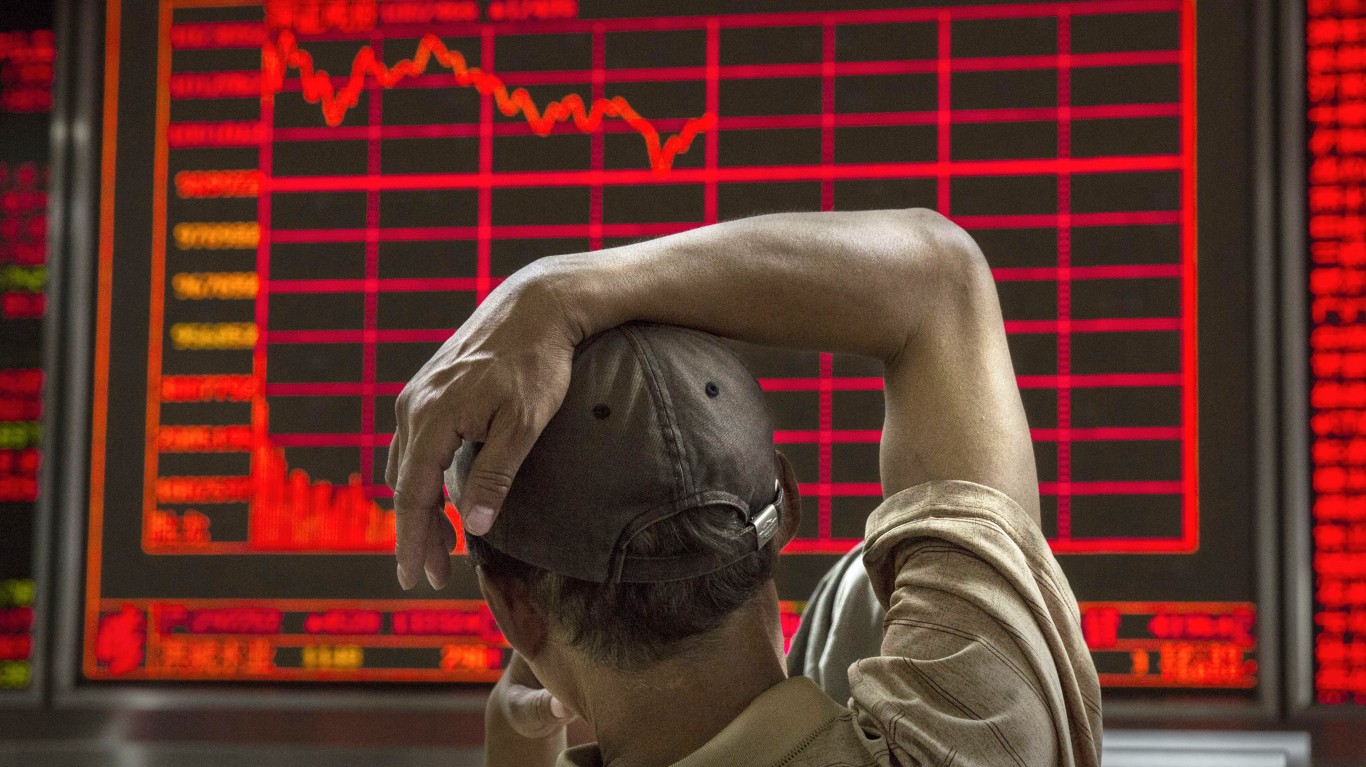
The Nasdaq-100 fell 2.67% on Monday. The index is now down 4.18% for November, with nine trading sessions left.
Invesco QQQ Trust (NASDAQ:QQQ) also fell 2.67% and closed at $661.75. It rose 0.09% to $662.37 after hours as of 7:59 p.m. ET, and that quote can change before the next open.
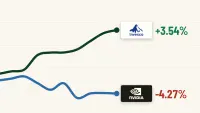
AI-focused stocks, which are the market’s biggest weights, led the decline. NVIDIA (NASDAQ:NVDA | NVDA Price Prediction) fell 4.12% to $156.14. The stock is still absorbing the company’s November 12 announcement that Jensen Huang resigned and that CFO Colette Kress is serving as interim CEO.
Policy added to the pressure. Democrats’ sweeping midterm wins raised concerns that new AI data center construction could be limited, and the administration issued new rules restricting remote access to advanced U.S. chips and servers.
Zhiwei Zhang, president and chief economist of Pinpoint Asset Management, said a risk the market was already worried about has become more serious. For QQQ holders, the rest of November carries more weight than usual because the month’s historical ranking is still open.
Where This November Ranks Since 1985
Since October 1985, only four Novembers were worse, all during market crises: the 1987 crash (-8.63%), 2000 (-23.63%), 2007 (-6.69%), and 2008 (-11.17%). By contrast, no November from 2009 through 2025 fell more than 2011’s -2.75%, and 2025 ended at -1.64%.
The worst-since-2008 label holds only if the index ends November below about 27,604. That level is roughly 1.5% above Monday’s close, so one strong session could erase it, and the ranking can still change.
Two Losing Months and Wider Daily Swings
October fell 6.65%, and the two months together have cost 10.56%. The index is 12.9% below its October 6 record close of 31,224.47, but it is still up 7.7% for 2026.
Investors who bought QQQ at the start of the year are likely still ahead. If you bought near the October high, your loss is probably close to the index’s drop from its record.
November’s average daily move of 1.92% is the highest since April 2025, when it was 2.34%. The index lost 6.36% on November 5, gained 3.40% on November 9 and 2.28% on November 11, then fell 1.22% on November 13.
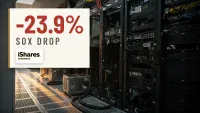
QQQ is cap-weighted, which means each company counts in proportion to its market value. On Monday, the PHLX Semiconductor Index fell 5.28%, and all 30 of its members closed lower. NVIDIA alone is worth about $3.77 trillion, so its moves can shift the whole fund. Because the largest holdings tend to fall together, holding 100 stocks in this fund spreads risk less than the count implies (we wrote a free handbook on riding a mania like this one and knowing when to step aside, here).
Yields, Fear and a Holiday Calendar
Losses tracked tech exposure: the Nasdaq Composite fell 2.5% to 24,509.76, the S&P 500 1.9%, or 145.08 points, to 7,416.59, its third straight loss, and the Dow 1.4% to 51,608.17.
The VIX, which measures how much volatility traders expect, jumped 18.7% to 22.91. Brent crude fell 3.5% to $92.44. The ten-year Treasury yield eased to 5.13% from 5.15%. A yield that high offers a near risk-free return now, competing with growth stocks whose prices depend on profits years away.
NVIDIA reports fiscal third-quarter 2027 results on November 17 at about 4:20 p.m. ET. Markets are closed November 26 for Thanksgiving and close early at 1 p.m. ET on November 27.
What QQQ Holders Should Watch Before Month End
The longer trend for QQQ remains positive despite the selloff. The index is still up 7.7% for 2026, and the selloff comes from specific concerns about leadership, policy, and yields, all of which can ease.
NVIDIA’s report is likely the largest single influence on whether the index moves back toward the 27,604 level before month end.
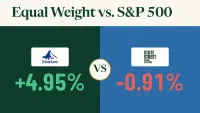
First Trust NASDAQ-100 Equal Weighted Index Fund (NASDAQ:QQEW) holds the same companies at equal weights. Chip stocks have much less influence on its results.
A November 30 close above 27,604 removes the worst-since-2008 label and shows buyers came back. A close below Monday’s 27,197.15 would show that selling pressure persisted through month-end.
Contact [email protected] for any questions or corrections.
Omor Ibne Ehsan is a writer at 24/7 Wall St. He is a self-taught investor with a focus on growth, cyclical, and dividend equities that have strong fundamentals, value, and long-term potential. He also has an interest in high-risk, high-reward investments such as penny stocks.