There are 8 Reasons I’m Buying SanDisk Now at This Deep Discount

This post may contain links from our sponsors and affiliates, and Flywheel Publishing may receive compensation for actions taken through them.

I’ve been adding to my SanDisk (NASDAQ:SNDK | SNDK Price Prediction) position, and the latest sell-off only pushed me to buy more. Shares closed at $809.11 after a 37.73% slide over the past month. Over that same stretch, the company reported quarterly revenue of $11.03B[1], up 377.9% year over year. The share price and the earnings power are heading in opposite directions, and that gap grounds my case.
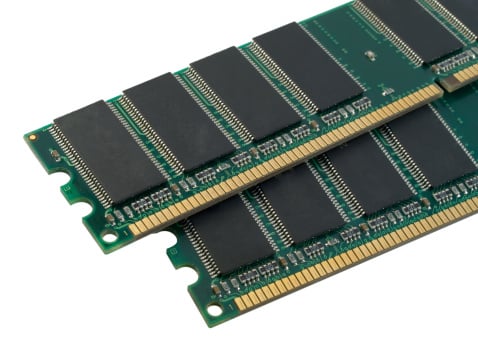
My case: SanDisk makes the NAND flash that AI inference increasingly runs on. Management points to KV cache, data lakes and vector databases, calling it “a secular dynamic that is expanding NAND’s role across the AI stack.”[2] In its own lab, systems using SSDs delivered “approximately three times the token throughput” of systems relying on volatile memory alone. That demand is what keeps pulling me back.
Eight Reasons I Keep Adding Before the Split Hits
First, valuation. I pay a trailing P/E of 10 and get a free cash flow yield of 9.98%. Second, earnings momentum. Non-GAAP EPS climbed from $1.22 a year ago to $49.51[1], continuing a 7-quarter beat streak. Third, guidance. Management expects fiscal Q2 revenue of $12.2B-$12.6B[1] and pre-split EPS of $55.00-$57.00.
Fourth, margins. GAAP gross margin hit 85.0%[1], and the non-GAAP operating margin reached 80.4%[2]. Fifth, the balance sheet. SanDisk has no debt[2] and holds $5.14B[1] in cash. Sixth, buybacks. The company bought back 6.0M shares (~4% of outstanding) over two quarters and still has $15.5B of authorization left. The company notes it is “returning 100% of excess cash to shareholders.”[2]
Seventh, contracted demand. About 50% of bits[2] sit under long-term agreements for fiscal 2027 and two-thirds for fiscal 2028. Management says “Our NBM pipeline exceeds our supply throughout the end of the decade.”[2] Skeptics call this a peak, but customers keep locking in supply years ahead with prepayments and deposits. Eighth, the 8-for-1 split. Split-adjusted trading begins November 20[2], and the company says it wants the lower share price to make the stock more accessible, including to employees through the ESPP. A lower share price can broaden the stock’s appeal to retail investors.
Why My Money Goes Here Instead of Micron or Seagate
Micron Technology (NASDAQ:MU) runs an excellent business. It also spent $30.712B on capex in fiscal 2026. SanDisk’s gross capex last quarter was $378 million[2], which leaves far more cash for buybacks. Micron’s $0.15 quarterly dividend does not make up the difference for me.
Seagate Technology (NASDAQ:STX) trades at a $114.55B market cap, nearly equal to SanDisk’s $115.13B. Seagate generated $1.479B of free cash flow last quarter. SanDisk generated $6.31B[1]. For the same market value, SanDisk produces far more free cash flow.
Risks I Refuse to Ignore
Memory runs in cycles, and SanDisk depends on its Kioxia Corporation partnership for wafer supply. Consumer revenue fell 29% sequentially[1], and the stock dropped 8.58% in a single session on Monday. Volatility like that tests anyone holding this stock. The case holds up because multi-year contracts, a debt-free balance sheet and datacenter revenue that rose 61% sequentially[1] give this company a substantial buffer.
What Could Move SanDisk Next
I will keep an eye on NBM extensions and the next earnings report. The NAND-for-AI angle is the same reason we keep circling back to the suppliers quietly powering the data-center expansion, which we rounded up in a free report on seven AI infrastructure names that aren’t chipmakers. Until the cash flow slows, I will keep tracking sell-offs like this one against the company’s earnings power.
Contact [email protected] for any questions or corrections.
Alex Sirois is a financial writer with experience spanning both retail and institutional investing. He has written for InvestorPlace and held roles at BNY Mellon and Bernstein, giving him a perspective that bridges Main Street portfolios and Wall Street analysis.
Alex holds an MBA from George Washington University and has built his career across multiple industries, including e-commerce, education, and translation — a breadth of experience that informs how he breaks down complex financial topics for everyday investors. His writing is conversational, actionable, and grounded in long-term, buy-and-hold investing principles.
At 247 Wall St., Alex focuses on delivering analysis that is both accessible and useful, with a clear emphasis on helping readers make more informed decisions with their money.