TSMC Is Reportedly Setting Credit Limits for AI Customers

This post may contain links from our sponsors and affiliates, and Flywheel Publishing may receive compensation for actions taken through them.
A chip designer that orders more wafers than its balance sheet can carry reportedly must put up cash first. Taiwan’s Commercial Times reported in its Monday, Nov. 16, 2026 print edition, citing industry sources, that Taiwan Semiconductor Manufacturing (NYSE:TSM | TSM Price Prediction) sets a credit limit for each customer based on its balance sheet, historical loss rates, competitiveness and outlook.
Orders above the limit require extra cash, and some customers must prepay to reserve designated capacity. TSMC has not commented, and a Chinese tech outlet that reported the story said the practice mainly targets custom AI chip (ASIC) customers.
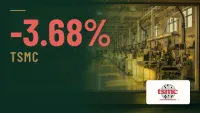
TSM closed Tuesday, Nov. 17 at $359.69, down 3.68%, for a market cap of about $1.865 trillion. It then traded at $376.35 at 7:59 p.m. ET after hours, up 4.63%, the evening NVIDIA (NASDAQ:NVDA) reported.
In Taipei on Wednesday, Nov. 18, the local shares rose 0.23% to NT$2,175. That close was 15.9% below the Oct. 6 record of NT$2,585, and the shares were up about 40% for 2026.

The report did not say when the system began, which customers prepay, or how large any limit is. No TSMC filing or press release mentions it.
Demand remains strong, and October revenue was a record NT$586.89 billion, up 59.7% from a year earlier.
Why ASIC Designers Feel the Squeeze
Designers owe TSMC for wafers as soon as they’re made. The chips still have to go through advanced packaging, and designers get paid only when their own customers receive finished products, so the gap they must finance grows as volume grows.
MediaTek priced a $3.9 billion interest-free overseas convertible bond on Aug. 31, and NVIDIA took $3.5 billion of it.
Global Unichip approved up to $800 million of overseas convertible bonds on Aug. 19 and signed a NT$40 billion syndicated loan on Oct. 30. Alchip raised $510 million overseas in June and issued new shares. The report does not say any of these companies were told to prepay.
Routine Credit Limits Reveal TSMC’s Leverage
Per-customer credit limits are routine risk management. TSMC has long stated that most of its trade receivables lack collateral or credit insurance and that it monitors and limits its credit exposure.
On the Oct. 15 earnings call, Chairman C.C. Wei said capacity planning considers “financial considerations”[1] along with data center build-outs. He also said TSMC does “not allow our customers to sublet or auction off the capacity.”[1] Those comments suggest that TSMC, as a supplier able to demand cash first and bar customers from reselling capacity, holds pricing power over its customers.
Customer prepayments, an ordinary accounting item separate from the reported limits, reached NT$234.23 billion at the end of June. That was up 56% from NT$149.7 billion at March 31 and followed five straight quarterly declines from NT$291.1 billion at the end of 2024.
Investors worry about AI circular financing, where suppliers help fund their own customers. Figures cited by investingLive put NVIDIA’s commitments at about $518 billion and its customer receivables at about $81 billion. The expansion extends well beyond the chipmakers themselves, which is the whole point of the free report we put together on seven AI infrastructure suppliers, available here.
Why TSM Holds the Stronger Hand Over Its ASIC Customers
TSM’s position looks stronger than its customers’. The reported system puts the funding risk on customers’ balance sheets, and Wei said TSMC still sees demand above supply.
Market risk remains, because the TAIEX fell to 39,261 on Nov. 18, 21.2% below its record close of 49,822.55 and past the 20% bear-market line. It then closed up 0.26% at 40,194.91, 19.3% below the record, so it ended the day above bear-market territory.
TSM carries less funding risk than the ASIC designers because it covers the funding gap with convertible bonds, loans, and new shares that dilute existing owners.

Taiwan’s market reopens at 9:00 a.m. Thursday, Nov. 19, Taipei time (8:00 p.m. ET Wednesday). The key event is any TSMC comment confirming or denying the report. If TSMC confirms it and TSM then closes below $359.69, investors will read the report as a sign of customer stress.
Contact [email protected] for any questions or corrections.
Omor Ibne Ehsan is a writer at 24/7 Wall St. He is a self-taught investor with a focus on growth, cyclical, and dividend equities that have strong fundamentals, value, and long-term potential. He also has an interest in high-risk, high-reward investments such as penny stocks.