Chip Stocks Just Had a Reversal Last Seen in March 2020

This post may contain links from our sponsors and affiliates, and Flywheel Publishing may receive compensation for actions taken through them.

On Thursday, November 19, 2026, the PHLX Semiconductor Index (SOX) opened at 9,938.33 and reached 10,109.88 by midday. That was 4.74% above Wednesday’s close of 9,652.80. It finished at 9,419.72, down 2.41% and at its lowest close since November 6.
The high-to-close swing of about 7.2 percentage points made Thursday only the third day in a decade, after March 20, 2020 and April 8, 2025, when the SOX traded that far up and still closed lower. Before 2020, the last such day was November 20, 2008.
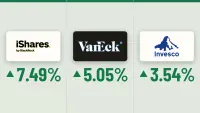
The two biggest chip funds followed the same path. VanEck Semiconductor ETF (NASDAQ:SMH) hit $479.96, up 4.44%, then closed at $447.48. That was a 2.62% drop, its sixth straight loss and its lowest close since April 13.
iShares Semiconductor ETF (NASDAQ:SOXX) reached $148.59 before closing at $137.95, down 2.75%. Both funds are still up sharply for 2026, but Thursday’s reversal likely signals more selling ahead unless buyers return.
Why the Close Matters More Than the High
In a momentum sector, a morning surge that fades means buyers spent their cash early, and holders used the strength to get out. The close shows where most of the money settled, so it tells you more than the peak does.
Micron Technology (NASDAQ:MU | MU Price Prediction) jumped 7.76% to $760.01, then closed down 2.10%. NVIDIA (NASDAQ:NVDA) touched $158.13 before ending at $145.98 for its sixth straight loss, while the Nasdaq fell 2.25%.
Big Drawdowns Inside Strong Years
The SOX closed 35.6% below its June 22 record of 14,634.72. SMH sits 33.1% below its own June 22 record of $668.91, and SOXX is 36.8% under its peak.
Even so, SMH is up 24.26% year to date, and SOXX is up 37.66%. A fall that far from a record alongside large annual gains suggests the trade got crowded and that early holders are now likely selling to late buyers.
SMH puts more of its money in the largest chipmakers, with NVIDIA at more than 19%[1] of assets as of September 30. SOXX spreads its weight more evenly. Since October 20, SMH has lost 18.1%, compared with 17.23% for SOXX.
AI Spending Doubts and NVIDIA’s Leadership Change
Sellers pointed to AI bubble fears, doubts that data center spending will pay off, and Democratic midterm gains that raise the risk of AI regulation. NVIDIA CEO Jensen Huang has also resigned, and the company is now run by an interim chief. Riding a mania like this one is survivable if you plan the exit in advance, which is the whole subject of our free bubble survivor’s handbook.
Advanced Micro Devices (NASDAQ:AMD) fell 7.72% to $489.19 after an investment firm said an affiliated fund had shorted the stock. Anthropic’s IPO opened shortly before noon ET, close to when the reversal began, but nothing ties the debut to the selling.
The SOX rebounded after March 2020 and April 2025, but in each case a policy change drove the recovery: emergency Fed support in 2020 and a tariff pause in 2025. Futures now put the odds of a quarter-point Fed rate hike in December at 96.4%, and higher rates reduce the present value of future chip profits.
What Could Change the Outlook for SMH and SOXX
SMH carries more concentrated risk. Its heavy NVIDIA weighting ties the fund to a company undergoing a CEO change while the Fed is expected to raise rates, and six straight losses show buyers have not stepped in.
SOXX offers a more balanced form of chip exposure. It has a 0.33%[2] expense ratio, and because its weighting is more even, a shock at one company, such as the short position against AMD, has a smaller effect on the fund.
Watch monthly options expiration on Friday, November 20. Then come the next PCE inflation report and the Fed’s December meeting.
The cautious view on SMH would weaken if it closes above Thursday’s $479.96 high before the December Fed decision. A close at that level would show buyers have absorbed the selling.
Contact [email protected] for any questions or corrections.
Omor Ibne Ehsan is a writer at 24/7 Wall St. He is a self-taught investor with a focus on growth, cyclical, and dividend equities that have strong fundamentals, value, and long-term potential. He also has an interest in high-risk, high-reward investments such as penny stocks.