Trump’s Tariff Refund Saved Lowe’s From An Earnings Miss. Here’s The Math On How Government Tariff Refunds Are Padding Retailers’ Profits

This post may contain links from our sponsors and affiliates, and Flywheel Publishing may receive compensation for actions taken through them.

Lowe’s (NYSE:LOW | LOW Price Prediction) reported fiscal third-quarter results on Nov. 18, 2026[1], and the headline number beat expectations. Lowe’s Companies posted adjusted diluted EPS of $3.10[1], above the $2.88 consensus estimate. One line in the release changes that picture. Lowe’s Companies said both diluted and adjusted diluted EPS include a $0.34[1] positive impact from IEEPA tariff refunds. Lowe’s Companies tied that to a pre-tax benefit of approximately $250 million[1].
Take out the refund and adjusted EPS falls to $2.76, which misses the consensus estimate. That figure is a 24/7 Wall St. calculation based on the company’s disclosed numbers.

Whose Money Is Coming Back
“Trump’s tariff refund” is shorthand for a court-ordered return of Trump’s tariffs. In February 2026, the Supreme Court struck down tariffs imposed under the International Emergency Economic Powers Act (IEEPA), and that forced U.S. Customs and Border Protection (CBP) to return the duties. Supply Chain Dive reported that the administration aims to return $166 billion to importers. Supply Chain Dive also reported that CBP’s refund system had paid out $106.6 billion[2] as of Aug. 21, the latest tally available.
By law, refunds go to the importer of record, meaning the company that paid the duty at the border. Shoppers who paid higher shelf prices have no direct claim. On the company’s July 30 call, the CFO of Amazon (NASDAQ:AMZN) noted that Amazon “was not the importer of record for the large majority of items sold in our store,” per Fortune.
Target Beats Even Without the Refund
Target (NYSE:TGT) reported Q3 EPS of $2.65[3], which Target Corporation said included refund benefits of $0.50. Target Corporation booked $301 million[3] in pre-tax refunds as a reduction of cost of sales, and Target Corporation said the refunds added $228 million to net earnings. Target still clears the $2.07[4] consensus estimate with the refund removed.
Target Corporation said the refunds added 1.1 percentage points[3] to its gross margin rate, and Target Corporation has recognized $1.3 billion in refunds over the first nine months of 2026. Target Corporation’s full-year EPS guidance of $10.65[3] to $11.40 includes approximately $2.14 of refunds recognized so far. The company says that guidance “excludes any potential future tariff refunds.”
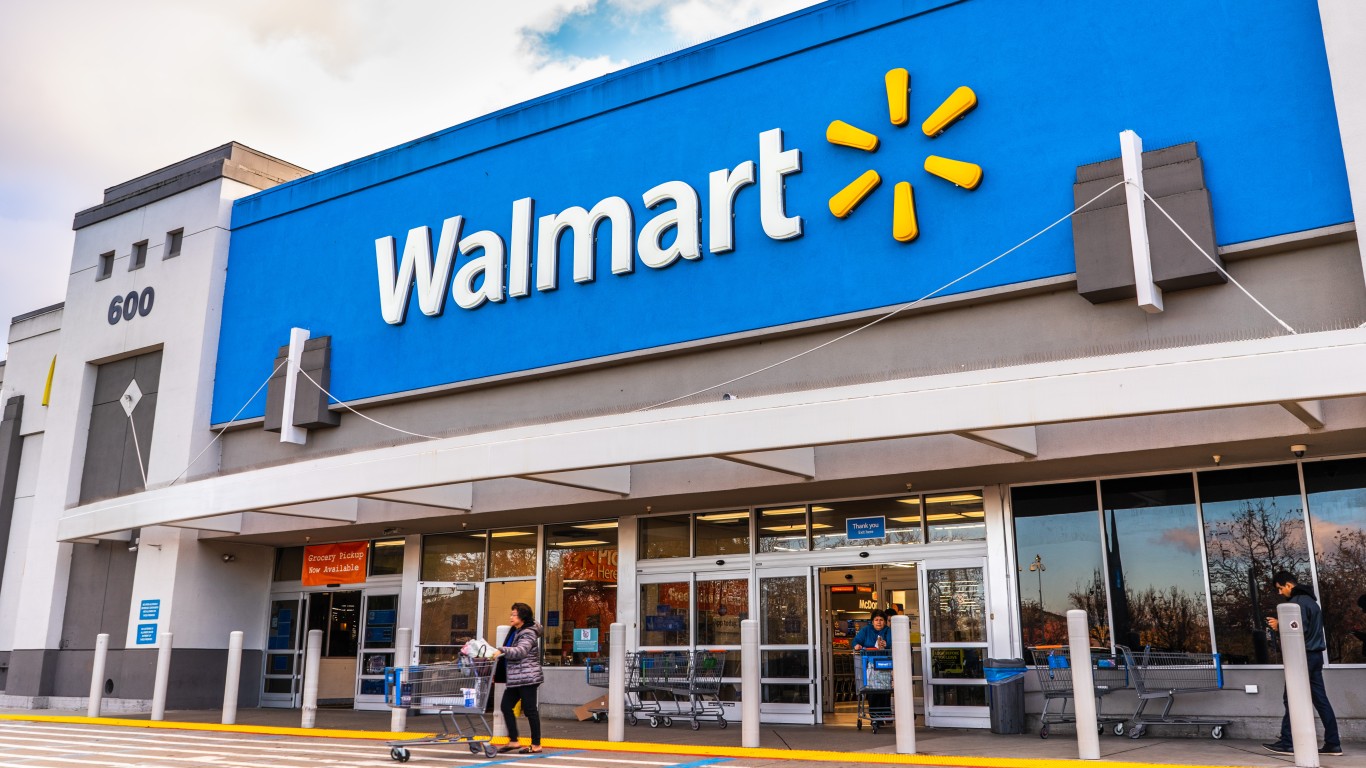
Home Depot Absorbs Costs, Walmart Cuts Prices
Fortune reported in August that Home Depot (NYSE:HD) collected $730 million in refunds in a single quarter. The company used the money “defensively, to absorb cost inflation rather than cut prices.” Supply Chain Dive reported that Walmart (NASDAQ:WMT) is putting its $2.9 billion[2] refund into price cuts. On the Nov. 19[5] call, Walmart CFO John David Rainey said gross profit “reflects the investments we made in price and customer initiatives using the tariff refunds we received.”[5]
What Lowe’s Says It Is Doing With the Cash
Supply Chain Dive reported that Lowe’s had received $80 million[2] in refunds by its second-quarter call. That money offset fuel and transportation costs, and CFO Brandon Sink said further benefits would be “reinvested in customer-facing actions.”
On the Nov. 18 call, CEO Marvin Ellison said, “As I have said before, we thought first about how we are going to share these refunds with the customer.” On the same call, Sink said refunds made up approximately 120 basis points of gross margin. He added that Lowe’s put about one-third of the Q3 refunds “into actions to reinforce customer value.” “We expect to reinvest the remainder of the tariff refunds in Q4,” he said. “So really, it’s net neutral on the year.”
Who Comes Out Ahead
Shoppers get no check. Whatever benefit they see comes through lower prices and promotions. Shareholders should know that this year’s reported earnings include one-time gains that will not repeat. Lowe’s fourth quarter is where to look next: if the remaining refunds go into prices as Sink described, the margin lift should disappear. Target’s guidance already assumes no new refunds, so its 2027 results will be compared against a 2026 base that refunds pushed higher.
Contact [email protected] for any questions or corrections.
AJ spent 10 years writing about financial markets at The Motley Fool. His coverage centers on technology stocks and the broader macroeconomic trends, from interest rates to geopolitics, that shape where markets are headed next. AJ is drawn to the stories where big-picture economics and individual companies collide.