Fed’s Lisa Cook Warns of Larger Rate Hikes Ahead

This post may contain links from our sponsors and affiliates, and Flywheel Publishing may receive compensation for actions taken through them.

Federal Reserve Governor Lisa Cook[1] told the Central Bank of Chile’s annual conference in Santiago on November 20, 2026, that the Fed’s single quarter-point hike in September is unlikely to change the path of inflation. If the Fed falls behind, she warned, “additional and larger rate increases may be required later to catch up.”
The speech came on a bad day for stocks. The S&P 500 fell 3.70% to 6,910.39, and the Nasdaq Composite dropped 5.28%. The State Street SPDR S&P 500 ETF Trust (NYSEARCA:SPY) closed at $689.81, and delayed after-hours quotes later showed it at $697.30.
Treasury yields fell anyway. That leaves your index fund caught between a voting governor who says policy is too loose and a bond market pricing slower growth.
What Cook Said, and What She Left Out
Cook framed the views as her own, with the larger hikes conditional, but she stopped short of calling for a half-point move in December.
Her case starts with inflation, which has run above the Fed’s 2%[1] target for 67 months. She estimates October PCE prices rose 3.8%[1] over 12 months, and core PCE rose 3.2%, figures she built from recent data ahead of the official release.
She backed the September hike to a 3.75% to 4.00%[1] range, then was one of two October dissenters who wanted another increase. “In a different environment, the Committee could afford to be patient,” she said, but she argued it lacks that luxury now.
Why AI Spending Puts SPY at the Center
Cook said policy is failing to slow the AI buildout, with companies announcing more than $2 trillion[1] in specific data center projects.
That expansion drives SPY. As of March 17, 2026, NVIDIA (NASDAQ:NVDA | NVDA Price Prediction) made up 7.58% of the fund, Apple (NASDAQ:AAPL) 6.66%, and Microsoft (NASDAQ:MSFT) 4.91%. The chipmakers get the headlines. But the power, cooling and networking suppliers feeding the data centers matter just as much, and we pulled seven of them into a free report.
Third-quarter GDP grew at a 3.4%[1] pace, and October payrolls rose 165,000. Rate hikes aimed at that strength hit high-valued growth stocks hardest.
Bond Traders Are Sending a Different Signal
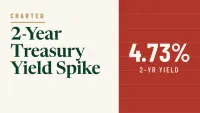
The 2-year Treasury yield fell to 4.63% from 4.76% on Thursday, and the 10-year slipped to 4.92% from 5.04%. Yields falling during a hawkish speech suggest investors fear a slowdown more than they fear Cook.
Futures still priced about 92% odds of a quarter-point hike at the December 8-9 meeting. The VIX, a gauge of expected stock swings, closed at 28.44[2] on November 19.
However, Cook’s argument is still weak in some places.
“Behind the curve” means letting inflation outrun interest rates, so the Fed must later raise rates faster to regain control, and bigger hikes would pressure stock valuations and bond prices, lift yields on cash and raise mortgage and credit card costs.
But Cook is one voice and was outvoted in October. She also said equity prices are supporting consumer spending, and a deeper selloff would eat away that part of her own case.
What a Hawkish Fed Could Mean for SPY Holders
Money needed within a few years carries the most exposure to this risk in SPY. A Fed debating bigger hikes while core inflation runs near 3.2%[1] is a poor background for a fund this concentrated in high-multiple technology.
Short-term Treasuries carry less valuation risk than stocks. The 2-year still yields 4.63%, a useful benchmark when researching how much rate risk SPY carries.
Watch the decision on December 9. If the Fed hikes by more than a quarter point or Cook gains company in dissent, her view is winning and SPY likely stays below $689.81. A single quarter-point hike with the 2-year holding under 4.76% would favor the bond market’s slowdown view instead.
Contact [email protected] for any questions or corrections.
Omor Ibne Ehsan is a writer at 24/7 Wall St. He is a self-taught investor with a focus on growth, cyclical, and dividend equities that have strong fundamentals, value, and long-term potential. He also has an interest in high-risk, high-reward investments such as penny stocks.