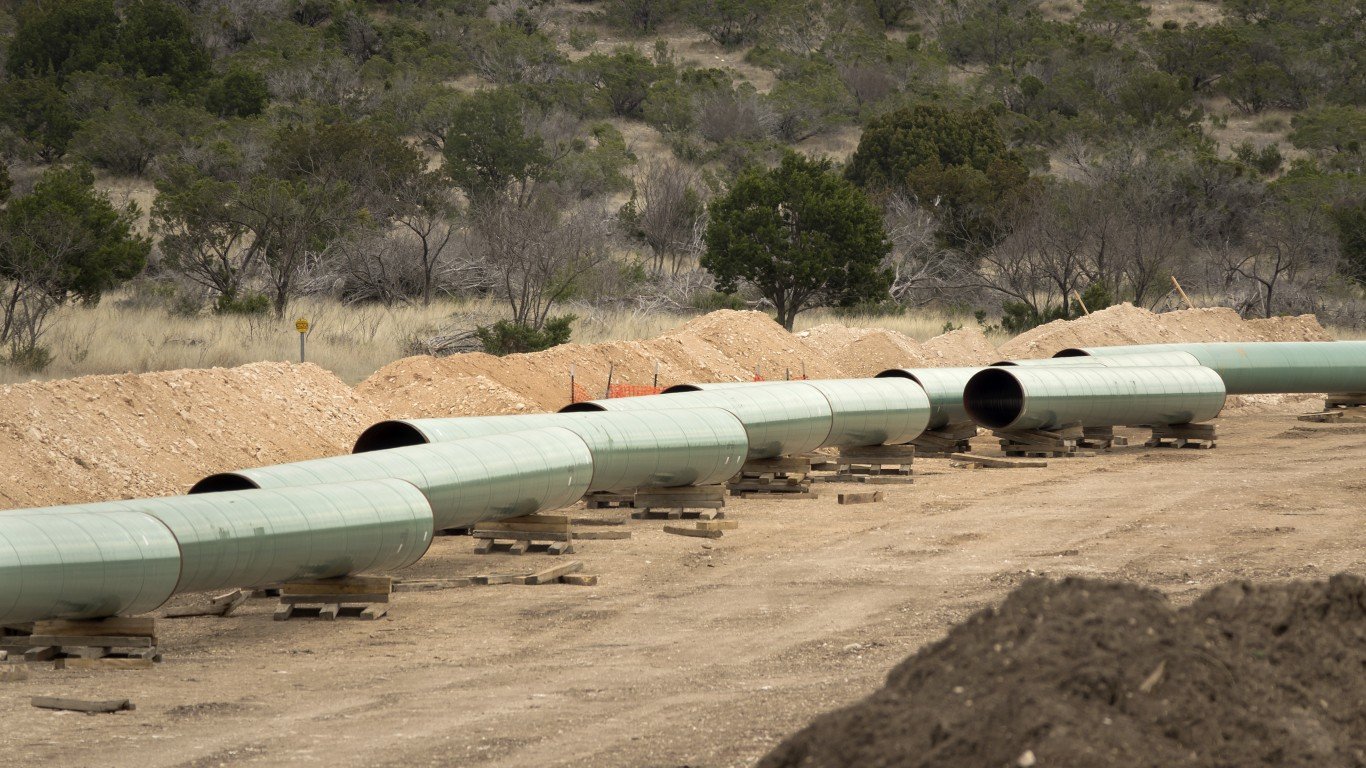
Why MLPs Like Plains All American and Western Midstream Can Be a Problem in a Roth IRA

This post may contain links from our sponsors and affiliates, and Flywheel Publishing may receive compensation for actions taken through them.
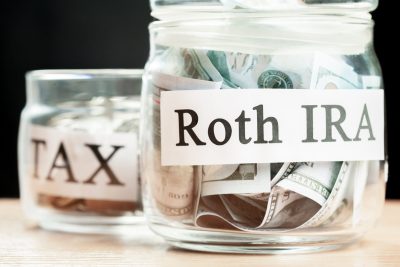
Plains All American Pipeline (NASDAQ:PAA | PAA Price Prediction) and Western Midstream Partners (NYSE:WES) pay some of the largest distributions in midstream energy, so they look like natural Roth IRA holdings. The problem is their partnership structure, which can make an account that is meant to be tax-free owe tax.
What These Two Partnerships Pay Today
Plains pays $0.4175 per unit each quarter, or $1.67 a year. At the latest price of $24.01, that works out to a yield of about 7.0%. The units are up 52.29% over the past year.

Western pays $0.93 per quarter, or $3.72 a year. At $40, the yield is about 9.3%. The yield has risen partly because the units fell 8.28% over the past month.

| Partnership | Annual Payout | Current Yield | Quarterly Payout Before 2020 Cut | Quarterly Payout After 2020 Cut |
|---|---|---|---|---|
| Plains All American | $1.67 | 7.0% | $0.36 | $0.18 |
| Western Midstream | $3.72 | 9.3% | $0.622 | $0.311 |
Both partnerships cut their payouts in 2020, and both have since raised them past their pre-cut levels. Plains raised its distribution every year from 2022 through 2026.
How a Roth IRA Can Owe Tax With Nothing Withdrawn
The rule rests on four pieces of law.
- A Roth IRA is treated the same as any other individual retirement plan unless the Roth section says otherwise (26 U.S.C. § 408A(a)[1]).
- IRAs are exempt from tax but stay subject to the tax on unrelated business income (26 U.S.C. § 408(e)(1)[2]).
- An account that owns a partnership interest must count its share of the partnership’s business income “whether or not distributed” (26 U.S.C. § 512(c)(1)[3]).
- The code allows a specific deduction of $1,000[3] against that income (26 U.S.C. § 512(b)(12)).
Under the Treasury regulation on returns (26 CFR 1.6012-2[4]), the account must file Form 990-T when its gross income from an unrelated business is $1,000 or more.
Both partnerships run operating businesses. Plains transports, stores, and markets crude oil, NGLs, and natural gas (per its company profile). Western gathers, processes, and transports gas, crude, and produced water (per its company profile). Income from operations like these is what the partnership rule reaches. Section 512(c)(1) applies to income the account was allocated, whether or not any cash was paid out, so a Roth can owe tax even when the owner has withdrawn nothing.
Why the Roth Shield Adds Less for MLPs
Some master limited partnership (MLP) distributions may be classified as return of capital. That cash lowers the unitholder’s cost basis rather than being taxed when it is received, so the tax is pushed back until the units are sold. A holder in a taxable account may therefore already defer some of the tax on these payouts. If so, a Roth saves less tax on an MLP than on a high-yield stock whose dividends are taxed every year as ordinary income. The K-1 paperwork comes with an MLP in either account type.
A Decision Framework Before You Hold MLPs in a Roth
Who might still hold them in a Roth: investors with small positions whose K-1s have shown business income staying under the $1,000[3] deduction, and investors who accept the chance of a Form 990-T filing in exchange for the yield.
Who might look elsewhere: Roth owners who want income without any account-level filing. They may want to compare high-yield holdings that report on a 1099, such as business development companies, mortgage REITs, and energy companies structured as C-corps.
Questions for a tax professional:
- What unrelated business income did my K-1s allocate to my IRA last year, and how much do all the partnerships in the account add up to?
- Does my custodian file Form 990-T, and does it charge a fee to do so?
- How much do I already defer through return of capital on these units in my taxable account?
- What happens to unrelated business income when the units are sold inside the Roth?
Look at each partnership’s K-1 before deciding whether these yields belong in a Roth.
Contact [email protected] for any questions or corrections.
Chris Lange is a financial and geopolitical writer with more than a decade of experience covering a myriad of topics. He has published thousands of articles for 24/7 Wall St., with past coverage focused heavily on stocks, IPOs, healthcare, defense, global affairs, and technology.
His work has been quoted, or referenced by a number of outlets including Business Insider, USA Today, Yahoo Finance, MSN, The Motley Fool, and many other publications. A graduate of Southwestern University, he studied business with a focus on investments and has previous experience in banking and startups.
When not reading or writing the news, he is following his passion for Lacrosse, playing chess, or building solar projects with his dad.