D-Wave Is Down 42% in a Month. What Will It Take to Get QBTS Stock Back to $10?

This post may contain links from our sponsors and affiliates, and Flywheel Publishing may receive compensation for actions taken through them.

Few quantum computing stocks have lost more ground this autumn than D-Wave Quantum (NASDAQ:QBTS). D-Wave stock has fallen 42% over the past month to $6.82 in recent trading. The shares are off 7% from Monday’s close.
On October 23, D-Wave closed at $11.66, above the $10 level that now hangs over the stock. AI-linked and speculative tech stocks are pulling back after Monday’s rally, and D-Wave was among that rally’s big gainers. That leaves one question for the company: what would have to go right to lift the shares back above $10?
D-Wave’s Third-Quarter Report Gave Both Camps Something
D-Wave reported its Q3 2026 results on November 10[1]. Revenue came in at $4.51 million[1], up 20.7% year over year (YoY) and ahead of the $4.34 million consensus. The company’s net loss of $0.13[1] per share missed expectations of a $0.10 loss. Gross margin at D-Wave slipped to 52.9%[1] from 71.4% as lower-margin professional services made up more of the mix.
Operating expenses at the company jumped 84%[2], driven by personnel costs, stock-based compensation and acquisition-related amortization. Shares of D-Wave traded at $11.59[1] when the company filed those results, and they’ve kept slipped with the rest of the quantum group since. That pattern points to sector-wide selling and less appetite for speculative tech as the main pressure on D-Wave.

How D-Wave Stacks Up Against IonQ and Rigetti
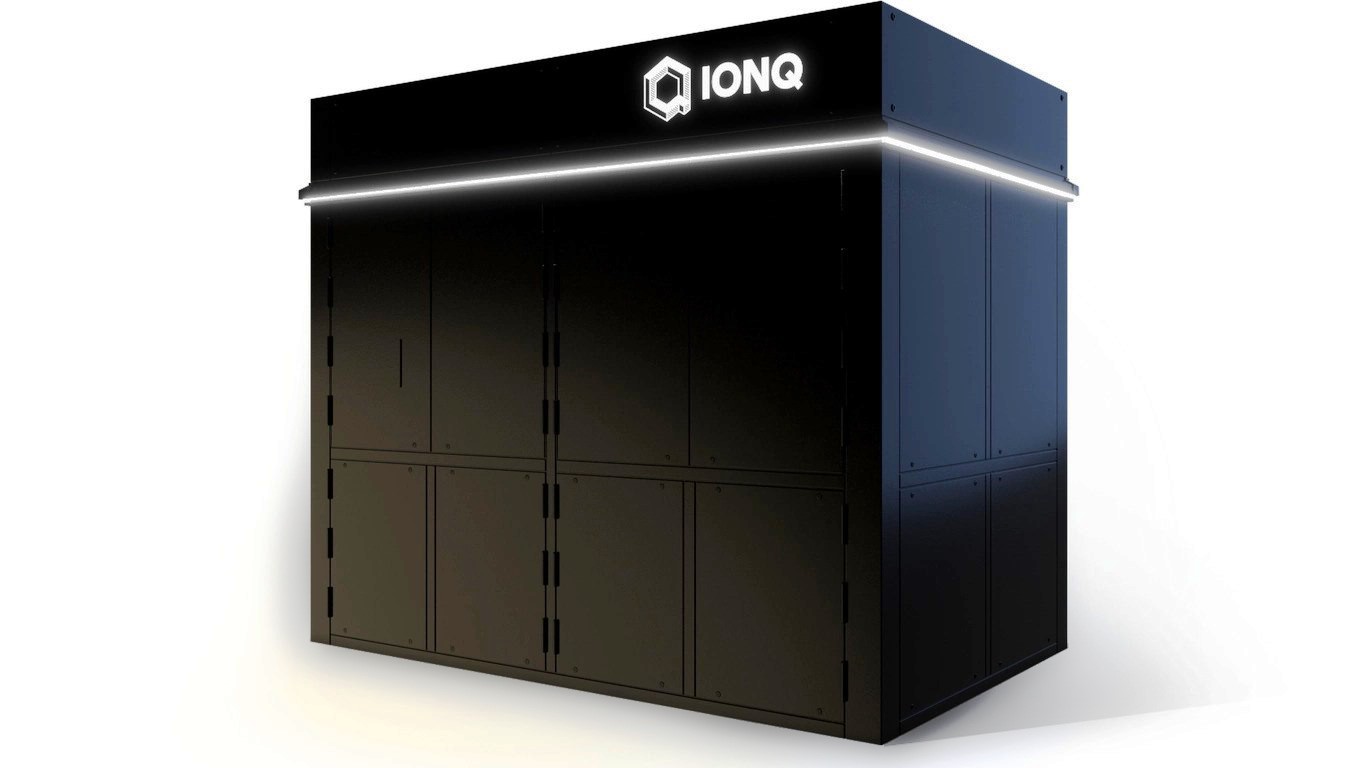
IonQ (NYSE:IONQ | IONQ Price Prediction) stock is down 28% over the past month to $22.40. Meanwhile, Rigetti Computing (NASDAQ:RGTI) stock is down 34% over the past month to $7.61. D-Wave has fallen more than either one, and both IonQ and Rigetti are also lower from Monday’s close.
Annealing is central to D-Wave’s model. The company calls its annealing systems production-ready today, while it doesn’t expect its gate-model systems to be ready for five or more years. By contrast, IonQ operates a wider trapped-ion platform that reaches into networking, sensing and security, and it owns the SkyWater foundry, which makes chips for D-Wave. Superconducting gate-model machines are Rigetti’s focus, built in its own fabrication facility and sold largely to national labs.
What Would Need to Go Right for D-Wave
Florida Atlantic University’s $20 million[2] system purchase is the nearest test. D-Wave expects to deliver it and recognize a substantial portion of that revenue in Q4 2026[2]. Of the company’s $38.3 million[1] in remaining performance obligations (RPO), 59% is expected to become revenue within 12 months. Management also said D-Wave’s sales pipeline grew more than 75%[2] from the end of Q2 2026.
D-Wave CEO Alan Baratz stated in the company’s results release, “Our triple-digit increase in year-to-date bookings and robust pipeline reinforce our confidence in the opportunity ahead.”[3] Up to $100 million[1] in CHIPS Act funding adds support, though D-Wave hadn’t received any of it by the end of Q3. A lasting recovery in speculative tech and AI opinion could help too, since quantum stocks tend to trade as a group.
What Could Keep D-Wave Below $10
Cash and investments at D-Wave stood at $503.4 million[2] on September 30, down 40% YoY, mainly because the company spent cash to buy Quantum Circuits. The company’s adjusted loss before interest, taxes, depreciation and amortization (EBITDA) reached $37.7 million[2] in Q3, and management didn’t provide quantitative guidance.
During 2025[3], D-Wave’s share count rose from 266.6 million to 358.7 million. Further share sales to fund operations could weigh on a stock that’s already under pressure. Uneven deal timing is another risk for D-Wave: its Q3 bookings of $1.9 million[2] were down 19% YoY.
D-Wave’s Road Back Above $10
D-Wave’s next test is whether the Florida Atlantic University system shows up in Q4 revenue as planned. Orders for the 17-qubit[2] gate-model systems the company is discussing for 2027 delivery could show whether its pipeline is turning into sales. Watch for new commercial contracts and the first CHIPS Act milestone payments as further signals.
Optimists can point to D-Wave’s growing backlog and a product customers already use in production, while skeptics can cite widening losses and a shrinking cash pile. Waiting until the debate over D-Wave’s cash burn resolves could be a smart plan for investors.
Contact [email protected] for any questions or corrections.
David Moadel is financial writer specializing in stocks, ETFs, options, precious metals, and Bitcoin. David has written well over 1,000 articles for leading online publications, helping investors understand markets, income strategies, and risk. His work has appeared in 24/7 Wall St., The Motley Fool, InvestorPlace, U.S. News & World Report, TipRanks, ValueWalk, Benzinga, Market Realist, MarketScreener, TalkMarkets, Finmasters, and others. With a master’s degree in education, David has taught at the elementary, high school, and college levels. That teaching background shapes his writing style: clear, educational, and practical. David has also built a loyal social-media audience by providing trustworthy financial content on YouTube, X/Twitter, and StockTwits.