Upstart’s CEO Keeps Buying the Stock, and Now Its Co-Founder Is Too

This post may contain links from our sponsors and affiliates, and Flywheel Publishing may receive compensation for actions taken through them.
Upstart (NASDAQ:UPST) CEO and co-founder Paul Gu bought 50,000 more shares on November 19, 2026, at a weighted average of $17.2013. The next day, fellow co-founder Dave Girouard added 60,000 shares at $15.8498. This was Gu’s fourth purchase of the same size since September, and each one came at a lower price than the one before.
Upstart closed Friday at $15.66, down 7.88%, after reaching a 52-week low of $15.54. On November 11, it had traded at $20.56.
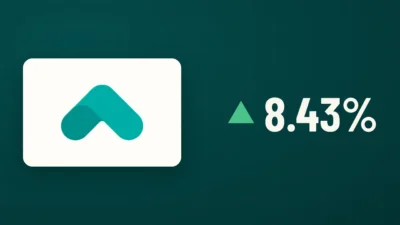
A broad market rally on Monday raised the stock 8.43% to $16.98, which puts Upstart’s market value at $1.68 billion. It traded at $17.01 after hours. Shares are still down 53.7% over the past year, and the 52-week high was $52.10.
Four Buys at Four Lower Prices
Gu paid $25.55 on September 10, $20.568 on November 11, $19.00 on November 16, and $17.2013 on November 19. In total, he bought 200,000 shares for about $4.12 million. At Monday’s close, those shares were worth roughly $3.40 million.
None of the four buys was made under a Rule 10b5-1 plan. That means Gu chose to make each one himself. He now reports about 1.50 million shares across his direct holdings, two trusts and an LLC.
Buying more as the price falls suggests the CEO thinks the market is underestimating his company, yet the stock still dropped further after every purchase.
Girouard Buys Near the Low
Girouard was CEO from incorporation until May 1, 2026. That is when Gu, then the chief technology officer, took over. Girouard stayed on as Executive Chairman, and his base salary was cut to $15,000.
His purchase cost about $951,000. It went through a family trust that now holds 9,041,340 shares, and he reports about 11.8 million shares in total. The purchase is already up about 7%.
Together, the two co-founders put in about $1.81 million. That is a small amount for a company this size. The meaningful part is that they kept buying, on back-to-back days.
Other Insider Sales Look Routine
President Sanjay Datta sold 8,568 shares, and Chief Legal Officer Scott Darling sold 7,372 shares at about $16.29. Both sales covered taxes owed on vesting stock units. CFO Andrea Blankmeyer sold 3,000 shares at $18.35 under a scheduled trading plan.
Sales like these happen automatically. Buys made outside a plan are more informative because they reflect a discretionary decision to add exposure.
Strong Results Run Into Tough Macro Conditions
Third-quarter loan originations rose 44%[1] to $4.12 billion, and contribution profit hit a record $218 million. But GAAP EPS of $0.33[1] missed the $0.6492 estimate. Adjusted EBITDA guidance was cut to about $260 million[1] from $294 million[2].
Daily loan volume in October fell 9%[3] from September. Over the same stretch, inflation picked back up to 3.7%,[3] and the Fed’s upper rate stood at 4.00%[4]. Those conditions raise costs for a marketplace that relies on outside partners to fund its loans.
“I think investors are wrong about the stock. I think they’re undervaluing the stock,”[3] Gu said on the earnings call.

What Upstart’s Valuation Signals for Investors
The stock trades at about 31 times earnings, and Upstart Bank is set to open in early 2027[3]. At that price, the market looks more focused on economic risk than on how fast fee revenue is growing.
The main risk is that another Fed rate hike cuts loan volume again, and the next earnings report has no posted date yet. When it comes, loan volume, funding, and credit quality will show whether the founders were right.
Investors exploring the stock will likely consider the founders’ confidence against these macro risks. Two founders buying without a scheduled plan while the stock is down 53.7% is a signal worth studying closely.
Contact [email protected] for any questions or corrections.
Omor Ibne Ehsan is a writer at 24/7 Wall St. He is a self-taught investor with a focus on growth, cyclical, and dividend equities that have strong fundamentals, value, and long-term potential. He also has an interest in high-risk, high-reward investments such as penny stocks.