USA Rare Earth Drops 6% as China Extends Mineral Export Pause and New U.S. Tariffs Loom; Critical Metals Declines 5%, MP Materials Falls 3%

This post may contain links from our sponsors and affiliates, and Flywheel Publishing may receive compensation for actions taken through them.
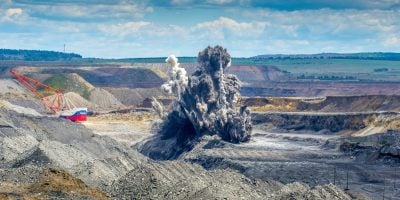
Rare earth and critical minerals stocks are slipping as mixed trade signals from Beijing and Washington hit the group at once. USA Rare Earth (NASDAQ:USAR) stock is at $6.31, down 6%, in morning trading. The selloff compounds a brutal year, leaving the stock down 47% year to date (YTD).
Through acquisitions and new plants, USA Rare Earth is building a non-China supply chain that runs from the Round Top deposit in Texas and the Serra Verde mine in Brazil to magnet plants in Oklahoma and South Carolina. The company closed its Serra Verde combination on September 3 and began commercial-scale shipments from Brazil in October[1]. Even so, the shares are falling along with the broader sector’s retreat.
China’s Export Extension and a U.S. Tariff Probe Squeeze Rare Earth Stocks
China said on November 24 that it will keep its pause on export restrictions for gallium, germanium, antimony and superhard materials shipped to the U.S. until January 27, 2027. Beijing will also keep easing checks on graphite exports, and the change takes effect November 28. The extension preserves a fragile trade truce after last week’s meeting between Trump and Xi in Shenzhen.
Easier access to Chinese supply could shrink the near-term scarcity premium that has supported U.S. producers of these materials. United States Antimony (NYSE:UAMY) is the most directly exposed, since antimony is on the list and the company holds a $245 million sole-source antimony contract with the U.S. Defense Logistics Agency.
Washington added a second source of pressure. The Wall Street Journal reported that U.S. Trade Representative Jamieson Greer is expected this week to release findings of a probe into government support for industries in China, the European Union and 14[2] other economies, a review that could lead to new tariffs with China likely facing the highest rates. In all, the action covers 16 major U.S. trading partners, according to Reuters, and futures on the NASDAQ 100 fell more than 2% on tariff worries.
Tariffs on Chinese goods could strengthen the long-term case for domestic suppliers such as USA Rare Earth. For now, the market is treating the whole group as high risk and selling first.
How Critical Metals and MP Materials Stack Up Against USA Rare Earth
Critical Metals (NASDAQ:CRML) stock is at $3.06, down 5%. That decline nearly matches USA Rare Earth’s drop in percentage terms. On a YTD basis, Critical Metals stock is down 56%, a bigger slide than USA Rare Earth.
MP Materials (NYSE:MP) stock is at $34.96, down 3%. Shares of the Mountain Pass operator are down 31% YTD, a shallower decline than USA Rare Earth and Critical Metals have posted. In Q3 2026, MP Materials completed magnet qualification with an car maker customer, and commercial magnet deliveries are expected to begin in Q4 2026. With a market value of $6.4 billion, MP Materials is the largest of the three companies.
Three Different Paths to a Non-China Supply Chain
USA Rare Earth is setting up a mine-to-magnet chain largely through acquisitions, pairing Brazilian heavy rare earth output with metal and alloy production in the United Kingdom and France and magnet plants in Oklahoma and South Carolina. The company sells Serra Verde’s output under a long-term take-or-pay offtake to a U.S. government-backed buyer, giving it a contracted outlet while Round Top remains a development asset.
MP Materials runs a mine and separation facility at Mountain Pass in California and makes magnets at its Independence plant in Fort Worth, Texas, with a larger magnet facility in development. Backing that model is a U.S. Department of War partnership that includes a price protection agreement, along with a long-term magnet supply agreement with Apple (NASDAQ:AAPL | AAPL Price Prediction).
Critical Metals sits much earlier in the cycle. Pre-revenue and dependent on fresh capital, the developer carries a going-concern warning from its auditors, and exploitation at its Tanbreez project in Greenland is targeted to begin by the end of 2028. Wolfsberg, the company’s lithium project in Austria, has a binding long-term offtake agreement with BMW.
What Comes Next for USA Rare Earth as Trade Policy Shifts
USA Rare Earth’s next test is whether the U.S. Trade Representative’s findings tilt policy toward domestic producers enough to offset easier access to Chinese minerals. The bulls can argue that a tougher stance on Chinese imports could widen the price gap that makes non-China rare earths valuable, supporting the company’s Serra Verde offtake and magnet expansion. Cash and equivalents of $1.09 billion[1] at the end of Q3 2026 give USA Rare Earth room to keep building.
An extended truce, meanwhile, could keep Chinese material flowing, and the bears note that the Serra Verde ramp and Stillwater expansion still have to prove themselves at scale. USA Rare Earth stock’s YTD slipping shows how quickly sentiment can turn on early-stage supply chains. A conservative investment approach could make sense until the U.S. Trade Representative’s tariff decision resolves.
Contact [email protected] for any questions or corrections.
David Moadel is financial writer specializing in stocks, ETFs, options, precious metals, and Bitcoin. David has written well over 1,000 articles for leading online publications, helping investors understand markets, income strategies, and risk. His work has appeared in 24/7 Wall St., The Motley Fool, InvestorPlace, U.S. News & World Report, TipRanks, ValueWalk, Benzinga, Market Realist, MarketScreener, TalkMarkets, Finmasters, and others. With a master’s degree in education, David has taught at the elementary, high school, and college levels. That teaching background shapes his writing style: clear, educational, and practical. David has also built a loyal social-media audience by providing trustworthy financial content on YouTube, X/Twitter, and StockTwits.