Warren Buffett and Greg Abel Collect Billions From These Untouchable Berkshire Hathaway Dividend Stocks

This post may contain links from our sponsors and affiliates, and Flywheel Publishing may receive compensation for actions taken through them.
Retirees and other income investors track Berkshire Hathaway’s stock portfolio because its biggest positions tend to stay in place for years. That consistency signals quality in a way a short-term trader can’t match. Berkshire’s latest Form 13F shows holdings as of September 30, 2026, filed on November 16, 2026. The five largest long-held dividend payers below all showed no change in reported share count from the prior quarter.
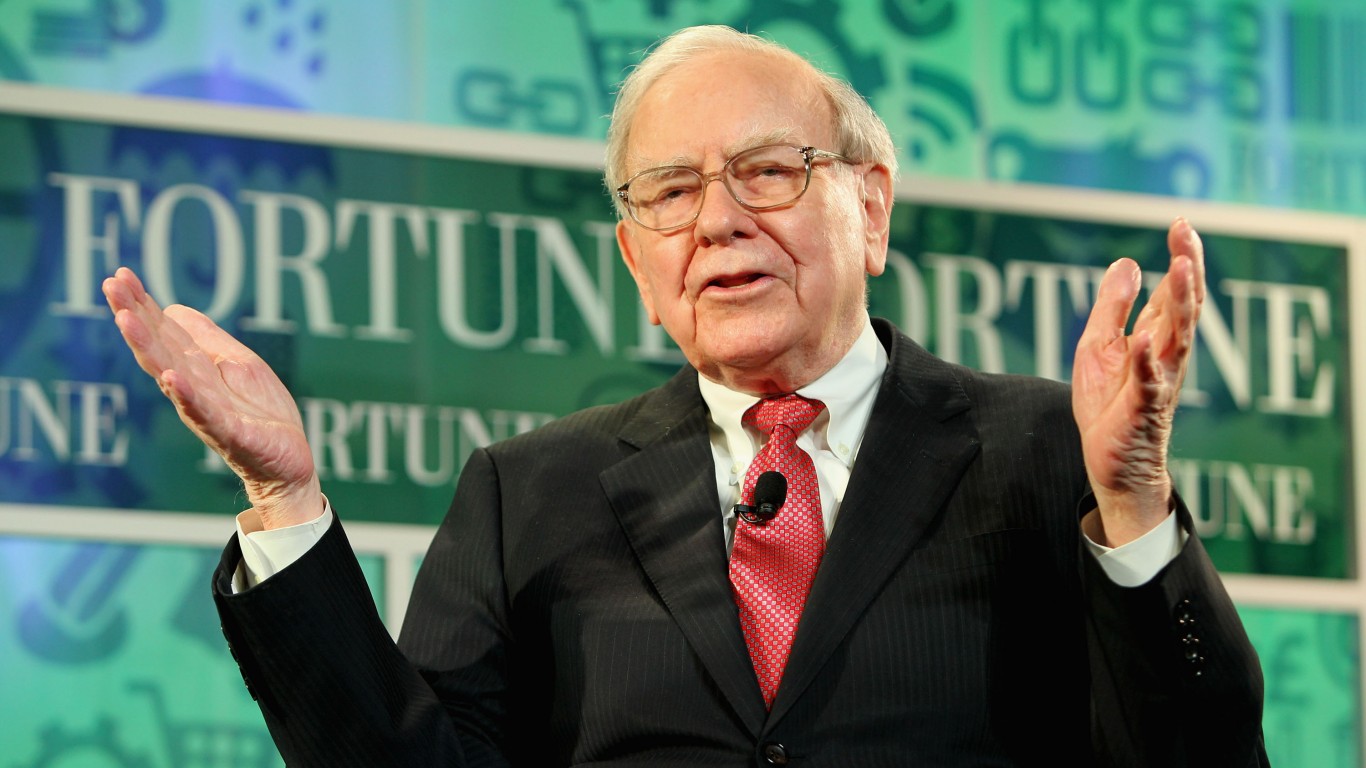
Warren Buffett described the leadership simply at an event in September: “Greg runs the company,” naming Greg Abel. Berkshire is a giant conglomerate that doesn’t need these dividends to pay its bills, so its goals and timing differ from an individual retiree’s. For your income, what matters is whether each payout is covered, growing, and supported by a sturdy balance sheet.
Apple: Berkshire’s Largest Position and a Steady Dividend Raiser
Apple (NASDAQ:AAPL | AAPL Price Prediction) sells iPhones, Macs, iPads, and wearables. On top of that device base, it runs a growing, higher-margin Services business. As of quarter-end, Berkshire reported 227,917,808 shares, making up 24.95% of the reported portfolio. The share count was unchanged from the prior filing, and the position appears in all 19 quarterly filings reviewed.
The yield is 0.31%, and the coverage is huge. Fiscal 2026 operating cash flow came to $145.10 billion[1] against capital spending of $9.04 billion, which leaves about $136.06 billion of free cash flow. Apple’s free cash flow yield of 2.68% is many times its dividend yield, and net debt is just 0.26 times EBITDA. The quarterly payout has risen every year, from $0.22 in 2021 to $0.27 today.
Bull case: Fiscal fourth-quarter revenue rose 11.7%[1] to $114.48 billion, and Services revenue reached $31.57 billion. That cash engine can keep the raises coming for a long time.
Risk: The income is small. At a P/E of 38, most of what Apple returns to shareholders comes through buybacks and share price growth, so it won’t do much to fund a retirement budget on its own.
American Express: Low Payout Ratio and Fast Dividend Growth
American Express (NYSE:AXP) issues premium charge and credit cards and runs its own merchant network. That network covers more than 190 million merchant locations. Berkshire reported 151,610,700 shares as of the quarter-end, or 15.16% of the portfolio. The count was unchanged and appears across all 19 quarters of filings.
The yield is 1.22%. Free cash flow is a poor test for a card lender, so the right metric is earnings coverage. The annualized dividend of $3.80 equals roughly 22% of the low end of raised adjusted EPS guidance of $17.60 to $17.90[2]. Credit quality is holding up too: the net write-off rate improved to 1.8%[2], and provisions fell to $1.00 billion from $1.30 billion. The quarterly dividend climbed from $0.43 in 2020 and 2021 to $0.95 now, with a raise every year in between.
Bull case: Card Member billed business rose 8%[2] to $454 billion. A low payout ratio leaves plenty of room for more double-digit raises.
Risk: Earnings depend on the consumer credit cycle. A recession would push write-offs higher and could slow dividend growth.
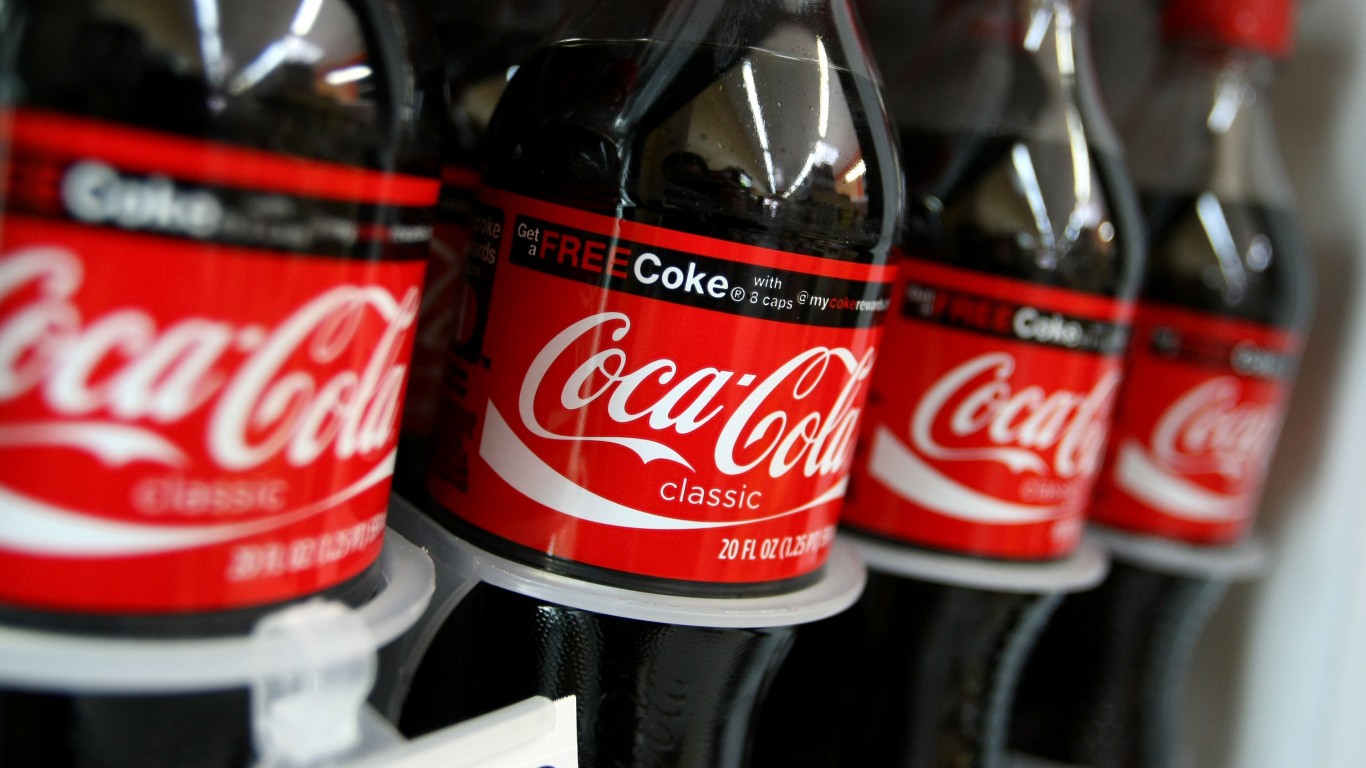
Coca-Cola: Decades of Rising Payouts With Room to Spare
Coca-Cola (NYSE:KO) sells beverage concentrates to bottlers in more than 200 countries and territories. Berkshire reported exactly 400,000,000 shares, about 9.30% of the company. The count was unchanged across the latest filing and appears in all 19 quarters of data.
The yield is 2.13%. The forward dividend of $2.12 equals about 63% of trailing EPS of $3.39. Based on the current share count, a full year of dividends costs roughly $9.12 billion, well below raised free cash flow guidance of at least $13.0 billion[3]. Interest coverage is 8.32 times. The quarterly payout has grown from $0.16 in 1999 to $0.53, with a higher rate every year from 2013 through 2026.
Bull case: Global unit case volume grew 5%[3], Coca-Cola Zero Sugar grew 16%, and the comparable operating margin expanded to 32.9%.
Risk: The stock is expensive. Shares have gained 41.24% year-to-date and trade at 78 times free cash flow. Barron’s recently noted the valuation as stretched by its own history (Barron’s), so new money is buying a lower starting yield.
Chevron: Highest Yield in the Group, Backed by Cash
Chevron (NYSE:CVX) produces oil and natural gas and refines it into fuels and petrochemicals. Berkshire reported 84,375,856 shares, about 4.32% of the company, unchanged from the prior quarter and present in all 19 quarters of filings.
At 3.17%, Chevron pays the highest yield here, and it is well covered. Third-quarter free cash flow reached $12.00 billion[4], and the 4.12% free cash flow yield sits above the dividend yield. Chevron keeps its finances conservative: debt-to-equity is 0.22, interest coverage is 13.70 times, and net debt fell $7.8 billion[4] in the quarter alone. The quarterly dividend has risen every year from $1.12 in 2018 to $1.78, which is payable on December 10.
Bull case: Brent averaged $97[4] a barrel versus $69 a year earlier, and U.S. refineries ran a record 1.09 million barrels per day[4].
Risk: Oil prices drive everything. The stock has already fallen 9.48% over the past month. A sustained drop in crude would pressure the cash cushion behind the payout.
Moody’s: Small Yield and a Long Record of Raises
Moody’s (NYSE:MCO) rates debt through Moody’s Investors Service and sells data and risk software through Moody’s Analytics. Berkshire reported 24,669,778 shares, or 3.68% of the portfolio, unchanged and present in all 19 quarters of filings.
The yield is 0.86%, and coverage is wide. At the current share count, a year of dividends costs roughly $710 million, against free cash flow guidance of $2.7 billion to $2.9 billion[5]. That leaves room for buybacks of up to $3.0 billion[5]. Total assets of $14.83 billion exceed liabilities of $11.42 billion, and the business needs little capital to run. The quarterly dividend has risen every year from $0.28 in 2014 to $1.03.
Bull case: 99%[5] of Moody’s Analytics revenue is recurring, with annualized recurring revenue of $3.69 billion. That gives the dividend a subscription-like base.
Risk: The ratings business depends on debt issuance. In the third quarter, high-yield transaction revenue fell 40%[5], and adjusted EPS of $4.14 missed expectations.
Five Long-Held Positions That Passed Every Safety Test
All five positions held their exact share counts in Berkshire’s latest filing, and all five pay dividends covered by cash flow or earnings and have raised them every year in the records reviewed here. Chevron and Coca-Cola deliver the most income today. American Express, Moody’s and Apple offer smaller yields but low payout ratios that leave room for more raises. For a retiree building a reliable income stream, this group pairs current income with dividend growth, the same mix that has kept these names in Berkshire’s portfolio quarter after quarter. If you want to borrow more of Buffett’s homework, we sorted his portfolio by valuation and pulled the seven cheapest dividend payers into a free report here.
Contact [email protected] for any questions or corrections.
Lee Jackson has covered Wall Street analysts' equity and debt research and equity strategy daily for 24/7 Wall St. since 2012. His broad, diverse career, including a stint as creative services director at an NBC affiliate in Austin, Texas, gives him unique insight into the financial industry.
Lee Jackson's journey in the financial industry spans more than 30 years, including nearly two decades as an institutional equity salesperson at Bear Stearns, Lehman Brothers, and Morgan Stanley. His career spanned pivotal sell-side Wall Street events, from the dot-com rise and bubble to the Long-Term Capital Management debacle, 9/11, and the Great Recession of 2008. This reflects his resilience and adaptability amid market volatility.
Lee Jackson’s practical financial industry experience, gained through a career at some of the biggest banks and brokerage firms, is complemented by a lifetime of writing across various platforms. This unique combination allows him to shed light on the intricacies of Wall Street in a way only someone with deep insider experience and knowledge can. Moreover, his extensive network across Wall Street continues to provide direct access for him and 24/7 Wall St., a privilege few firms enjoy.
Since 2012, Jackson’s work for 24/7 Wall St. has been featured in Barron’s, Yahoo Finance, MarketWatch, Business Insider, TradingView, Real Money, The Street, Seeking Alpha, Benzinga, and other media outlets. He attended the prestigious Cranbrook Schools in Bloomfield Hills, Michigan, and has a degree in broadcasting from the Specs Howard School of Media Arts.