CoreWeave Has the Backlog Lead, Nebius Has the Leverage Edge: Who Wins the Next $100B?

This post may contain links from our sponsors and affiliates, and Flywheel Publishing may receive compensation for actions taken through them.
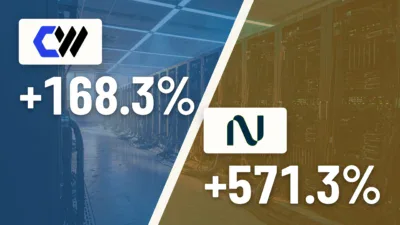
CoreWeave (NASDAQ:CRWV) and Nebius Group (NASDAQ:NBIS | NBIS Price Prediction) reported third-quarter results two days apart. CoreWeave has the bigger signed pipeline. Nebius has the cleaner funding model. The next wave of AI cloud spending should go to whichever one turns GPU clusters into steady cash flow without drowning in interest.
CoreWeave Sells Scale While Nebius Collects Cash Up Front
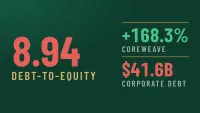
CoreWeave grew revenue 168.3%[1] to $3.66 billion, and its backlog reached about $132.5 billion. Multi-year deals with labs such as OpenAI and Meta Platforms (NASDAQ:META) give it years of visibility. CEO Michael Intrator called it “a breakout quarter.”[1] Below the operating line, net interest expense of $846 million exceeded $207 million of GAAP operating income. Lenders earned more from the quarter than shareholders did.
Nebius grew revenue 571.3%[2] to $980.8 million. About $325 million[2] of that came from a one-time asset-light deal. Pricing caused much of the gain: rates rose more than 20% per GPU-hour[2] from Q2. CEO Arkady Volozh said “Prepayments on Q3 agreements covered more than 100% of the associated capex.”[2] In effect, customers paid for the expansion.
| Business Driver | CoreWeave | Nebius |
|---|---|---|
| Power Footprint | Over 1.7 GW[1] active, 4.6 GW signed | Over 4 GW[3] signed, 5 GW[2] targeted by year-end |
| Software Layer | Forge, used by 70%[4] of new Q3 cloud customers | Token Factory managed inference |
| Funding Engine | Delayed draw term loans supported by customer contracts | Prepayments plus asset-backed financing |
Borrowed Billions Versus Customer-Funded Growth
CoreWeave has $66.219 billion of short- and long-term debt against $4.025 billion of equity. That leaves little room if pricing slips. Management points to renewals as the answer. More than 130,000 GPUs[4] come off contract in 2027 and could add close to $4 billion of annualized revenue with no new capex. If that happens, aging GPUs would lift margins instead of weighing on them.
Nebius holds $16.072 billion of debt against $12.298 billion of equity. Execution has fell behind: delays at a third-party data center in New Jersey pushed revenue into 2027, and 2026 guidance slipped to the low end of $3.0 billion to $3.4 billion[2]. Volozh is switching toward owned sites, where “our own team does everything.”[3]
Q4 2027 Breakeven Is the Date That Matters
Nebius guided to 2027 revenue of $12 billion to $13 billion[2] on $40 billion to $45 billion of capex. It expects prepayments and asset-backed financing to cover 75% to 85%[2] of that spending. I will be watching whether its owned sites in Alabama and Missouri stay on schedule ahead of the targeted Q4 2027[2] pre-tax breakeven. At CoreWeave, compare Q4 interest expense of $1.05 billion to $1.15 billion[1] with operating income.
Customer Funding Gives Nebius a Balance Sheet Edge
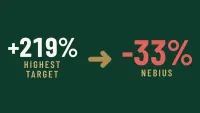
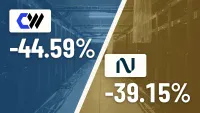
Both stocks have sold off. Nebius fell 44.55% over the past month and CoreWeave fell 22.87%. Nebius has the stronger funding position. Customers fund its growth, its balance sheet can absorb a delay, and Token Factory adds software margins on GPUs it owns.
CoreWeave offers the largest signed revenue base, and its case depends on higher prices beating interest costs. Either way, the real winners of this capex cycle may be the power, cooling, and networking suppliers feeding every one of these data centers (we covered seven of them in a free AI infrastructure report). My thinking would change if CoreWeave’s EBITDA less interest more than doubles in 2027[4], as management expects. That would show its scale can beating its debt.
Contact [email protected] for any questions or corrections.
Alex Sirois is a financial writer with experience spanning both retail and institutional investing. He has written for InvestorPlace and held roles at BNY Mellon and Bernstein, giving him a perspective that bridges Main Street portfolios and Wall Street analysis.
Alex holds an MBA from George Washington University and has built his career across multiple industries, including e-commerce, education, and translation — a breadth of experience that informs how he breaks down complex financial topics for everyday investors. His writing is conversational, actionable, and grounded in long-term, buy-and-hold investing principles.
At 247 Wall St., Alex focuses on delivering analysis that is both accessible and useful, with a clear emphasis on helping readers make more informed decisions with their money.