AST SpaceMobile Gains 2% Despite Berenberg’s Price Target Cut to $30, Rocket Lab Climbs 5% After Electron Launch; Cathie Wood-Backed SpaceX Rises 3%

This post may contain links from our sponsors and affiliates, and Flywheel Publishing may receive compensation for actions taken through them.

Space stocks are bouncing back ahead of the holiday-shortened session, and one of the more surprising gains belongs to a name Wall Street just turned conservative on. AST SpaceMobile (NASDAQ:ASTS) stock is at $26.47 in morning trading, up 2%. That move comes even after a Berenberg downgrade, and it leaves the direct-to-cell satellite company down 64% year to date (YTD).
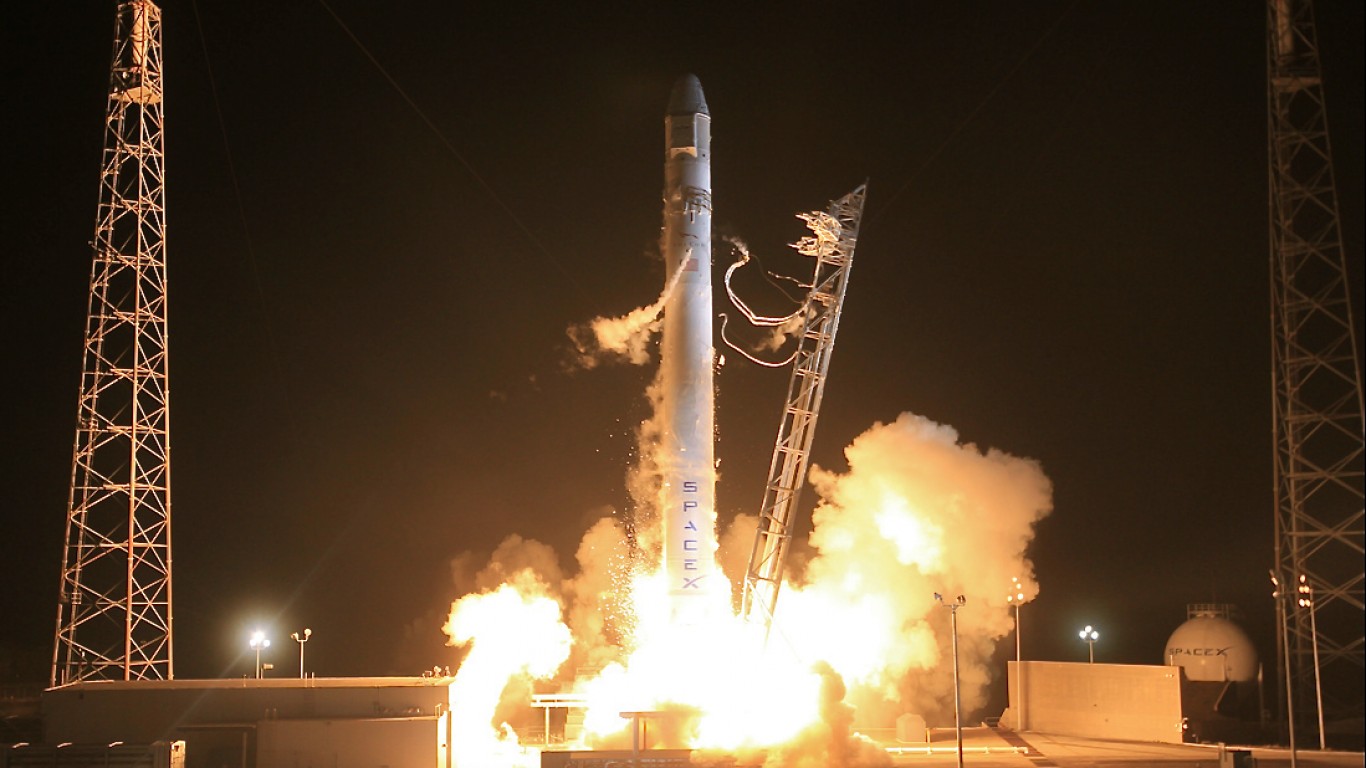
Rocket Lab (NASDAQ:RKLB | RKLB Price Prediction) stock is at $49.23, up 5%, after a successful Electron launch on Thanksgiving night. Cathie Wood-backed SpaceX (NASDAQ:SPCX) stock is at $131.10, up 3%, following a busy run of headlines. Technology is leading a broad rebound, with NASDAQ 100 futures up sharply.
The bigger question is whether Berenberg’s caution on AST SpaceMobile is a warning for the whole group, or a sign that space stocks are shaking off November’s selloff. Each of these three companies is moving for its own reason.
Berenberg Slashes AST SpaceMobile Target Over Launch Delays
Berenberg downgraded AST SpaceMobile to Hold from Buy on November 27 and cut its price target to $30[1] from $92. That 67%[1] reduction from Berenberg reflects satellite launch delays that push back the company’s revenue growth. Under its new model, Berenberg expects about 100 satellites[1] deployed by 2028, held at that level until positive free cash flow in 2030. A faster build toward 248 satellites[1] was Berenberg’s earlier expectation.
Even so, the firm still likes AST SpaceMobile’s technology and long-term prospects. Blue Origin’s New Glenn rocket is the swing factor. A successful return to flight could prompt Berenberg to revisit its rating, while another failure or long delay could add pressure.
AST SpaceMobile is trying to cut its reliance on outside launch providers with Blacklift, its own reusable rocket, backed by a $1.3 billion[2] engine supply agreement announced with its Q3 2026 results on November 9. First Blacklift launches are targeted for late 2028. On November 25, AST SpaceMobile stock bounced off a 52-week low after a filing showed director Adriana Cisneros and her family bought about $1.03 million of shares.
Rocket Lab and SpaceX Rally on Their Own Headlines
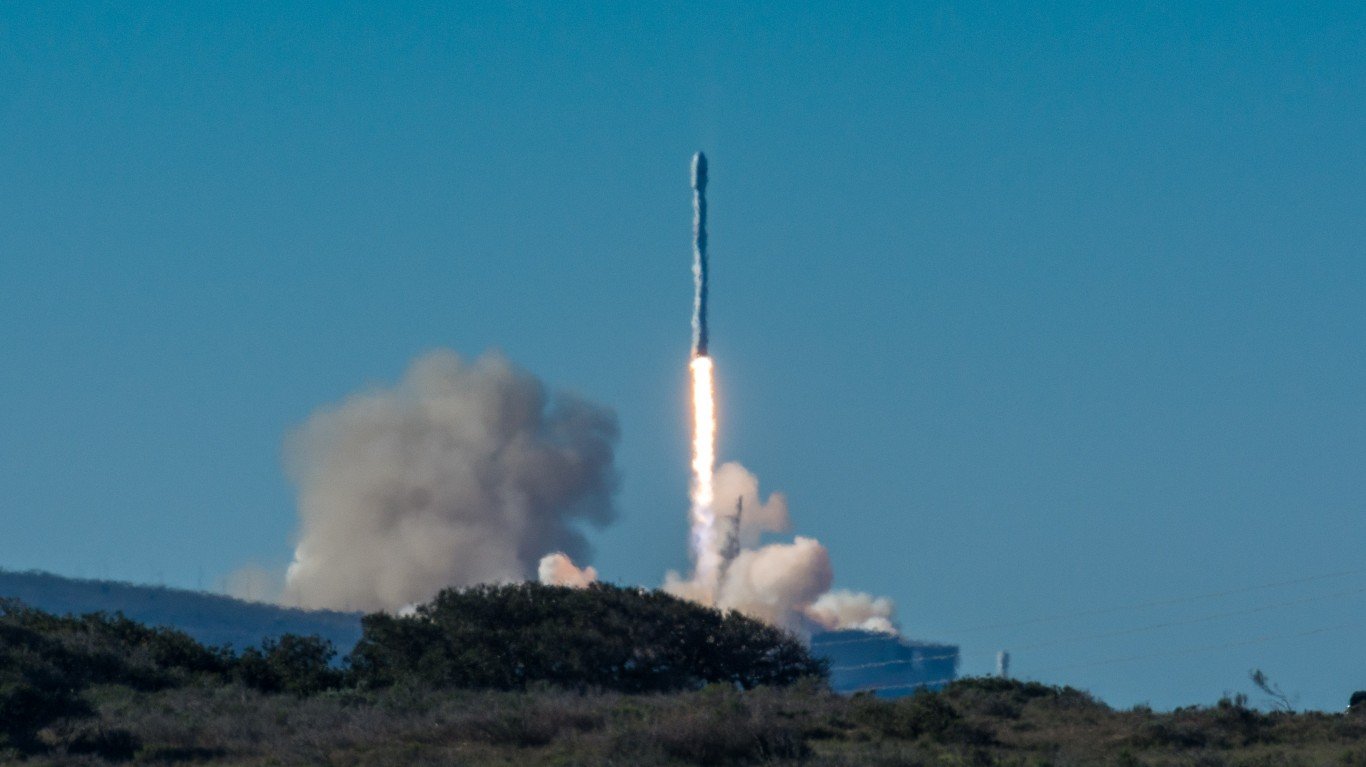
Rocket Lab stated that its Electron rocket completed its 101st mission on Thanksgiving night, November 26, carrying a StriX radar satellite for Japan’s Synspective. That launch follows Mizuho’s recent initiation of Rocket Lab at Underperform with a $40[3] price target. Despite the bounce, Rocket Lab stock is down 29% YTD.
SpaceX’s schedule was busier. The Federal Communications Commission (FCC) on November 25 cleared SpaceX’s Starmind orbital data center plan for up to one million satellites[3]. Cathie Wood’s ARK Investment Management bought 37,788[4] SpaceX shares that same day, and Baron Capital’s Ron Baron estimated a single SpaceX artificial intelligence (AI) data center could eventually earn more than $50 billion a year in rent.
For the bears, a SemiAnalysis note reported that SpaceX cut short-term rents on some small NVIDIA Blackwell clusters by 20% to 35%[5]. Gary Black of The Future Fund warned that an all-stock bid in reported merger talks with Tesla (NASDAQ:TSLA) could push SpaceX shares below $100[4].
In a more positive call, Mizuho started coverage of Intuitive Machines (NASDAQ:LUNR) at Outperform with a $15[3] price target. That split call from Mizuho on Intuitive Machines and Rocket Lab shows analysts are sorting out space names one company at a time.
How AST SpaceMobile’s Model Differs From Rocket Lab and SpaceX
AST SpaceMobile is building a space-based cellular broadband network that connects directly to ordinary, unmodified smartphones, and it sells through mobile network operators, using their shared spectrum to reach those carriers’ subscribers. That makes AST SpaceMobile’s revenue a wholesale story that depends on how quickly its satellites reach orbit.
Rocket Lab is a launch provider and spacecraft builder, so each Electron flight turns directly into revenue, while SpaceX combines launch, Starlink broadband and an AI compute business under one roof, giving it far more scale than AST SpaceMobile or Rocket Lab. Launch agreements with SpaceX and Blue Origin carry AST SpaceMobile’s BlueBird deployments, which is why delays at outside providers hit it hardest.
What Blue Origin’s Next Launch Means for AST SpaceMobile
The next test for AST SpaceMobile is whether Blue Origin’s New Glenn returns to flight successfully, the catalyst Berenberg highlighted. For their part, the bulls can point to the company’s plan for nationwide intermittent service activation in the U.S. and key markets before year-end 2026. AST SpaceMobile also maintained its full-year 2026 revenue guidance of $150 million to $200 million[2].
For the bears, AST SpaceMobile’s Q3 revenue of $42.32 million[2] missed the $46 million consensus, and law firm notices dated November 5[6] announced a securities class action against the company. Berenberg’s call hinges on that rocket. Investors may want to stay cautious until the New Glenn question resolves.
Contact [email protected] for any questions or corrections.
David Moadel is financial writer specializing in stocks, ETFs, options, precious metals, and Bitcoin. David has written well over 1,000 articles for leading online publications, helping investors understand markets, income strategies, and risk. His work has appeared in 24/7 Wall St., The Motley Fool, InvestorPlace, U.S. News & World Report, TipRanks, ValueWalk, Benzinga, Market Realist, MarketScreener, TalkMarkets, Finmasters, and others. With a master’s degree in education, David has taught at the elementary, high school, and college levels. That teaching background shapes his writing style: clear, educational, and practical. David has also built a loyal social-media audience by providing trustworthy financial content on YouTube, X/Twitter, and StockTwits.