Costco Stock Could Deliver Another Strong Year for Shareholders

This post may contain links from our sponsors and affiliates, and Flywheel Publishing may receive compensation for actions taken through them.
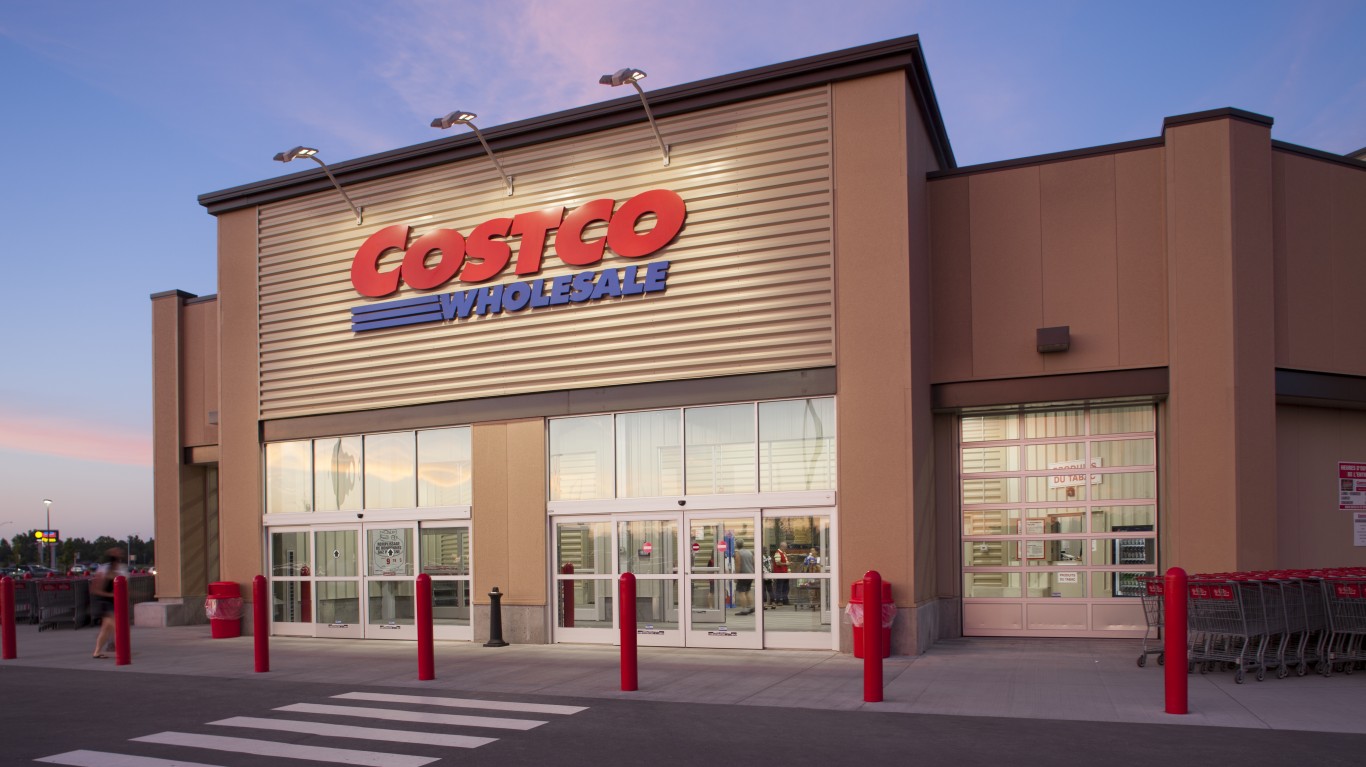
Costco (NASDAQ:COST | COST Price Prediction) makes its money selling memberships, then selling everything else close to cost. That model is performing well. Costco ended fiscal 2026 with 150.4 million cardholders[1], a U.S. and Canada renewal rate of 92.3%[2], and executive members driving 75.6%[1] of sales.
Management told analysts in September, “What we’re most excited about is quality: record high executive penetration, guest engagement, and digital engagement.”[2]
Investors have rewarded that quality. Shares are up 30.97% year-to-date and 12.07% in the past month alone, trading at $1,092.77, near a 52-week high of $1,094.75. Fiscal 2026 revenue grew 10.14%, and a fresh $30 special dividend rewarded shareholders. Let’s look at what Costco needs to do to hit $1,300 in 2027.

Wall Street’s Target Already Trails the Stock
The consensus price target of $1,085.35 implies 0.68% downside. Costco has simply beaten analysts, though the fundamentals support the optimism: 26 analysts rate it a Buy or Strong Buy.
Fiscal 2027 estimates call for EPS of $22.8381, up 10% from $20.76, on revenue of $329.7 billion (8.8% growth). Estimates have risen over the past quarter, now standing at $22.7040 versus where they were 90 days earlier, with 7 upward revisions against 1 cut in the past month.
Costco has also beaten EPS estimates six straight quarters, so forecasts may prove too low.

Here’s What It Takes for Costco to Reach $1,300
Costco trades at 48x fiscal 2027 estimates. At $1,300, that rises to 57x. By late 2027, though, investors will price fiscal 2028 EPS of $25.1336, putting $1,300 at 52x, just below today’s trailing multiple of 53x. In other words, Costco only needs to hold its premium while earnings grow.

How might Costco get to $1,300?
- Faster expansion: Costco plans 33 openings in fiscal 2027[2], including 5 relocations, and sees a path to roughly 30 new warehouses a year for five to ten years.
- Digital momentum: Digitally enabled sales exceeded $33 billion[2], and Uber Eats and DoorDash (NASDAQ:DASH) now cover the U.S.
- Operating leverage: The Q4 SG&A rate fell to 8.94%[2] from 9.21%. Management said, “At present we feel able to maintain leverage with continued top-line growth.”[2]
- Special dividend track record: Jim Cramer noted Costco outperformed in the year following each of the last three special dividend announcements.
Costco’s History Says $1,300 Is Within Reach
Getting to $1,300 would take a 19% gain, smaller than the 27.45% return of the past year. Shares have climbed 115.41% over five years and 772.95% over ten.
After the 2020 special dividend, shares gained roughly 39% in a year. After 2017, they rose roughly 12%. The worst monthly drop in a decade was about 19% in 2022, a sign of how steady this compounder has been.
Is $1,300 Realistic? Here’s My Take
Reaching $1,300 means a 19% gain in 2027. Rising estimates, a six-quarter beat run, accelerating warehouse openings, and digital growth all support it.
The challenges include duties, health care and liability costs, membership growth that has slowed for eight quarters in a row[2], and a valuation that leaves little room for stumbles. Gains like this shouldn’t be expected every year, but we’ve outlined the design for how Costco could see outsized returns in 2027.
Contact [email protected] for any questions or corrections.
Vandita Jadeja is a financial publisher with over a decade of experience writing about financial topics, including investment, savings, retirement, insurance and banking. Vandita is a Chartered Accountant who loves to debunk financial concepts for readers.
Her work has appeared on sites that include The Motley Fool, InvestorPlace, and Benzinga. She covers investing and focuses on stock picks and price prediction for 24/7 Wall St.
When not looking for the next stock investment opportunity, she can be found traveling, reading, chasing sunsets and enjoying her iced latte.