JPMorgan Says Agency Crypto Rules Can Be Overturned in Court. Is Losing the CLARITY Act Worse Than It Looks?
The Senate's failure to pass the CLARITY Act sent crypto leaders rushing toward a familiar backup plan, but JPMorgan just warned that fallback may be far more fragile than the industry wants to admit.

This post may contain links from our sponsors and affiliates, and Flywheel Publishing may receive compensation for actions taken through them.
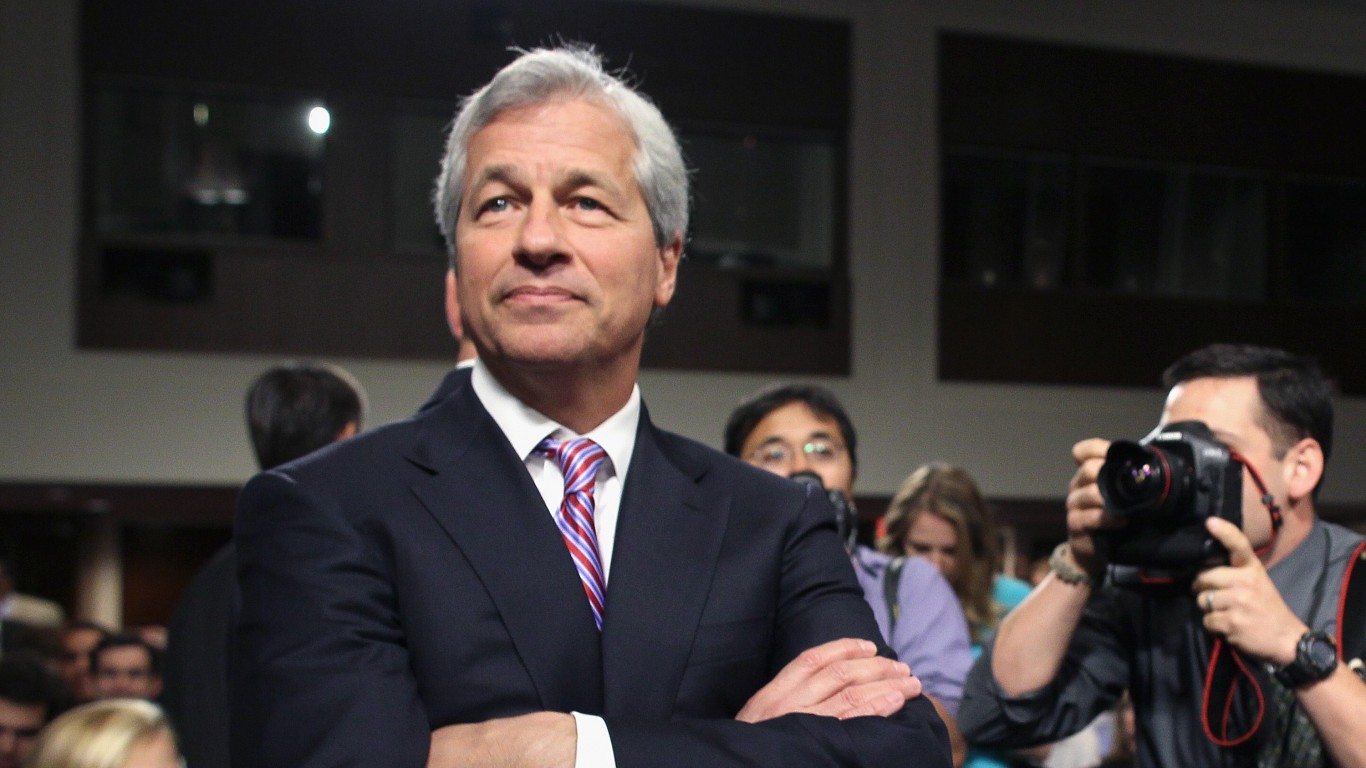
On September 15, the U.S. Senate blocked the cloture motion to advance the CLARITY Act bill, failing by 49-50 votes. In the hours and days that followed, some of the industry’s biggest names, including Atkins, Selig, Armstrong, Saylor and Garlinghouse, pointed to the same fallback. If Congress could not deliver new rules, they argued, the agencies could still provide a clearer path through rulemaking.
However, one of the top global financial services firms, JPMorgan, was less convinced. The bank told clients that a soft landing built on agency rules is not the same as one backed by legislation because rules can be changed or reversed more easily. JPMorgan still recognized that clearer agency rules could support crypto prices, but questioned how durable that clarity would be without Congress putting it into law.
What JPMorgan Said and What Bernstein Conceded
The unusual part of the September 16 reaction is that JPMorgan and Bernstein are looking at the same mechanism and disagreeing mainly over how durable it will be. JPMorgan warned that agency rules “are less durable than legislation as they can be changed or challenged in court.” Bernstein remains bullish on rulemaking under the current SEC, but described the CLARITY Act as a “fool-proof shield for the industry against future political shifts” and said its failure removes that shield even as it expects the SEC to move quickly with new rules.
If legislation would have protected the industry from future political shifts, then relying on agency rules leaves that protection in the hands of whoever controls the agencies. StoneX said the bill is effectively dead for this Congress with only a handful of Senate working days remaining. The bullish case for rulemaking therefore depends partly on how long the current SEC’s approach remains in place.
In 2025, the Commission dismissed its enforcement case against Coinbase and moved away from the previous administration’s regulation-by-enforcement approach while developing a clearer crypto framework. That is JPMorgan’s durability argument in practice because a change in leadership can change the agency’s approach without Congress passing a new law.
When that happens, investors would ask not only whether the SEC can provide clearer rules after CLARITY fails, but whether those rules would survive the next change in Washington.
What an Overturned or Changed Crypto Rule Looks Like in Practice
Ripple’s case against the SEC shows both the value and the limits of relying on regulatory action outside legislation. In 2023, Judge Analisa Torres ruled that Ripple’s institutional sales of XRP were securities transactions, while its programmatic sales on exchanges were not.
The SEC and Ripple later dropped their appeals in 2025, leaving the district court’s judgment in place. The case therefore created an important legal distinction for XRP, but it took years of litigation to get there and applies through a court ruling rather than a rule written for the entire industry.
Agency rulemaking can provide broader guidance without waiting for a case to reach court, but it carries a different risk. The SEC can change its regulatory approach when its leadership changes, as the Coinbase case demonstrated in 2025 when the Commission dismissed its enforcement action and said it was moving toward a more transparent crypto framework through its Crypto Task Force. SEC Chairman Paul Atkins has since acknowledged that legislation would provide rules durable enough to withstand future leadership changes.
Rulemaking could give the crypto industry clearer ground to operate on after the CLARITY Act setback, but a future Commission could still change the approach or a court could challenge it. Legislation would put that framework on a different legal footing, which is why the question is not simply whether the SEC can provide clarity, but how durable that clarity would be.
Which Coins Carry the Real Risk
XRP, Ethereum and Solana remain more exposed to changes in how the SEC interprets specific activities and transactions, including sales and staking. Bitcoin has fewer of those unresolved questions because its status as a digital commodity is more firmly established. That does not make Bitcoin immune to regulation, but it means a future change in SEC policy would have fewer fundamental questions to reopen.
The CLARITY Act setback therefore leaves crypto with a two-track path. Agency rulemaking can provide faster clarity, but legislation would provide greater durability. For investors looking beyond the next few months, the important question is not whether the SEC can make the rules clearer, but how much of that clarity would survive the next change in Washington.
Contact [email protected] for any questions or corrections.
Sam Daodu is a crypto analyst and the editor of 24/7 Wall St.'s Crypto Desk, where he covers Bitcoin, XRP, Ethereum, Solana and the altcoins investors search for most. His work focuses on price levels, spot ETF flows, on-chain data and the regulatory decisions that move crypto markets, written so a first-time buyer and a seasoned trader can both use it.
Sam has written about crypto professionally since 2019 and has published more than 2,000 articles. Before joining 24/7 Wall St., he wrote for crypto media outlets and Web3 companies and ghostwrote for crypto founders and token launches. His analysis is syndicated on Yahoo Finance, MSN and AOL and has been cited by other crypto news sites. He also founded MacLabs Marketing, a content and personal branding agency for crypto founders and executives.
When he isn't reading charts, Sam is usually at the gym or watching One Piece, a series he maintains has better tokenomics than most altcoins.