Which Crypto Could Be the Second to Reach a $1 Trillion Market Value?
Bitcoin alone claims the trillion-dollar throne in crypto, but one rival sits closer to that milestone than most investors realize, while the others face obstacles that could keep them out of the race for years.

This post may contain links from our sponsors and affiliates, and Flywheel Publishing may receive compensation for actions taken through them.
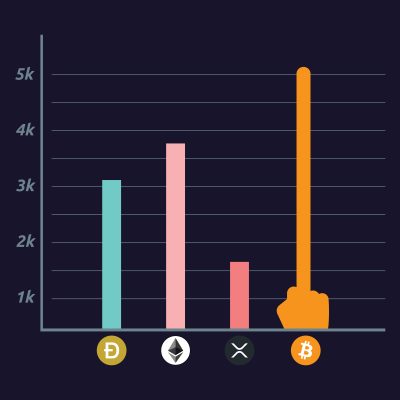
Bitcoin (CRYPTO:BTC) remains the only cryptocurrency with a market value over $1 trillion, estimated at about $1.62 trillion. This accounts for 58.0% of a total crypto market worth $2.79 trillion. No other cryptocurrency comes close.
Ethereum (CRYPTO:ETH) is trading at about $2,335 after a 12.5% decline over the past month, but it has still gained 24.6% over the last 90 days. XRP (CRYPTO:XRP) is priced at $1.30, Solana (CRYPTO:SOL) at about $101, and BNB (CRYPTO:BNB) at approximately $739.
The $1 trillion figure often comes up because it clearly sets Bitcoin apart from its rivals. So which cryptocurrency could hit that milestone next, and what price would it need to reach?
Each Coin Would Need a Record-Breaking Price to Hit $1 Trillion

A cryptocurrency’s market capitalization is calculated by multiplying its price by its circulating supply. Based on the circulating supply of each coin as of October 25, here are the prices and multiples each candidate would need to reach a $1 trillion market value:
| Coin | Market Cap | Price Needed | Multiple Needed |
|---|---|---|---|
| Ethereum | $285.2 billion | $8,186 | 3.5x |
| BNB | $97.1 billion | $7,606 | 10.3x |
| XRP | $82.1 billion | $15.79 | 12.2x |
| Solana | $59.5 billion | $1,696 | 16.8x |
Each of these prices far exceeds the cryptocurrencies’ all-time highs. For instance, Ethereum peaked at $4,946 on August 24, 2025. XRP hit a record high of $3.65 on July 17, 2025; Solana peaked at $293 on January 19, 2025; and BNB reached $1,370 on October 13, 2025.
Supply growth can influence both XRP and Solana. XRP has about 63.4 billion coins in circulation out of a 100 billion total supply, with additional coins released from Ripple’s escrow over time. Solana has 589.8 million SOL in circulation out of 636.4 million total, and the network continuously rewards validators with new SOL.
While more coins might lower the price, each needs to reach $1 trillion, and it also creates sustained selling pressure. In contrast, Ethereum has 122.2 million ETH outstanding, while BNB’s maximum supply is capped at 200 million coins.
Ethereum Requires the Smallest Increase to Reach $1 Trillion
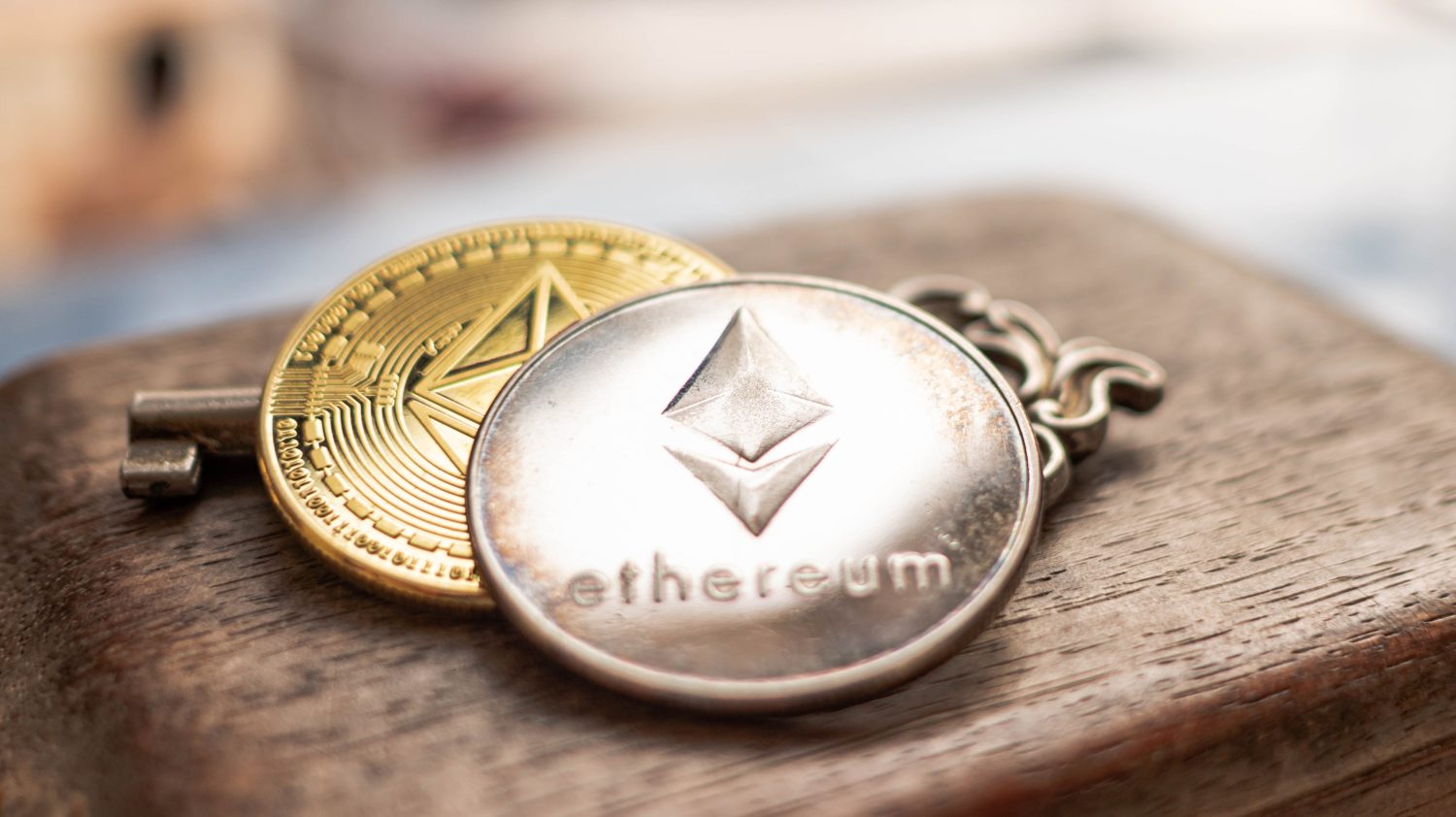
Ethereum captures 10.2% of the crypto market and needs only a 3.5x increase—the smallest multiple among the four competitors. Its growth drivers include stablecoins, tokenized funds, and ETFs, two of which have hard metrics tied to them.
A spot ETF is an exchange-traded fund that directly holds ETH, making it easier for traditional investors to gain exposure, much like a stock. As of October 22, U.S. spot Ethereum ETFs had accumulated $12.7 billion in cumulative net inflows.
However, this figure peaked at $14.0 billion on September 28, and it has since declined, with net outflows on all but two trading days from October 1 to October 22, including a notable $110.5 million outflow on October 22.
Tokenization involves placing a traditional asset, such as a bank deposit or a money market fund share, on a blockchain as a token. Notably, on October 19, JPMorgan Chase (NYSE:JPM | JPM Price Prediction) launched its JPM Coin deposit token on Ethereum for institutional clients through its Kinexys unit, marking an important addition to the stablecoin activity already taking place on the network.
BNB, XRP and Solana Need Much Bigger Gains

Following Ethereum, the remaining cryptocurrencies face larger growth requirements. BNB needs a 10.3x increase, and its demand comes primarily from Binance’s exchange operations, where BNB reduces trading fees and fuels the BNB Chain. Consequently, BNB’s potential growth is closely tied to one company’s performance.
XRP must reach a price of $15.79, significantly above its record of $3.65. The bullish argument for XRP hinges on its potential in payments and tokenization, but as of October 23, spot XRP ETFs had attracted only $1.8 billion in cumulative net inflows, with many trading days in October reporting no new flows.
Solana has the toughest climb ahead, requiring a 16.8x increase. While its speed and new institutional products support its growth potential, spot Solana ETFs totaled only $1.54 billion by October 22 and saw outflows on most trading days in October.
Which Cryptocurrency Could Be Next to Reach a $1 Trillion Market Value?
Ultimately, Ethereum stands out as the most viable candidate in the near future. BNB, XRP, and Solana need at least a tenfold increase to hit the $1 trillion mark, and ongoing supply growth complicates XRP and Solana’s prospects. Meanwhile, Ethereum’s path requires patience, as it must more than triple from about $2,335.
To reach this ambitious goal, Ethereum needs ETF outflows to reverse and push cumulative inflows above the $14.0 billion peak. Following that, ETH would have to surpass its prior all-time high of $4,946 before setting sights on the $8,186 target. Additionally, the growth of tokenized deposits like JPM Coin could drive steady on-chain demand.
If ETF outflows continue through the end of 2026 and ETH fails to exceed its current record price, reaching a $1 trillion market value seems unlikely for any cryptocurrency besides Bitcoin before 2028.
Contact [email protected] for any questions or corrections.
Sam Daodu is a crypto analyst and the editor of 24/7 Wall St.'s Crypto Desk, where he covers Bitcoin, XRP, Ethereum, Solana and the altcoins investors search for most. His work focuses on price levels, spot ETF flows, on-chain data and the regulatory decisions that move crypto markets, written so a first-time buyer and a seasoned trader can both use it.
Sam has written about crypto professionally since 2019 and has published more than 2,000 articles. Before joining 24/7 Wall St., he wrote for crypto media outlets and Web3 companies and ghostwrote for crypto founders and token launches. His analysis is syndicated on Yahoo Finance, MSN and AOL and has been cited by other crypto news sites. He also founded MacLabs Marketing, a content and personal branding agency for crypto founders and executives.
When he isn't reading charts, Sam is usually at the gym or watching One Piece, a series he maintains has better tokenomics than most altcoins.