3 Cryptos Under $0.25 That Could Stage a Comeback in 2026
Three cryptos priced under a quarter have shed up to 94% from their peaks, yet each one carries a distinct catalyst that could flip the trend before 2026 closes out. The question is whether those catalysts arrive in time or…

This post may contain links from our sponsors and affiliates, and Flywheel Publishing may receive compensation for actions taken through them.
Cardano (CRYPTO:ADA), Stellar (CRYPTO:XLM), and Arbitrum (CRYPTO:ARB) are all priced under $0.25, down 81% to 94% from their peaks. As these three affordable cryptos continued to decline through October 2026, many wonder if any of them can rebound before the year ends.
In the last month, Cardano dropped 21.73%, Stellar fell 25.94%, and Arbitrum lost 18.84%. However, each coin possesses unique factors that could encourage a comeback.
For this article, a comeback means returning to its 50-day moving average (the average closing price over the last 50 days) and then testing the 30-day high again.
Cardano Is Banking Its Recovery on Code Still Being Written

Cardano operates as a proof-of-stake blockchain, meaning coin holders lock up their assets to help secure the network and earn rewards. ADA is priced at $0.19, down 93.76% from its all-time high of $3.09, set in September 2021.
In October 2026, Cardano experienced a difficult month, hitting a 30-day high of $0.27 on October 5 before closing at a 30-day low of $0.19 on October 29. Year-to-date, ADA is down 42.11%, holding a market cap of $7.25 billion, which ranks 18th among cryptocurrencies.
Key to Cardano’s potential recovery is Midnight, a privacy-focused partner chain, meaning a separate blockchain linked to Cardano that uses zero-knowledge proofs, technology that allows verification without revealing the underlying data. MoneyGram joined the Midnight mainnet as a founding node operator in February 2026.
Another positive factor is a new programming language being developed by Charles Hoskinson, Cardano’s founder, alongside Lucas Rosa, a co-creator of Cardano’s smart contract language, Aiken. Both initiatives are promising, but their impact may take time as development continues. For ADA, the first milestone to watch for is a return to the 50-day average of $0.23, followed by a retest of the $0.27 high, while it trades below its 200-day average of $0.21.
Stellar’s Growth Hasn’t Caught Up to Its Price Yet
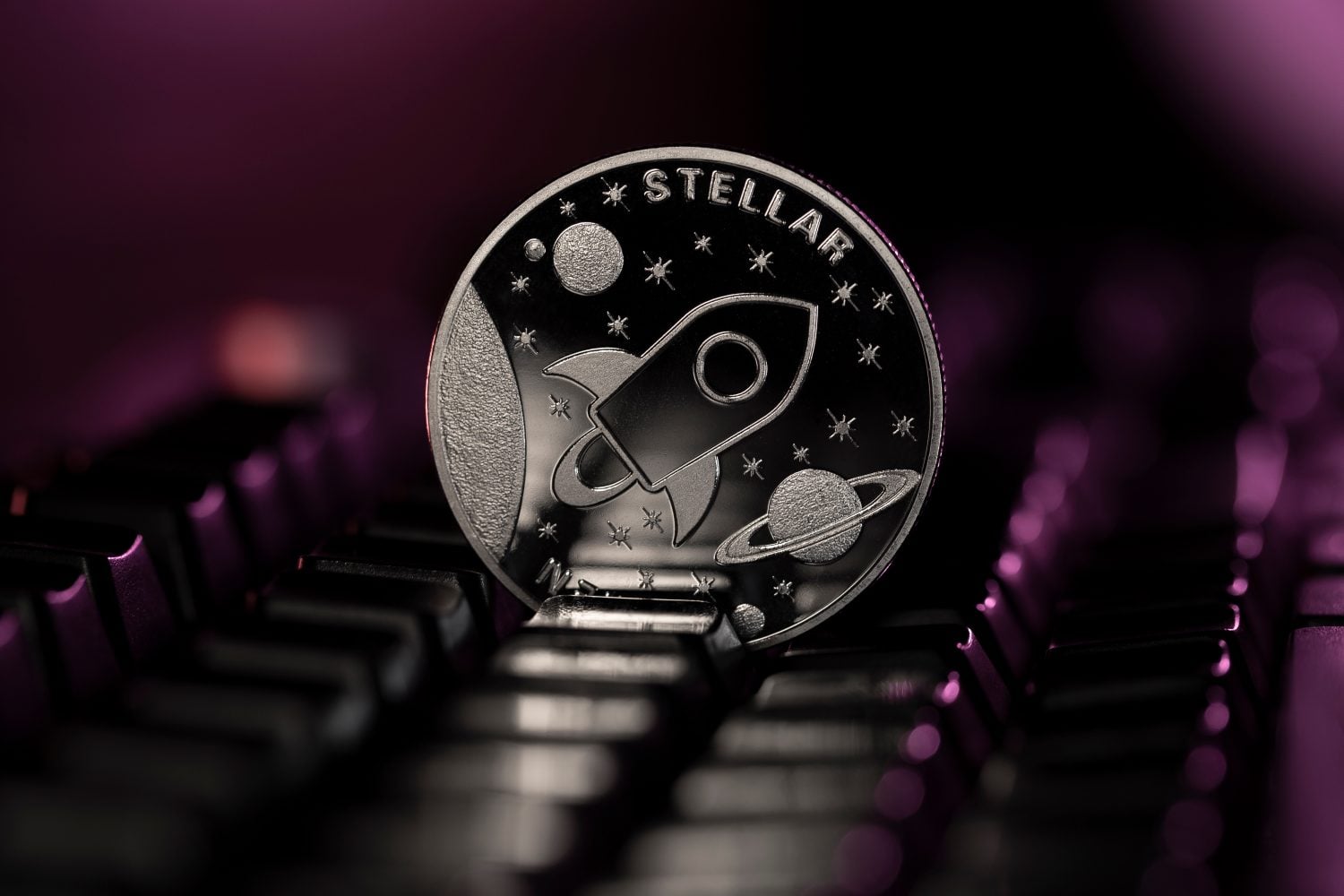
Stellar is a payment blockchain designed to facilitate efficient money transfers and tokenized asset movement across borders. XLM trades at $0.17, down 80.85% from its all-time high of $0.88, reached in January 2018.
XLM hit $0.23 on September 30, then slipped to a 30-day low of $0.16 on October 29, before still posting a 38.32% gain over the past three years, a gain Cardano and Arbitrum can’t claim.
Stellar boasts several live catalysts to support its growth. MetaMask has made Stellar a default network, simplifying access for users of one of the most popular wallets; about $1.65 billion of the SAFO tokenized fund is held on the Stellar network; and Curve, a decentralized exchange for trading stablecoins, operates on Stellar.
Despite these successes, XLM’s price hasn’t reflected the growing adoption yet. With a market cap of $5.91 billion, it ranks 19th. To turn things around, XLM could return to its 50-day average of $0.19, then rise to $0.23.
Arbitrum’s Governance Proved It Can Act in a Crisis

Arbitrum is a layer-2 network that processes Ethereum transactions off the main chain, making transactions cheaper and faster. ARB is priced at $0.16, down 93.11% from its all-time high of $2.39, achieved in January 2024. It holds a market cap of $1.14 billion, ranking 70th among cryptocurrencies.
Arbitrum has shown significant momentum, with a 108.89% rise over the last 90 days, recovering from a one-year low of $0.07 on August 15, 2026. It’s also the only one of the three that remains above its 200-day average of $0.12.
A key advantage for Arbitrum lies in its governance structure. The Security Council, a small elected group that holds emergency powers over the network, froze ether tied to the Kelp DAO exploit in April 2026. This quick action showed Arbitrum’s ability to respond effectively during a crisis, though it raised centralization concerns among some users.
Among the three coins, ARB has the most potential, but it still needs new buyers to see significant gains. The first target to watch is the 50-day average of $0.19, followed by the 30-day high of $0.21 reached on October 5.
Which Coin Has the Best Chance of Recovery?
Stellar appears to have the best opportunity for recovery, with Arbitrum in second place and Cardano last. Stellar’s catalysts are already active and measurable, and XLM has experienced the least decline among the three.
For XLM, a recovery may start with a hold above the $0.16 close from October 29, followed by a rise above $0.19 and a retest of $0.23. However, if XLM slips below $0.16, the successes from MetaMask and SAFO may not be enough to prevent further selling, pushing any recovery into 2027.
Arbitrum ranks second on its upward trend, though it still needs to entice new buyers, while Cardano ranks last with its biggest catalysts still under development. ADA closing below $0.19 could lead it down to a year-low of $0.14 reached on June 28, 2026. A close above $0.23 would provide the first positive indication that a rebound is underway.
Contact [email protected] for any questions or corrections.
Sam Daodu is a crypto analyst and the editor of 24/7 Wall St.'s Crypto Desk, where he covers Bitcoin, XRP, Ethereum, Solana and the altcoins investors search for most. His work focuses on price levels, spot ETF flows, on-chain data and the regulatory decisions that move crypto markets, written so a first-time buyer and a seasoned trader can both use it.
Sam has written about crypto professionally since 2019 and has published more than 2,000 articles. Before joining 24/7 Wall St., he wrote for crypto media outlets and Web3 companies and ghostwrote for crypto founders and token launches. His analysis is syndicated on Yahoo Finance, MSN and AOL and has been cited by other crypto news sites. He also founded MacLabs Marketing, a content and personal branding agency for crypto founders and executives.
When he isn't reading charts, Sam is usually at the gym or watching One Piece, a series he maintains has better tokenomics than most altcoins.