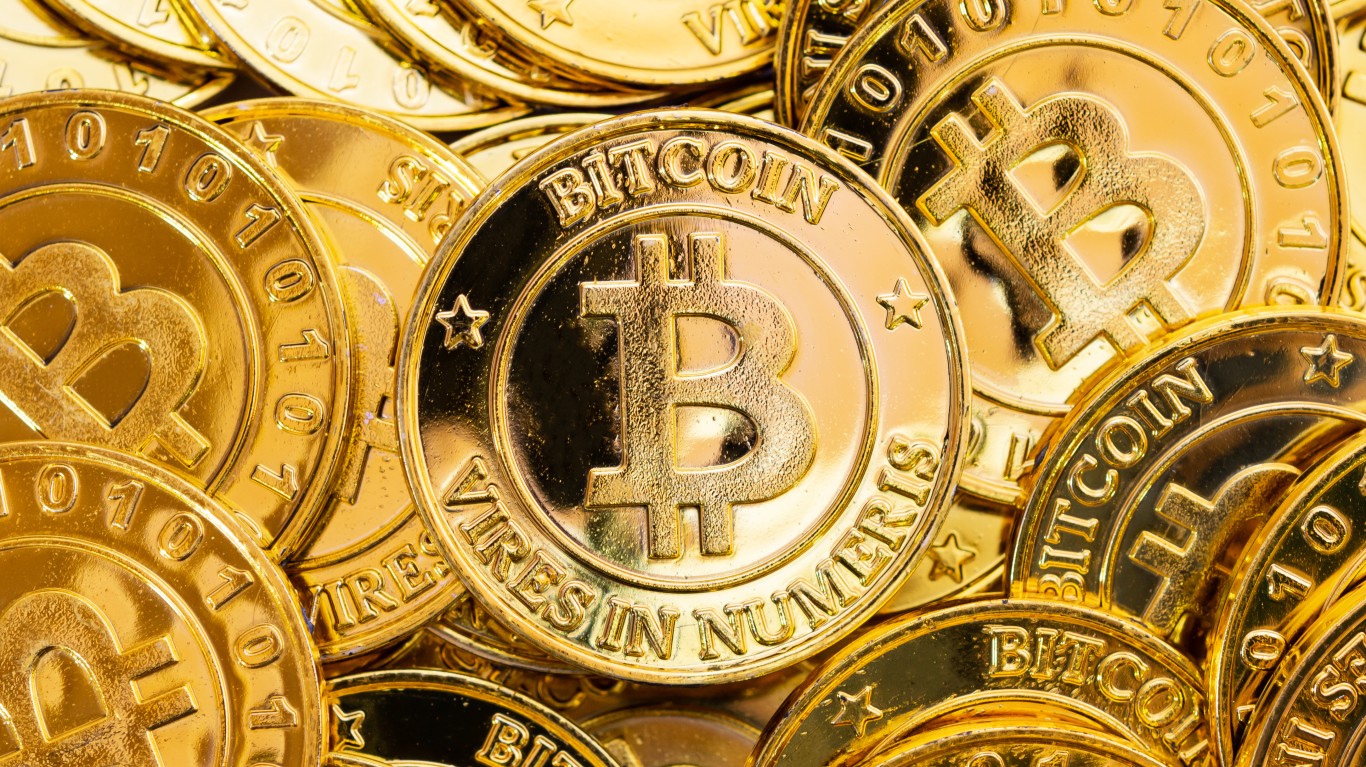
Bitcoin Fell With Tech Stocks on the Binance Hack. Is BTC Still a Safe-Haven Asset?
The Binance hack rattled crypto markets the same day disappointing tech earnings dragged the Nasdaq lower, and even gold stumbled. Three past shocks reveal a pattern in Bitcoin's behavior that raises serious doubts about its safe-haven reputation.

This post may contain links from our sponsors and affiliates, and Flywheel Publishing may receive compensation for actions taken through them.

Despite a remarkable 123.2% rise since October 31, 2023, Bitcoin (CRYPTO:BTC) had a rough day today, October 30, 2026. It dropped 3.3% within 24 hours to $77,370, falling below its lowest daily close of the past month, which was $77,838.81 on October 29, 2026.
The selloff extended beyond the crypto market. The Binance hack spooked crypto investors late on October 29, 2026, coinciding with disappointing tech earnings on the Nasdaq-100. The Invesco QQQ Trust (NASDAQ:QQQ) fell 2.5% during premarket trading, and gold, often seen as a safe haven, dipped as well. That raises a crucial question. If Bitcoin tumbles with tech stocks and gold during a market shock, can it still be considered a safe haven?
Amazon and Intel’s Earnings Dragged Tech Stocks Lower, Impacting Bitcoin

Amazon (NASDAQ:AMZN | AMZN Price Prediction) plummeted 7.3% in premarket trading to $225.96, while Intel (NASDAQ:INTC) fell 25% after the companies reported disappointing earnings. Amazon’s third-quarter figures showed a GAAP EPS of $1.89, falling short of the estimated $1.96. Despite a robust 39% increase in AWS revenue to $45.98 billion, investors were unsettled by its aggressive spending plans.
Amazon anticipates about $220 billion in cash capital expenditure for 2026, which covers investments in data centers and chips, and plans to spend even more in 2027. CEO Andy Jassy reassured analysts on October 29, 2026, that “We can fund this plan,” but Wall Street seems to want to see results first. With a P/E ratio of 34, there’s little room for missed estimates.
Since Amazon made up 4% of QQQ as of June 30, 2026, its decline weighed heavily on the overall fund. Bitcoin mirrored this downturn, falling 7.4% over the past 30 days, while QQQ dropped 5.5%. Bitcoin was already behaving like a tech stock before the selloff, and the Binance hack compounded that predictable response.
Gold Also Took a Hit, Clouding the Safe-Haven Argument

Gold didn’t escape the fallout either. Spot gold was trading at $4,057.70 on October 28, 2026, and slipped to $4,052.17 on October 29, only to fall further to $3,957.64 early today. The SPDR Gold Shares (NYSEARCA:GLD) dropped 1.5% during premarket trading and is down 8.4% year to date.
A Fear & Greed index reading of 41 shows the market is currently leaning toward fear. In such an environment, traders often sell off liquid assets to raise cash. Gold, despite its safe-haven reputation, is often sold first during a panic until buyers step back in. This comparison between Bitcoin and gold, especially on inflation, now faces a fear-driven test as both assets are shaken at once.
What Three Past Market Shocks Reveal About Bitcoin’s Response

Bitcoin has reacted to three significant shocks since 2022, two within the crypto space and one affecting the broader market. Bitcoin fell for a full month after both crypto shocks and rose after the tariff shock.
| Shock | Date | BTC Close | BTC One Week Later | BTC 30 Days Later |
|---|---|---|---|---|
| FTX collapse | November 8, 2022 | $18,579.39 | Down 9% | Down 7.3% |
| Bybit hack | February 21, 2025 | $95,956.79 | Down 12.1% | Down 10.3% |
| Tariff shock | April 2, 2025 | $82,489.24 | Up 0.1% | Up 17.5% |
| Binance hack | October 29, 2026 | $77,838.81 | Pending | Pending |
The FTX collapse had the biggest impact on market trust. Bitcoin closed at $18,579.39 on November 8, 2022, and fell 9% a week later, remaining 7.3% lower after 30 days.
The Bybit hack is the closest parallel to the Binance situation because both were exchange thefts. Bitcoin dropped 12.1% within a week and was still down 10.3% after 30 days. Gold also felt the pinch, sliding from $2,941.13 on February 21, 2025, to $2,875.52 by February 28, before climbing back to $3,023.72 on March 23, 2025.
The tariff shock played out differently. Bitcoin gained slightly after one week, up 0.1%, and surged 17.5% after 30 days. Gold initially fell from $3,113.88 on April 2, 2025, to $2,979.29 a week later, before climbing back to $3,239.65 a month later. Bitcoin struggled for a full month during both crypto-related shocks, while the market-wide tariff panic resolved faster.
Bitcoin’s Behavior During Market Crises Reflects Tech Stock Trends
Bitcoin behaves like a tech stock when a shock hits, making its safe-haven status hard to assess in times of fear. It still holds above its 200-day moving average of $73,106.51, even though it trades 38.6% below its all-time high of $126,080 from October 6, 2025.
The tariff shock is one example of a rapid recovery, and it came after the broader market stabilized; stocks have historically outperformed Bitcoin over longer stretches, with QQQ delivering a 496.2% return over ten years. If Binance reopens withdrawals smoothly and tech stocks stabilize after earnings season, Bitcoin could follow the same recovery pattern; if the hacker starts selling stolen coins instead, the month-long decline after the Bybit hack could repeat.
Contact [email protected] for any questions or corrections.
Sam Daodu is a crypto analyst and the editor of 24/7 Wall St.'s Crypto Desk, where he covers Bitcoin, XRP, Ethereum, Solana and the altcoins investors search for most. His work focuses on price levels, spot ETF flows, on-chain data and the regulatory decisions that move crypto markets, written so a first-time buyer and a seasoned trader can both use it.
Sam has written about crypto professionally since 2019 and has published more than 2,000 articles. Before joining 24/7 Wall St., he wrote for crypto media outlets and Web3 companies and ghostwrote for crypto founders and token launches. His analysis is syndicated on Yahoo Finance, MSN and AOL and has been cited by other crypto news sites. He also founded MacLabs Marketing, a content and personal branding agency for crypto founders and executives.
When he isn't reading charts, Sam is usually at the gym or watching One Piece, a series he maintains has better tokenomics than most altcoins.