AI Just Minted $10 Trillion and You Own None of It. These 4 ETFs Put You in the Game
The numbers behind the artificial intelligence boom have stopped feeling abstract. AI capital spending is now propping up large portions of U.S. economic growth, hyperscalers are signing multi-year power contracts, and a handful of chipmakers have added trillions in market…

This post may contain links from our sponsors and affiliates, and Flywheel Publishing may receive compensation for actions taken through them.

The numbers behind the artificial intelligence boom have stopped feeling abstract. AI capital spending is now propping up large portions of U.S. economic growth, hyperscalers are signing multi-year power contracts, and a handful of chipmakers have added trillions in market value while you watched from the sidelines. If that sounds painfully familiar, four exchange traded funds will get you off the bench: Invesco QQQ Trust (NASDAQ:QQQ), VanEck Semiconductor ETF (NASDAQ:SMH), Global X Robotics & Artificial Intelligence ETF (NASDAQ:BOTZ), and iShares Expanded Tech-Software Sector ETF (NASDAQ:IGV). Each one targets a different layer of the AI stack so you do not have to pick the single winning stock to participate.
Here is the problem you are trying to solve. The mega caps that minted that wealth trade at valuations that make single-name buying feel like jumping in at the top. You want diversified exposure, you want to keep costs low, and you want a portfolio that captures the chips, the software, the platforms, and the robots without paying a hedge fund to assemble it. These four funds do that job.
QQQ: The Default Way to Own Big Tech
QQQ tracks the Nasdaq-100, which means it is effectively a basket of the largest non-financial companies driving AI platform development. Its expense ratio sits at 0.18%, keeping fund-level costs minimal for a core holding. The fund is up 17.87% year to date and 32.11% over the trailing year, with a ten year return of 569.95%. For an investor who feels late to the AI party, QQQ is the foundation: cheap, liquid, and already loaded with the companies generating the AI cash flows.
SMH: The Picks and Shovels
If QQQ is the platform layer, SMH is the foundry. The fund concentrates on the chipmakers and equipment suppliers building the silicon every large language model runs on. Top holdings include AMD at 10.33%, Broadcom at 9.57%, Micron at 9.39%, Taiwan Semiconductor at 8.75%, and NVIDIA at 8.4%, with semiconductor equipment names like ASML, Lam Research, and Applied Materials rounding out the book. The expense ratio is 0.35%. Performance has been the standout of this group: up 75.49% year to date and 127.69% over the past year. That is the price of being closest to the AI capex cycle, both on the way up and, eventually, on the way down.
BOTZ: The Physical AI Bet
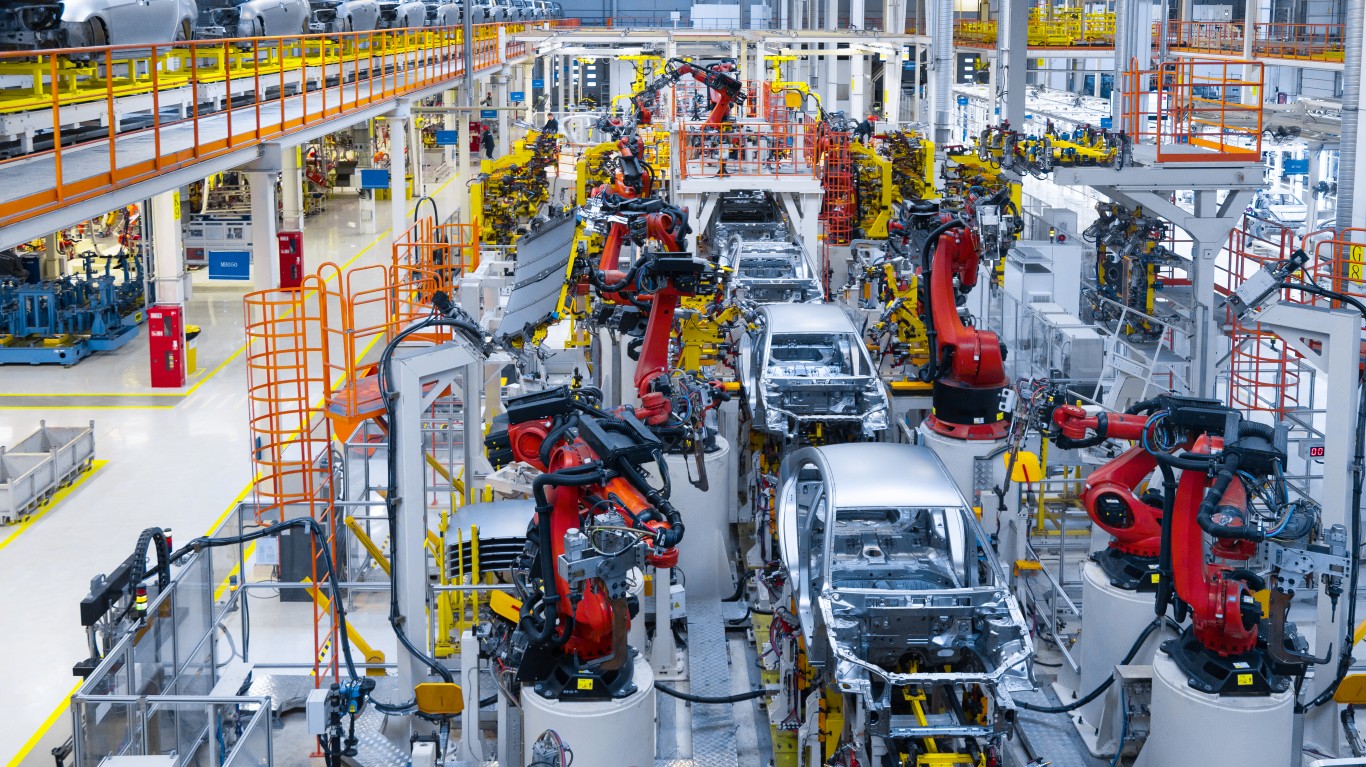
BOTZ is where AI leaves the data center and shows up in factories, surgical suites, and warehouses. The fund holds about $3.54 billion in net assets across global automation leaders. Top weightings include ABB at 10.50%, NVIDIA at 9.95%, FANUC at 9.69%, Keyence at 6.37%, and Intuitive Surgical at 5.81%. Roughly a third of the portfolio sits in Japanese industrial automation names, which gives you exposure most U.S. brokerage accounts cannot easily reach directly. Year to date the fund is up just 1.74%, and the one year return is 13.84%. Slower than SMH, yes, and that is the point. You are buying the next leg of the theme, humanoid and industrial robotics, while it is still cheap relative to the chip names.
IGV: Software, on Sale
IGV holds the application and infrastructure software companies that turn raw compute into revenue. The expense ratio is 0.39%. The fund is down 14.89% year to date and 16.54% over the trailing year, which is the news. Software has lagged badly as investors questioned how quickly AI revenue actually shows up in subscription line items. The ten year return is still 331.72%. For a buyer who believes AI eventually monetizes through software margins, IGV is the part of the AI trade that is not priced for perfection.
The Real Trade-Off
None of these funds are cheap on a fundamental basis, and three of the four are heavily correlated. SMH alone fell 5.52% in the past week, a reminder that concentrated AI exposure cuts both ways. Correlation, sizing, and the recent IGV drawdown are the variables that determine whether this basket behaves like diversification or like one concentrated bet. The AI wealth creation of recent years was not a straight line, and future returns will not be either.
Contact [email protected] for any questions or corrections.
I am a long time investor and student of business, and believe finding good companies that can become great investments is the best game on earth. After 20 years of writing and researching the public markets it is clear that individuals have never had more tools and information to take control of their financial lives. From ETFs and $0 commissions to cryptos and prediction markets there has never been a greater democratization of access to investing.
I write to help people understand the investments available to them so they can make the best choice for their portfolio, whether they're starting out or looking for income in retirement.