Why Smart Money Is Quietly Swapping VGT for Its Nearly Identical, Cheaper Twin
Fidelity runs a tech ETF that shadows VGT tick for tick at a lower fee, yet financial advisors quietly steer clients away from making the switch. The reason has nothing to do with performance.

This post may contain links from our sponsors and affiliates, and Flywheel Publishing may receive compensation for actions taken through them.

Vanguard Information Technology ETF (NYSEARCA:VGT) offers simple exposure to American tech at minimal cost. But Fidelity’s near-clone undercuts VGT on fees while tracking essentially the same large-cap US tech universe. If you hold VGT in a taxable account, the swap math is more complicated than the fee gap suggests.
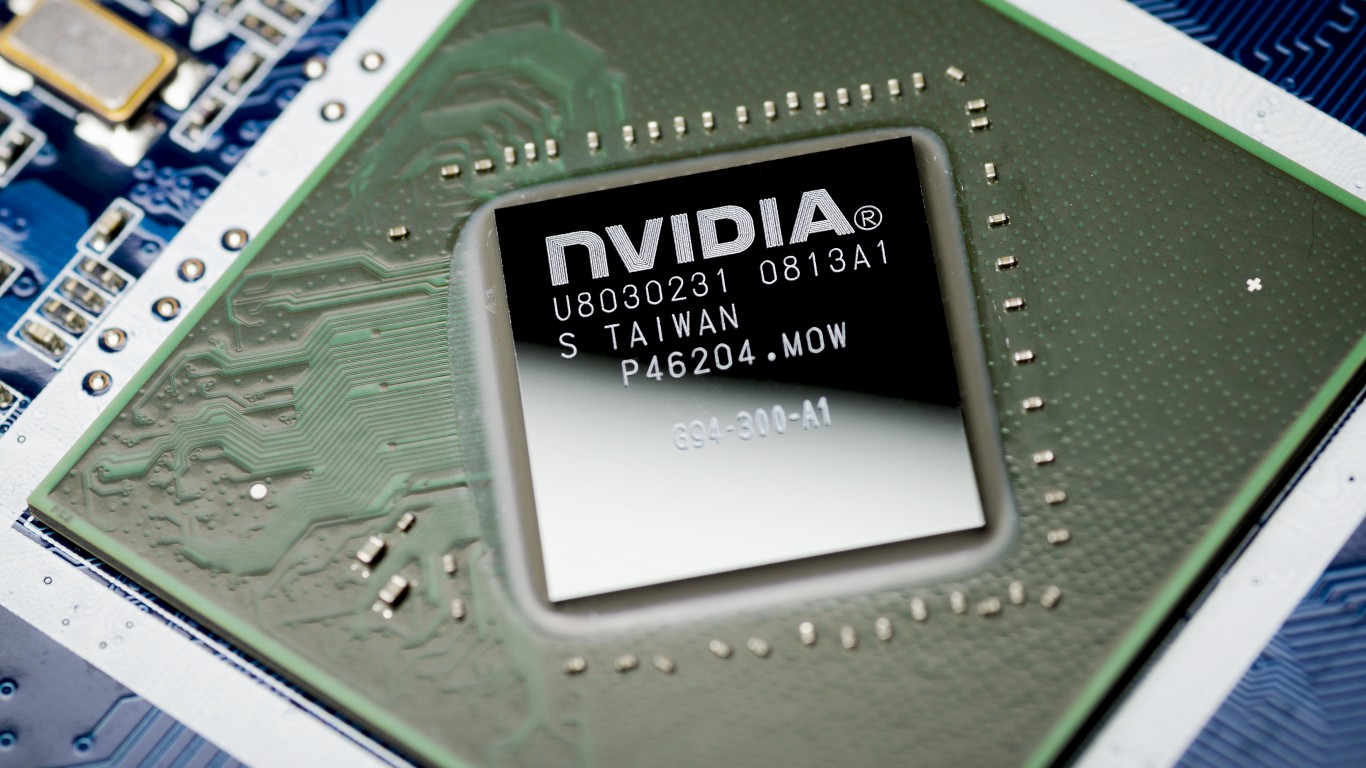
VGT and Fidelity MSCI Information Technology Index ETF (NYSEARCA:FTEC) both anchor your portfolio to US information technology, with a heavy tilt toward the top. VGT carries roughly 98.5% tech exposure with about 54% of assets sitting in its top ten holdings, even though it owns 425-plus securities. FTEC is built on the MSCI IT index and lands in the same neighborhood. Its top ten accounts for roughly 58% of the fund, with NVIDIA (NASDAQ:NVDA | NVDA Price Prediction) at 17%, Apple (NASDAQ:AAPL) at 15.8%, and Microsoft (NASDAQ:MSFT) at 8.6%. Same three horses, same order, similar weights.
The return engine is a bet on the AI capex cycle and the balance sheets of six or seven mega-caps. Goldman Sachs’ 2026 outlook frames the market’s current state as an “uneasy equilibrium” where AI capex is masking underlying economic weakness, and Morningstar warns that the top 10 US stocks now account for over one-third of the market, up from 18% a decade ago. When you buy either fund, you intentionally lean into that concentration.
Does the Fee Gap Actually Matter
VGT charges an expense ratio of 0.09%. FTEC sits at roughly 0.084%. For a $100,000 position, that difference is roughly $6 per year. What makes FTEC interesting is that tracking has kept pace at a slightly lower cost. Over the past year, VGT returned 41% against FTEC’s 41%. Year to date, VGT is up 26%, and FTEC is up 26%. Over five years, VGT gained 140% versus FTEC’s 142%. Over ten years, VGT edges ahead at 831% against FTEC’s 815%. Different index methodologies produce tracking noise around the same underlying result.
Income is a wash. FTEC’s annualized forward payout is $1.156, and VGT’s recent quarter came in at $0.1384, following a March distribution of $0.7438. Both funds run yields well under 1%. Nobody buys tech-sector ETFs for the dividend.
The Swap Comes Down to Tax Consequences
In a Roth IRA or 401(k), rotate from VGT to FTEC and pocket the fee savings. In a taxable brokerage account with a long-held VGT position, you are likely sitting on years of long-term capital gains. Realizing those gains to save six basis points a year is a bad trade. The IRS check will dwarf a decade of fee savings.
The bigger risk in either fund is one both share equally. FTEC holds NVIDIA, Apple, and Microsoft at roughly 40% combined, and VGT’s top-heavy structure is similar. A serious drawdown in two or three names hits either portfolio the same way. European “tech sovereignty” policy, an AI capex slowdown, or a mega-cap earnings miss are risks you cannot diversify away by switching tickers.
Who Should Own Which
For a new tax-advantaged position, FTEC wins on price and delivers the same exposure. For an existing VGT holding sitting on years of gains, stay put. The fee arbitrage is real but small, and the tax bill from selling an appreciated position undoes it many times over. If you find yourself asking whether you should own a fund that is nearly 40% semiconductors and roughly 40% concentrated in three names, that is the actual question about whether or not this is a fit for your portfolio.
Contact [email protected] for any questions or corrections.
Omor Ibne Ehsan is a writer at 24/7 Wall St. He is a self-taught investor with a focus on growth and cyclical stocks that have strong fundamentals, value, and long-term potential. He also has an interest in high-risk, high-reward investments such as cryptocurrencies and penny stocks.