The US Military’s Most Expensive Weapons Programs Right Now
The U.S. Department of Defense recently released details related to its budget in fiscal 2026. Totaling nearly $962 billion, the proposed annual budget is the largest in Defense Department history, and up 11.6% from the fiscal 2025 budget. While a…


The U.S. Department of Defense recently released details related to its budget in fiscal 2026. Totaling nearly $962 billion, the proposed annual budget is the largest in Defense Department history, and up 11.6% from the fiscal 2025 budget. While a large share of U.S. military spending goes toward benefits and compensation for military and defense personnel, 40% is earmarked for procurement, as well as research, development, testing, and evaluation of weapons and materiel.
According to a newly published report from the Under Secretary of Defense, the Pentagon has allocated nearly $170.8 billion for weapons programs alone in fiscal 2026 — more than double the entire annual military budget of countries like France, Israel, and the United Kingdom, according to recent estimates. The report includes about 87 separate line items for weapons development and procurement, 40 of which each cost more than $1 billion.
Using data from DOD’s annual budget request, 24/7 Wall St. identified the U.S. military’s most expensive weapons programs in 2026. We only considered weapons programs with a projected cost of at least $1 billion in the coming fiscal year. All supplemental data is also from the DOD’s report.
The weapon systems on this list include aircraft, missiles and munitions, battle tanks, surface ships and submarines, missile defense systems, space-based systems, and communication and intelligence technology. The costs listed reflect estimates for procurement, research and development, or both.
Cumulatively, the weapons systems on this list alone are expected to cost over $149 billion. The largest share of these investments — nearly $60 billion — will go to the U.S. Navy or Marine Corps. Another $50.9 billion is allocated for the Air Force or Space Force, $7.8 billion for the Army, and $31.4 billion for weapons to be jointly used by different service branches.
One of the most notable changes evident in the coming year’s defense budget is the $40 billion marked for use by the U.S. Space Force — a more than 30% increase from 2025. This money will cover several weapons systems on this list, including space-based missile-warning and communications satellites.
Still, while the Space Force — the newest branch of the U.S. military — is set to expand significantly in 2026, the latest DOD budget request also shows that the Pentagon is not abandoning more traditional, 20th-century weapons. This list of billion-dollar weapons also includes battle tanks, fighter jets, bombers, and naval destroyers.
These are the U.S. military’s most expensive weapons programs in 2026.
Why It Matters
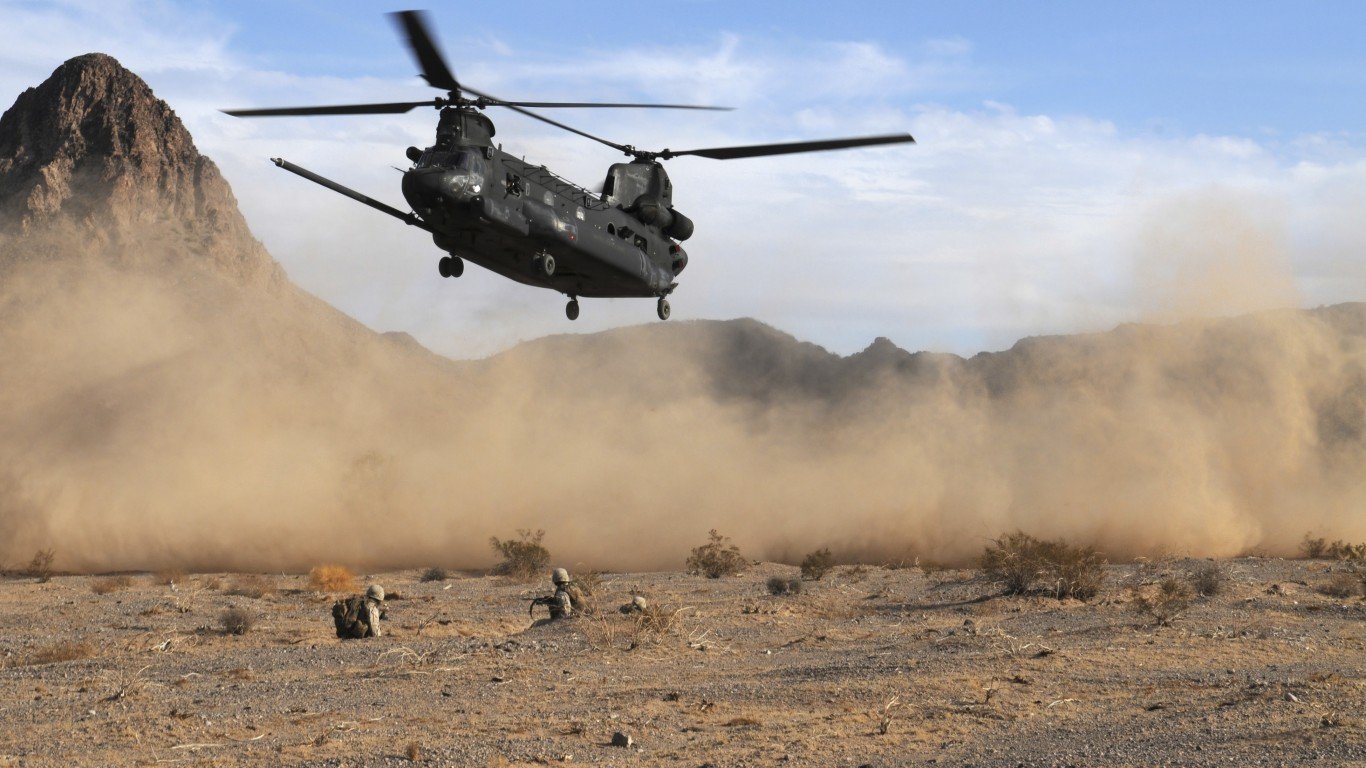
The U.S. defense budget is by far the largest in the world, surpassing that of the next nine highest-spending countries combined — including China, Russia, Germany, and the United Kingdom. While the bulk of the U.S. military budget goes toward immediate needs — such as operations, maintenance, and personnel — more than a third is allocated to more forward-looking initiatives. To maintain credible deterrence and the capability to respond to crises anywhere in the world, the U.S. will invest billions in weapons development and procurement programs in fiscal 2026 — including 40 programs that will each cost over $1 billion.
40. LRSO Long Range Stand-Off Weapon
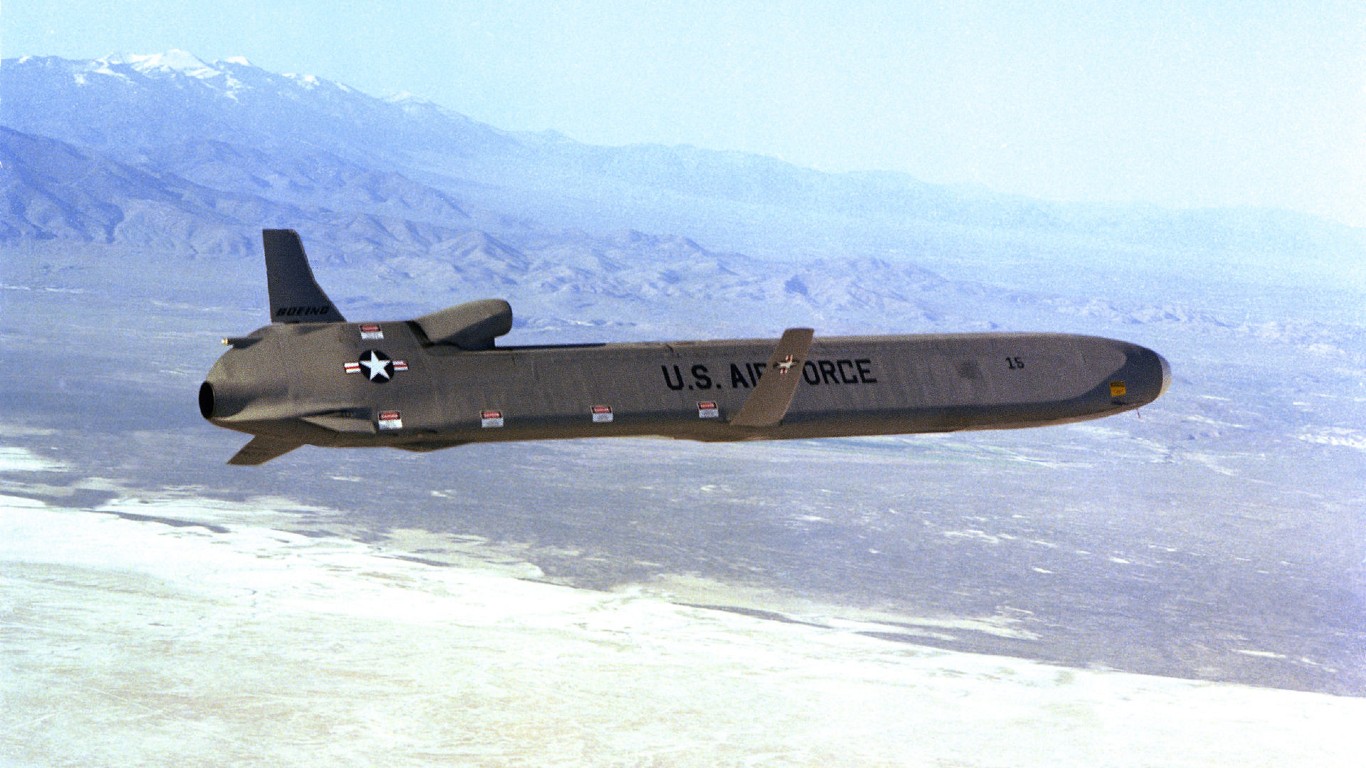
- Procurement budget for fiscal 2026: $1.1 billion
- Change in funding, FY 2025 to FY 2026: +30.6% (+$246.3 million)
- Weapon description: Air defense-resistant nuclear cruise missile
- Program category: Missiles and Munitions
- Program service branch: U.S. Air Force
- Primary contractor(s) include: RTX
39. JASSM Joint Air-to-Surface Standoff Missile
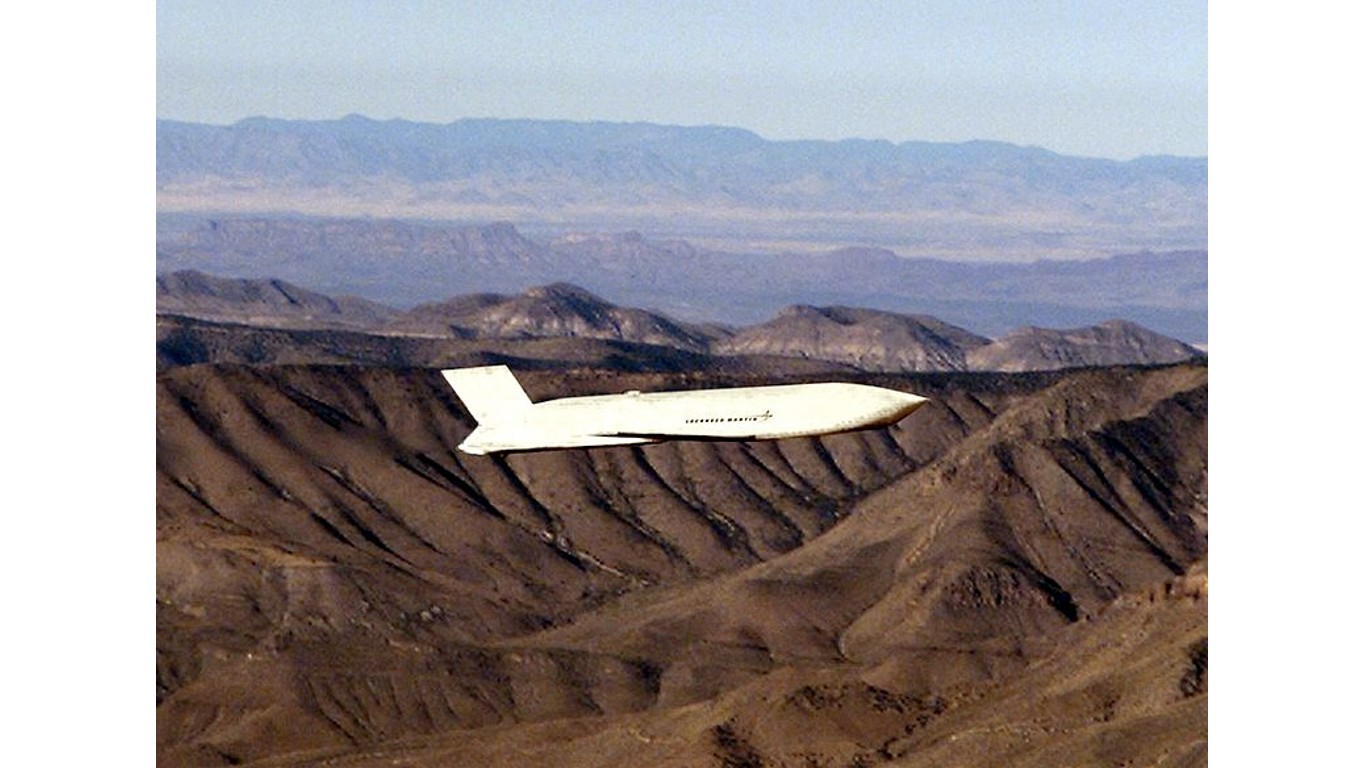
- Procurement budget for fiscal 2026: $1.1 billion
- Change in funding, FY 2025 to FY 2026: +4.8% (+$48.5 million)
- Weapon description: Precision cruise missile carried by bomber and fighter aircraft
- Program category: Missiles and Munitions
- Program service branch: Joint Service
- Primary contractor(s) include: Lockheed Martin
38. MQ-25 Stingray
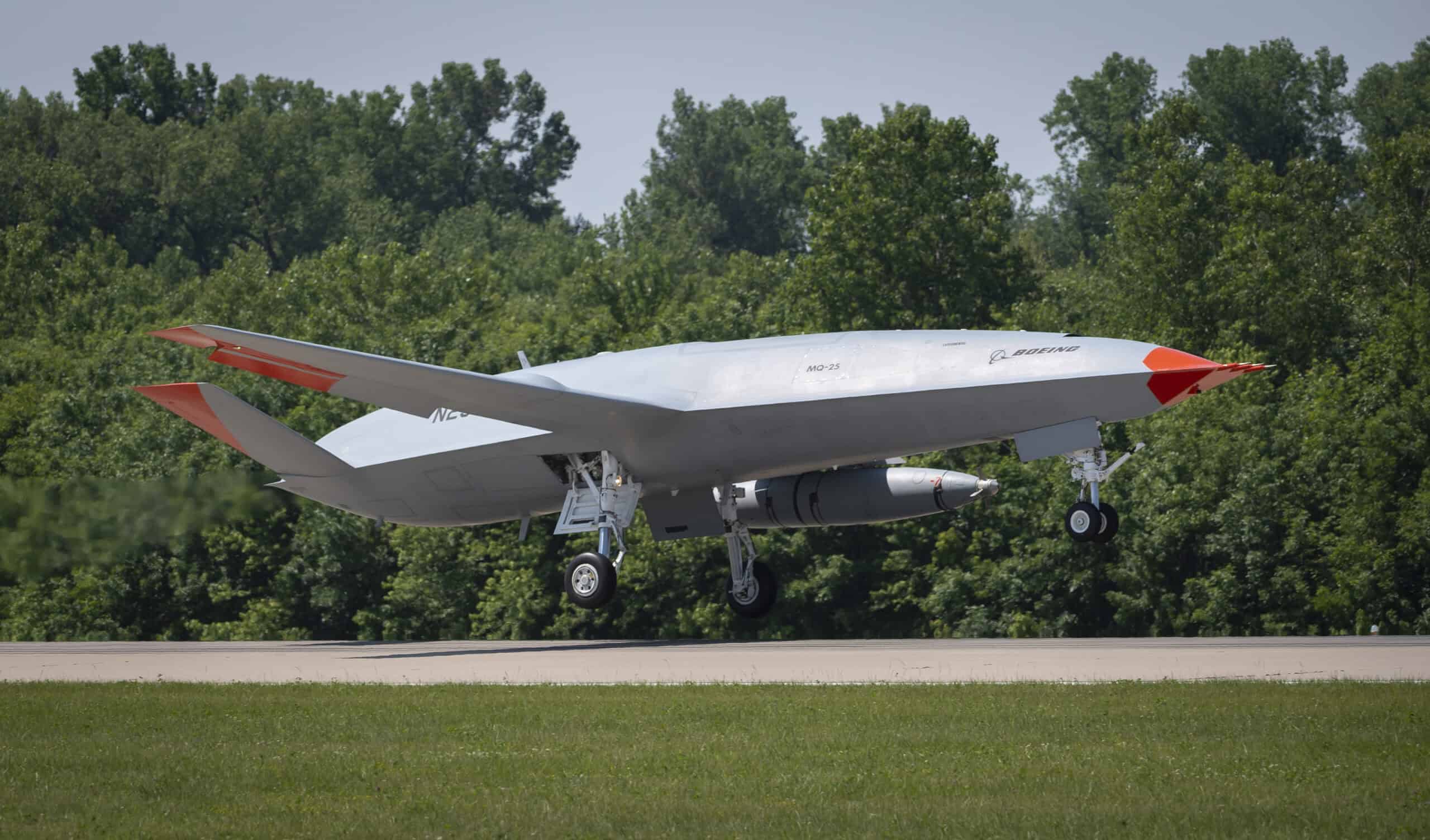
- Procurement budget for fiscal 2026: $1.1 billion
- Change in funding, FY 2025 to FY 2026: +168.7% (+$716.9 million)
- Weapon description: Unmanned aerial refueling, intelligence, reconnaissance, and surveillance drone
- Program category: Aircraft and Related Systems
- Program service branch: U.S. Navy / U.S. Marine Corps
- Primary contractor(s) include: Boeing, Lockheed Martin
37. LRASM Long Range Anti-Ship Missile
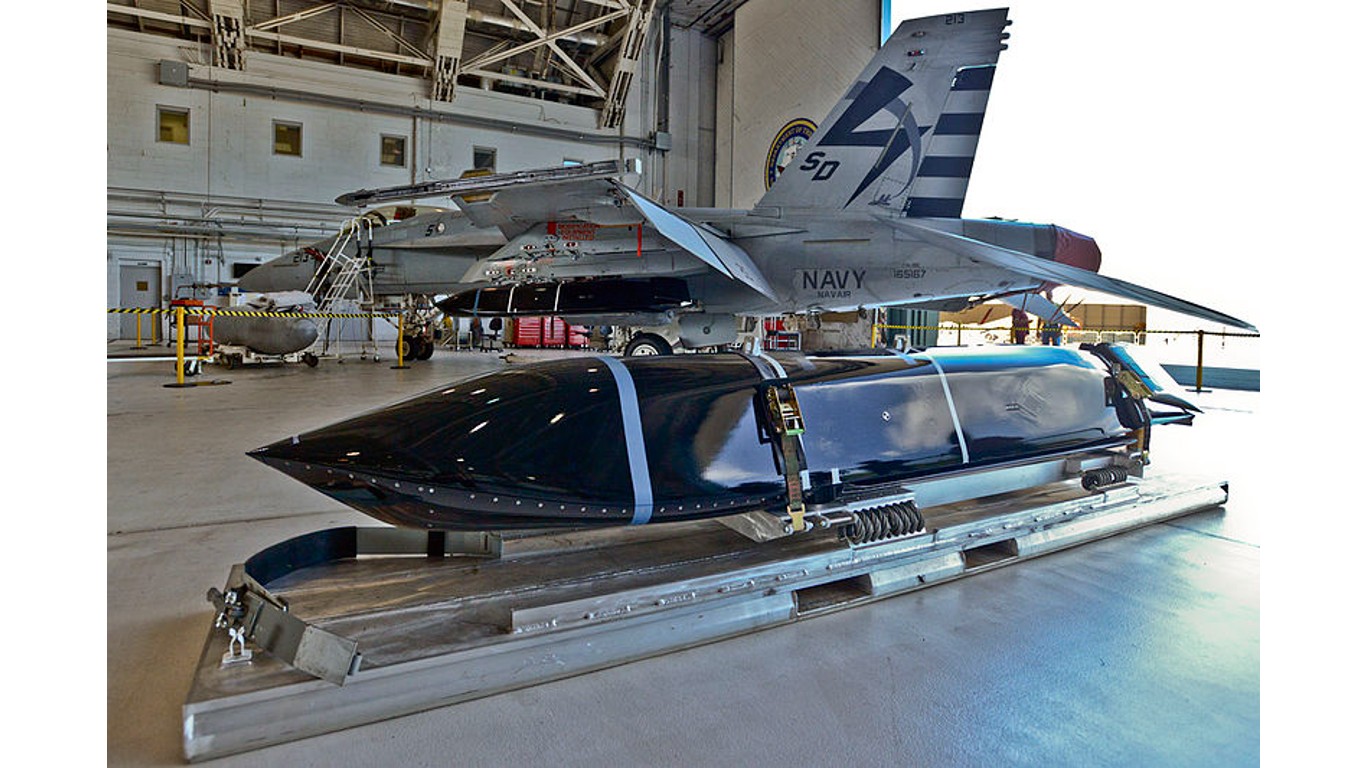
- Procurement budget for fiscal 2026: $1.2 billion
- Change in funding, FY 2025 to FY 2026: +20.8% (+$201.0 million)
- Weapon description: Precision guided anti-surface ship missile
- Program category: Missiles and Munitions
- Program service branch: Joint Service
- Primary contractor(s) include: Lockheed Martin
36. FLRAA Future Long-Range Assault Aircraft

- Procurement budget for fiscal 2026: $1.2 billion
- Change in funding, FY 2025 to FY 2026: -0.8% (-$10.1 million)
- Weapon description: Next-generation vertical-lift assault/utility aircraft
- Program category: Aircraft and Related Systems
- Program service branch: U.S. Army
- Primary contractor(s) include: Bell Helicopter Textron
35. SM-6 Standard Missile-6
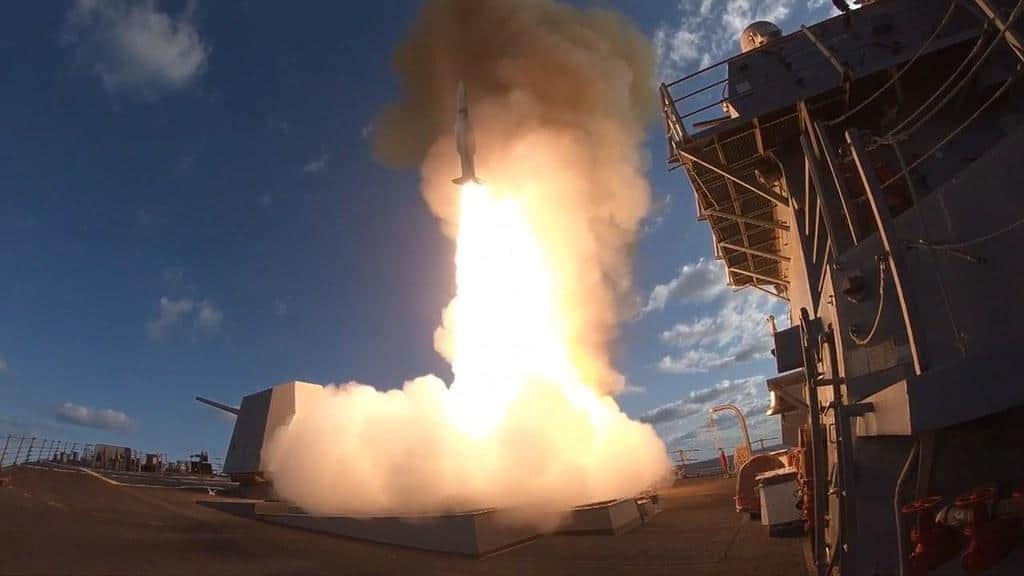
- Procurement budget for fiscal 2026: $1.3 billion
- Change in funding, FY 2025 to FY 2026: +28.5% (+$279.8 million)
- Weapon description: Maritime, surface-to-air missile carried by cruisers and destroyers
- Program category: Missiles and Munitions
- Program service branch: U.S. Navy
- Primary contractor(s) include: RTX
34. GMLRS Guided Multiple Launch Rocket System
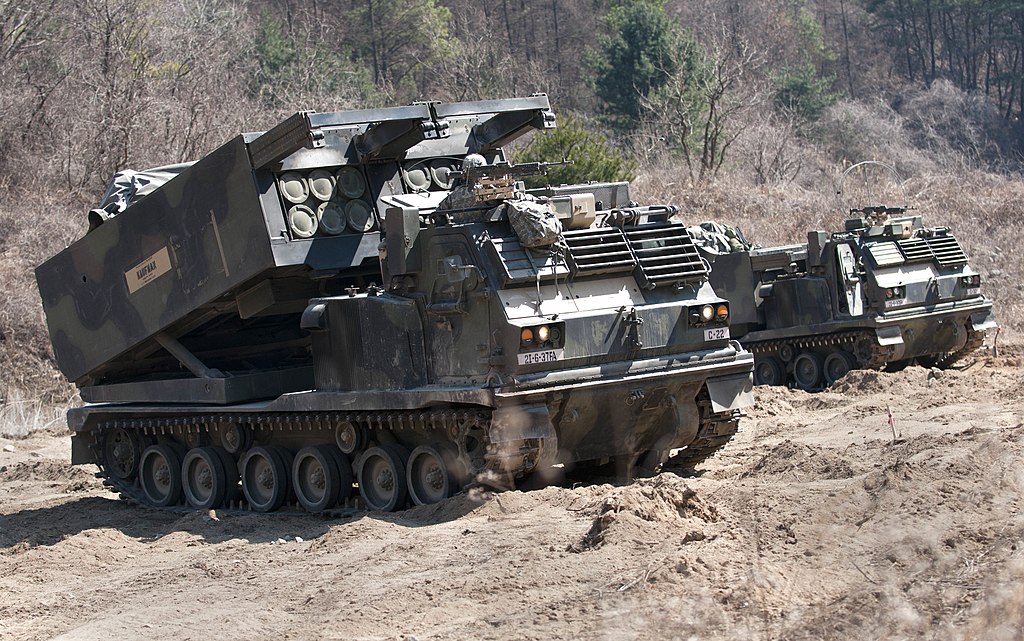
- Procurement budget for fiscal 2026: $1.3 billion
- Change in funding, FY 2025 to FY 2026: +3.5% (+$42.6 million)
- Weapon description: Surface-to-surface artillery rockets
- Program category: Missiles and Munitions
- Program service branch: Joint Service
- Primary contractor(s) include: Lockheed Martin
33. IFPC Indirect Fire Protection Capability

- Procurement budget for fiscal 2026: $1.3 billion
- Change in funding, FY 2025 to FY 2026: +82.8% (+$573.8 million)
- Weapon description: Drone, cruise missile, rocket, artillery, and mortar defense system
- Program category: Missile Defense Programs
- Program service branch: U.S. Army
- Primary contractor(s) include: Leidos, RTX, Lockheed Martin
32. PAC-3 / MSE PAC-3/Missile Segment Enhancement
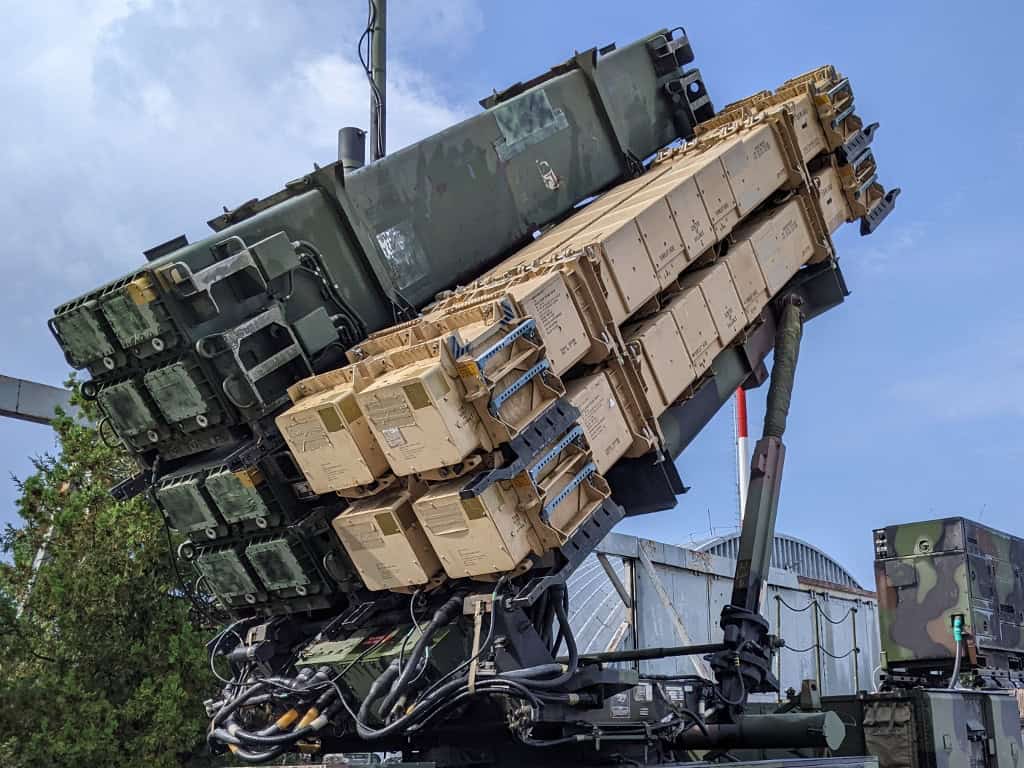
- Procurement budget for fiscal 2026: $1.4 billion
- Change in funding, FY 2025 to FY 2026: +50.1% (+$453.8 million)
- Weapon description: Long-range surface-to-air missile defense system
- Program category: Missile Defense Programs
- Program service branch: U.S. Army
- Primary contractor(s) include: Lockheed Martin
31. M-1 Abrams Tank Modification/Upgrades
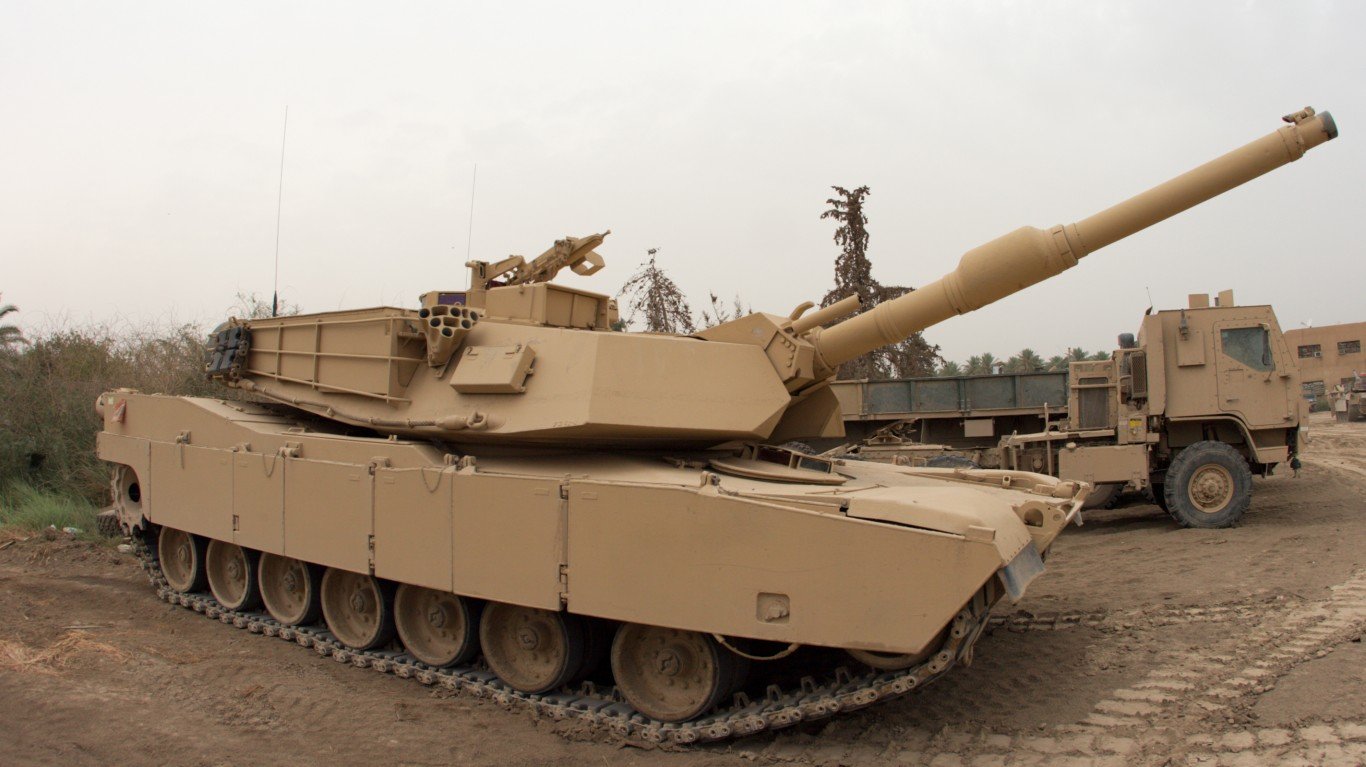
- Procurement budget for fiscal 2026: $1.5 billion
- Change in funding, FY 2025 to FY 2026: +39.2% (+$412.6 million)
- Weapon description: Main battle tank
- Program category: Ground Systems
- Program service branch: U.S. Army
- Primary contractor(s) include: General Dynamics
30. B-1, B-2, B-52 Bombers
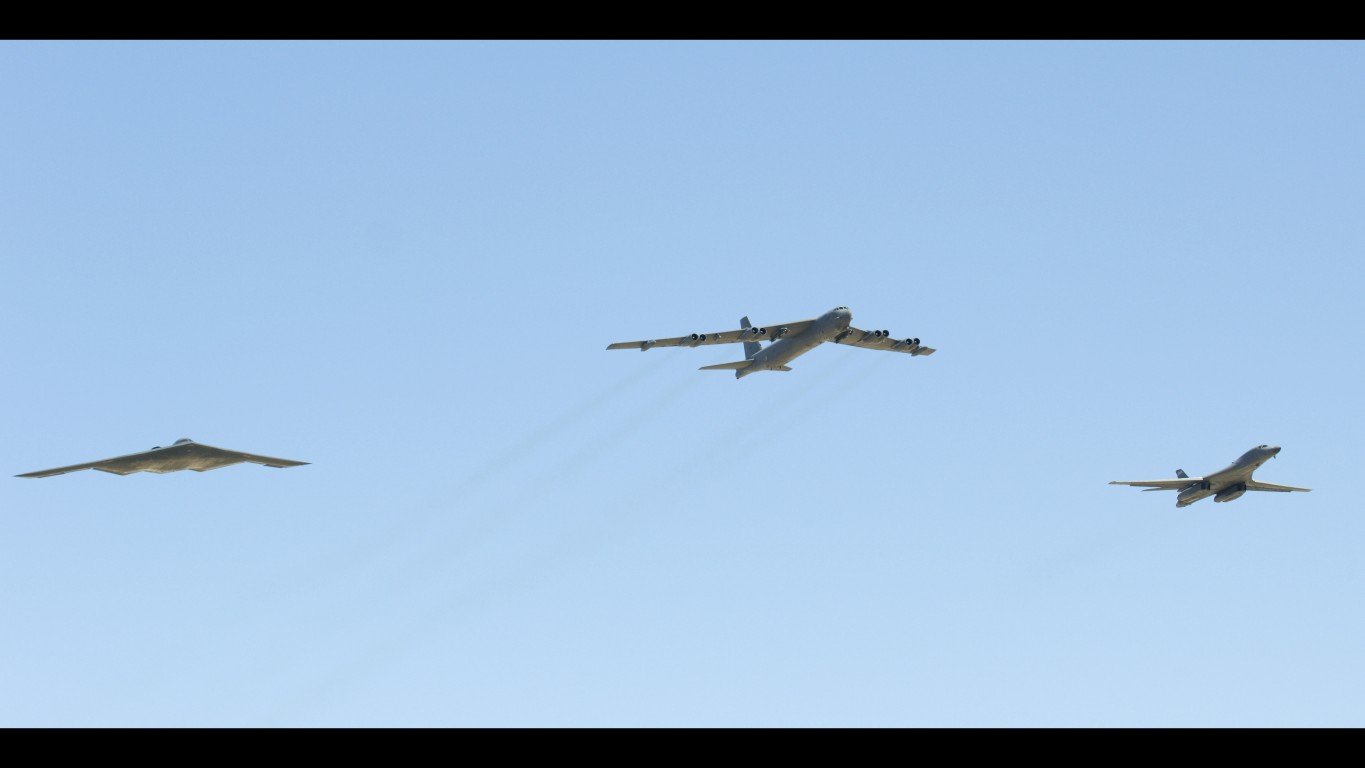
- Procurement budget for fiscal 2026: $1.5 billion
- Change in funding, FY 2025 to FY 2026: +12.2% (+$160.0 million)
- Weapon description: Legacy long-range bomber aircraft
- Program category: Aircraft and Related Systems
- Program service branch: U.S. Air Force
- Primary contractor(s) include: Northrop Grumman, Boeing
29. THAAD Terminal High Altitude Area Defense
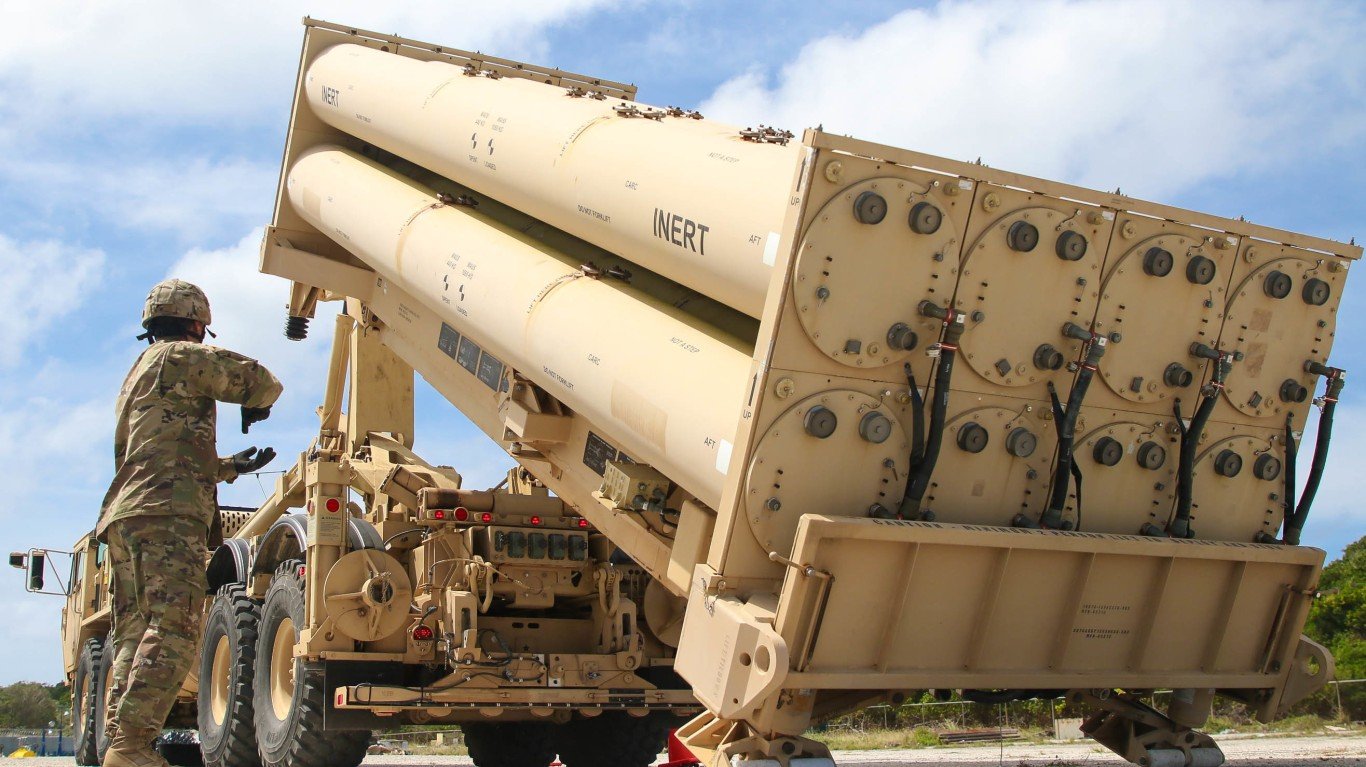
- Procurement budget for fiscal 2026: $1.5 billion
- Change in funding, FY 2025 to FY 2026: +173.3% (+$966.9 million)
- Weapon description: Interceptor missile defense system
- Program category: Missile Defense Programs
- Program service branch: Joint Service
- Primary contractor(s) include: Lockheed Martin
28. Aegis Sea-Based Weapons System
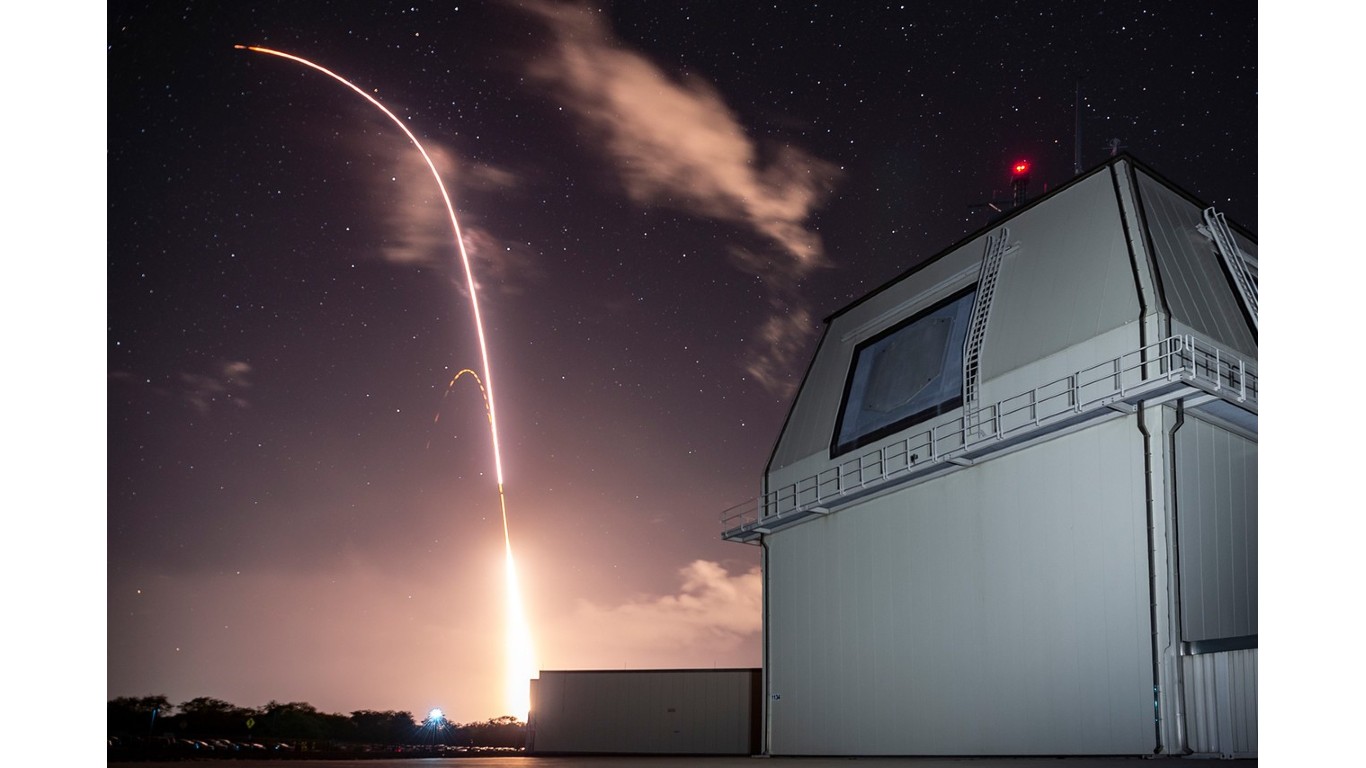
- Procurement budget for fiscal 2026: $1.8 billion
- Change in funding, FY 2025 to FY 2026: +11.4% (+$183.7 million)
- Weapon description: Sea-based missile defense system
- Program category: Missile Defense Programs
- Program service branch: Joint Service
- Primary contractor(s) include: Lockheed Martin, RTX
27. LSM Medium Landing Ship

- Procurement budget for fiscal 2026: $2.0 billion
- Change in funding, FY 2025 to FY 2026: +5,435.3% (+$1.9 billion)
- Weapon description: Maneuverable, intra-theater, amphibious warfare ship
- Program category: Shipbuilding and Maritime Systems
- Program service branch: U.S. Navy
- Primary contractor(s) include: TBD
26. F/A-18 Super Hornet
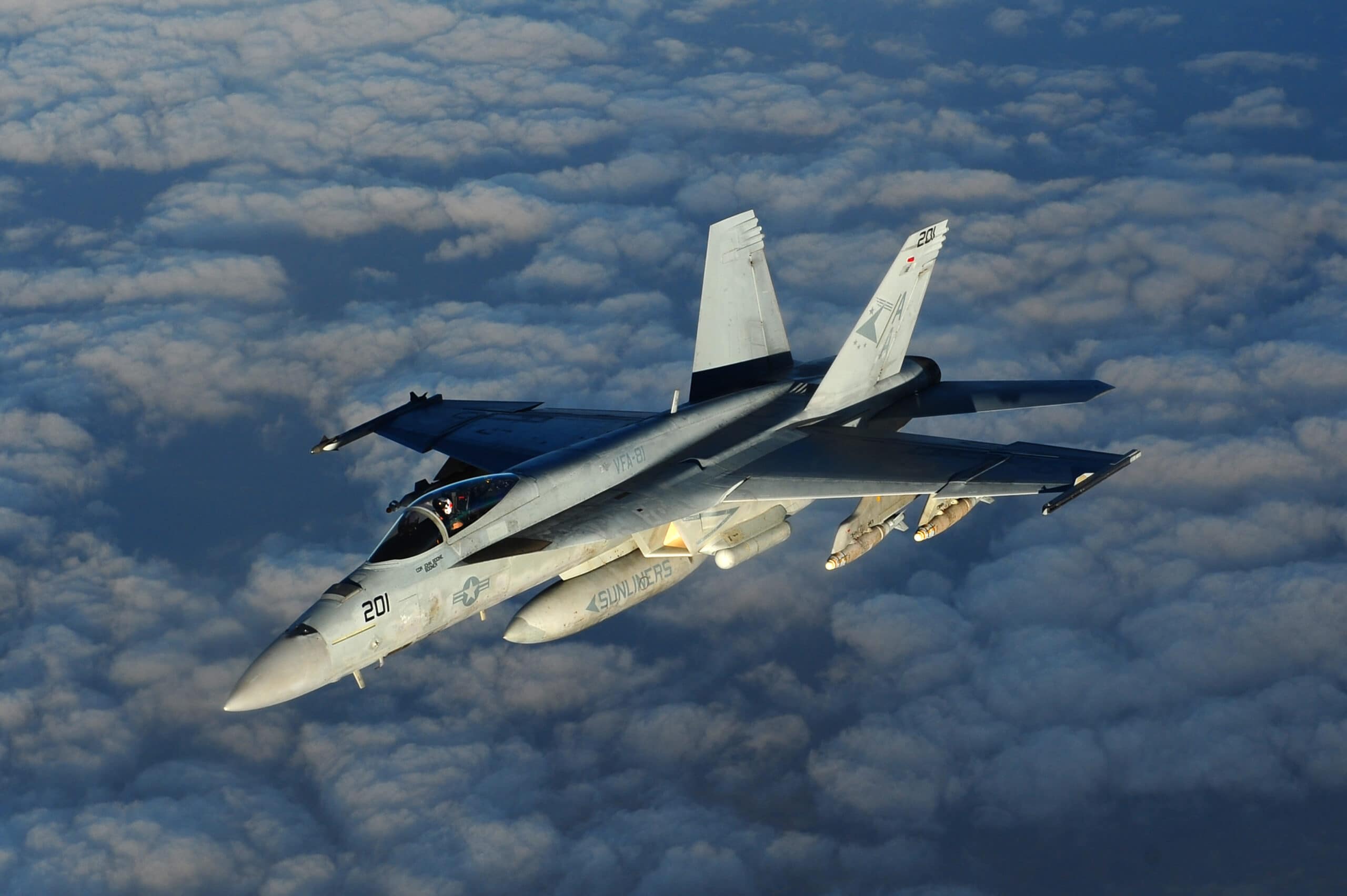
- Procurement budget for fiscal 2026: $2.0 billion
- Change in funding, FY 2025 to FY 2026: +19.4% (+$322.1 million)
- Weapon description: Carrier-based multi-role tactical fighter and attack aircraft
- Program category: Aircraft and Related Systems
- Program service branch: U.S. Navy / U.S. Marine Corps
- Primary contractor(s) include: Boeing, General Electric
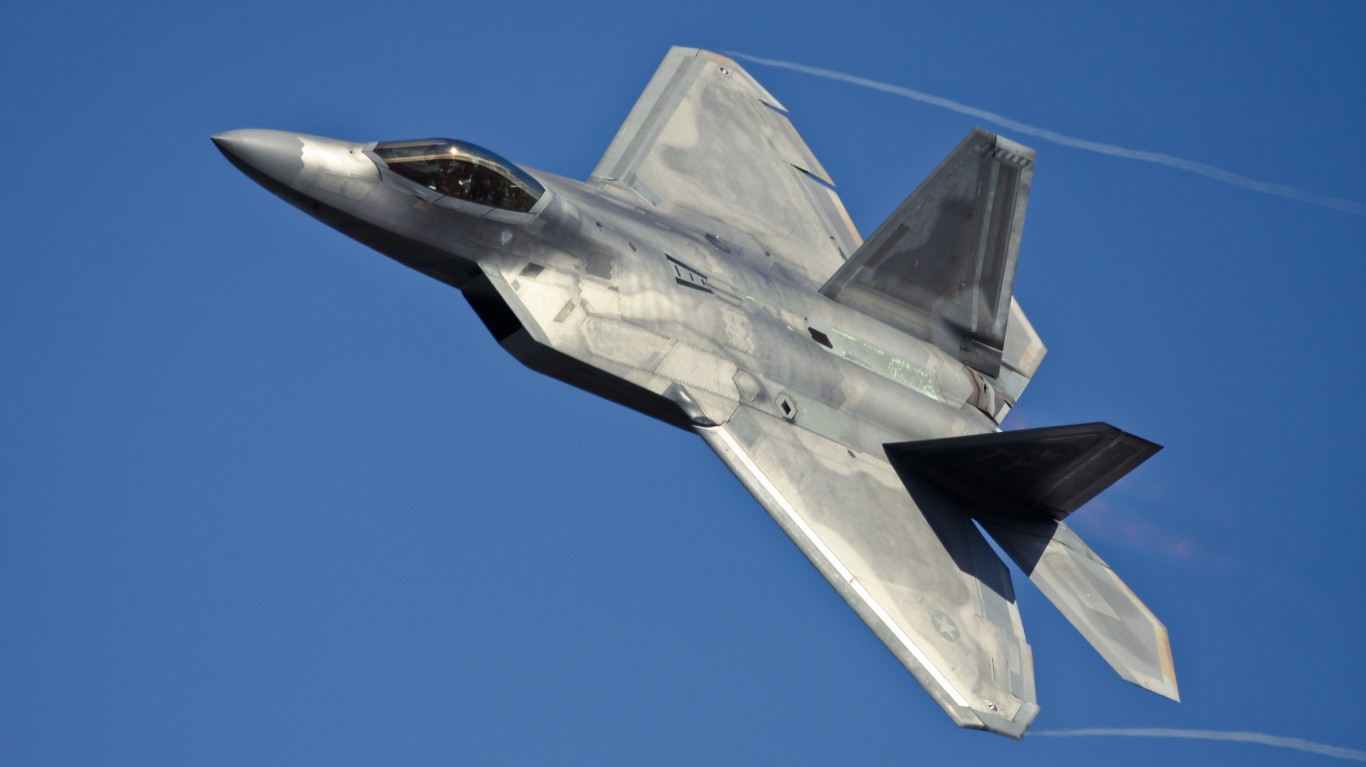
25. F-22 Raptor
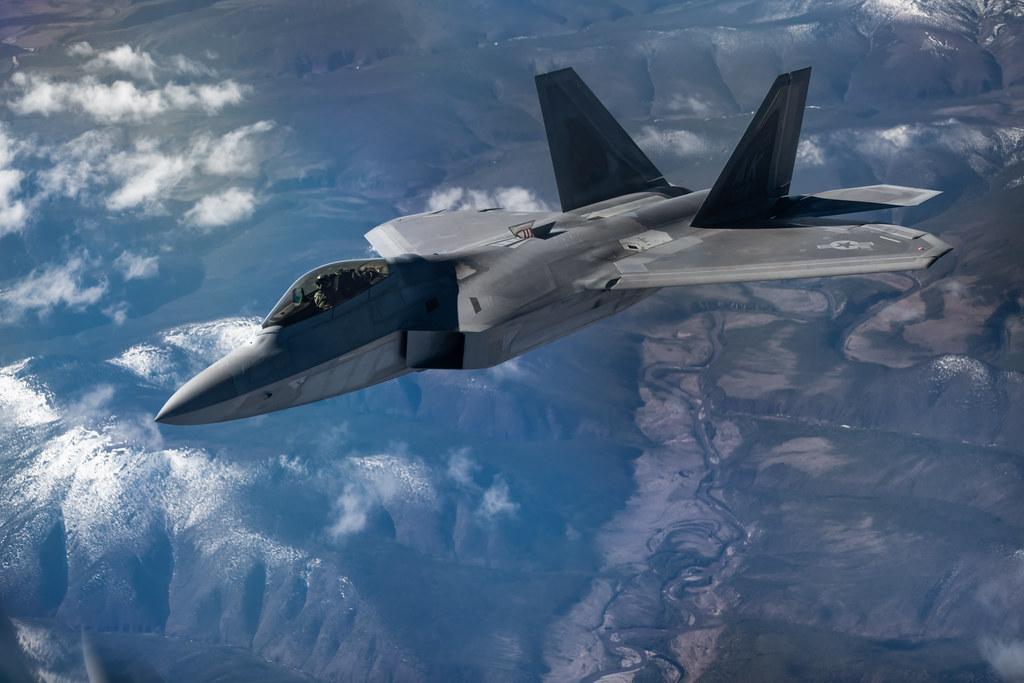
- Procurement budget for fiscal 2026: $2.0 billion
- Change in funding, FY 2025 to FY 2026: +22.0% (+$363.7 million)
- Weapon description: Fifth-generation air superiority fighter jet
- Program category: Aircraft and Related Systems
- Program service branch: U.S. Air Force
- Primary contractor(s) include: Lockheed Martin, Pratt & Whitney
24. T-AO 205 John Lewis Class Fleet Replenishment Oiler
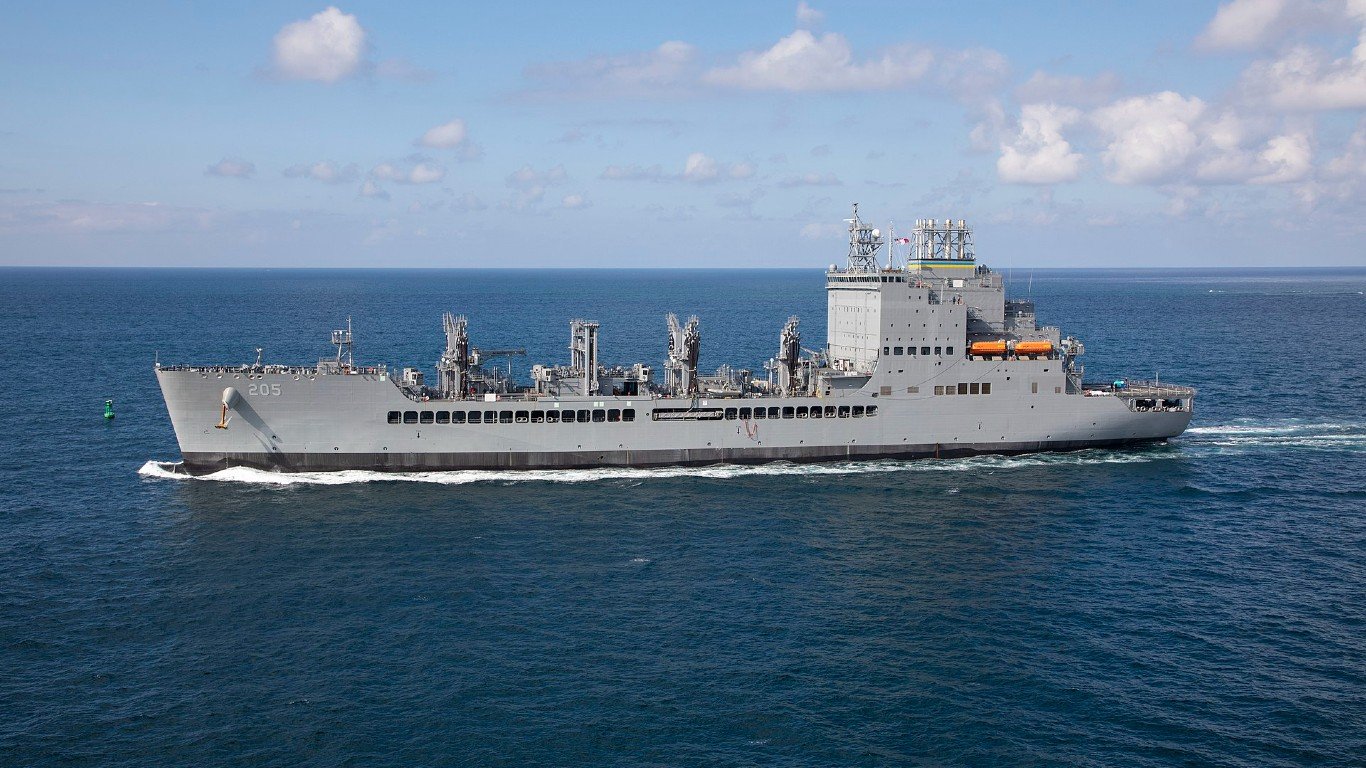
- Procurement budget for fiscal 2026: $2.0 billion
- Change in funding, FY 2025 to FY 2026: +690.9% (+$1.8 billion)
- Weapon description: Fuel and cargo delivery vessel
- Program category: Shipbuilding and Maritime Systems
- Program service branch: U.S. Navy
- Primary contractor(s) include: General Dynamics
23. E-2D Advanced Hawkeye

- Procurement budget for fiscal 2026: $2.1 billion
- Change in funding, FY 2025 to FY 2026: +263.7% (+$1.5 billion)
- Weapon description: Carrier-based, twin-engine, early-warning radar aircraft
- Program category: Aircraft and Related Systems
- Program service branch: U.S. Navy / U.S. Marine Corps
- Primary contractor(s) include: Northrop Grumman, Rolls-Royce, Lockheed Martin
22. CVN Refueling Complex Overhaul
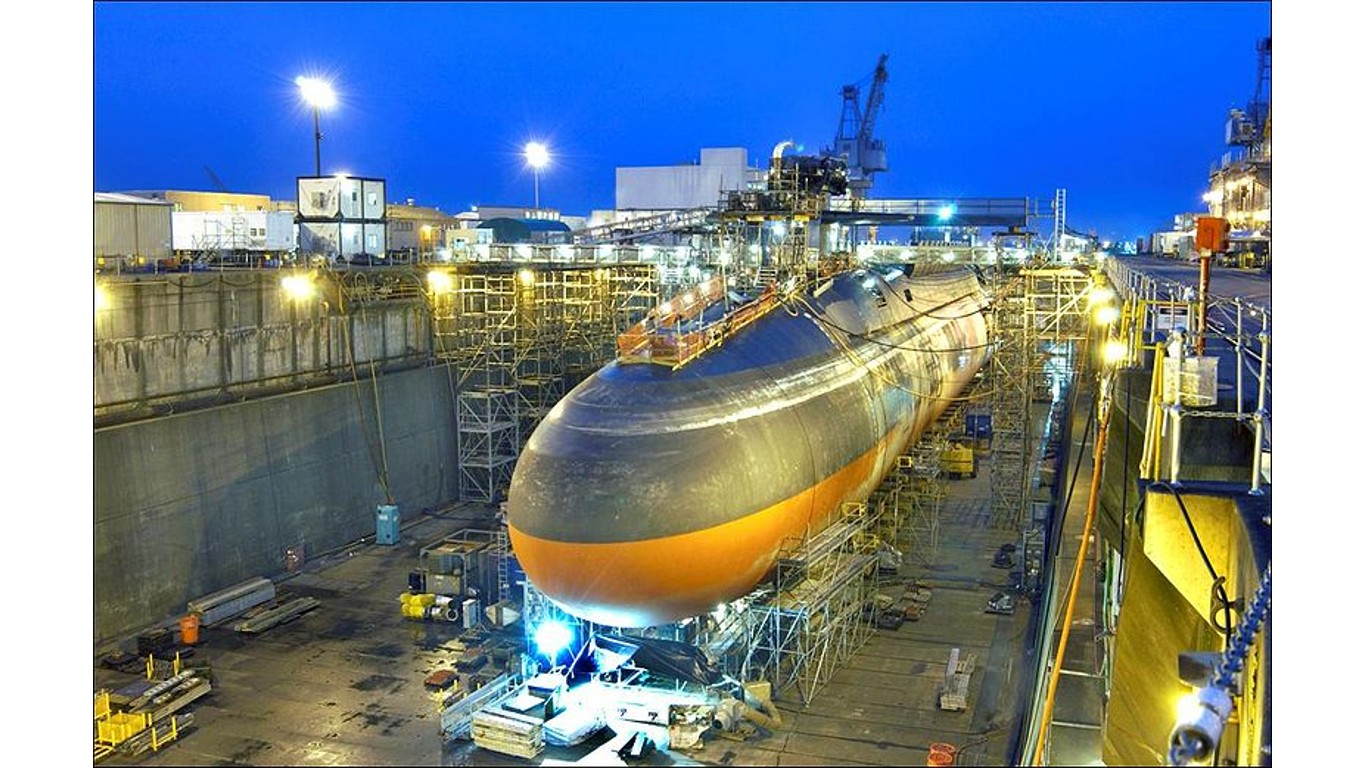
- Procurement budget for fiscal 2026: $2.3 billion
- Change in funding, FY 2025 to FY 2026: +52.9% (+$787.3 million)
- Weapon description: Modernization of nuclear-powered aircraft carriers
- Program category: Shipbuilding and Maritime Systems
- Program service branch: U.S. Navy
- Primary contractor(s) include: HII
21. Launch Enterprise
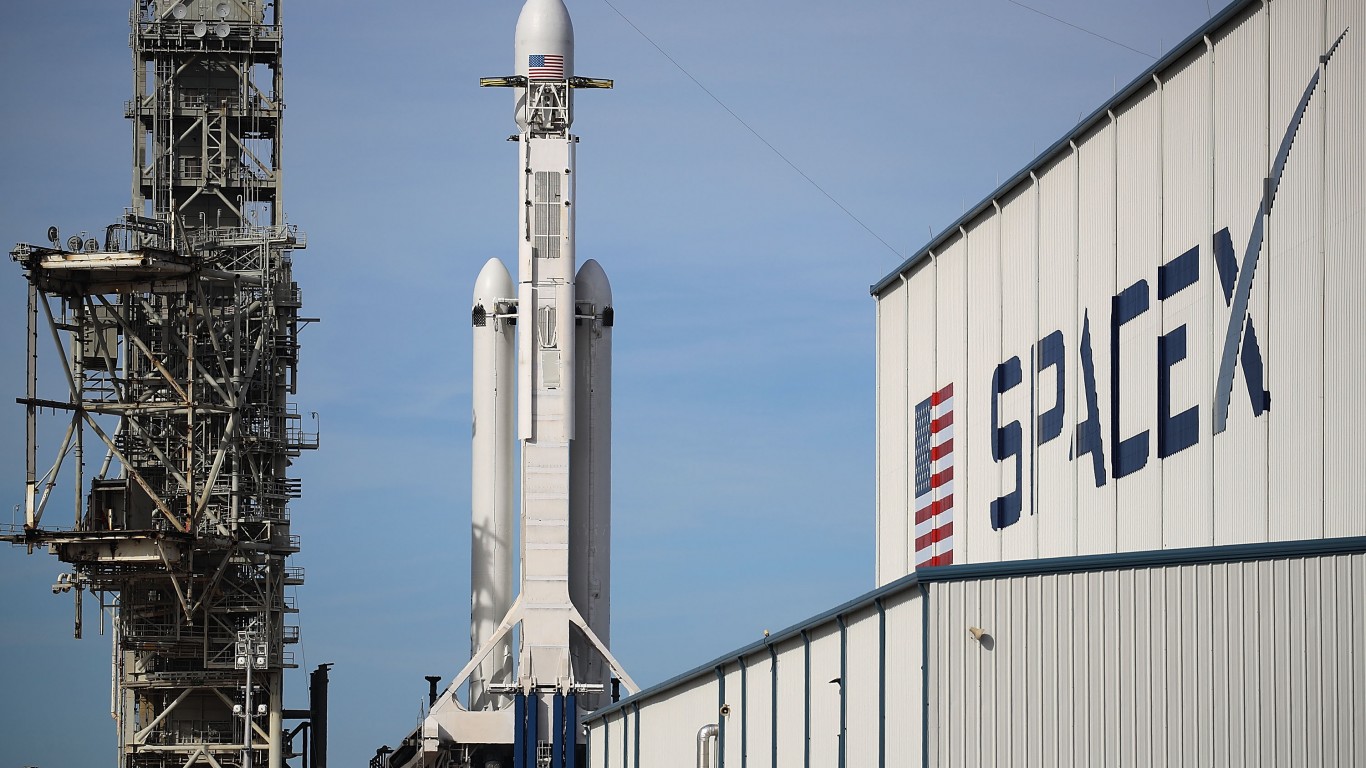
- Procurement budget for fiscal 2026: $2.4 billion
- Change in funding, FY 2025 to FY 2026: +0.5% (+$11.3 million)
- Weapon description: Rocket system launch enterprise
- Program category: Space Based Systems
- Program service branch: U.S. Air Force / Space Force
- Primary contractor(s) include: Blue Origin, Rocket Lab, SpaceX, Stoke Space, United Launch Alliance, Northrop Grumman
20. CH-53K Heavy Lift Replacement Helicopter
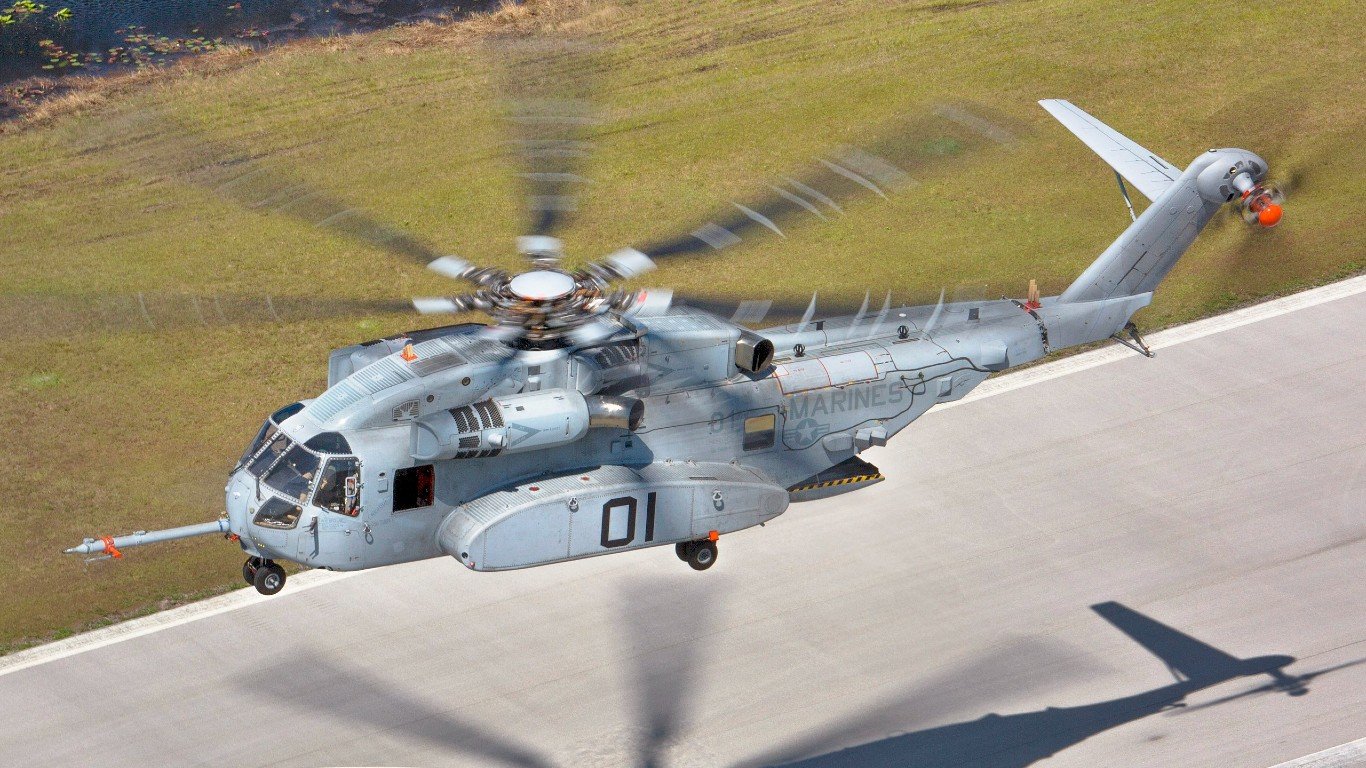
- Procurement budget for fiscal 2026: $2.5 billion
- Change in funding, FY 2025 to FY 2026: -16.9% (-$505.3 million)
- Weapon description: Marinized heavy-lift helicopter
- Program category: Aircraft and Related Systems
- Program service branch: U.S. Navy / U.S. Marine Corps
- Primary contractor(s) include: Sikorsky, General Electric
19. PATRIOT / PAC-3 PATRIOT Advanced Capability
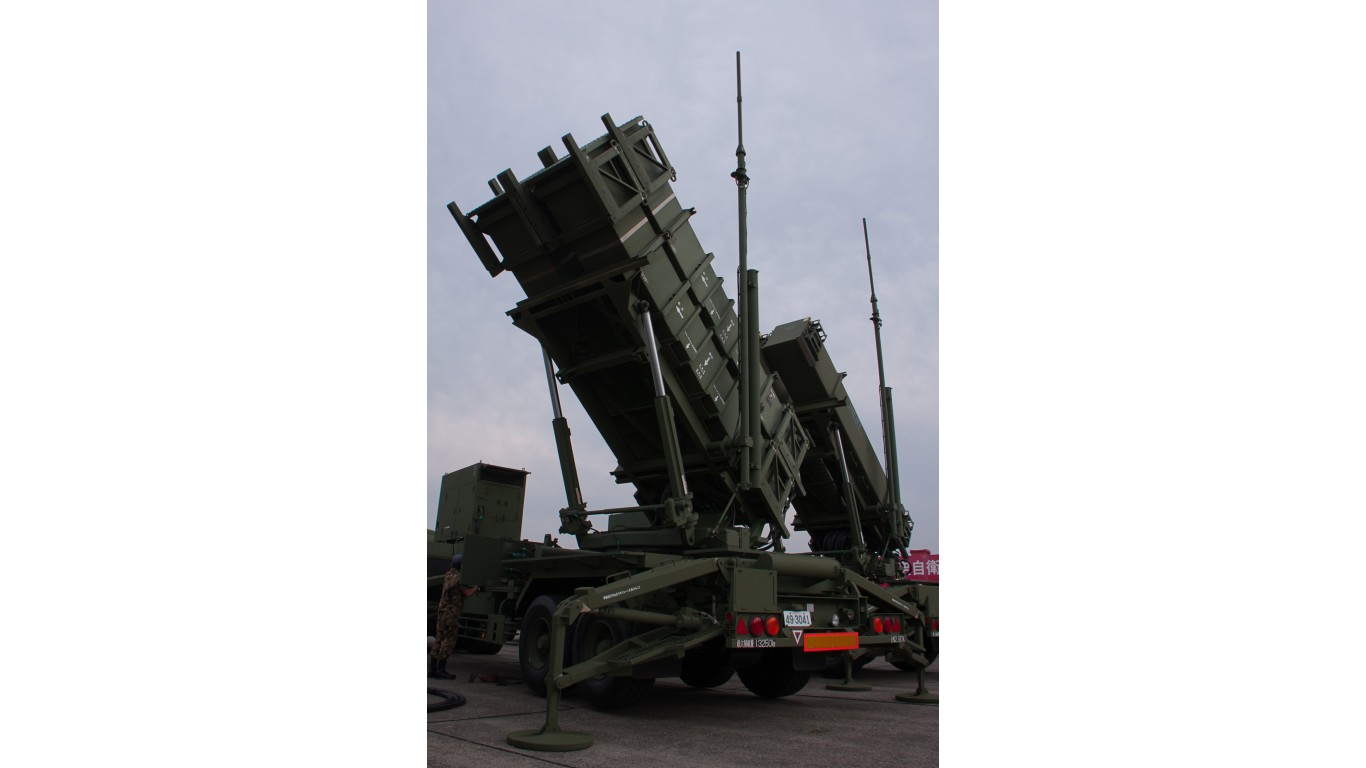
- Procurement budget for fiscal 2026: $2.5 billion
- Change in funding, FY 2025 to FY 2026: +176.7% (+$1.6 billion)
- Weapon description: Long-range, all-altitude, all-weather, air defense system
- Program category: Missile Defense Programs
- Program service branch: U.S. Army
- Primary contractor(s) include: RTX, Lockheed Martin
18. GMD Ground-based Midcourse Defense

- Procurement budget for fiscal 2026: $2.5 billion
- Change in funding, FY 2025 to FY 2026: +0.8% (+$18.7 million)
- Weapon description: Missile defense system
- Program category: Missile Defense Programs
- Program service branch: Joint Service
- Primary contractor(s) include: Lockheed Martin, Northrop Grumman
17. Hypersonic Defenses

- Procurement budget for fiscal 2026: $2.7 billion
- Change in funding, FY 2025 to FY 2026: +69.6% (+$1.1 billion)
- Weapon description: Hypersonic weapon detection, tracking, and interception system
- Program category: Hypersonic Warfare
- Program service branch: Joint Service
- Primary contractor(s) include: RTX, L3-Harris, Northrop Grumman, Lockheed Martin
16. LPD 17 San Antonio Class Amphibious Ship

- Procurement budget for fiscal 2026: $2.8 billion
- Change in funding, FY 2025 to FY 2026: +70.1% (+$1.2 billion)
- Weapon description: Transport dock ship
- Program category: Shipbuilding and Maritime Systems
- Program service branch: U.S. Navy
- Primary contractor(s) include: HII
15. KC-46A Pegasus

- Procurement budget for fiscal 2026: $3.3 billion
- Change in funding, FY 2025 to FY 2026: +6.3% (+$195.0 million)
- Weapon description: Aerial refueling aircraft
- Program category: Aircraft and Related Systems
- Program service branch: U.S. Air Force
- Primary contractor(s) include: Boeing
14. F-47 Next Generation Air Dominance
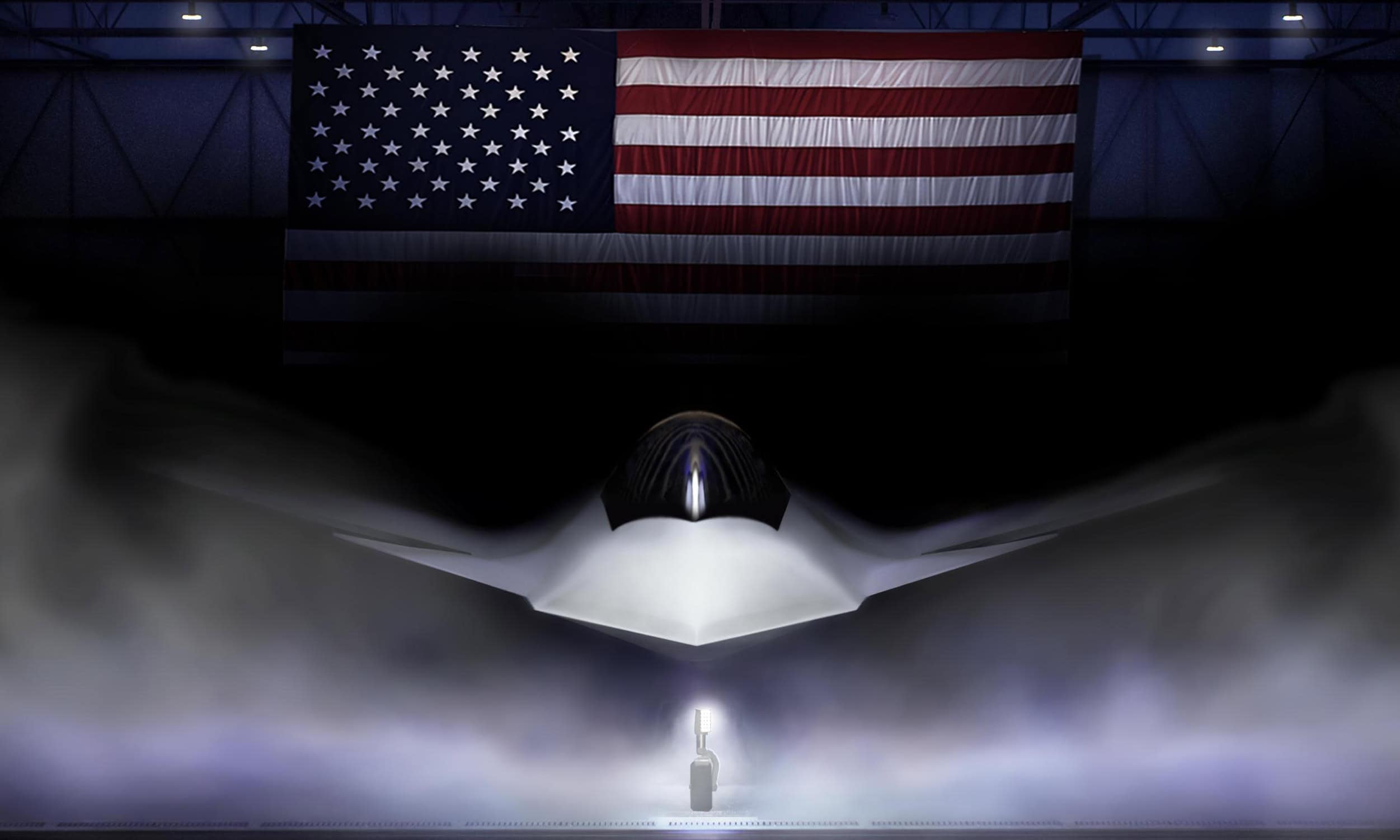
- Procurement budget for fiscal 2026: $3.5 billion
- Change in funding, FY 2025 to FY 2026: +43.5% (+$1.1 billion)
- Weapon description: Sixth-generation fighter jet
- Program category: Aircraft and Related Systems
- Program service branch: U.S. Air Force
- Primary contractor(s) include: Boeing
13. CVN 78 Gerald R. Ford Class Nuclear Aircraft Carrier
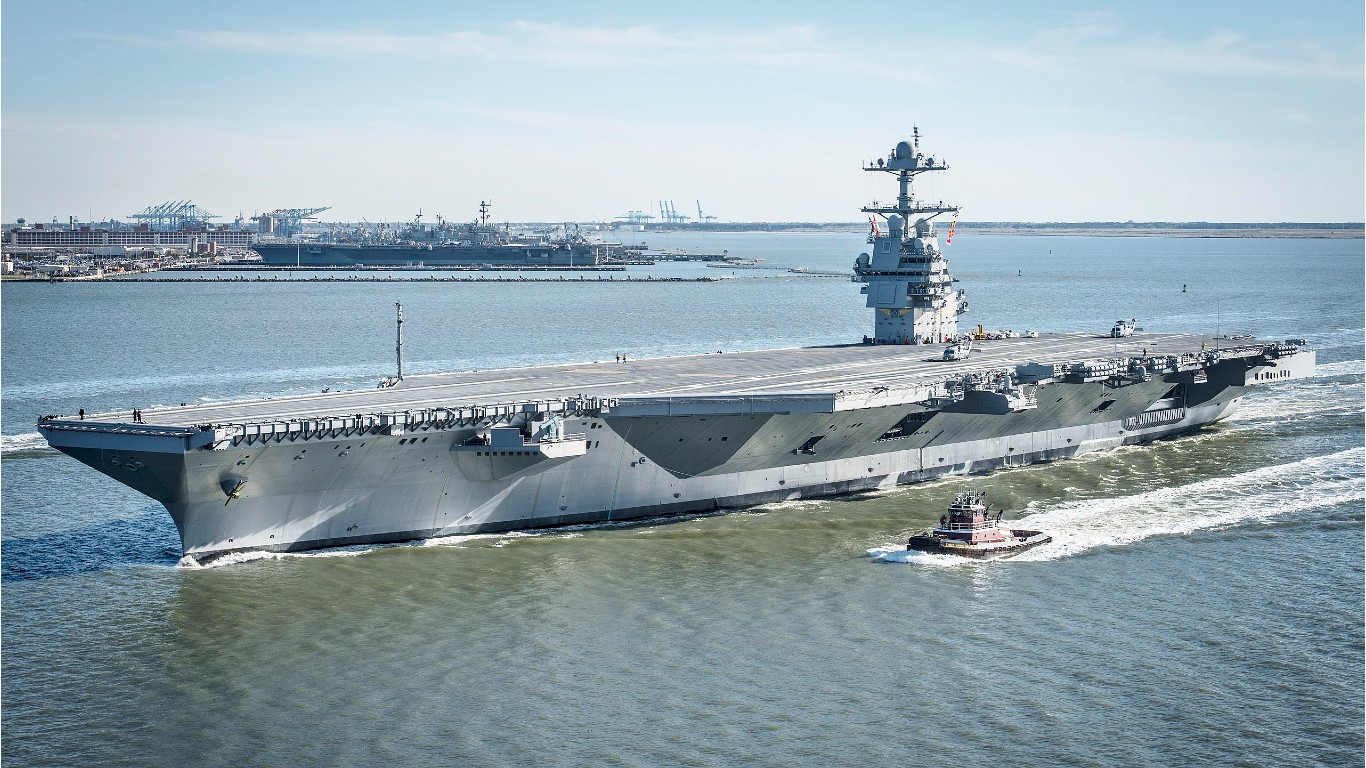
- Procurement budget for fiscal 2026: $3.6 billion
- Change in funding, FY 2025 to FY 2026: +64.6% (+$1.4 billion)
- Weapon description: Aircraft carrier
- Program category: Shipbuilding and Maritime Systems
- Program service branch: U.S. Navy
- Primary contractor(s) include: HII
12. Trident II Trident II Ballistic Missile Modifications
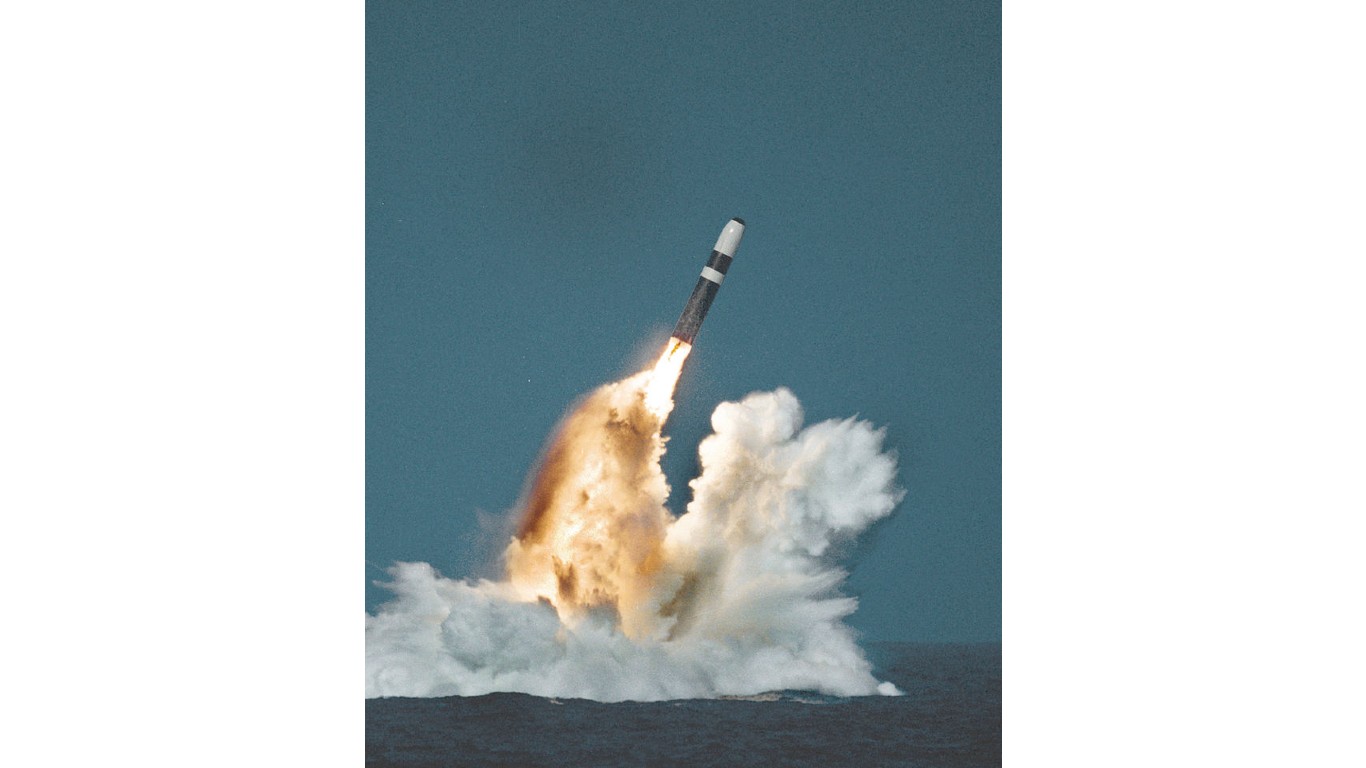
- Procurement budget for fiscal 2026: $3.7 billion
- Change in funding, FY 2025 to FY 2026: +56.4% (+$1.3 billion)
- Weapon description: Nuclear-capable, submarine launched ballistic missile
- Program category: Missiles and Munitions
- Program service branch: U.S. Navy
- Primary contractor(s) include: Lockheed Martin
11. F-15 Eagle / Eagle II
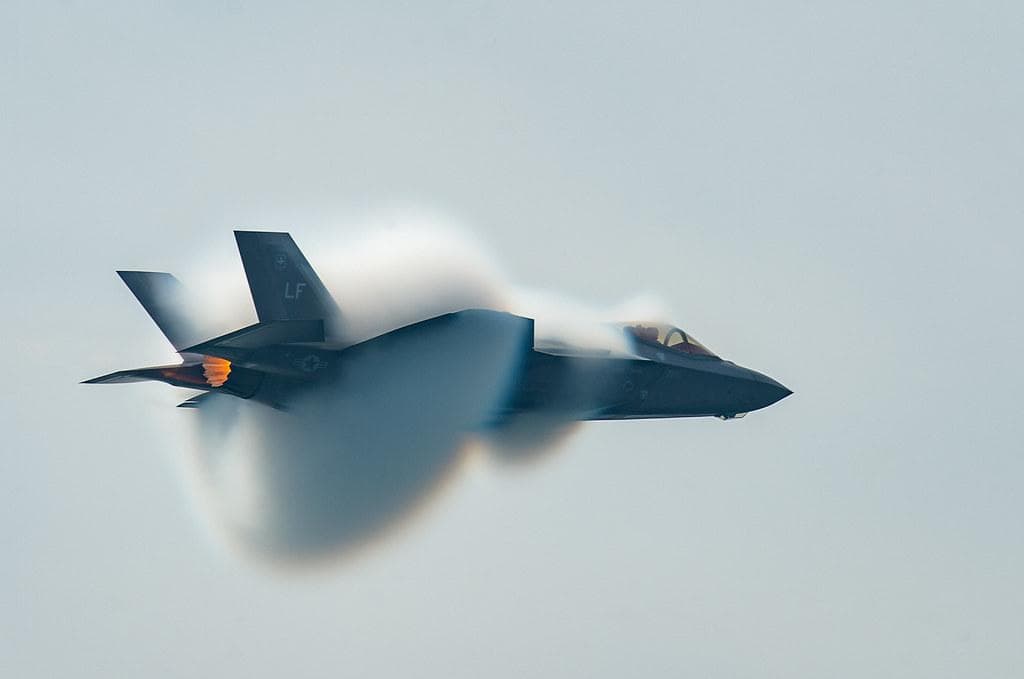
- Procurement budget for fiscal 2026: $3.8 billion
- Change in funding, FY 2025 to FY 2026: +60.3% (+$1.4 billion)
- Weapon description: Multi-role fighter jet
- Program category: Aircraft and Related Systems
- Program service branch: U.S. Air Force
- Primary contractor(s) include: Boeing
10. LHA America Class Amphibious Assault Ship
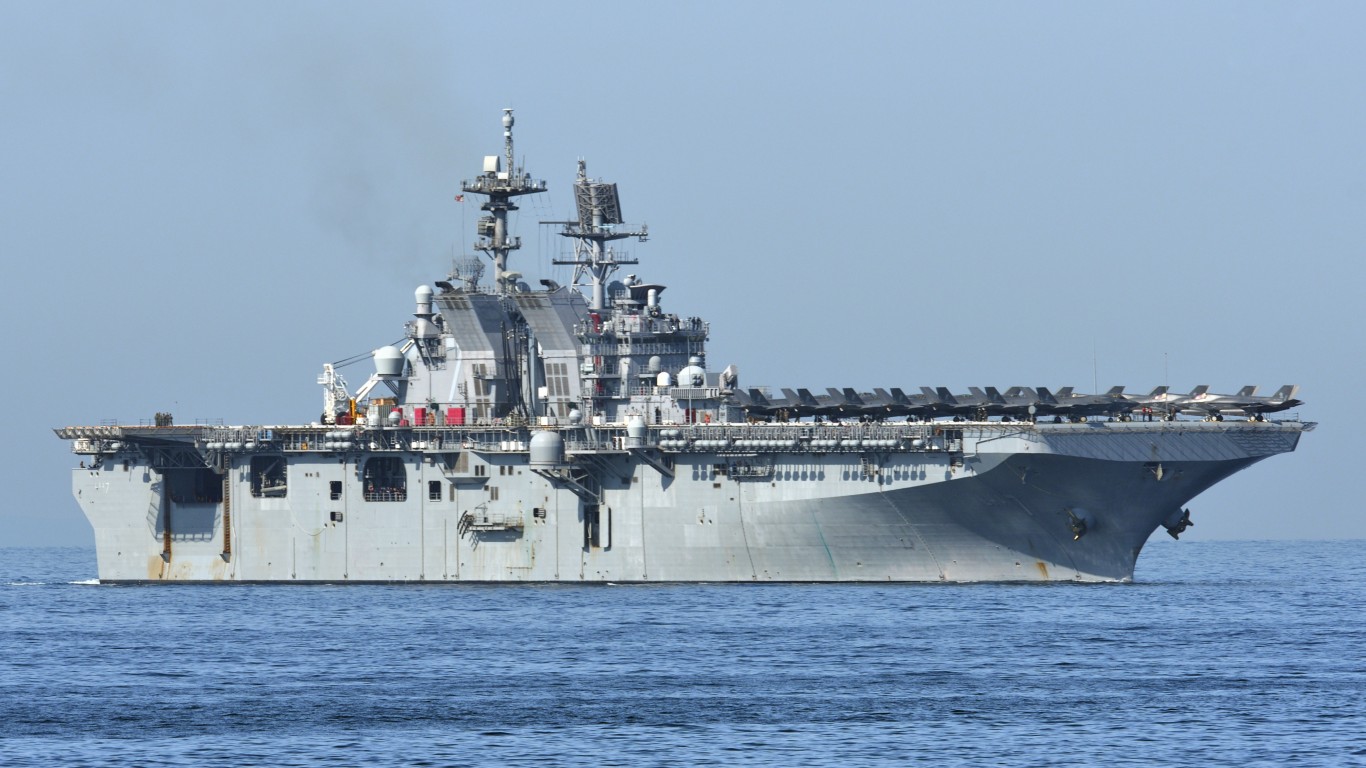
- Procurement budget for fiscal 2026: $4.0 billion
- Change in funding, FY 2025 to FY 2026: +1,760.1% (+$3.8 billion)
- Weapon description: Large-deck support craft for ground forces
- Program category: Shipbuilding and Maritime Systems
- Program service branch: U.S. Navy
- Primary contractor(s) include: HII
9. LGM-35A Sentinel
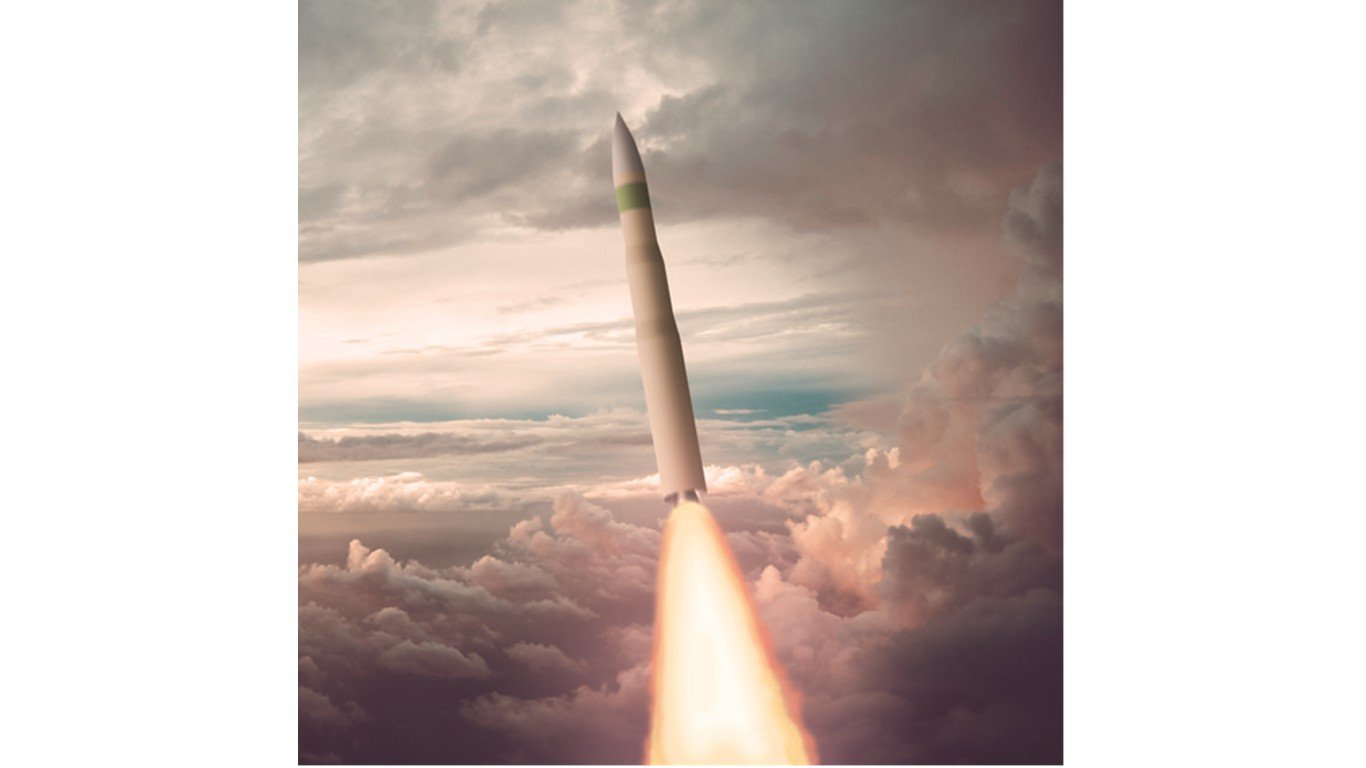
- Procurement budget for fiscal 2026: $4.2 billion
- Change in funding, FY 2025 to FY 2026: +106.2% (+$2.1 billion)
- Weapon description: Nuclear-capable, ground-based ballistic missile
- Program category: Missiles and Munitions
- Program service branch: U.S. Air Force
- Primary contractor(s) include: Northrop Grumman
8. Satellite Communications (SATCOM)
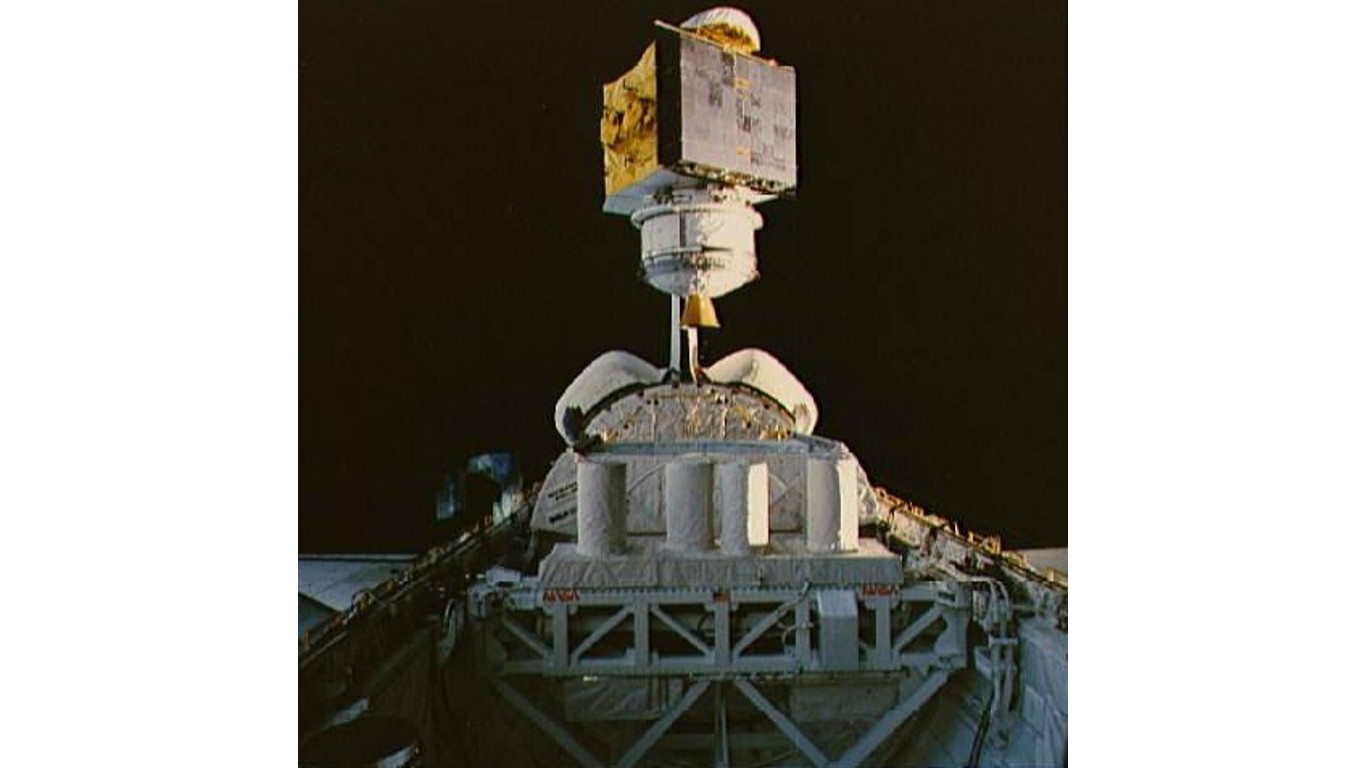
- Procurement budget for fiscal 2026: $5.9 billion
- Change in funding, FY 2025 to FY 2026: +31.4% (+$1.4 billion)
- Weapon description: Satellite-based DOD communication systems
- Program category: Space Based Systems
- Program service branch: U.S. Air Force / Space Force
- Primary contractor(s) include: Boeing, Northrop Grumman, General Dynamics, RTX
7. DDG 51 Arleigh Burke Class Destroyer

- Procurement budget for fiscal 2026: $5.9 billion
- Change in funding, FY 2025 to FY 2026: -31.2% (-$2.7 billion)
- Weapon description: Anti-air, anti-submarine, and anti-surface capable destroyer vessel
- Program category: Shipbuilding and Maritime Systems
- Program service branch: U.S. Navy
- Primary contractor(s) include: General Dynamics, HII Industries
6. Ammunition

- Procurement budget for fiscal 2026: $6.3 billion
- Change in funding, FY 2025 to FY 2026: +8.3% (+$484.2 million)
- Weapon description: Firearm ammunition, artillery and mortar projectiles, grenades, shoulder launched munitions, and rocket-assisted projectiles
- Program category: Missiles and Munitions
- Program service branch: Joint Service
- Primary contractor(s) include: Multiple domestic and foreign suppliers, including BAE Systems and RTX
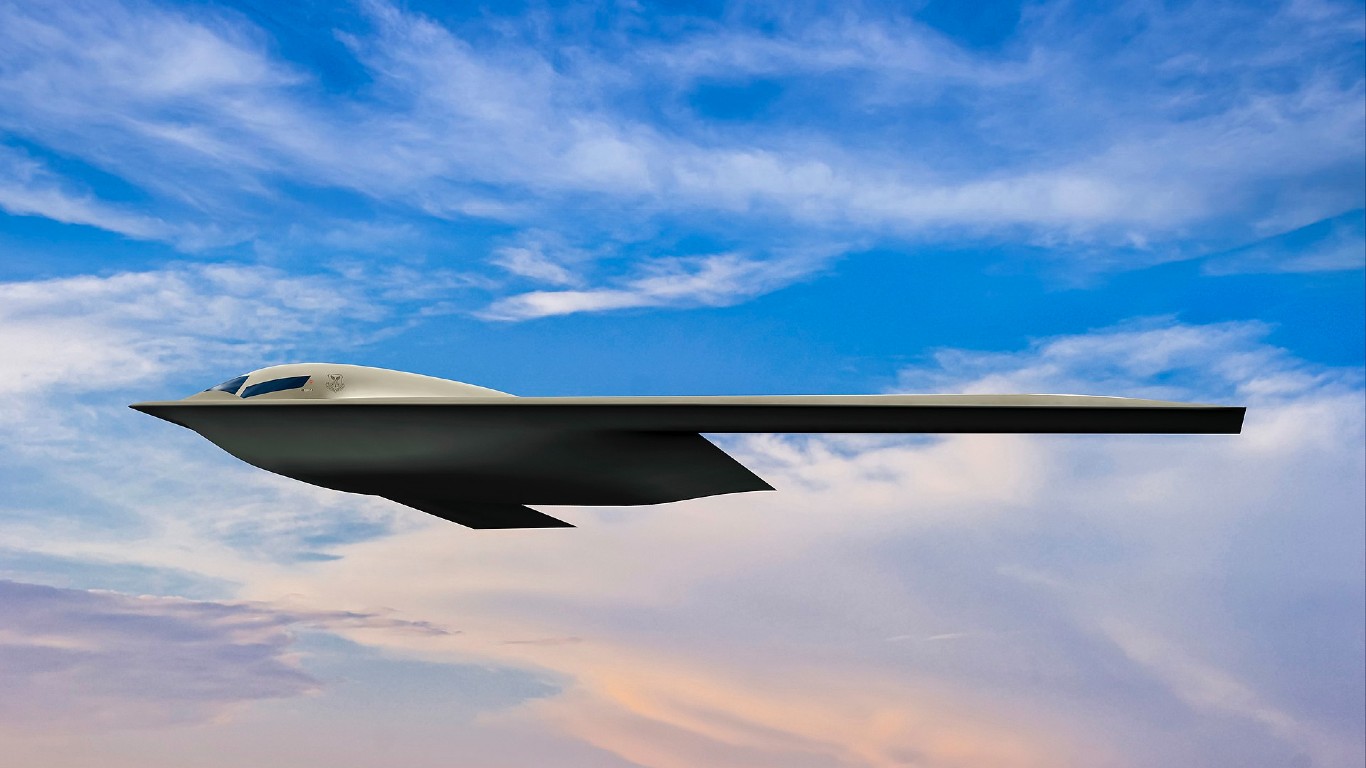
5. B-21 Raider
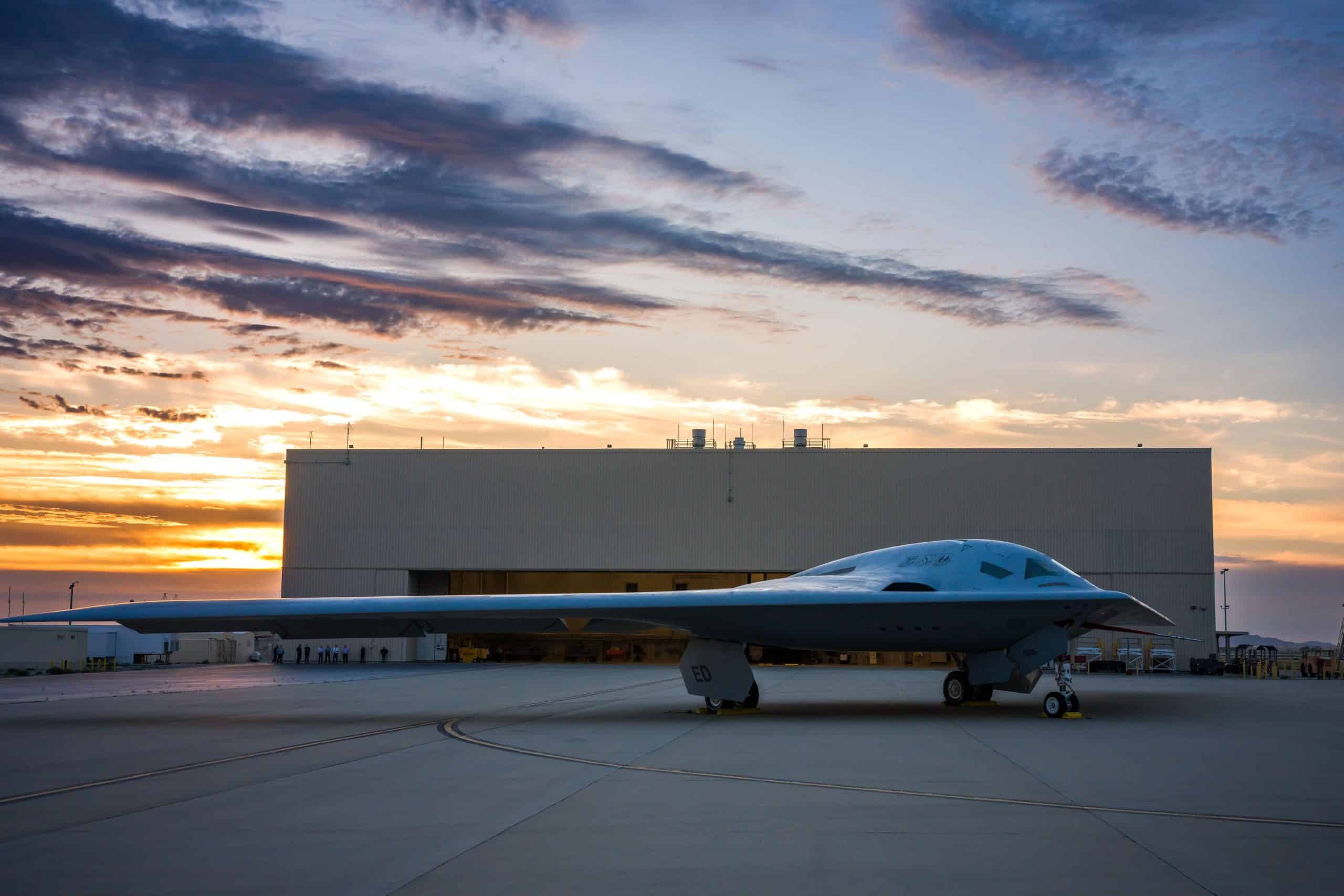
- Procurement budget for fiscal 2026: $10.3 billion
- Change in funding, FY 2025 to FY 2026: +95.8% (+$5.0 billion)
- Weapon description: Long-range stealth bomber aircraft
- Program category: Aircraft and Related Systems
- Program service branch: U.S. Air Force
- Primary contractor(s) include: Northrop Grumman
4. SSBN 826 Columbia Class Ballistic Missile Submarine
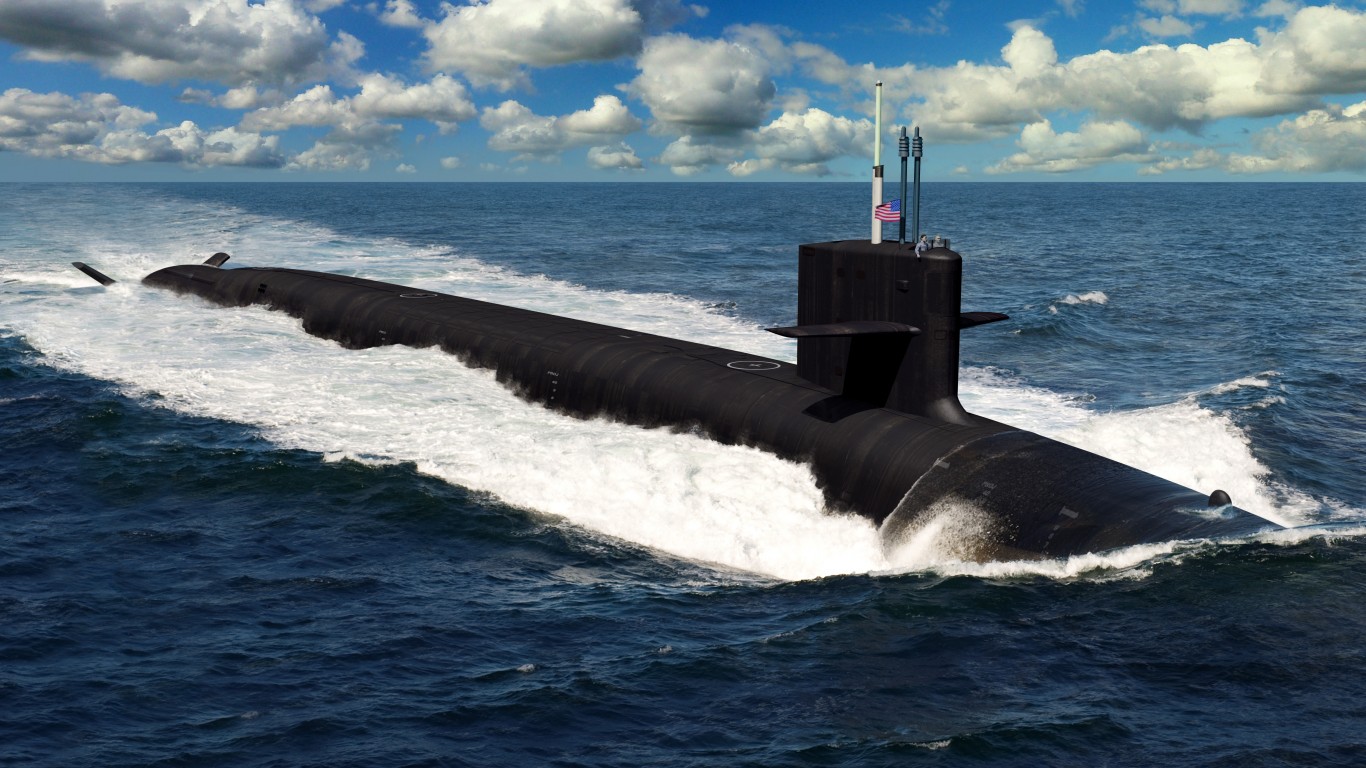
- Procurement budget for fiscal 2026: $11.5 billion
- Change in funding, FY 2025 to FY 2026: +15.9% (+$1.6 billion)
- Weapon description: Ballistic missile nuclear deterrent submarine
- Program category: Shipbuilding and Maritime Systems
- Program service branch: U.S. Navy
- Primary contractor(s) include: General Dynamics, HII Industries
3. SSN 774 Virginia Class Submarine
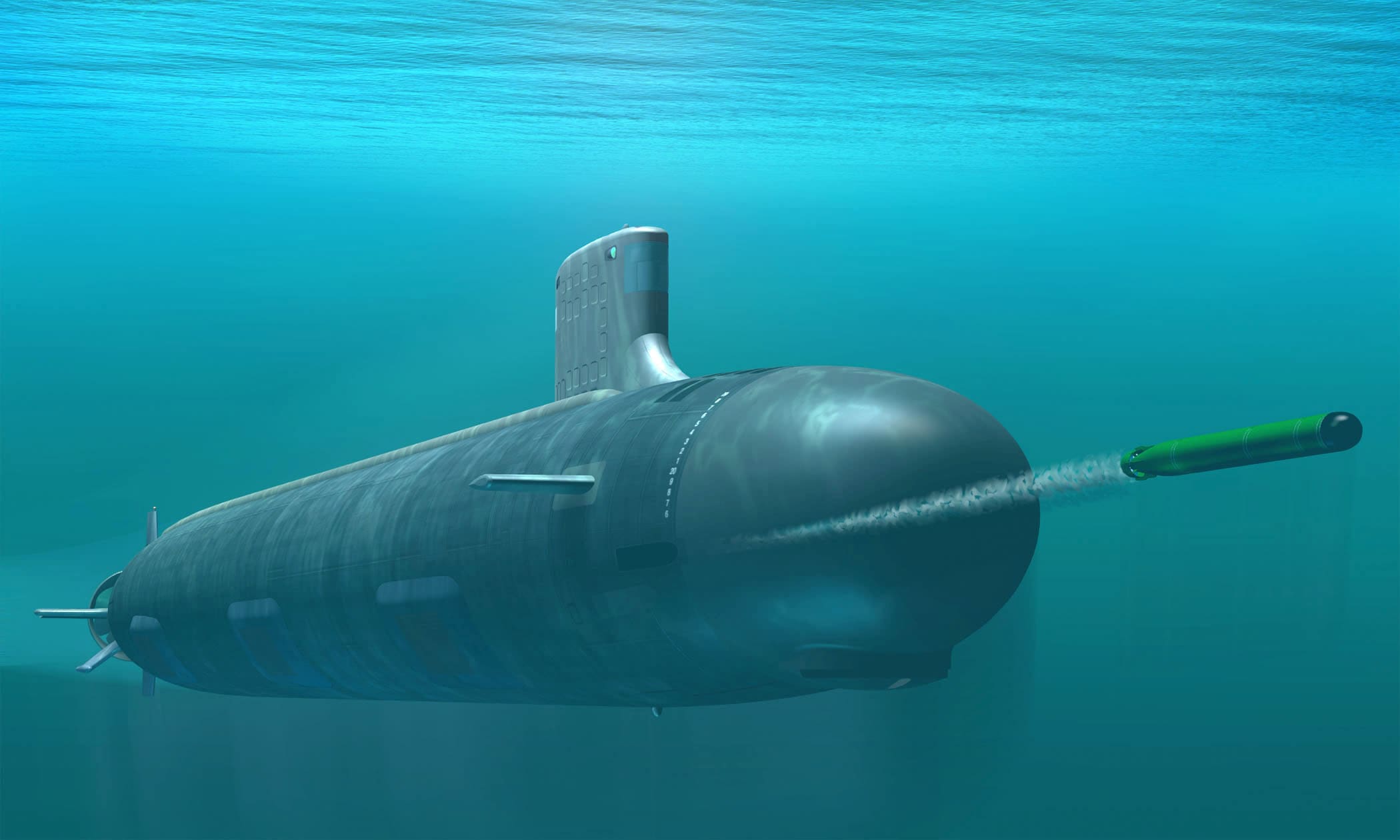
- Procurement budget for fiscal 2026: $12.2 billion
- Change in funding, FY 2025 to FY 2026: -12.1% (-$1.7 billion)
- Weapon description: Nuclear-powered attack submarine
- Program category: Shipbuilding and Maritime Systems
- Program service branch: U.S. Navy
- Primary contractor(s) include: General Dynamics, HII Industries
2. MW/MT Missile Warning/Missile Tracking (MW/MT)

- Procurement budget for fiscal 2026: $13.0 billion
- Change in funding, FY 2025 to FY 2026: +175.8% (+$8.3 billion)
- Weapon description: Space-based infrared missile warning satellites
- Program category: Space Based Systems
- Program service branch: U.S. Air Force / Space Force
- Primary contractor(s) include: Lockheed Martin, Northrop Grumman
1. F-35 Joint Strike Fighter Lightning II
- Procurement budget for fiscal 2026: $13.1 billion
- Change in funding, FY 2025 to FY 2026: -1.6% (-$212.6 million)
- Weapon description: Fifth-generation strike fighter jet
- Program category: Aircraft and Related Systems
- Program service branch: Joint Service
- Primary contractor(s) include: Lockheed Martin, Pratt & Whitney
Contact [email protected] for any questions or corrections.
Sam Stebbins is a writer at 247WallSt.com where his primary focus is on government policy, politics, companies, and broad social and economic trends. Sam has been writing in the money and news verticals for over 8 years and holds a bachelor's degree from Hobart College, which he earned in 2010. Sam resides in upstate New York and enjoys hiking, biking, canoeing, and skiing in the Adirondack Mountains and across the Northeast.