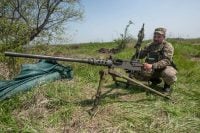
Weapons of Valor: The Most Influential Guns of World War II
World War II was fought on land, sea, and air, but it was the small arms carried by millions of soldiers that shaped the day-to-day reality of combat. Rifles, submachine guns, and machine guns determined how infantry maneuvered, how cities…

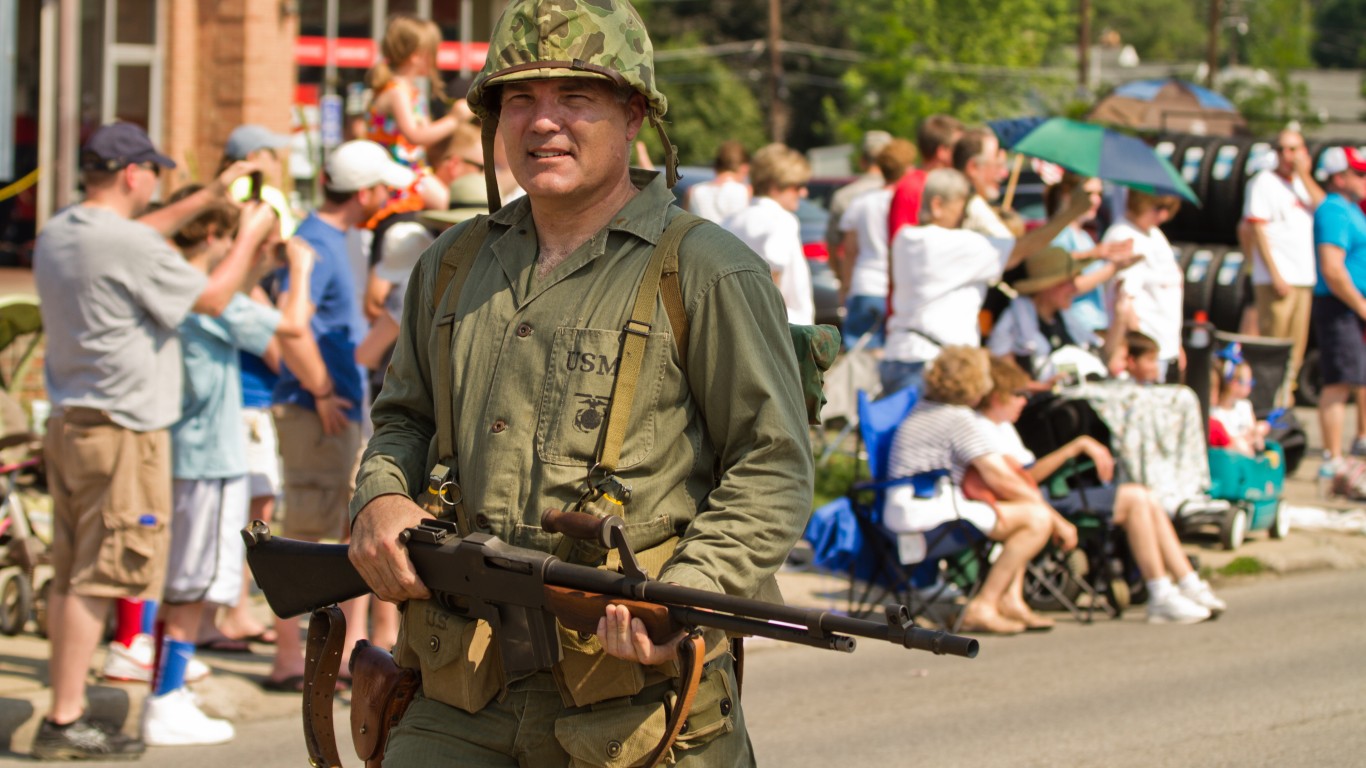
World War II was fought on land, sea, and air, but it was the small arms carried by millions of soldiers that shaped the day-to-day reality of combat. Rifles, submachine guns, and machine guns determined how infantry maneuvered, how cities were taken, and how defenses held under pressure. Here, 24/7 Wall St. is taking a closer look at the most influential guns of World War II.
To determine the most influential guns of World War II, 24/7 Wall St. reviewed various historical and military sources. We ordered these guns chronologically. We included supplemental information regarding the country of origin, manufacturer, caliber of ammunition, and more for each gun.
Here is a look at the most influential guns of World War II:
Why Are We Covering This?
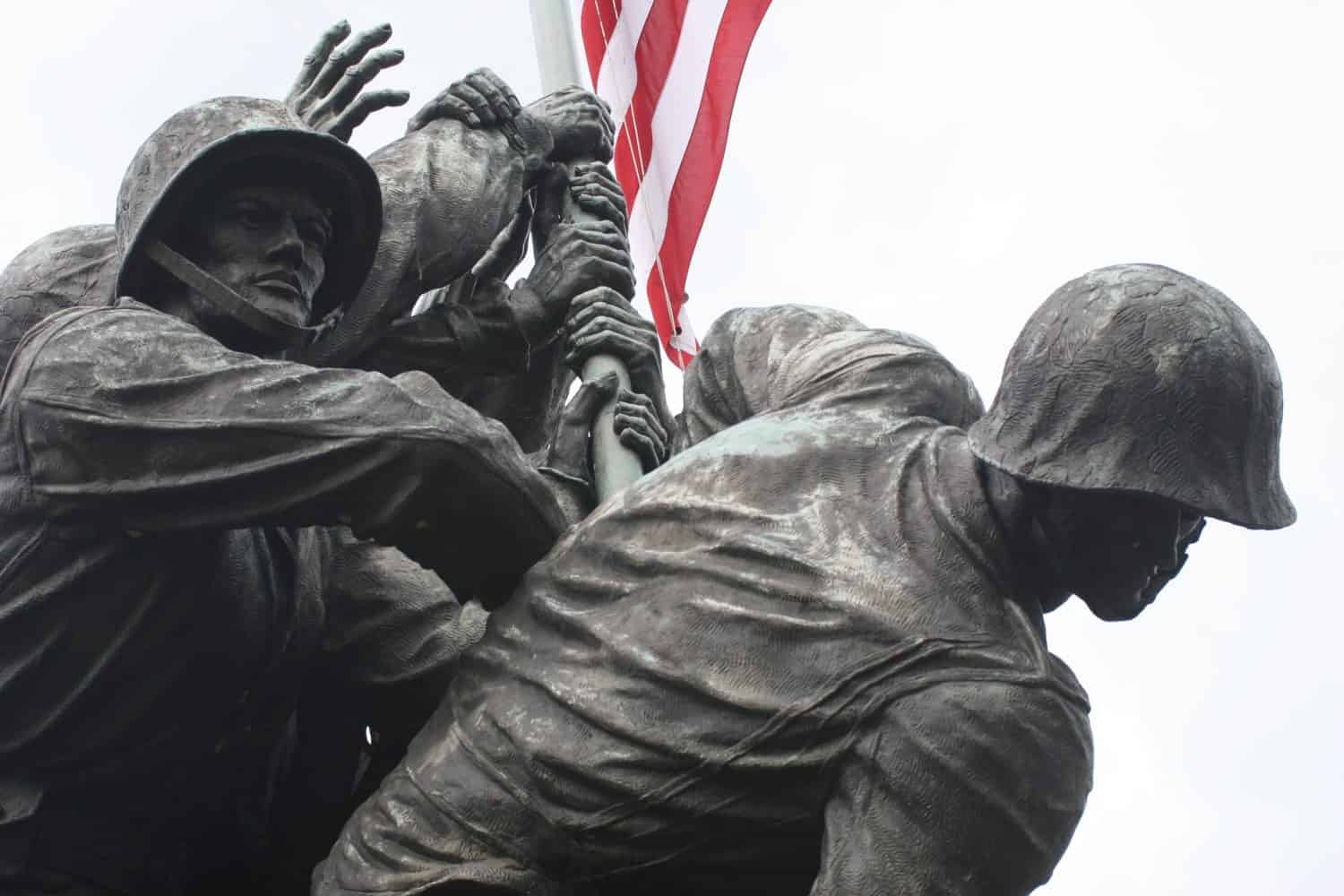
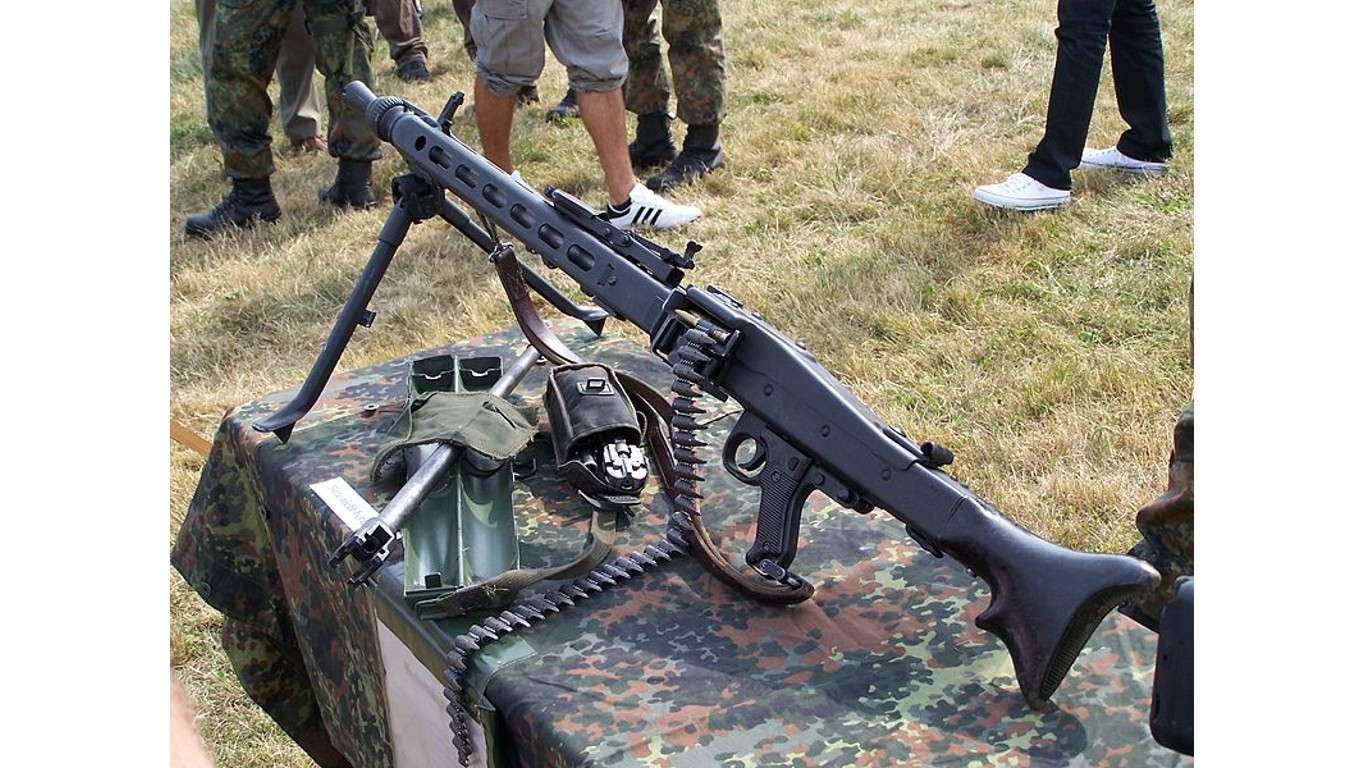
The firearms of World War II would ultimately shape strategy, define tactics and influence every major battle across the globe for this war and all that would follow. Understanding these weapons offers a clearer view of how infantry fought, adapted, and survived under radically different conditions, from frozen forests to island jungles. Many of these guns also laid the foundation for modern small-arms design, with operating systems, ergonomics, and philosophies still reflected in today’s rifles, machine guns, and sidearms.
A Global War Defined by Firepower

World War II was shaped not only by sweeping strategies and massive troop movements, but by the firearms carried into combat by millions of soldiers. Rifles, machine guns, and submachine guns played a central role in determining battlefield outcomes. These weapons influenced how infantry advanced, defended, communicated, and survived across every major front of the conflict.
Industrial Innovation Meets Battlefield Reality
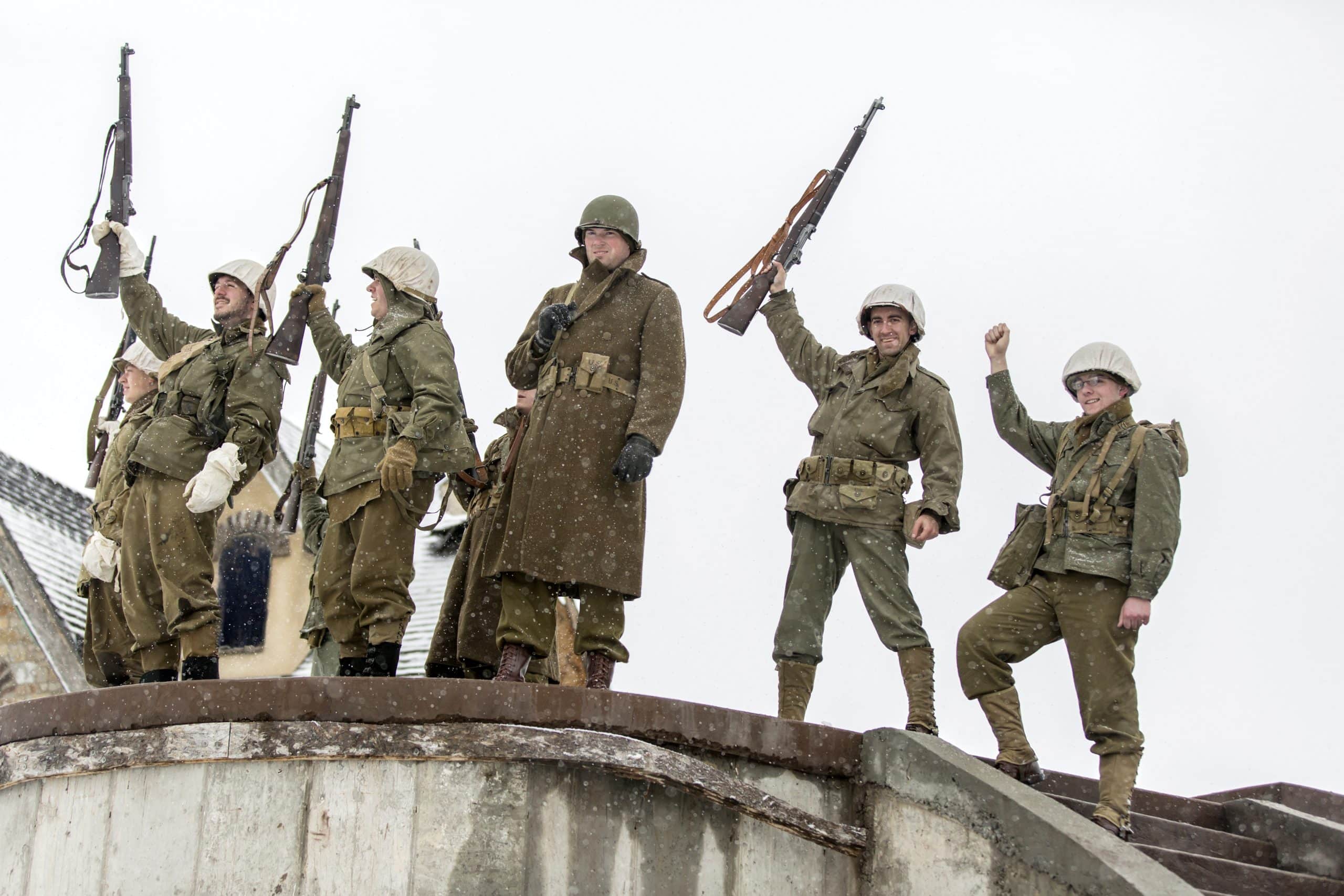
As nations shifted into total war, firearm production evolved at a historic pace. New manufacturing methods like metal stamping and simplified machining allowed armies to produce small arms on a massive scale. This industrial surge meant that the effectiveness of a weapon was tied not just to design, but to how quickly it could be built, maintained, and fielded.
The Shift Toward Automatic and Semi-Automatic Weapons
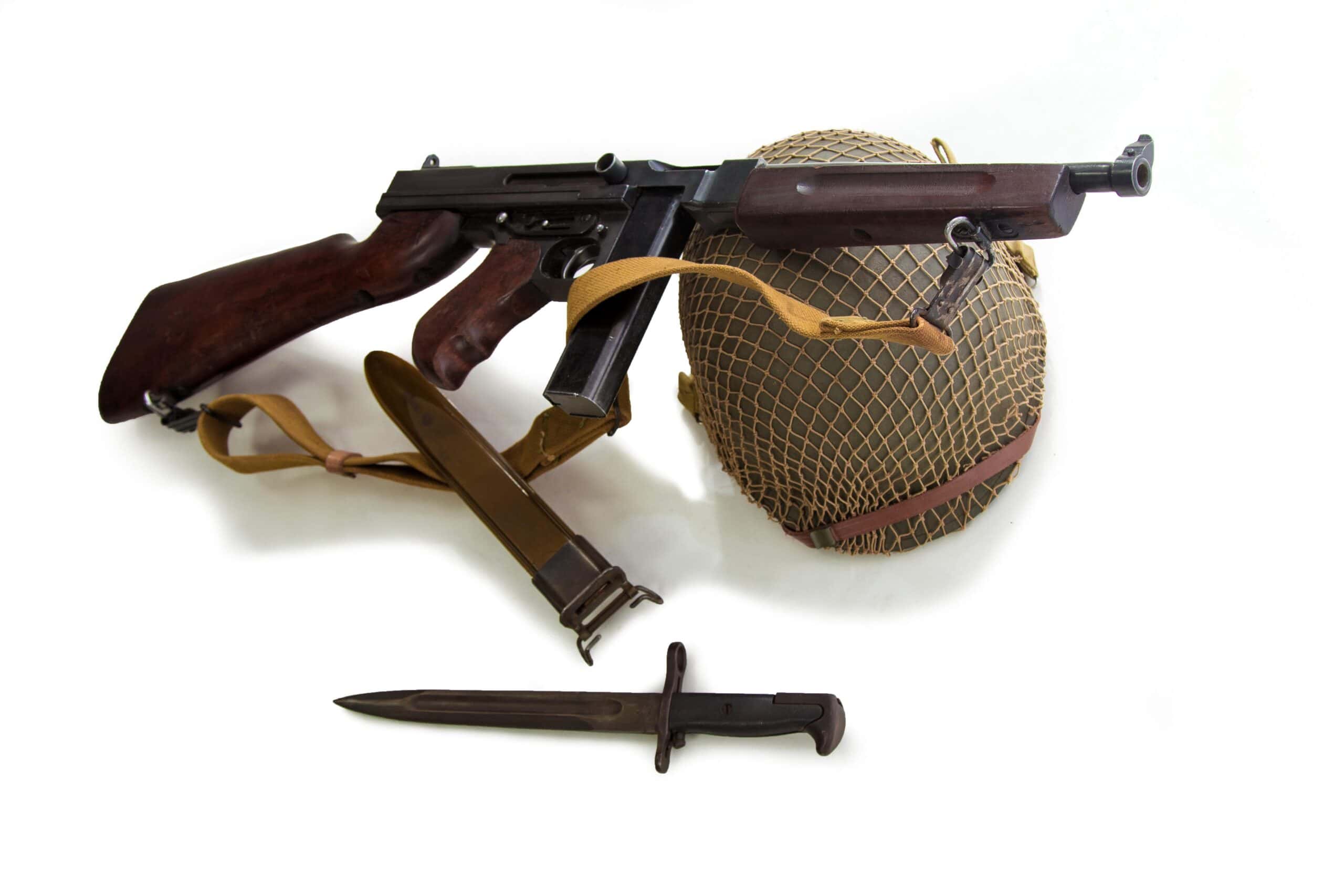
World War II accelerated the transition away from slow bolt-action rifles. Semi-automatic rifles delivered more consistent firepower, and submachine guns proved deadly in close-quarters combat. Meanwhile, the rise of the general-purpose machine gun transformed squad-level tactics. These technological leaps redefined how infantry engaged enemies at multiple ranges.
Different Fronts, Different Demands
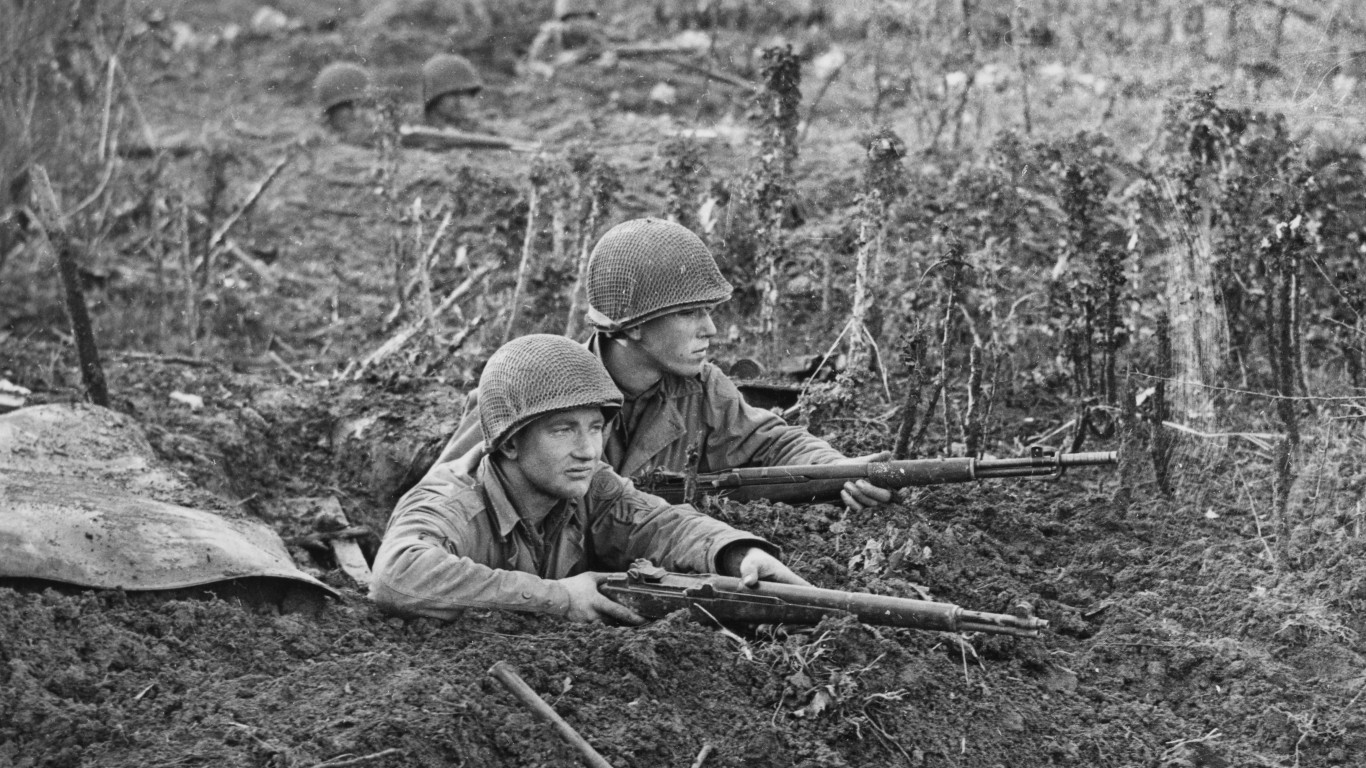
Weapons performed differently across the radically diverse environments of the war. The Eastern Front’s freezing winters tested mechanisms and lubricants, while the Pacific’s humidity and jungles demanded rugged reliability. Urban battlefields favored compact submachine guns, whereas open terrain elevated the importance of long-range rifles and machine guns. Geography shaped each weapon’s reputation.
How These Weapons Still Shape Modern Warfare
Many firearms introduced or refined during WWII continue to influence modern small-arms design. The MG42’s operating principles survive in today’s NATO machine guns, and pistols like the Browning Hi-Power set standards for capacity and ergonomics. Even retired weapons left behind design philosophies that guide contemporary military doctrine, proving their enduring impact.
Mosin-Nagant 91/30
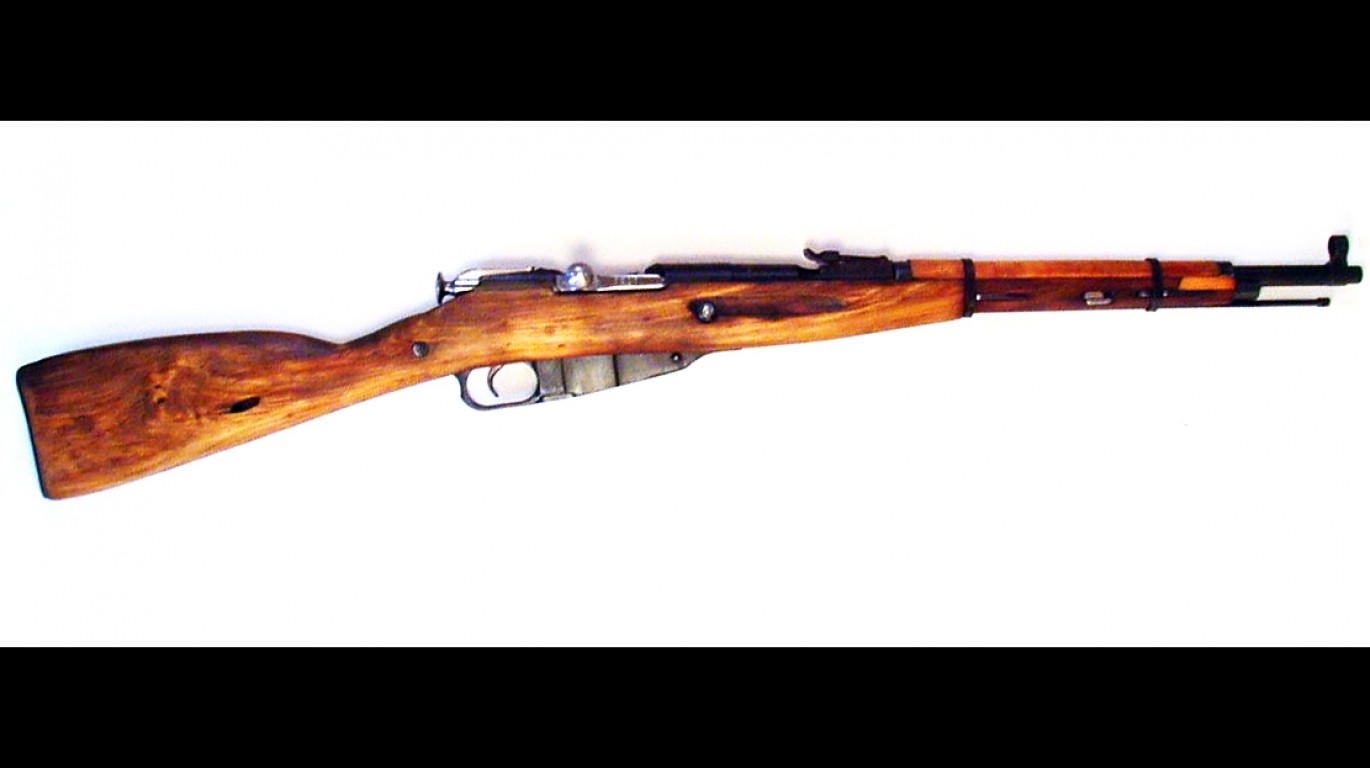
- Year introduced: 1891
- Country of origin: Soviet Union
- Manufacturer: Tula / Izhevsk
- Type: Bolt-action Rifle
- Range: 1500 ft.
- Firing action: Bolt-action
- Caliber and feed: 7.62×54mmR; 5-round internal magazine
The Mosin-Nagant 91/30 was the core rifle of the Red Army, known for surviving mud, snow, and brutal cold on the Eastern Front. Crude but extremely durable, it armed millions of Soviet soldiers. Its slow bolt and rough finish never matched German craftsmanship, yet its long-range power and reliability made it a workhorse of the war.
Luger P08
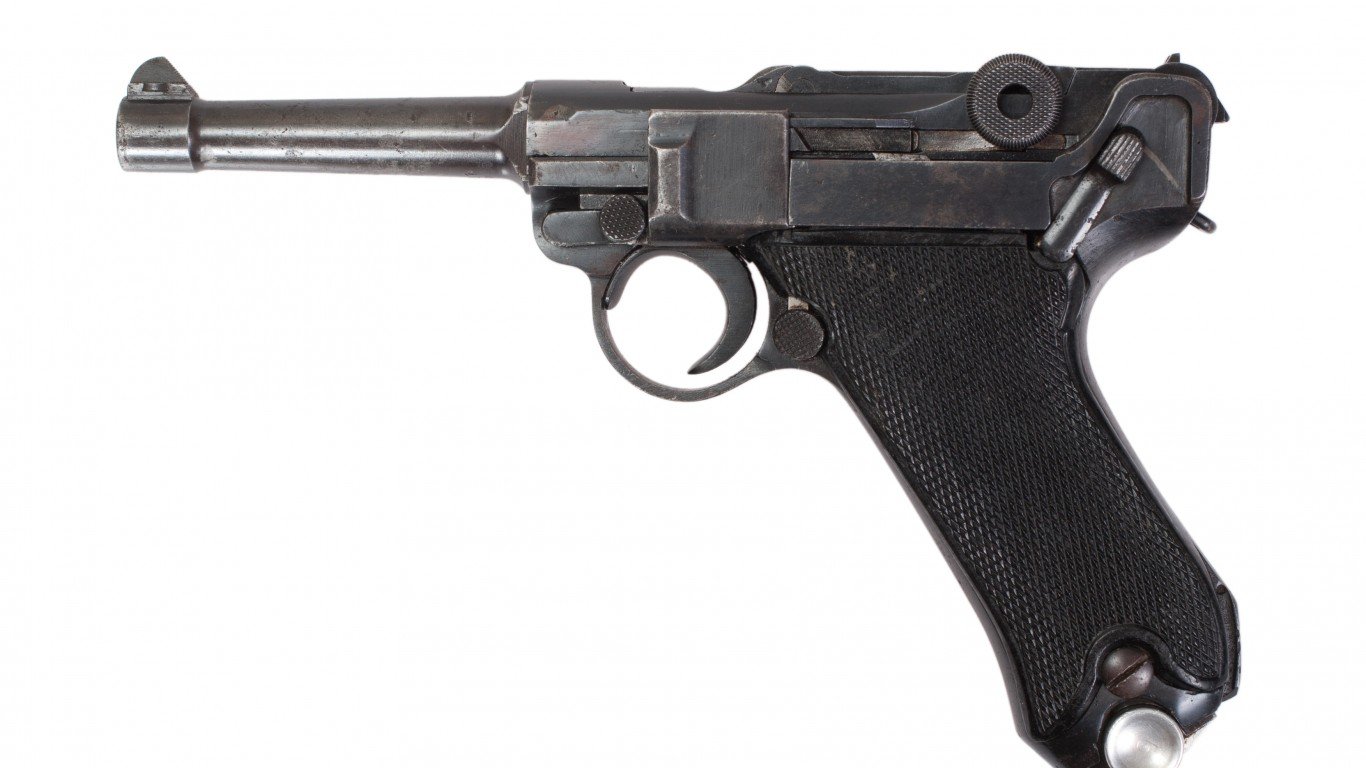
- Year introduced: 1908
- Country of origin: Germany
- Manufacturer: DWM / Mauser
- Type: Pistol
- Range: 160 ft.
- Firing action: Toggle-locked, semi-automatic
- Caliber and feed: 9×19mm Parabellum; 8-round detachable magazine
The Luger P08 combined distinctive engineering with excellent ergonomics and accuracy, making it one of the most recognizable pistols ever built. Sensitive to dirt and expensive to produce, it was gradually supplanted by the P38 but remained a coveted sidearm. Its grip angle and balance influenced countless later handgun designs.
Colt M1911
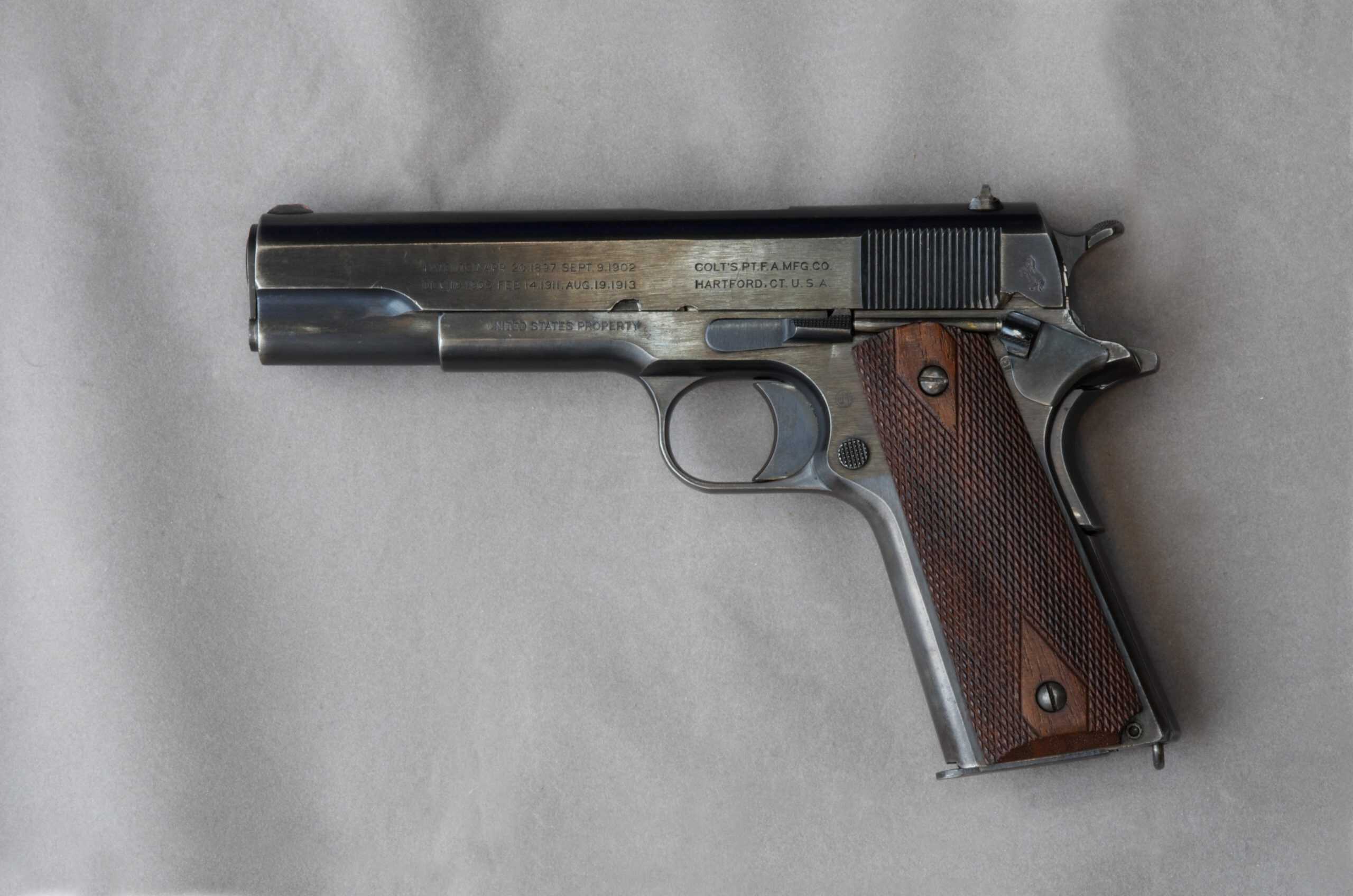
- Year introduced: 1911
- Country of origin: United States
- Manufacturer: Colt
- Type: Pistol
- Range: 150 ft.
- Firing action: Short recoil, semi-automatic
- Caliber and feed: .45 ACP; 7-round detachable magazine
The M1911 gave American troops a hard-hitting sidearm with excellent close-range stopping power. Its robust steel construction and simple controls made it dependable in mud, heat, and salt air. Although limited by capacity and weight, it earned a reputation for reliability and lethality that kept it in service long after WWII ended.
Browning M1919
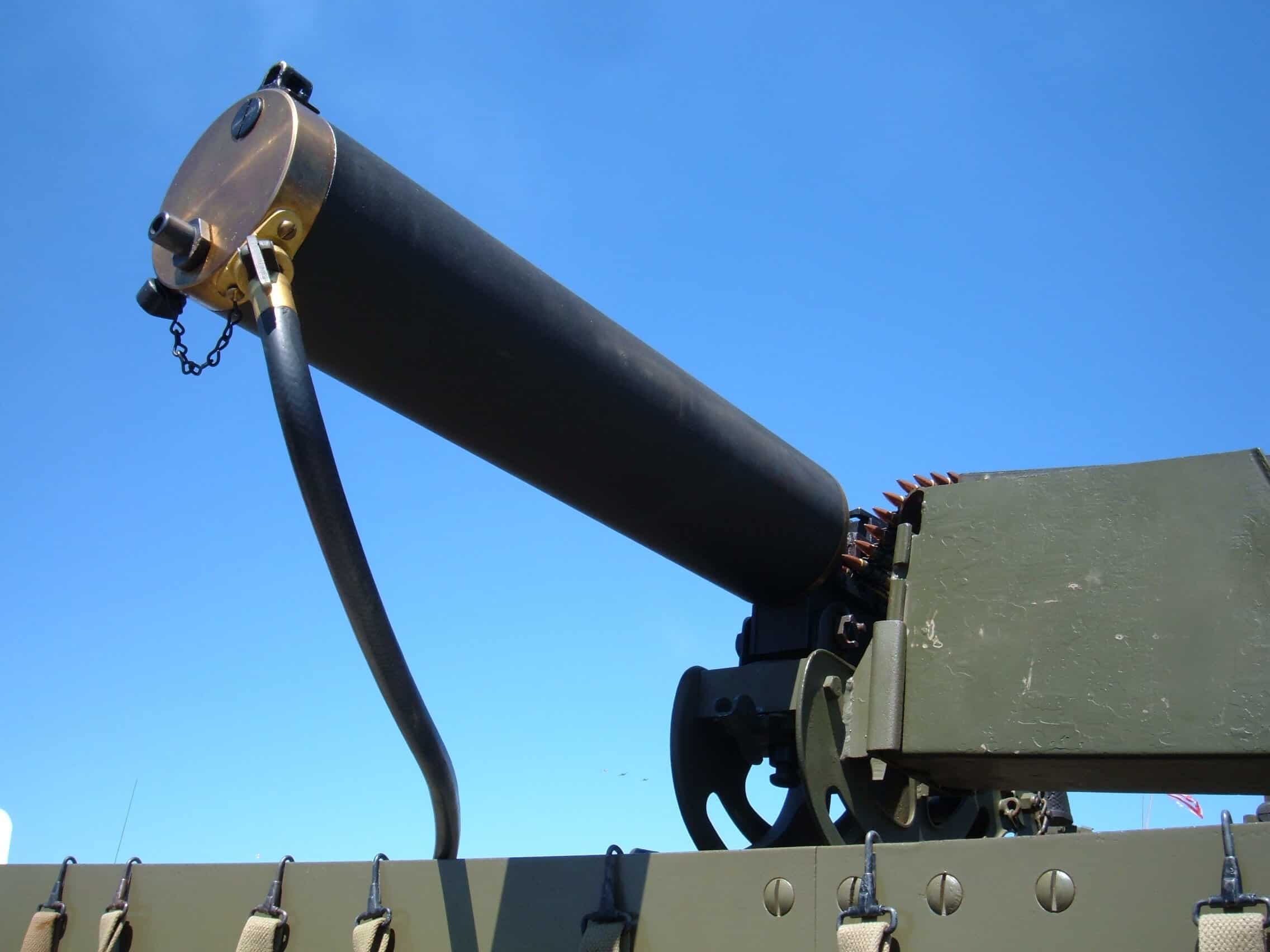
- Year introduced: 1919
- Country of origin: United States
- Manufacturer: Colt / Various
- Type: Medium Machine Gun
- Range: 3000 ft.
- Firing action: Recoil-operated, full-auto
- Caliber and feed: .30-06 Springfield; Belt-fed
The Browning M1919 served as the standard U.S. medium machine gun, mounted on tripods, vehicles, and aircraft. Durable and accurate, it provided essential sustained fire in both offensive and defensive roles. Though heavy to move, it proved mechanically reliable across all theaters and became a mainstay of American fire support doctrine.
Thompson M1928 / M1A1
- Year introduced: 1928
- Country of origin: United States
- Manufacturer: Auto-Ordnance
- Type: Submachine Gun
- Range: 500 ft.
- Firing action: Blowback, selective-fire
- Caliber and feed: .45 ACP; 20- or 30-round box magazine
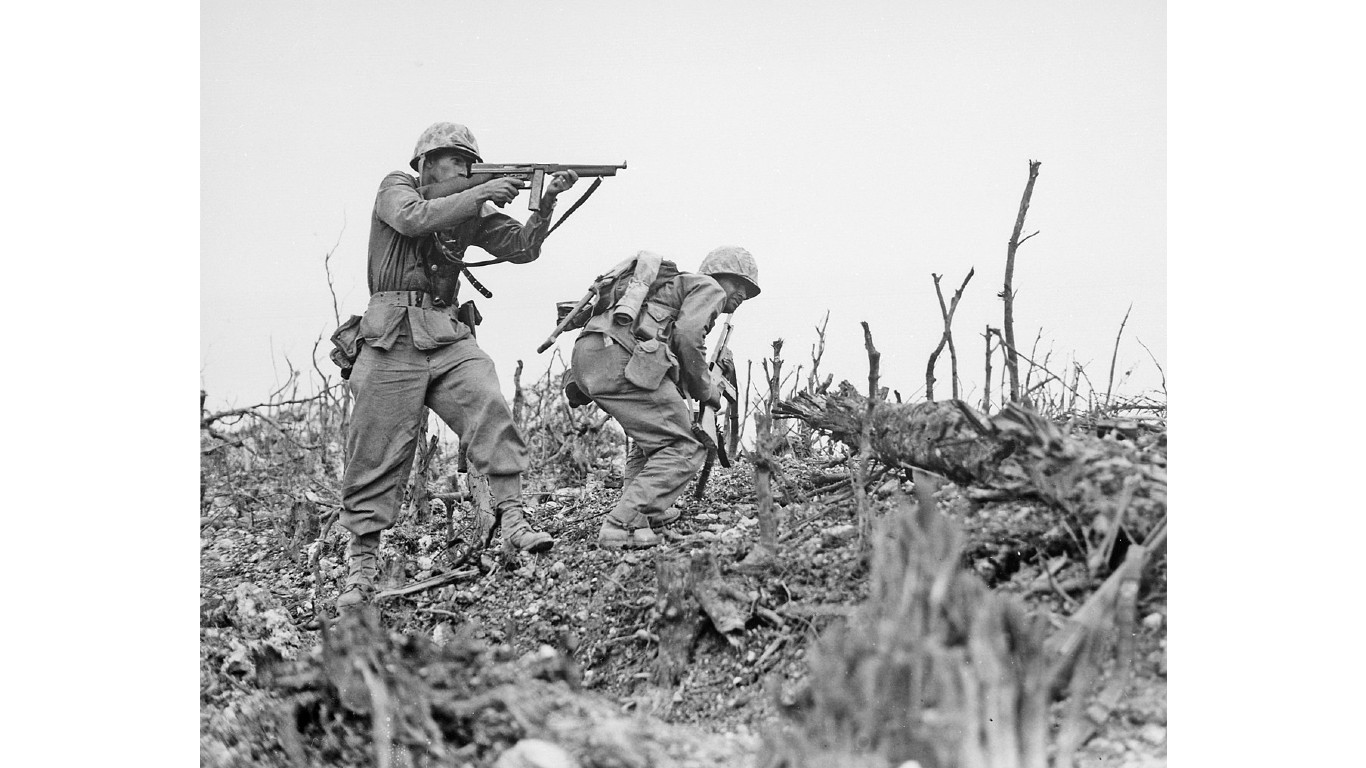
The Thompson became synonymous with close-quarters firepower. Used by U.S., British, and Chinese troops, it delivered heavy .45 ACP rounds with excellent reliability. Its weight and cost were drawbacks, but in jungles, cities, and trench assaults it excelled. The gun’s effectiveness and notoriety helped cement the submachine gun’s role in modern warfare.
Degtyaryov DP-28

- Year introduced: 1928
- Country of origin: Soviet Union
- Manufacturer: Degtyaryov
- Type: Light Machine Gun
- Range: 2300 ft.
- Firing action: Gas-operated, full-auto
- Caliber and feed: 7.62×54mmR; 47-round pan magazine
The DP-28 was a quintessential Soviet weapon: simple, rugged, and forgiving of abuse. Its distinctive pan magazine was awkward but provided sustained fire for advancing infantry. Functioning reliably in mud, snow, and sand, it became a critical part of Soviet squad tactics and contributed heavily to Red Army firepower on the Eastern Front.
Browning M2 .50 Cal
- Year introduced: 1933
- Country of origin: United States
- Manufacturer: Browning / Various
- Type: Heavy Machine Gun
- Range: 6000 ft.
- Firing action: Short-recoil operated, full-auto
- Caliber and feed: .50 BMG; Belt-fed
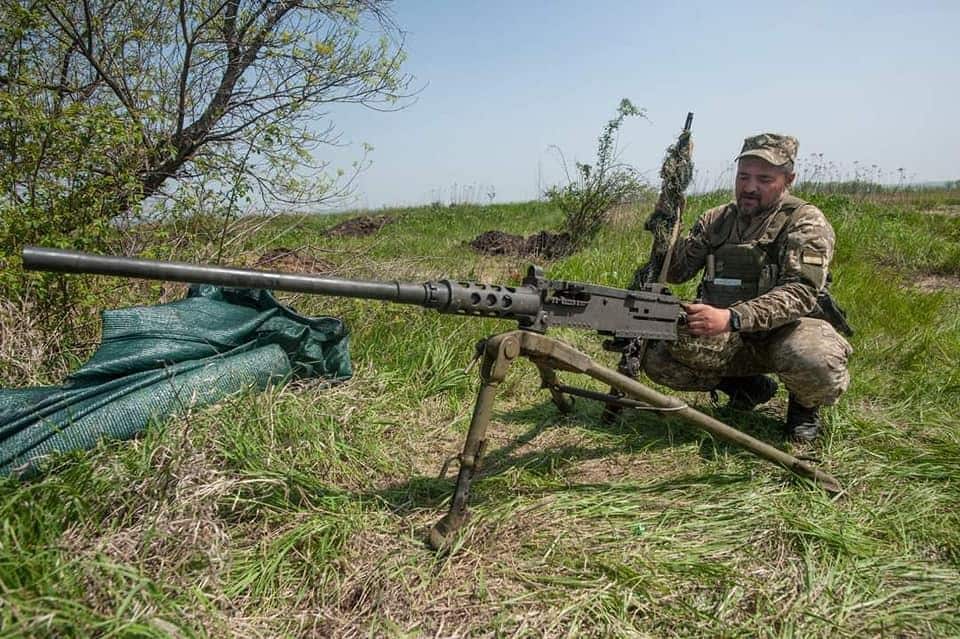
The Browning M2 offered unmatched range and destructive power against infantry, vehicles, and aircraft. Mounted on trucks, tanks, ships, and aircraft, it became one of the most versatile weapons of the war. Its extraordinary reliability and effectiveness ensured not only WWII dominance but continued frontline service into the twenty-first century.
Tokarev TT-33

- Year introduced: 1933
- Country of origin: Soviet Union
- Manufacturer: Tula
- Type: Pistol
- Range: 175 ft.
- Firing action: Short recoil, semi-automatic
- Caliber and feed: 7.62×25mm Tokarev; 8-round detachable magazine
The TT-33 provided Soviet forces with a simple, durable sidearm firing a high-velocity cartridge capable of penetrating helmets and light cover. Its design streamlined John Browning’s earlier concepts for easier mass production. Though basic in safety features, it proved reliable in brutal climates and became one of the most widely issued pistols on the Eastern Front.
MG34
- Year introduced: 1934
- Country of origin: Germany
- Manufacturer: Mauser
- Type: General-purpose Machine Gun
- Range: 3500 ft.
- Firing action: Recoil-operated, selective-fire
- Caliber and feed: 7.92×57mm Mauser; 50-round belt or drum
The MG34 was the first true general-purpose machine gun, configurable for light or heavy roles. Its high rate of fire and superb build quality made it lethal but expensive and maintenance-heavy. It provided a powerful template for future machine-gun doctrine and demonstrated the value of a single system covering multiple battlefield roles.
Karabiner 98k
- Year introduced: 1935
- Country of origin: Germany
- Manufacturer: Mauser
- Type: Bolt-action Rifle
- Range: 1500 ft.
- Firing action: Bolt-action
- Caliber and feed: 7.92×57mm Mauser; 5-round internal magazine
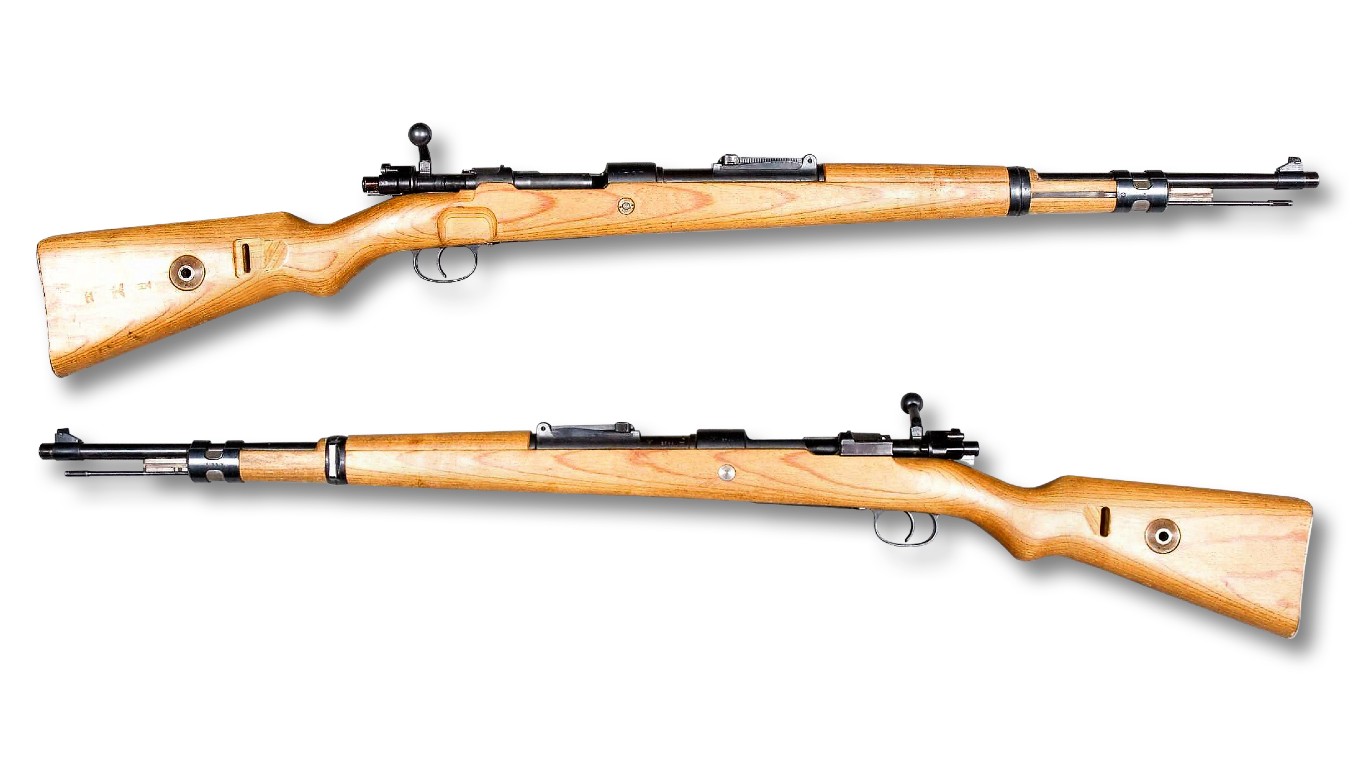
The Kar98k was Germany’s primary infantry rifle, prized for accuracy, smooth bolt operation, and strong cartridge performance. It handled harsh environments well and performed reliably from North Africa to Russia. Though its low rate of fire lagged behind semi-autos like the Garand, the rifle’s quality and precision influenced post-war sporting and military designs.
Browning Hi-Power
- Year introduced: 1935
- Country of origin: Belgium
- Manufacturer: FN Herstal
- Type: Pistol
- Range: 165 ft.
- Firing action: Short recoil, semi-automatic
- Caliber and feed: 9×19mm Parabellum; 13-round detachable magazine
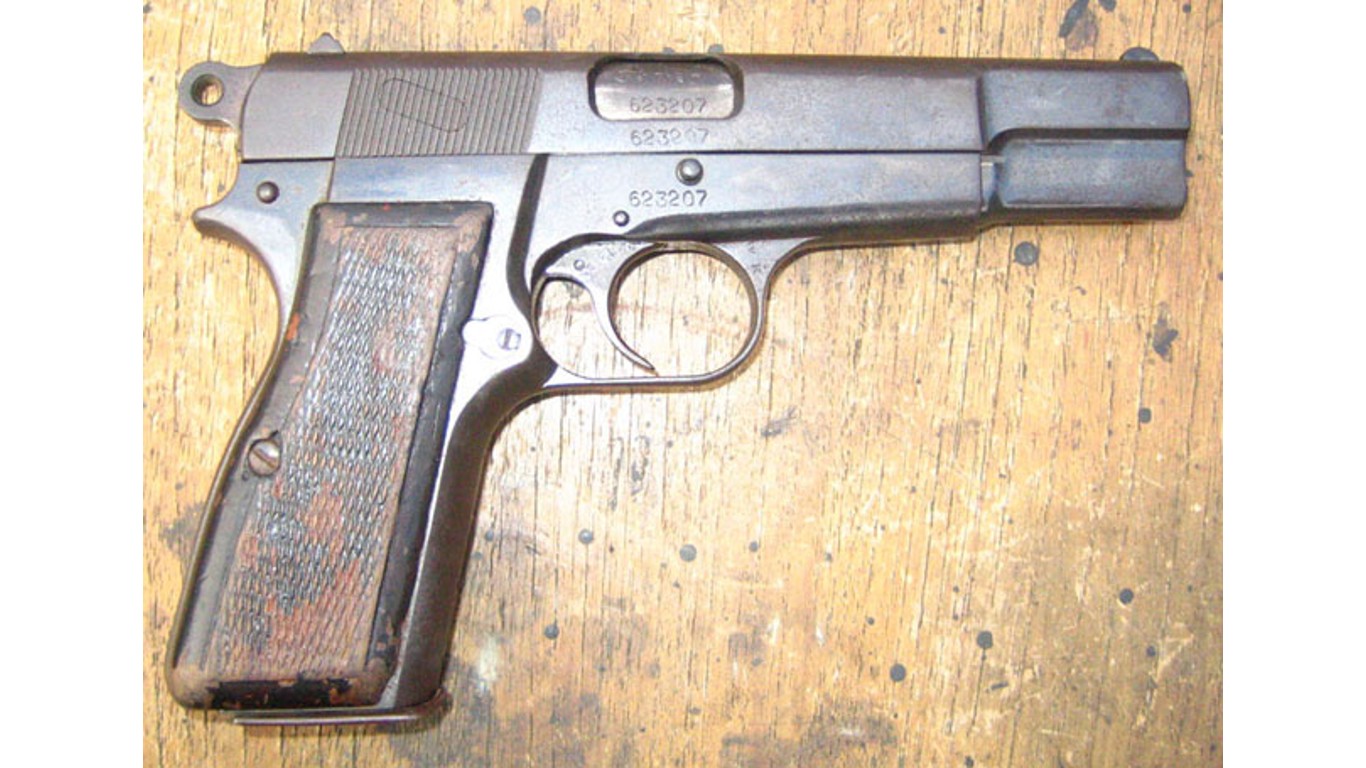
The Browning Hi-Power set a new standard with its high-capacity magazine and comfortable ergonomics. Adopted by both Allied and Axis forces, it saw extensive service worldwide. Its reliability and advanced design influenced nearly every modern 9mm service pistol, making it one of the most important handguns of the twentieth century.
M1 Garand
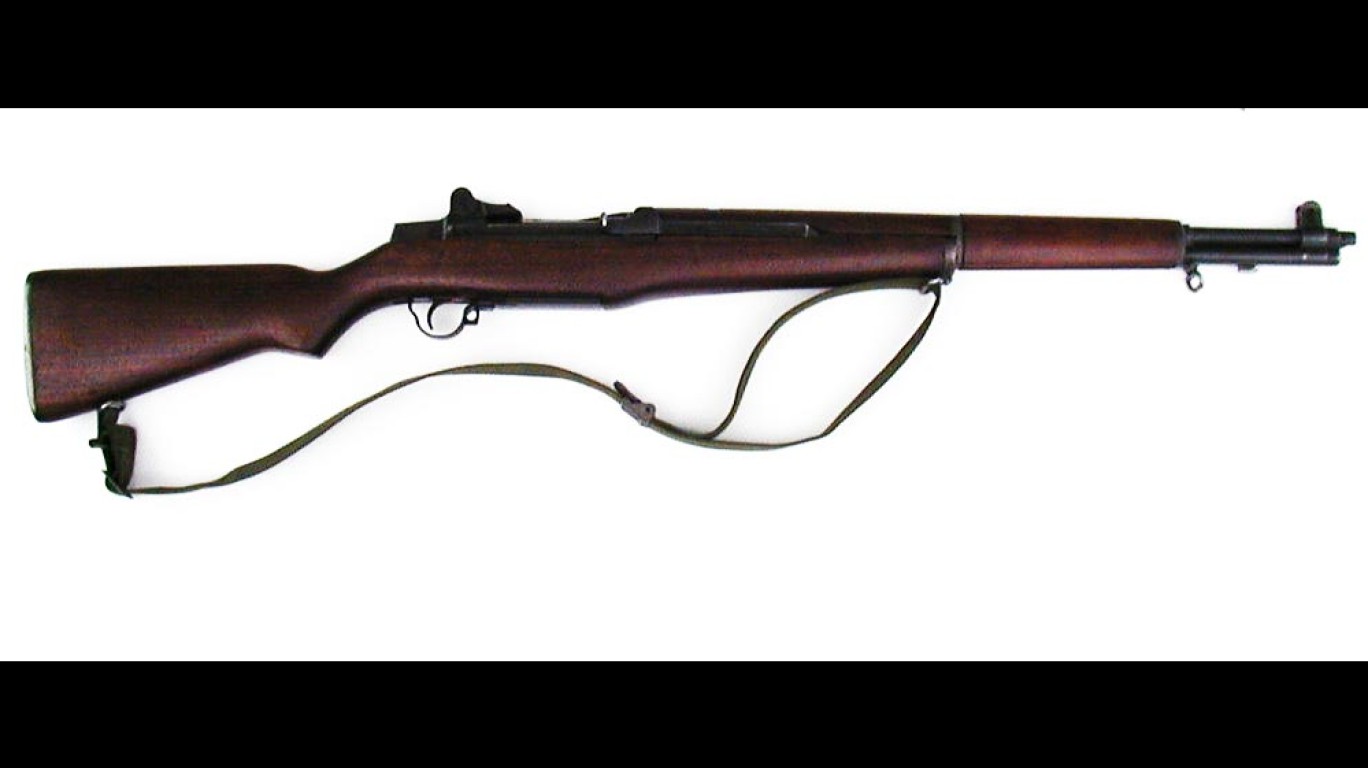
- Year introduced: 1936
- Country of origin: United States
- Manufacturer: Springfield Armory
- Type: Semi-automatic Rifle
- Range: 1500 ft.
- Firing action: Gas-operated, semi-automatic
- Caliber and feed: .30-06 Springfield; 8-round en-bloc clip
The M1 Garand gave U.S. forces a major advantage with its semi-automatic fire, allowing faster follow-up shots than the bolt-action rifles fielded by most Axis troops. Its reliability, range, and stopping power made it highly effective across Europe and the Pacific. Heavy and limited to eight-round clips, it still set the benchmark for modern battle rifles.
Type 96 LMG
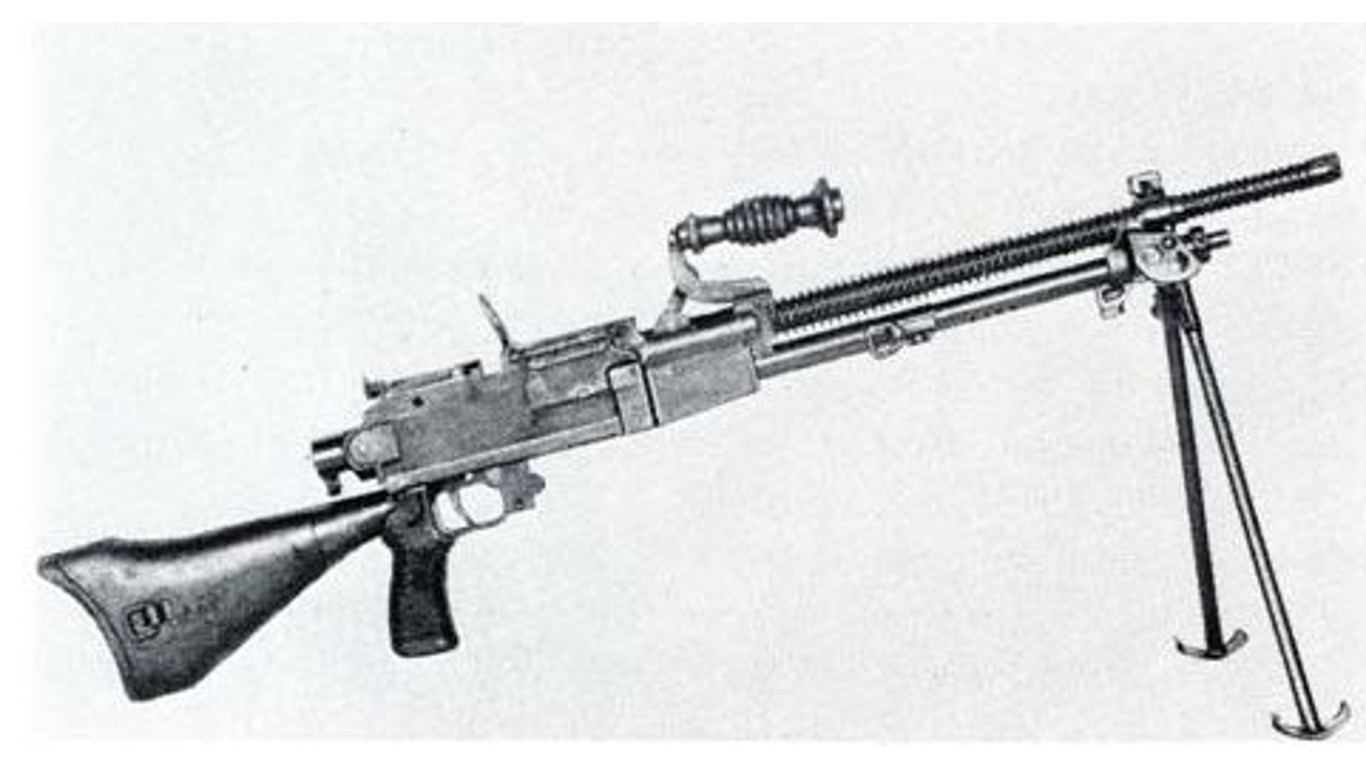
- Year introduced: 1936
- Country of origin: Japan
- Manufacturer: Nambu
- Type: Light Machine Gun
- Range: 2000 ft.
- Firing action: Gas-operated, selective-fire
- Caliber and feed: 6.5×50mm Arisaka; 30-round top-mounted magazine
The Type 96 light machine gun provided Japanese infantry with portable automatic fire suited to island and jungle fighting. Its mild-recoiling 6.5mm cartridge made it controllable, and its design handled dirt and humidity reasonably well. Although less powerful than Allied machine guns, it fit Japan’s emphasis on light, mobile infantry formations.
Boys Anti-Tank Rifle
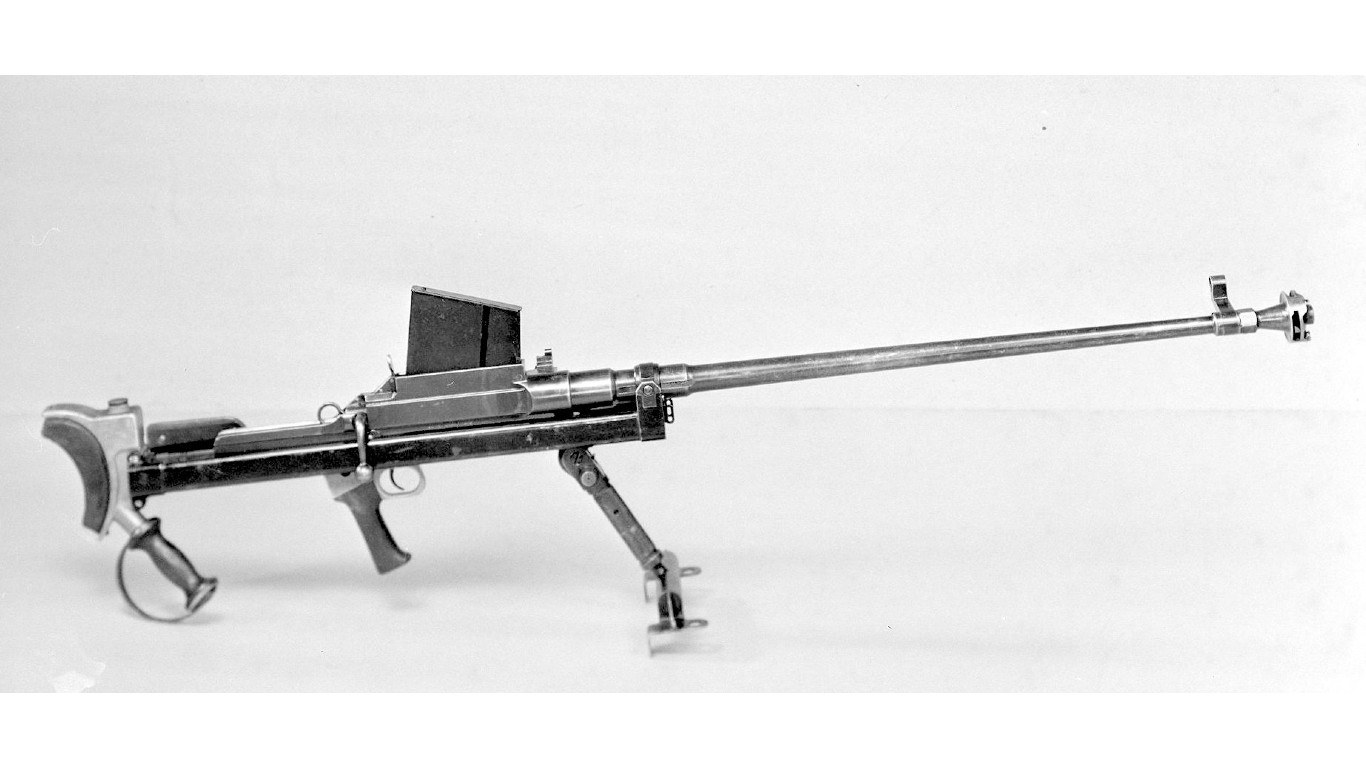
- Year introduced: 1937
- Country of origin: United Kingdom
- Manufacturer: Birmingham Small Arms
- Type: Anti-tank Rifle
- Range: 900 ft.
- Firing action: Bolt-action
- Caliber and feed: .55 Boys; 5-round detachable magazine
Early in the war, the Boys anti-tank rifle offered infantry a way to penetrate light armor and armored cars. Rapid improvements in tank protection quickly outpaced its capabilities, and it was relegated to secondary roles. Heavy recoil, weight, and limited effectiveness led to its replacement by rocket launchers, but it marked an important transitional step in anti-armor weapons.
MP40
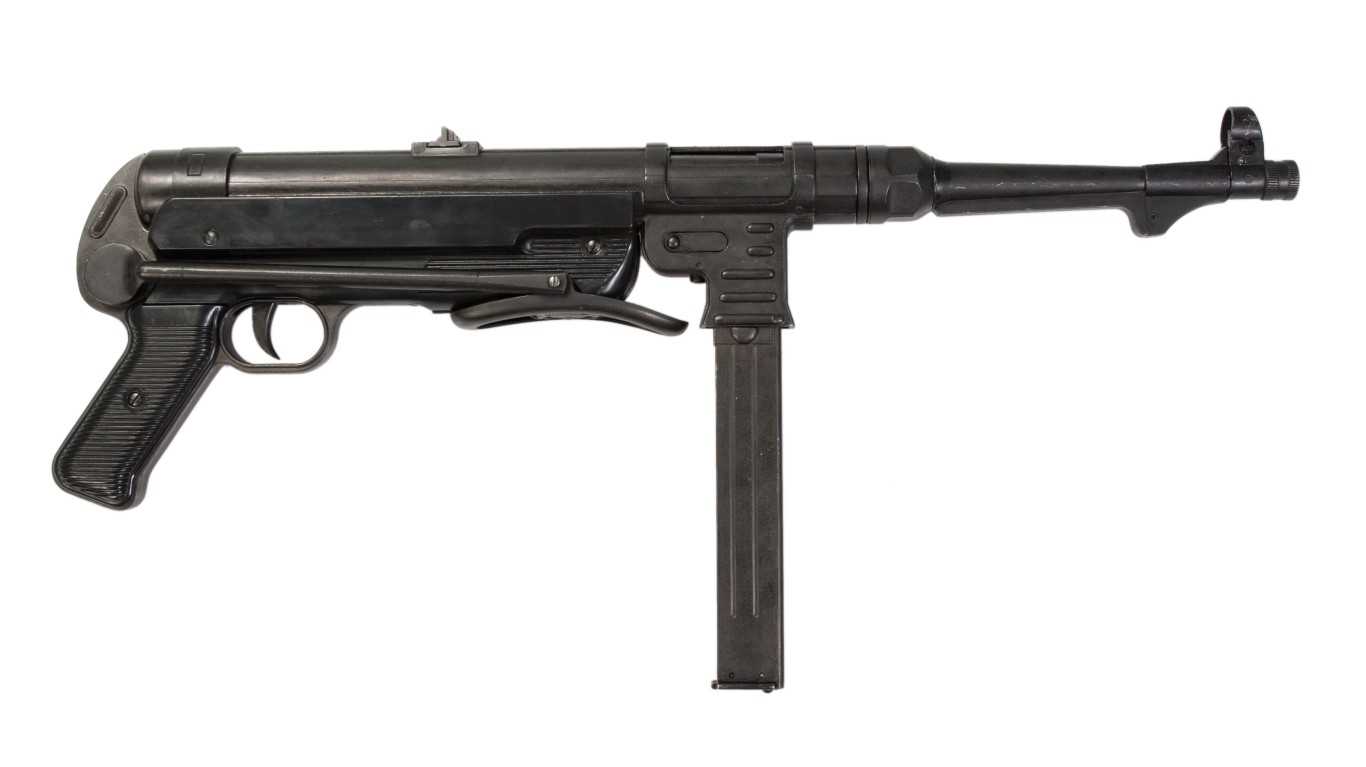
- Year introduced: 1938
- Country of origin: Germany
- Manufacturer: ERMA
- Type: Submachine Gun
- Range: 500 ft.
- Firing action: Blowback, full-auto
- Caliber and feed: 9×19mm Parabellum; 32-round box magazine
The MP40 combined stamped-metal construction with ergonomic folding-stock design, making it a highly practical weapon for mechanized infantry and paratroopers. Its controllable recoil and compact profile suited close combat in cities and villages. While limited in range and suffering from fragile magazines, it became an enduring symbol of German infantry forces.
Beretta M38

- Year introduced: 1938
- Country of origin: Italy
- Manufacturer: Beretta
- Type: Submachine Gun
- Range: 500 ft.
- Firing action: Blowback, full-auto
- Caliber and feed: 9×19mm or 9mm M38; 30- or 40-round box magazine
The Beretta M38 series earned a reputation as one of the best submachine guns of the war. It combined excellent accuracy, smooth operation, and rock-solid reliability. Italian and German troops valued its performance in close-range engagements. Although more expensive and complex than many rivals, its battlefield effectiveness made it highly respected.
Bren Mk I / Mk II
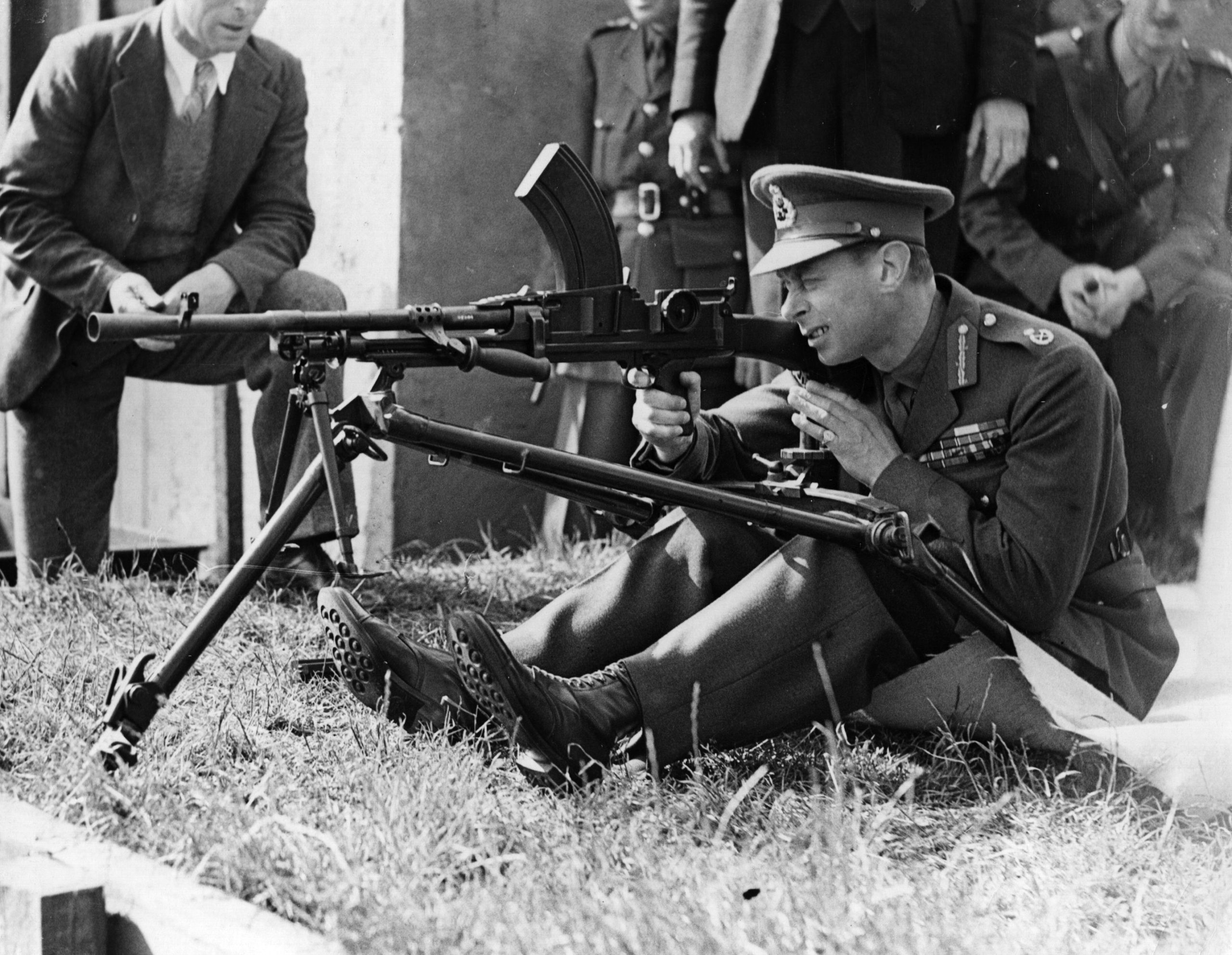
- Year introduced: 1938
- Country of origin: United Kingdom
- Manufacturer: Enfield
- Type: Light Machine Gun
- Range: 2000 ft.
- Firing action: Gas-operated, selective-fire
- Caliber and feed: .303 British; 30-round top-mounted magazine
The Bren gun gave British and Commonwealth squads accurate, controllable automatic fire. Its quick-change barrel and top-mounted magazine made it practical in both defense and advance. Reliable in deserts, jungles, and arctic conditions, it became a cornerstone of British infantry tactics and remained in service long after the war.
Walther P38

- Year introduced: 1938
- Country of origin: Germany
- Manufacturer: Walther
- Type: Pistol
- Range: 160 ft.
- Firing action: Short recoil, DA/SA
- Caliber and feed: 9×19mm Parabellum; 8-round detachable magazine
The Walther P38 introduced a double-action/single-action trigger system that greatly improved safety and handling over earlier designs. Replacing the Luger as Germany’s primary service pistol, it was easier to manufacture and maintain. Its innovative operating system became the blueprint for many post-war military and police sidearms around the world.
Arisaka Type 99
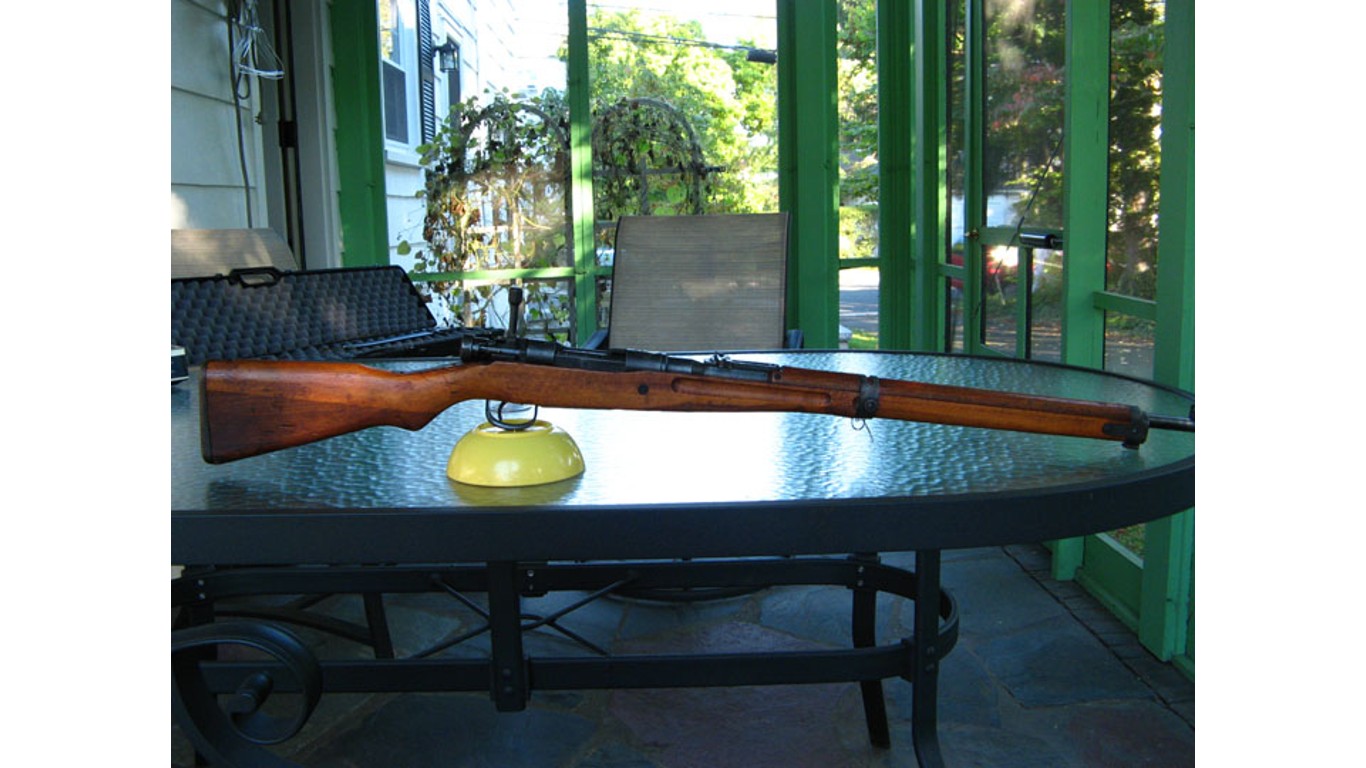
- Year introduced: 1939
- Country of origin: Japan
- Manufacturer: Nagoya Arsenal
- Type: Bolt-action Rifle
- Range: 1500 ft.
- Firing action: Bolt-action
- Caliber and feed: 7.7×58mm Arisaka; 5-round internal magazine
The Type 99 was Japan’s late-war service rifle, built around a strong action and a more powerful cartridge than earlier Arisaka designs. It tolerated rough handling and tropical climates well. Although late-war production shortcuts hurt finish quality, the rifle remained accurate and reliable, reflecting Japan’s emphasis on simple, durable infantry weapons.
SVT-40
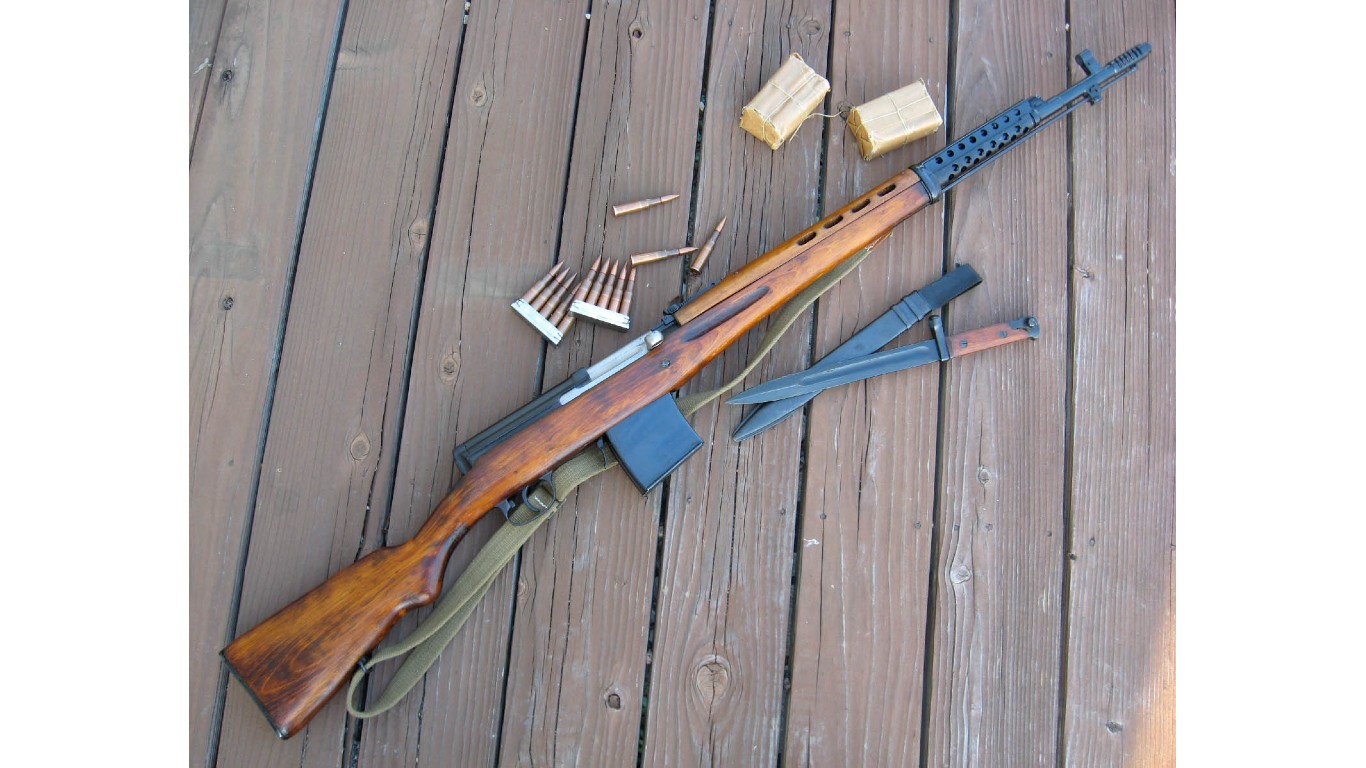
- Year introduced: 1940
- Country of origin: Soviet Union
- Manufacturer: Tula / Izhevsk
- Type: Semi-automatic Rifle
- Range: 1500 ft.
- Firing action: Gas-operated, semi-automatic
- Caliber and feed: 7.62×54mmR; 10-round detachable magazine
The SVT-40 was the Soviet Union’s ambitious attempt to field a modern semi-automatic rifle. It offered higher firepower and good range, especially in the hands of experienced troops. However, it was maintenance-sensitive in field conditions and ultimately produced in smaller numbers. Even so, its design influenced later Soviet small arms thinking.
Lee-Enfield No.4 Mk I
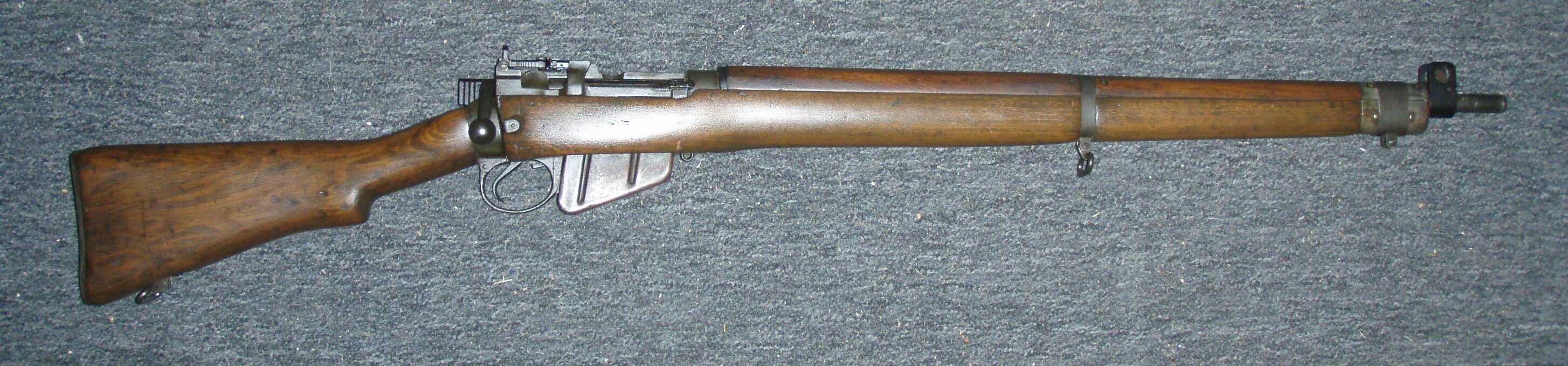
- Year introduced: 1941
- Country of origin: United Kingdom
- Manufacturer: RSAF Enfield
- Type: Bolt-action Rifle
- Range: 1600 ft.
- Firing action: Bolt-action
- Caliber and feed: .303 British; 10-round detachable magazine
The Lee-Enfield No.4 Mk I gave British and Commonwealth troops one of the fastest-cycling bolt actions of the war. Combined with a 10-round magazine, it allowed impressive sustained fire compared to most Axis rifles. Accurate, rugged, and effective from Europe to Burma, it became a defining weapon of the Allied infantry effort.
PPSh-41
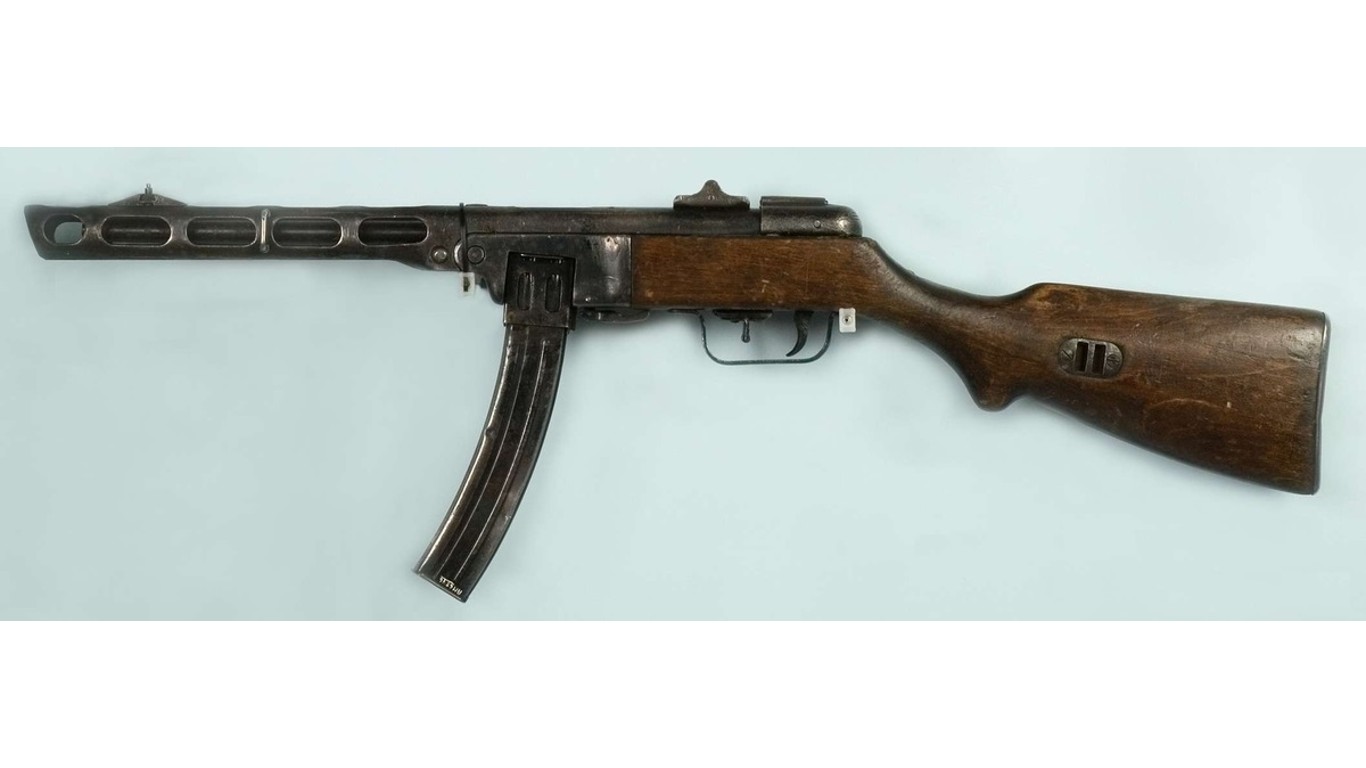
- Year introduced: 1941
- Country of origin: Soviet Union
- Manufacturer: Zavod No. 367
- Type: Submachine Gun
- Range: 500 ft.
- Firing action: Blowback, full-auto
- Caliber and feed: 7.62×25mm Tokarev; 71-round drum or 35-round magazine
The PPSh-41 was built for mass production and brutal front-line conditions. Its enormous drum magazine and blistering rate of fire made it devastating in close-quarters assaults, especially in cities and forests. Rugged, simple, and reliable in extreme cold, it became one of the most feared and prolific submachine guns of the Eastern Front.
Sten Gun
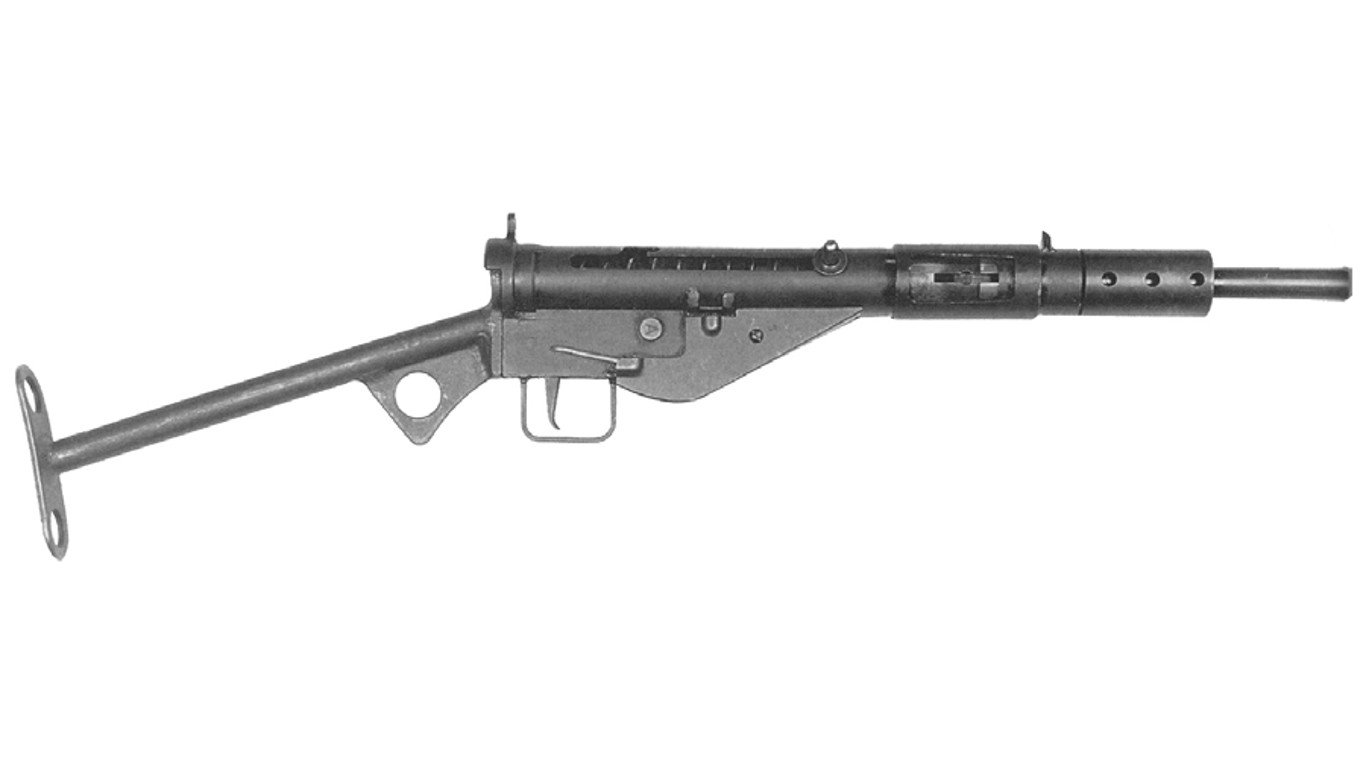
- Year introduced: 1941
- Country of origin: United Kingdom
- Manufacturer: RSAF Enfield
- Type: Submachine Gun
- Range: 350 ft.
- Firing action: Blowback, full-auto
- Caliber and feed: 9×19mm Parabellum; 32-round side-mounted magazine
The Sten was Britain’s answer to critical early-war weapon shortages. Cheap, simple, and quickly produced, it armed paratroopers, Home Guard units, and resistance fighters across occupied Europe. Crude ergonomics and occasional reliability issues were the trade-off for rapid mass production, but strategically it allowed Britain to stay in the fight.
MG42
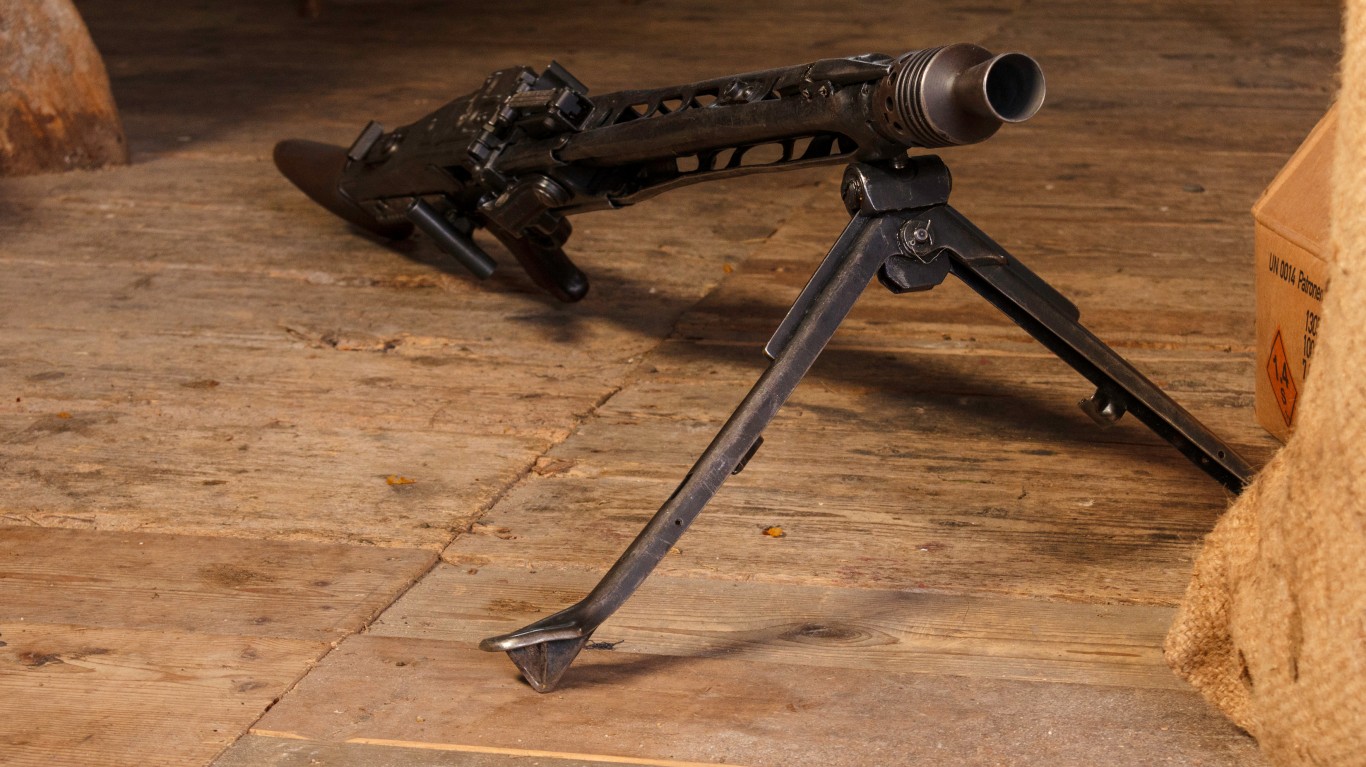
- Year introduced: 1942
- Country of origin: Germany
- Manufacturer: Mauser
- Type: General-purpose Machine Gun
- Range: 3500 ft.
- Firing action: Recoil-operated, full-auto
- Caliber and feed: 7.92×57mm Mauser; Belt-fed
The MG42 became infamous for its extremely high rate of fire and terrifying sound. Designed for easier mass production than the MG34, it offered outstanding reliability and suppressive capability. Its influence carried into post-war designs like the MG3 and even inspired aspects of NATO machine guns, cementing its status as one of history’s most important automatics.
Bazooka (M1 / M9)
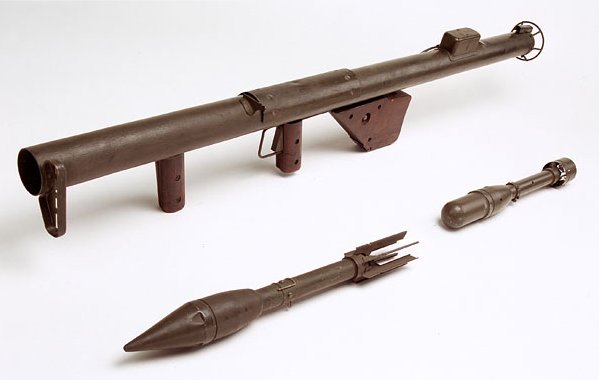
- Year introduced: 1942
- Country of origin: United States
- Manufacturer: General Electric / Others
- Type: Anti-tank Weapon
- Range: 300 ft.
- Firing action: Rocket launcher
- Caliber and feed: 60mm rocket warhead; Reusable tube launcher
The American Bazooka gave Allied infantry their first truly portable anti-tank rocket launcher. Light and relatively simple to operate, it could destroy armored vehicles and bunkers that were otherwise difficult to tackle. Though later overshadowed by more powerful designs, it defined a new class of infantry support weapon and influenced anti-tank tactics worldwide.
Gewehr 43 (G43)
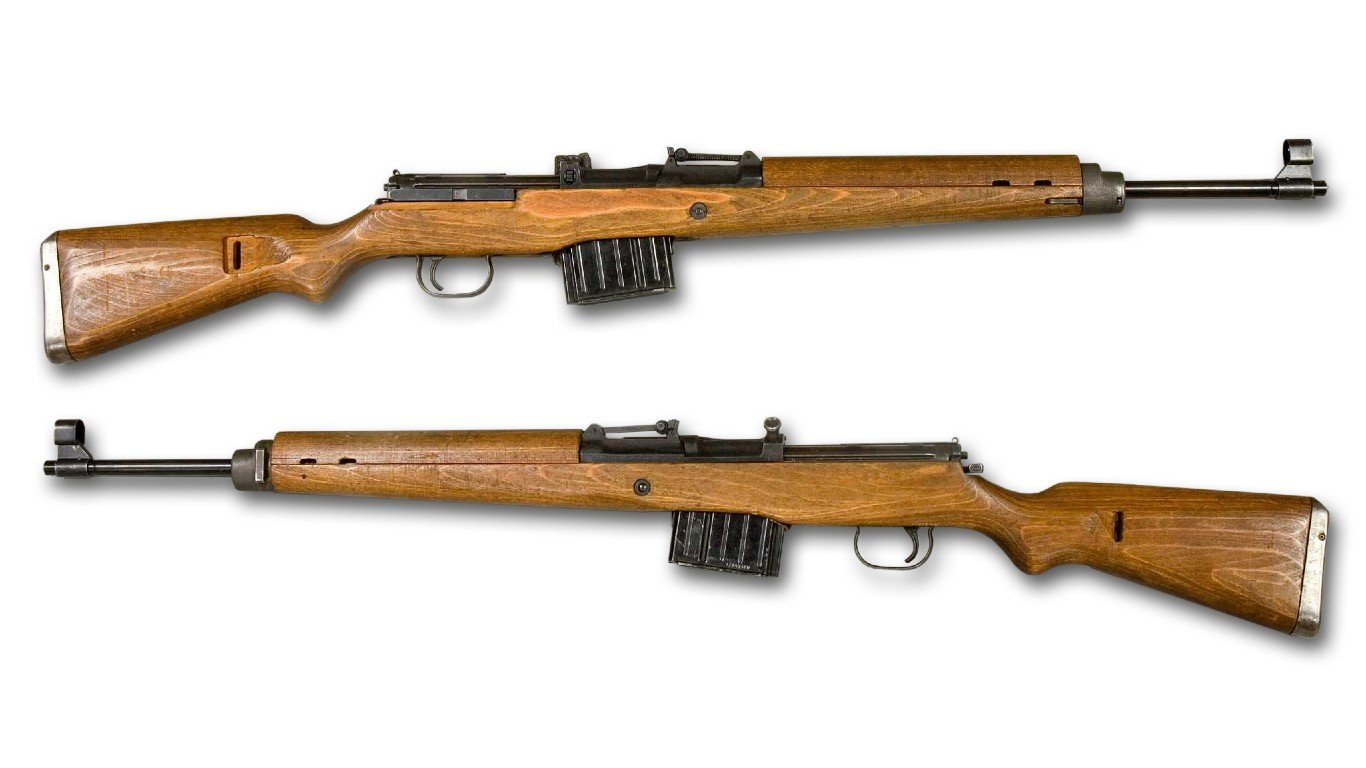
- Year introduced: 1943
- Country of origin: Germany
- Manufacturer: Walther
- Type: Semi-automatic Rifle
- Range: 1600 ft.
- Firing action: Gas-operated, semi-automatic
- Caliber and feed: 7.92×57mm Mauser; 10-round detachable magazine
The Gewehr 43 brought Germany closer to parity with Allied semi-automatic service rifles. Its detachable magazine and gas system provided faster follow-up shots than the Kar98k. Wartime production pressures meant variable quality, but in capable hands it was an effective long-range rifle and an important step toward post-war battle rifle concepts.
M3 Grease Gun
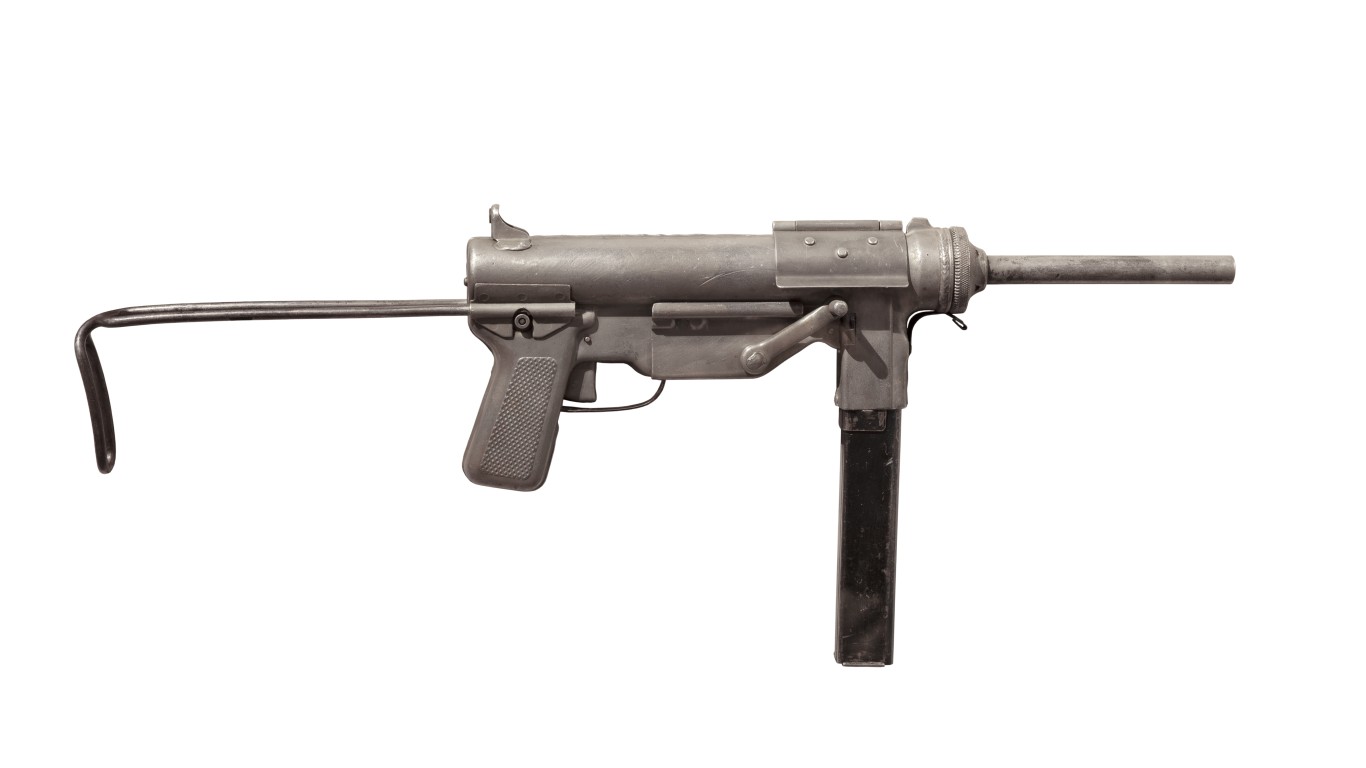
- Year introduced: 1943
- Country of origin: United States
- Manufacturer: GM Guide Lamp
- Type: Submachine Gun
- Range: 450 ft.
- Firing action: Blowback, full-auto
- Caliber and feed: .45 ACP; 30-round box magazine
The M3 Grease Gun was designed as a cheap, simplified alternative to the Thompson. Stamped construction, a slow rate of fire, and compact size made it ideal for tank crews and paratroopers. Although crude and basic, it proved surprisingly durable and controllable, remaining in service for decades after the war ended.
PPS-43

- Year introduced: 1943
- Country of origin: Soviet Union
- Manufacturer: Sestroretsk
- Type: Submachine Gun
- Range: 500 ft.
- Firing action: Blowback, full-auto
- Caliber and feed: 7.62×25mm Tokarev; 35-round box magazine
The PPS-43 refined Soviet submachine-gun design into a compact, highly efficient weapon. Its stamped construction reduced cost and weight while maintaining excellent reliability. Ideal for tank crews, scouts, and urban fighters, it worked well in mud, snow, and debris. Its straightforward design influenced many post-war Eastern Bloc submachine guns.
Panzerfaust
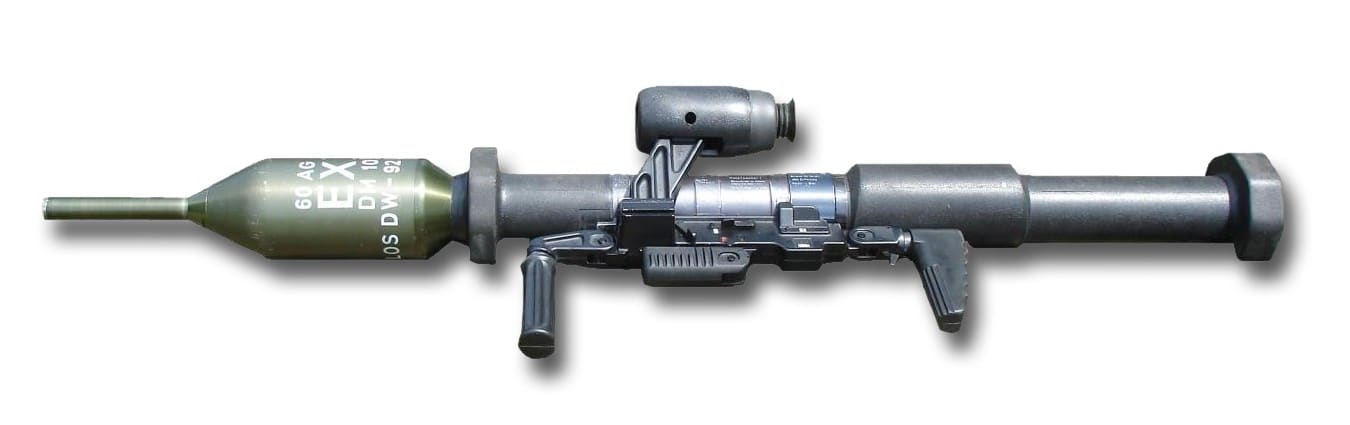
- Year introduced: 1943
- Country of origin: Germany
- Manufacturer: Hugo Schneider AG
- Type: Anti-tank Weapon
- Range: 200 ft.
- Firing action: Recoilless launcher
- Caliber and feed: 140mm shaped-charge warhead; Single-use launcher
The Panzerfaust revolutionized infantry anti-tank warfare by giving individual soldiers a simple, disposable launcher capable of killing heavy armor at close range. Cheap to manufacture and easy to operate with minimal training, it posed a serious threat to Allied tanks. Its success heavily influenced post-war infantry anti-armor weapons and shaped armored tactics.
Panzerschreck

- Year introduced: 1943
- Country of origin: Germany
- Manufacturer: HASAG
- Type: Anti-tank Weapon
- Range: 500 ft.
- Firing action: Rocket launcher
- Caliber and feed: 88mm rocket warhead; Reusable tube launcher
Modeled after the American Bazooka but enlarged for greater effect, the Panzerschreck delivered powerful anti-tank performance at longer ranges. Its large warhead could penetrate heavy armor, making it especially dangerous in ambushes. The launcher required a blast shield and disciplined crews, but it showed how portable rockets could challenge even advanced tanks.
Contact [email protected] for any questions or corrections.
Chris Lange is a financial and geopolitical writer with more than a decade of experience covering a myriad of topics. He has published thousands of articles for 24/7 Wall St., with past coverage focused heavily on stocks, IPOs, healthcare, defense, global affairs, and technology.
His work has been quoted, or referenced by a number of outlets including Business Insider, USA Today, Yahoo Finance, MSN, The Motley Fool, and many other publications. A graduate of Southwestern University, he studied business with a focus on investments and has previous experience in banking and startups.
When not reading or writing the news, he is following his passion for Lacrosse, playing chess, or building solar projects with his dad.