Still Working at 70? Here’s When You Actually Need to Claim Social Security
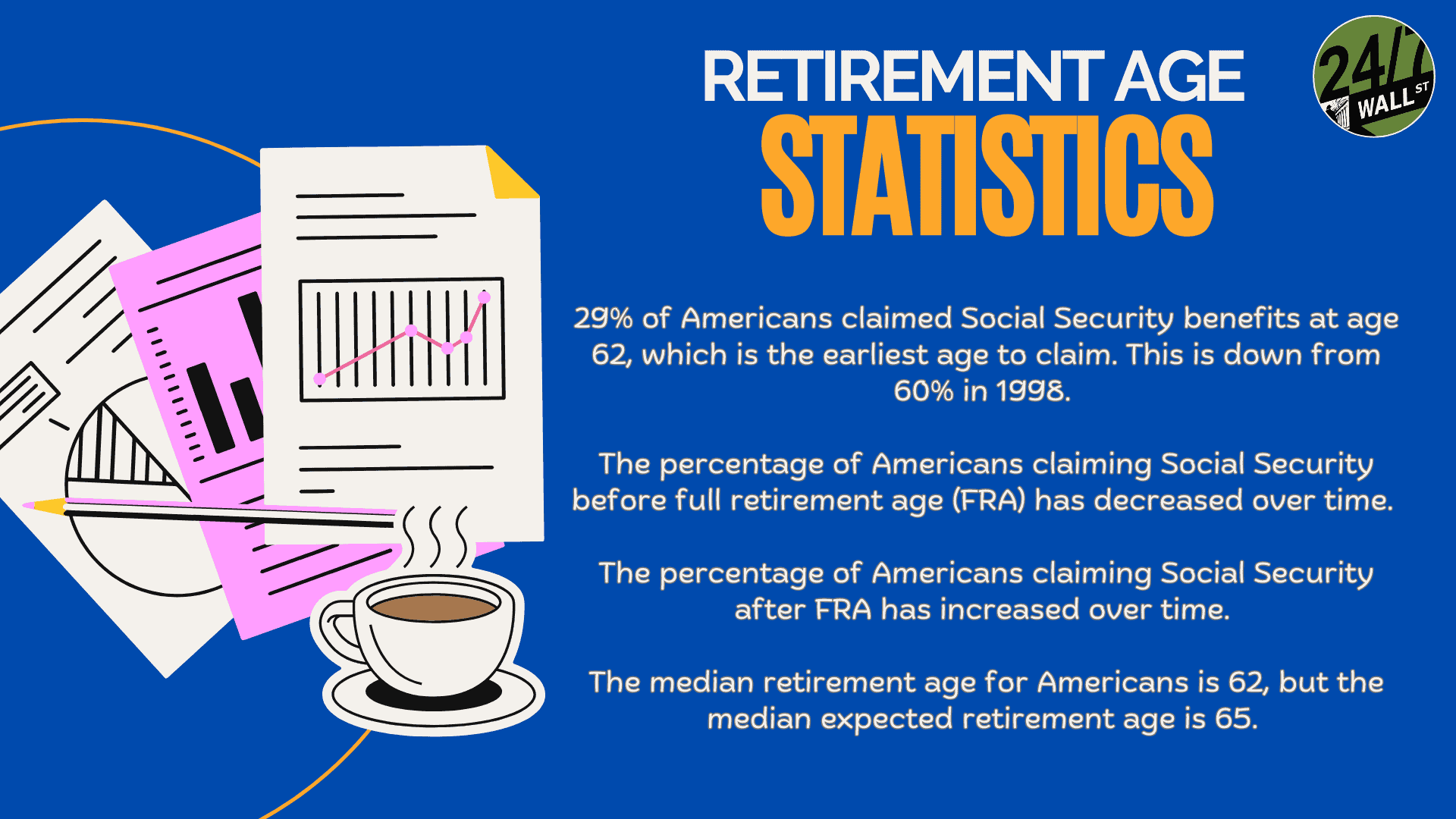
Once you turn 62, you can file for Social Security at any point. That age is popular precisely because it is the earliest benefits become available, and for workers who need income right away, waiting simply is not an option.…

This post may contain links from our sponsors and affiliates, and Flywheel Publishing may receive compensation for actions taken through them.

Once you turn 62, you can file for Social Security at any point. That age is popular precisely because it is the earliest benefits become available, and for workers who need income right away, waiting simply is not an option. But patience carries a real financial reward. Holding off delivers more generous monthly payments, which matters most to retirees who cannot lean heavily on personal savings and expect Social Security to carry the bulk of their retirement income.
You are entitled to your full monthly Social Security benefit once you reach full retirement age (FRA). For people born in 1959, FRA is 66 and 10 months. For everyone born in 1960 or later, FRA is 67.
The Social Security Administration (SSA) also rewards patience beyond FRA. For every month you postpone filing between FRA and age 70, Social Security increases your eventual benefit by two-thirds of 1%, which compounds to 8% for each full year of delay. A worker whose FRA is 67 but who waits until 70 earns an extra 24% on top of their base benefit, meaning a monthly check equal to 124% of what they would have collected at FRA. Those delayed retirement credits cannot accumulate indefinitely, so knowing exactly when to file is essential if you want to avoid leaving money on the table.
When waiting no longer pays off
If you are still working at 70, the instinct to keep deferring Social Security can feel logical, but it is not. The benefit increase stops entirely at age 70: delayed retirement credits cease accruing the moment you hit that birthday, and filing even one month later will not add a single dollar to your monthly payment. The SSA will not force you to claim at 70, but because no additional growth accumulates after that point, collecting at 70 is the rational choice for virtually every worker.
Working, even full-time, does not disqualify you from receiving Social Security. You can draw retirement benefits and a paycheck at the same time. The catch is that the SSA’s earnings test applies if you are younger than FRA. In 2026, workers who are under FRA for the entire year can earn up to $24,480 before the earnings test starts reducing their benefit, with Social Security withholding $1 for every $2 earned above that threshold. A separate, more lenient rule applies in the calendar year you reach FRA: the limit rises to $65,160, and the withholding rate drops to $1 for every $3 earned, counting only the months before your FRA birthday. That withholding is temporary in both cases. Once you reach FRA, the SSA recalculates your benefit and credits you back for the months it withheld payments, raising your monthly amount going forward.
At 70, none of that applies. Once you have passed FRA, there is no cap on how much you can earn while collecting benefits. A six-figure paycheck will not reduce a single dollar of your monthly Social Security check.
One detail worth addressing separately concerns Medicare. The Initial Enrollment Period for Medicare Part B is a seven-month window: the three months before your 65th birthday, the month you turn 65, and the three months after. Missing that window can raise the cost of Medicare Part B permanently. The standard Part B premium in 2026 is $202.90 per month, a jump of $17.90 from $185 in 2025 and the largest single-year increase since 2022. The annual Part B deductible also rose in 2026, climbing $26 to $283. A late enrollment penalty adds 10% for each full year of delay, a surcharge that sticks for life. The one important exception: if you or your spouse actively works for an employer with 20 or more employees and you are covered under that employer’s plan, you can defer Part B without penalty. You then have eight months after that coverage ends to enroll under a Special Enrollment Period. Delaying Social Security and delaying Medicare enrollment are two entirely separate decisions with very different consequences.
Know the rules before you file
Social Security’s rulebook is thick, and some provisions interact in ways that are easy to miss. Understanding them before you file can make a meaningful difference in lifetime income.
Delaying your claim indefinitely past age 70 is one of the more costly errors you can make, since it means forgoing benefits you have already fully earned. If you have already passed your 70th birthday without signing up, not all is lost. Workers who have reached FRA can request that the SSA pay retroactive benefits, though the agency cannot pay back further than six months or earlier than the FRA date. A worker who is 70 and a half and files immediately can collect up to six months of back pay. Wait any longer, and those earlier months are gone permanently.
It is also worth keeping one eye on Social Security’s long-term finances, because the program faces a tightening fiscal picture. According to the 2026 annual Trustees Report, the combined OASDI trust funds are projected to be depleted in the third quarter of 2034, at which point incoming payroll-tax revenue would cover roughly 83% of scheduled benefits. The retirement-only OASI fund faces a sharper timeline: its reserves are projected to run out in the fourth quarter of 2032, one quarter earlier than last year’s estimate. At that point, the program could pay only about 78% of retirement benefits, meaning an automatic 22% cut for retirees absent congressional action. The trustees attributed a portion of that accelerated depletion to the One Big Beautiful Bill Act, enacted July 4, 2025, which lowered individual income tax rates and added a new senior deduction for taxpayers over age 65. Those changes reduce the income-tax revenue that flows from taxing Social Security benefits back into the trust fund. The 2026 report also revealed that the program’s 75-year actuarial deficit widened by 16%, growing to 4.42% of taxable payroll, up from 3.82% the prior year. In July 2026, a bipartisan group of senators introduced the Protecting Retirement Opportunities and Maintaining Income Security for Everyone Act, known as the PROMISE Act, which would direct the Social Security Advisory Board to draft a solvency plan keeping the trust funds solvent for at least 50 years and create a formal process requiring Congress to vote on the proposal. As the Bipartisan Policy Center has noted, the senators elected in November 2026 will be in office through 2032, making the upcoming midterms a critical inflection point for the program’s future. These projections give added weight to locking in your maximum possible benefit before any legislative changes take effect.
Social Security planning involves more moving parts than most people expect, including your health, other income sources, spousal benefits, and life expectancy. A financial advisor who specializes in retirement income can help you build a filing strategy tailored to your specific circumstances.
Editor’s note: This article was updated to name the One Big Beautiful Bill Act (enacted July 4, 2025) as the specific legislation the Trustees cited for accelerating OASI fund depletion, to add the 2026 Medicare Part B annual deductible of $283, and to include the full name of the PROMISE Act and the detail that it would require Congress to vote on any solvency proposal the Social Security Advisory Board produces.
Contact [email protected] for any questions or corrections.
Maurie Backman has more than a decade of experience writing about financial topics, including retirement, investing, Social Security, and real estate. Her work has appeared on sites that include The Motley Fool, USA Today, U.S. News & World Report, The Washington Post, and Kiplinger.
Prior to becoming a full-time financial writer, Maurie worked in the financial industry trading distressed debt. She then changed course and spent a few years designing electronic toys. After a stint in content marketing and UX, she shifted back into writing and has since covered everything from the housing market to estate planning to Medicare.
When she's not busy writing, Maurie can be found hiking, walking her dogs, driving her kids to their various sports practices and games, and curling up with a good book. She cooks on occasion and bakes way too often.