Would You Retire in a Kingdom? Why More Americans Are Considering Morocco
Years ago, Marcie spent a semester in Morocco as a college student. It made a lifelong impression, not just on her head, but her heart. While working as a registered nurse, she has often imagined returning someday, not as a…

This post may contain links from our sponsors and affiliates, and Flywheel Publishing may receive compensation for actions taken through them.
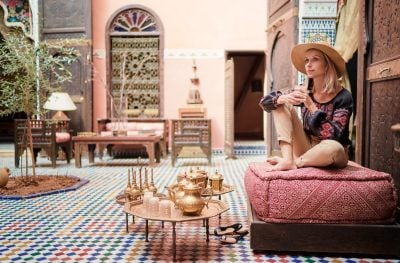
Years ago, Marcie spent a semester in Morocco as a college student. It made a lifelong impression, not just on her head, but her heart. While working as a registered nurse, she has often imagined returning someday, not as a tourist but as a resident. Now retirement is approaching, and the question has become practical rather than hypothetical: can her savings support a full-time life in Morocco? To answer that, we need to look beyond the postcard version of the country and examine what retirement there actually costs.
Why Morocco keeps showing up on American shortlists
Morocco is a constitutional monarchy under Mohammed VI, an Arab-majority country with deep Berber roots and strong French and Spanish influences. That mix is part of the appeal: mint tea in a centuries-old medina at lunch, Andalusian music at dinner, and a croissant ordered in French the next morning.
Morocco welcomed more than 17 million tourists in 2024, primarily from France, Spain, the United Kingdom, Italy, and other European countries, so hearing French, Spanish, and English in major cities is common. Americans may also appreciate that Morocco was the first country to recognize U.S. independence in 1777 and remains a friendly U.S. trade and defense partner; American visitors typically feel quite welcome there.
While Morocco is an Islamic-majority country, most retirees will find daily life less restrictive than they expect. Some local women wear the hijab, others dress in Western styles, and tourists routinely wear shorts and sleeveless clothing in cities such as Casablanca, Marrakech, Fez, and Tangier. Safety is generally quite good, with petty theft a more realistic concern than violent crime.
The upper middle class budget
Local guides often claim you can live comfortably in Morocco on $1,000 to $1,500 per month. Technically, that is true, but most American retirees considering a permanent move have something more comfortable in mind. An upper-middle-class retirement, including a furnished two- or three-bedroom apartment in a desirable neighborhood, regular restaurant meals, domestic travel, part-time household help, and private healthcare, is more likely to cost $3,500 to $4,000 per month. A realistic monthly budget looks something like this:
- Rent in a desirable neighborhood: $1,000
- Groceries and dining: $700
- International private health insurance: $350
- Utilities and internet: $150
- Transportation: $250
- Part-time housekeeper: $200
- Entertainment and domestic travel: $400
- Flights home, taxes, gifts, and emergency reserves: $550
Total: approximately $3,600 per month, or about $43,000 annually.
Healthcare deserves special attention. Most American retirees will not want to rely exclusively on Morocco’s public health system. A comprehensive international private health insurance policy typically costs about $4,200 annually for a younger retiree, rising to approximately $5,500 to $6,500 per year after age 65. For most expatriates, private coverage is a necessity rather than a luxury.
Portfolio math
Start with $43,000 annual all-in cost. The average retired worker Social Security benefit runs near $23,000 a year, and Morocco is on the SSA’s list of countries where benefits are paid without restriction. That leaves roughly $20,000 a year from the portfolio. At a 4% withdrawal rate, you need $500,000. At a more conservative 3.5%, you need about $571,000. For a larger margin covering riad purchase, more travel, and aging in place with private care, plan for $750,000 to $850,000.
This assumes annual portfolio returns of 6% to 7% nominal from diversified index funds, dividend ETFs, and a short treasury ladder, with inflation near current +0.6% monthly CPI prints that pushed the index to 332.4.
Moving yourself to Morocco is easier than moving your money
Morocco’s currency is subject to rules that Americans may not be accustomed to. Moving money into the country is generally straightforward. Moving large amounts back out, particularly after the sale of a home or other major asset, can involve additional documentation and banking requirements. Retirees who plan to purchase property should make sure they understand those rules before wiring funds overseas.
The practical approach is to keep the majority of retirement assets in U.S. investment accounts and transfer only the money needed for several months of living expenses at a time. If property ownership is part of the plan, it is important to structure the purchase correctly from the beginning so that future proceeds can be transferred back to the United States without unnecessary complications. Morocco and the United States have a long-standing tax treaty, but retirees who spend more than 183 days per year in Morocco may become Moroccan tax residents and should obtain professional tax advice before moving.
A couple with roughly $600,000 to $750,000 in invested assets, average Social Security benefits, and a conservative 3.5% withdrawal rate can realistically enjoy an upper-middle-class retirement in Morocco. The attraction is simple: a lifestyle that might cost $5,000 per month or more in the United States can often be enjoyed for substantially less. The tradeoff is learning to navigate a different legal, financial, and cultural system than the one you left behind.
Contact [email protected] for any questions or corrections.
Drew Wood has edited or ghostwritten nine books and published more than 1,500 articles on investing, business, politics, travel, world cultures, wildlife, and earth science. He holds a doctorate and four master's degrees and has nearly 30 years of college teaching experience. His travels have taken him to 25 countries, including three years living in Ukraine.