Everyone Wants to Retire to San Diego. Can a Middle-Class Couple Actually Afford It?
A Midwestern couple in their late 60s has done most of the right things: they own their home outright, have accumulated a solid nest egg, and are ready to retire. Their question is one that comes up often among would-be…

This post may contain links from our sponsors and affiliates, and Flywheel Publishing may receive compensation for actions taken through them.

A Midwestern couple in their late 60s has done most of the right things: they own their home outright, have accumulated a solid nest egg, and are ready to retire. Their question is one that comes up often among would-be transplants: is it enough to make San Diego work?
Why San Diego Stays at the Top of Every Retirement List
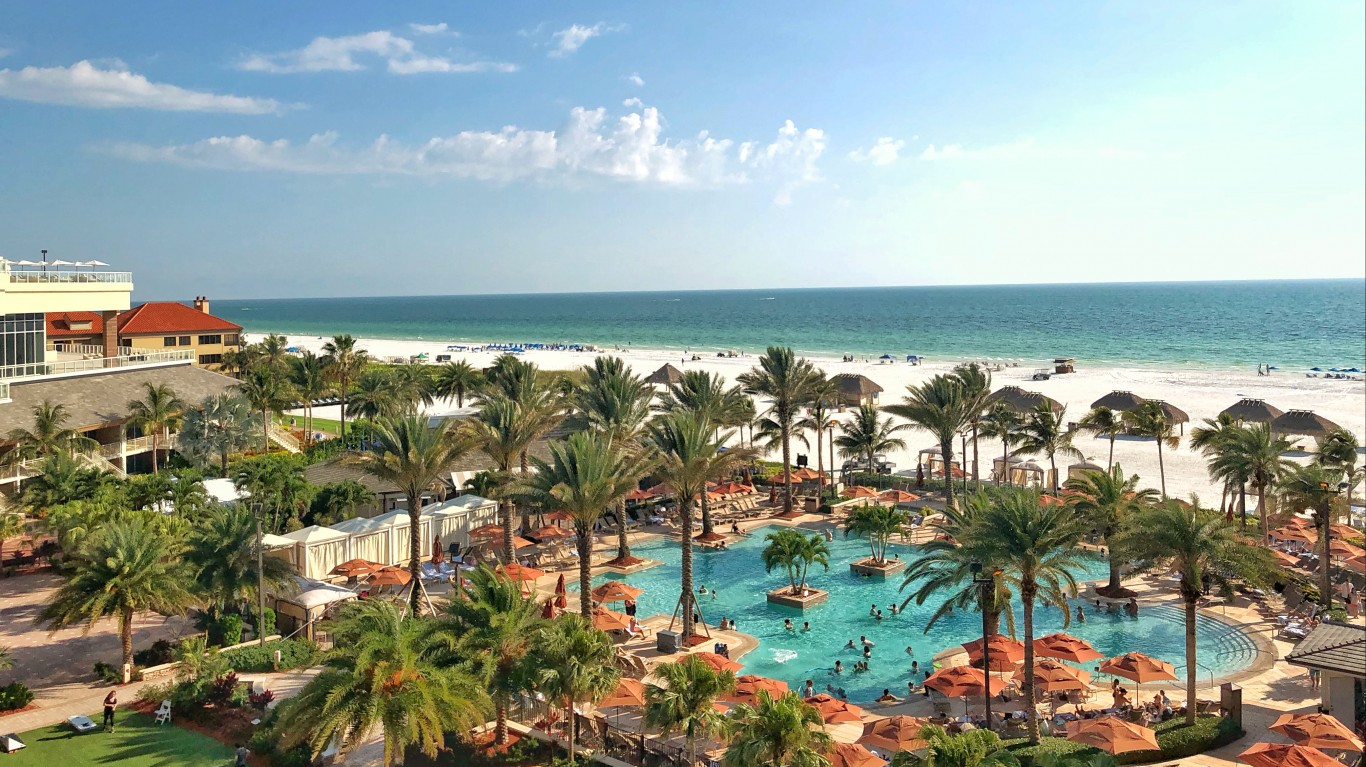
San Diego offers the kind of retirement lifestyle that fills vision boards: year-round mild weather, beaches stretching from La Jolla to Coronado, walkable neighborhoods, top-tier healthcare, a major international airport, and an active community of retirees. The catch is that all of those advantages come with a price tag, and it is one of the highest in the country.
Vacation and Retirement in San Diego Are Different Things
A tourist rents the beach and sunsets for a week. A retiree buys the property tax bill, homeowners insurance, maintenance costs, and a California tax return that follows them into retirement. The same coastline that costs a few hundred dollars a night on vacation can require close to $2 million to own in some of San Diego County’s most desirable communities. The lifestyle is extraordinary, but unlike a vacation, the bills arrive every month whether you spend the day at the beach or not.
What the Three Real Scenarios Cost
Start with the household: Social Security of $48,000 a year, a $450,000 paid-off Midwest home, and the rest in a retirement portfolio. Medicare runs Medicare Part B in 2026 runs $202.90 a month per person at the standard tier, roughly $4,900 a year for the couple. California fully exempts Social Security from state income tax, but every dollar pulled from a traditional IRA or 401(k) is taxed as ordinary income at rates that climb fast, reshaping every scenario below.
The Coastal Dream (Carlsbad, Encinitas, Coronado). Buying near the water at roughly $1.6 million takes the $450,000 of Midwest equity and another $1.15 million from the portfolio at closing. Property tax under Prop 13 starts near 1.1% of purchase price, roughly $17,600 a year, locked to that basis for life. San Diego homeowners insurance averages around $1,770 for standard coverage, though coastal and wildfire-adjacent ZIPs often run multiples of that. Add utilities, HOA, food, healthcare, transportation, and reserves, and an honest annual budget lands near $115,000 to $125,000.
The Practical Inland Retirement (Escondido, Poway, Rancho Bernardo). A comparable single-family home in Rancho Bernardo trades near a $890,000 median. Property tax drops to roughly $9,800, insurance eases, and the beach is a 25 to 40 minute drive. The same lifestyle comes in around $85,000 to $95,000 a year.
Rent, Don’t Buy. Selling the Midwest house, keeping the full portfolio invested, and renting a two-bedroom in a desirable inland neighborhood for roughly $3,400 a month preserves capital and skips the property tax reset. Total annual cost lands near $90,000, with rent inflation tracking above the broader CPI reading of 334.0 in coastal California for most of the past decade.
The Tax Detail Most Calculators Skip
To net $50,000 above Social Security in the inland scenario, the couple must gross up withdrawals for federal tax, California tax at brackets reaching 9.3%, and the Medicare IRMAA surcharge that triggers above $218,000 of joint MAGI. A retiree in Florida pulling the same $50,000 needs about $58,000 gross. In California, that same net is closer to $68,000 to $72,000 gross. At a 4% withdrawal rate, every extra $10,000 of forced gross-up adds $250,000 to the portfolio target. That is the real San Diego tax, hitting the inland retiree as hard as the coastal one.
What It Actually Takes
At a 4% withdrawal rate on a 25 to 30 year horizon, with the 10-year Treasury at 4.56% supporting a reasonable bond sleeve, the inland buy scenario needs the $450,000 Midwest equity plus roughly $1.5 million invested, call it $1.95 million in total assets. The rent scenario needs about $1.6 million invested plus home-sale proceeds in reserve. The coastal dream needs closer to $2.6 million in total assets and accepts insurance fragility. For a middle-class couple with Social Security of $48,000, San Diego is reachable inland, stretched coastal, and most honest as a rental. The dream is real. It costs about a quarter-million more in portfolio than the same life in a no-income-tax state.
Contact [email protected] for any questions or corrections.
Drew Wood has edited or ghostwritten nine books and published more than 1,500 articles on investing, business, politics, travel, world cultures, wildlife, and earth science. He holds a doctorate and four master's degrees and has nearly 30 years of college teaching experience. His travels have taken him to 25 countries, including three years living in Ukraine.