Nobody Wants To Retire In North Dakota. Maybe That’s Exactly Why You Should.
Nobody wants to retire in North Dakota. America’s fourth-least-populated state has fewer than 800,000 residents spread across an area larger than England. And that may be exactly why the retirement math works so well there. The destinations Americans have spent decades…

This post may contain links from our sponsors and affiliates, and Flywheel Publishing may receive compensation for actions taken through them.
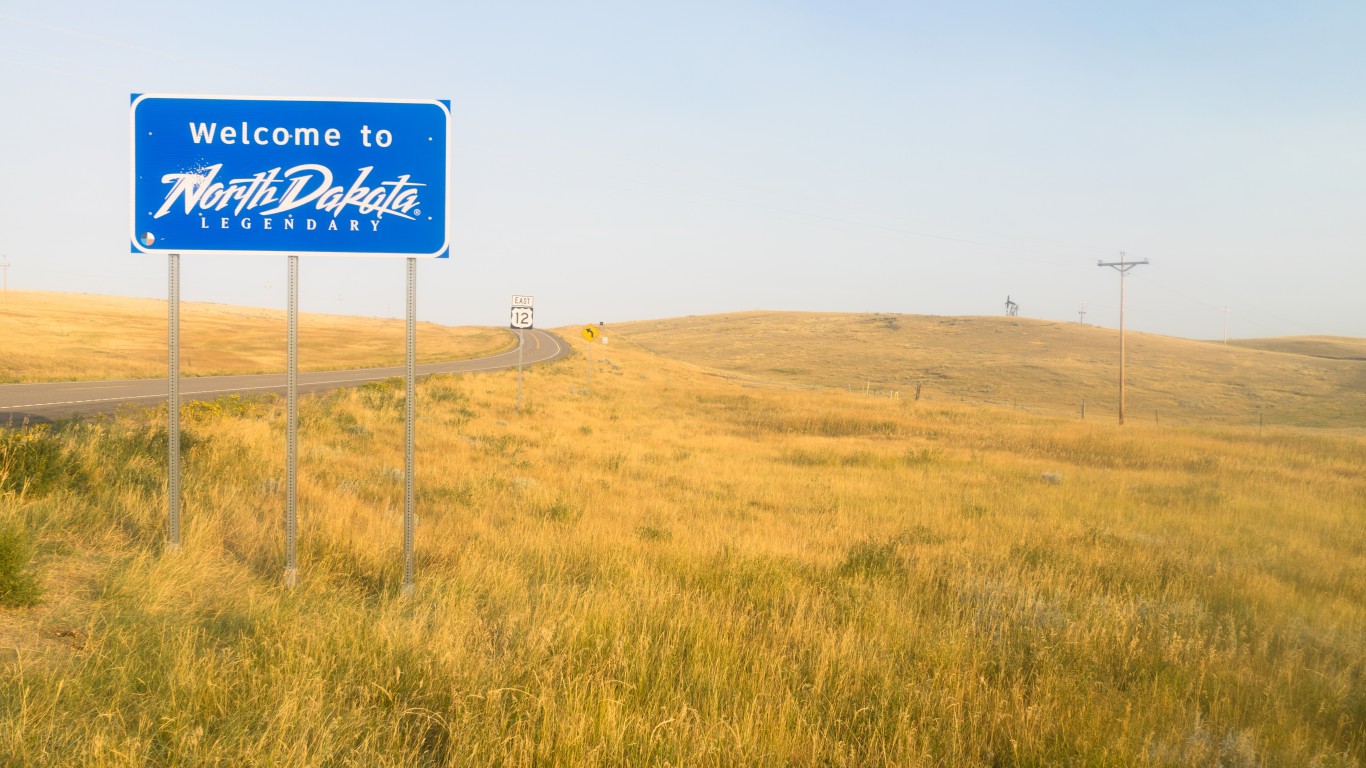
Nobody wants to retire in North Dakota. America’s fourth-least-populated state has fewer than 800,000 residents spread across an area larger than England. And that may be exactly why the retirement math works so well there.
The destinations Americans have spent decades chasing have become dramatically more expensive. North Dakota largely missed that cycle. Here is what a 67-year-old with a $500,000 portfolio and $2,500 per month in Social Security can actually afford there.
North Dakota is Not North Palm Beach
Let’s be honest. Most retirees flee the northern states for ocean breezes, golf courses, marinas, waterfront dining, and the ability to apply sunscreen in January. North Dakota cannot compete on any of those terms. Winters are long and cold, the population is sparse, and you will not find the same retirement-focused social scene that exists in places like Florida.
What North Dakota offers instead is space, affordability, and simplicity. The prairie, badlands, lakes, and river valleys provide a quiet kind of beauty that rarely makes retirement brochures. Traffic jams are virtually nonexistent, housing remains affordable, insurance markets are stable, and daily life is not organized around fighting for reservations, parking spaces, or crowds. The retirees who thrive there are usually not looking for excitement. They are looking for financial breathing room, lower stress, and a place where their retirement dollars still buy a comfortable life.
The Cost Picture In Fargo, Bismarck, And Grand Forks
North Dakota’s statewide cost-of-living index sits at 88.959, well below Florida at 103.414, Arizona at 100.677, and Tennessee at 91.87. In practical terms, retirement dollars stretch further there than in many of the states retirees traditionally target.
Housing is where it shows up first. Fargo’s median sale price is around $315,000, with starter homes closer to $260,000 and solid two-bedroom ranches under that. Bismarck and Grand Forks price similarly. A retiree who owns a paid-off home worth $250,000 in Cass or Burleigh County faces property taxes around 1.0% to 1.2% of value, before the state’s Primary Residence Credit knocks up to $500 off the bill. Homeowners insurance runs roughly $1,800 to $2,200 a year, with no hurricane deductible, no wind-and-hail surcharge, and no wildfire non-renewal letters.
Another tradeoff is distance. North Dakota is not a quick drive from grandchildren in Florida or Arizona, and many trips require a connecting flight through Minneapolis, Denver, Chicago, or Dallas. Retirees who expect frequent cross-country travel should budget accordingly.
A Sample North Dakota Budget
A realistic single-retiree annual budget in one of those three cities, owning the home outright:
- Housing carrying cost (taxes, insurance, utilities, maintenance reserve): about $11,000
- Healthcare at 67 (Medicare Part B, Medigap plan, Part D, dental and vision): about $7,400
- Food at a moderate USDA tier for one: about $6,500
- Transportation, including vehicle replacement reserve: about $4,500
- Miscellaneous, gifts, personal spending, and emergency reserve: about $5,000
- Federal and state income tax: about $1,500
That totals roughly $36,000 a year for a quiet, comfortable life. A more generous version with regular restaurants, a winter trip, and a newer vehicle pushes the budget to about $48,000.
Running The Withdrawal Math
Social Security at $2,500 a month delivers $30,000 a year. Against the $36,000 modest budget, the portfolio has to cover $6,000, which is a 1.2% withdrawal on a $500,000 balance. Against the $48,000 comfortable budget, the gap is $18,000, or a 3.6% withdrawal. At 67, with a reasonable balance between a total-market index fund, an investment-grade bond ladder, and TIPS to defend against inflation, 3.6% is well inside the survivability band for a 25 to 30 year horizon. The same math in coastal Florida, where the $48,000 budget becomes roughly $58,000 after housing and insurance load, pushes the withdrawal to 5.6% and the plan starts to wobble.
The Weather Tax, Honestly Priced
North Dakota is not for everyone. Winters are long, dark, and serious, and that reality deserves an honest discussion. Retirees who struggle with seasonal depression may find the short winter days difficult, and mobility becomes a legitimate concern as people age. Snow, ice, and subzero temperatures make everyday tasks harder, and many retirees will want to budget for snow removal rather than assume they can keep shoveling driveways into their late 70s and 80s.
January highs in Fargo sit in the teens, and snow on the ground from late November through March is the base case. What it buys is the absence of many of the disasters repricing the Sun Belt: no hurricane evacuations, no wildfire smoke seasons, no flood-zone reclassifications, and no insurance carriers leaving the state. Mild, long-daylight summers, low traffic, low violent crime in the three main cities, and genuinely good regional healthcare anchored by Sanford and Essentia round it out. Hunting, fishing, and lake country are fifteen minutes from almost anywhere.
The Tax Headline That Misleads Almost Everyone
If you look at adjusted state and local tax burden, North Dakota ranks high at $9,253 per capita, fifth in the country. That number misleads. The burden is inflated by oil and gas severance taxes collected from mineral production, not from residents’ paychecks or retirement accounts. On the tax structure retirees actually pay, the Tax Foundation ranks North Dakota 9th best in the country, with a property tax rank of 4th and an individual income tax rank of 17th. The top state income rate is 2.5%, Social Security is excluded from state taxable income, and there is no estate tax. A retiree pulling $30,000 from Social Security and another $18,000 from a traditional IRA owes essentially nothing in state tax after the federal standard deduction of $16,100 for a single filer. The headline burden is an oil-patch artifact. The retiree experience is the opposite.
What The Answer Actually Is
For this specific retiree, the math works with margin. A paid-off modest home in Fargo, Bismarck, or Grand Forks, the $500,000 portfolio held roughly 50% in a broad U.S. index fund, 35% in a short-to-intermediate Treasury and investment-grade bond ladder, 10% in TIPS, and 5% in cash, will support the comfortable $48,000 lifestyle at a 3.6% withdrawal and Social Security covering the rest. A retiree who carries a mortgage into Florida or Arizona on the same balance is doing a harder math problem.
North Dakota is not a dream destination in the brochure sense, yet the obscurity is the discount, the disasters that are repricing the Sun Belt are not coming here, and the tax structure is more retiree-friendly than the per-capita headline suggests. If the budget you can actually fund is $40,000 to $50,000 a year, the place nobody is moving to may be the place that lets you stop working without ever recalculating the spreadsheet again.
Contact [email protected] for any questions or corrections.
Drew Wood has edited or ghostwritten nine books and published more than 1,500 articles on investing, business, politics, travel, world cultures, wildlife, and earth science. He holds a doctorate and four master's degrees and has nearly 30 years of college teaching experience. His travels have taken him to 25 countries, including three years living in Ukraine.