Here’s How You Can Retire to The Villages, Florida, at 62 on $3,000 a Month Stress Free
We get versions of this question constantly: can I actually pull off The Villages on a modest fixed income, retiring early at 62? The answer is yes, but only if every line item lines up and you understand what the…

This post may contain links from our sponsors and affiliates, and Flywheel Publishing may receive compensation for actions taken through them.
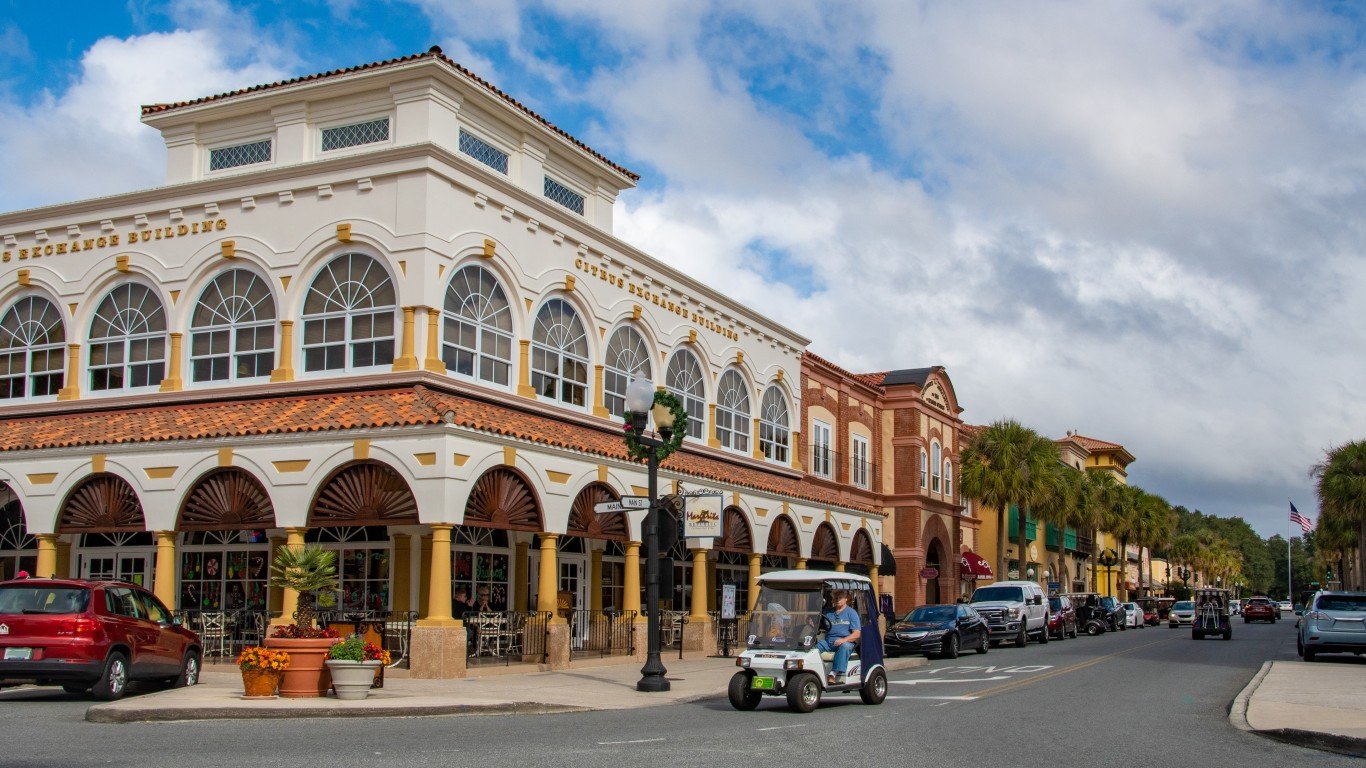
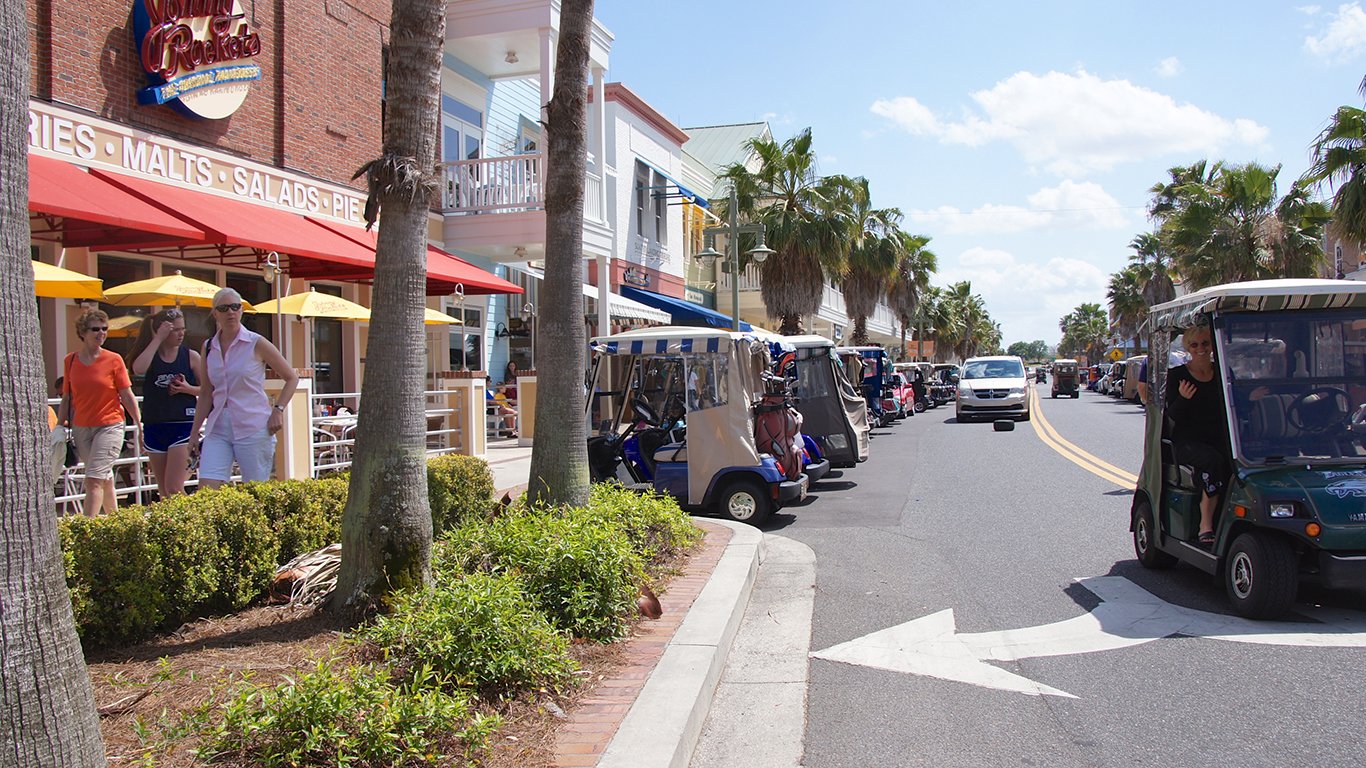
We get versions of this question constantly: can you actually pull off The Villages on a modest fixed income, retiring early at 62? The answer is yes, but only if every line item lines up and you understand what the brochures leave out. Here is what the math actually looks like.
Why The Villages Almost Works on $3,000 a Month
Florida gives you a head start before you even unpack. According to the Tax Foundation’s 2026 State Tax Competitiveness Index, the state ranks 5th overall nationally and levies no individual income tax, meaning no state tax on your Social Security benefits, IRA withdrawals, or pension income. Florida’s overall cost of living sits at about 3.4% above the national average, placing it in the upper-middle tier rather than the punishing coastal markets. Sumter County, where most of The Villages is located, runs a touch below the state average on groceries and utilities but above it on insurance and HOA-style fees.
The $3,000 figure, which works out to $36,000 a year, is achievable if and only if you arrive with the house already paid off. Buying in with financing at today’s rates breaks the budget immediately. The Villages has held its value better than many Florida markets even as broader state prices soften. The median sale price was approximately $355,000 over the three months ending May 2026, according to Redfin, down about 2.3% year-over-year. More recent Realtor.com listing data puts the median listing price at $377,784 as of August 2026, down about 2% from the same month a year earlier, suggesting the cooling trend is continuing. Homes are also sitting on the market longer, with median time on market roughly double what it was in 2022. That combination creates genuine room to negotiate, and some older patio villas and pre-owned manufactured homes in the community’s earlier sections remain available in the $250,000 to $360,000 range for cash buyers.
The Budget That Actually Adds Up
Here is a working annual budget for a single retiree owning a paid-off villa:
- Property tax: ~$2,600 (Sumter County millage on a homesteaded $275K home)
- Homeowners insurance: ~$4,200 (inland Florida; a realistic 2026 figure for a $275K home with full hurricane coverage on the private market)
- Amenity fee and CDD assessments: ~$2,700 (the amenity fee adjusts with CPI)
- Utilities, water, internet: ~$2,700
- Food at home and modest dining: ~$5,400 (USDA moderate plan for one)
- Healthcare bridge to Medicare: ~$3,600 net of ACA subsidies at this income
- Car, gas, insurance, golf cart upkeep: ~$3,800 (the national average for a gallon of regular gasoline has risen to approximately $4.15 as of early September 2026, according to AAA)
- Home maintenance, replacement reserves, personal, gifts, federal tax: ~$5,600
That lands at roughly $36,600. There is no meaningful cushion here. Miss on insurance or healthcare by any material amount and you are dipping into reserves.
Turning That Budget Into a Portfolio Number
Social Security is the anchor of this plan. Claiming at 62 triggers a permanent haircut: benefits are reduced for each year you claim before full retirement age, totaling a 30% reduction for workers whose full retirement age is 67. For an average earner, that reduction puts the monthly check around $1,400, or roughly $16,800 a year. The 2026 cost-of-living adjustment of 2.8% helps at the margin, but COLAs only protect the base you already locked in.
Subtract $16,800 from $36,000 and you need to pull about $19,200 a year from a portfolio. Because you are retiring early and need the money to last 30-plus years, a 3.5% withdrawal rate is more prudent than the standard 4%. At 3.5%, you need roughly $550,000 invested, plus the paid-off house, plus a separate $25,000 cash reserve for the insurance and roof shocks Florida specializes in. Call it $575,000 liquid and a $275,000 home. That is the real entry ticket.
The Three-Year Healthcare Bridge Nobody Prices Correctly
Medicare does not arrive until 65. From 62 to 65, you are on the ACA marketplace, and the subsidy math runs off your modified adjusted gross income. Keep withdrawals structured across a mix of taxable brokerage accounts (where only realized gains count toward MAGI) and a small Roth slice, and you can hold MAGI near $30,000, which preserves heavy premium tax credits. Pull the same dollars from a traditional IRA and your MAGI jumps, the subsidies collapse, and your premium can triple. This sequencing error is the single biggest planning mistake we see in early retirees headed to Florida.
The Real Catch: Florida’s Insurance and Amenity Escalator
The structural risk in this plan comes from two compounding line items that most retirement calculators simply ignore. Florida homeowners insurance has roughly doubled since 2021. While 2022 and 2023 tort reforms have begun stabilizing the market, rates remain among the highest in the country. Inland markets like Sumter County sit near the low end of the state range, but even there a properly covered $275,000 home with a hurricane deductible can run $3,800 to $5,000 or more annually in 2026.
The picture is genuinely improving for new arrivals. Citizens Property Insurance cut its multiperil rates by an average of 8.8% for 2026, the first reduction since 2015, following legislative reforms that sharply curtailed lawsuit-driven claims and brought new private carriers back to the state. The Florida Office of Insurance Regulation confirmed that rates decreased in 51 of Florida’s 67 counties in 2026. Several private insurers made their own cuts: Florida Peninsula filed for an 8.2% reduction, Security First for 8%, and State Farm for a 10% statewide decrease. One reason the reforms worked: Florida’s share of all U.S. homeowners insurance lawsuits fell from 79% in 2020 to 41% in 2025. Citizens’ policy count now stands at around 336,000, down 76% from its October 2023 peak, as policyholders shifted to private coverage. The crisis-level acceleration in premiums has eased, though most analysts still expect modest average increases over time.
The Villages amenity fee is contractually tied to CPI, so every uptick in general inflation translates directly into a higher fixed cost. Over a 30-year retirement, an insurance line growing faster than Social Security COLAs will steadily consume discretionary spending unless the investment portfolio is structured to outpace it.
The path is clear: arrive with a paid-off villa, roughly $575,000 invested at a 3.5% withdrawal rate, Social Security claimed at 62 for about $1,400 a month, withdrawals sequenced to protect ACA subsidies until Medicare eligibility at 65, and a dedicated cash reserve for Florida’s insurance market. That is what $3,000 a month in The Villages actually costs. Miss any one of those legs, and the stress-free part is the first thing to disappear.
Editor’s note: This pass corrected Citizens Property Insurance’s 2026 multiperil rate reduction from 8.7% to 8.8% per the insurer’s official announcement; updated the national gasoline average to approximately $4.15 per gallon as of early September 2026 per AAA data; and added August 2026 Realtor.com listing price data showing the median listing price in The Villages at $377,784, down about 2% year-over-year, alongside new context that rates fell in 51 of Florida’s 67 counties in 2026 per the Florida Office of Insurance Regulation, and that Florida’s share of U.S. homeowners insurance lawsuits fell from 79% in 2020 to 41% in 2025.
Contact [email protected] for any questions or corrections.
I am a long time investor and student of business, and believe finding good companies that can become great investments is the best game on earth. After 20 years of writing and researching the public markets it is clear that individuals have never had more tools and information to take control of their financial lives. From ETFs and $0 commissions to cryptos and prediction markets there has never been a greater democratization of access to investing.
I write to help people understand the investments available to them so they can make the best choice for their portfolio, whether they're starting out or looking for income in retirement.