‘Everyone’s a Genius at the Blackjack Table Until They Get a Bad Hand’: Dave Ramsey to an 18-Year-Old Asking Whether to Borrow $250,000 for Cattle
A teenage cattle farmer called Dave Ramsey with a plan to borrow a quarter million dollars, convinced the profit math worked in his favor. Ramsey had a different kind of math in mind.

This post may contain links from our sponsors and affiliates, and Flywheel Publishing may receive compensation for actions taken through them.
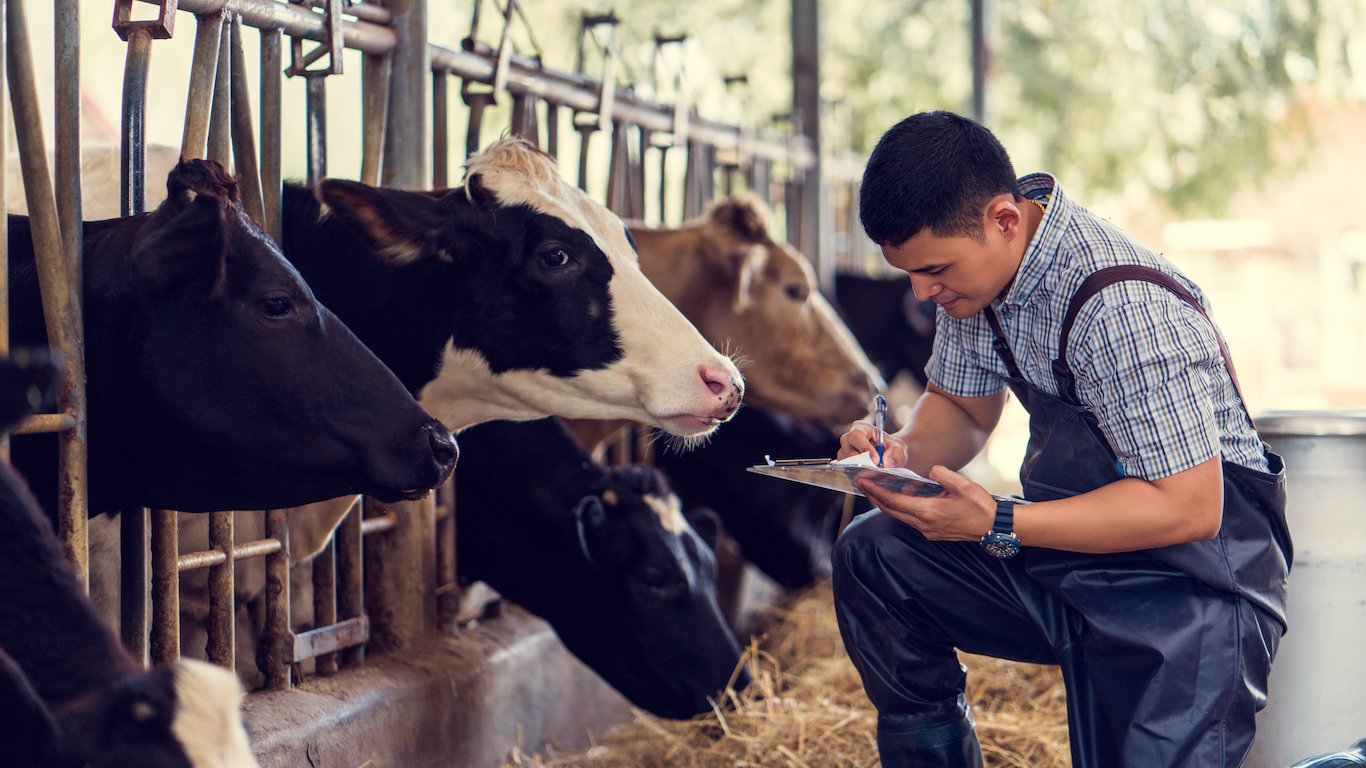
An 18-year-old cattle farmer named Stephen called The Ramsey Show with a question Dave Ramsey said he had never fielded before: should he borrow $250,000 to fill his barn with calves, or take a safer contract feeding someone else’s herd? Ramsey’s answer landed with a line that belongs on a poster in every business school: “Everyone’s a genius at the blackjack table until they get a bad hand. And so that’s my fear for you, especially at 18.”
The stakes are concrete. Stephen already carries a $28,000 annual barn payment and earns $50,000 a year as a herdsman. Adding a quarter-million-dollar operating note to a volatile commodity business means one bad calving season, one disease outbreak, or one price crash could wipe out everything he has built and then some.
The Verdict: Ramsey Is Right, and the Math Is the Reason
Ramsey’s advice is sound, and the underlying mechanic is leverage. Borrowed money multiplies both the upside and the downside of any business by the ratio of debt to equity. Stephen’s first batch produced about $60,000 in profit off a $100,000 operating loan his father co-signed when he was 16. That is a strong return on capital. It also masks how thin the margin for error is.
Run the numbers on the proposed second act. Stephen wants to borrow $250,000 chasing roughly $60,000 in projected profit. If cattle prices drop 15% between purchase and sale, that entire projected profit evaporates before the loan interest is even paid. A 25% drop leaves Stephen writing a check to the bank out of his herdsman salary for years. Ramsey put the tail risk plainly: “All you need is one mad cow disease spread and all of a sudden you’re screwed.”
Compare that to the alternative Stephen already had on the table. Custom-feeding cattle for a third party pays $35,000 with zero overhead and no debt. Stephen explained why he was tempted to skip it: “Risk is super hard to factor. That’s the problem. There’s no doubt if I borrow the money and do it all myself, my own cows, there’s more profit because the guy that I’m growing them for, he’s got to make some money on them too.” Correct on the profit. Missing the point on the risk. The other rancher is charging Stephen a spread precisely because he is absorbing the price and disease risk that Stephen would otherwise carry.
Speed of Cash Versus Speed of Debt
Ramsey sketched a hypothetical debt-free growth path to make the compounding case: “Year 1, you made $20,000 profit. Year 2, you had $40,000 in profit. Year 3, you scaled up to $80,000. Over time, think about where you’ll be at 21 if you do this completely debt-free versus, well, I made some money, but then I had to pay back the loan.” Those numbers are illustrative, not Stephen’s actuals. The point is that retained profit compounds, and at 18 the compounding runway is decades long.
The variable that flips this decision is whether Stephen can absorb a total loss of the borrowed capital without losing the farm. He cannot. Borrowing $250,000 against a $50,000 salary and an existing $28,000 barn note means a bad hand ends the game. If the loan were $25,000 instead, a wipeout would sting but survive. Size the bet to what a total loss would actually cost you, rather than to what the best case pays.
What Stephen, and Anyone Weighing Business Debt, Should Do
Ramsey closed with a directive: “I want to place the bet on Steven instead of on this pile of debt. Move at the speed of cash, and your life will be so much better.” He told Stephen to calculate how much cash he could stack in 12, 18, and 24 months while living at home with almost no bills, then use that pile as debt-free runway.
- Take the custom-feeding contract. The $35,000 with no overhead is real money that cannot bankrupt you.
- Stack cash on the herdsman salary. Write out projected savings at 12, 18, and 24 months with living expenses held near zero.
- Set a self-funded threshold. When retained cash covers a batch outright, buy calves debt-free and scale from there.
- Model the downside first. Before any future loan, calculate what happens if revenue drops 25% and interest still accrues.
Leverage feels like a shortcut until the hand turns. At 18, time is the asset. Do not mortgage it.
Contact [email protected] for any questions or corrections.
I am a long time investor and student of business, and believe finding good companies that can become great investments is the best game on earth. After 20 years of writing and researching the public markets it is clear that individuals have never had more tools and information to take control of their financial lives. From ETFs and $0 commissions to cryptos and prediction markets there has never been a greater democratization of access to investing.
I write to help people understand the investments available to them so they can make the best choice for their portfolio, whether they're starting out or looking for income in retirement.