Retirees Who Tried Three Arizona Cities Before Settling Say They Should Have Started With One
Most people pick an Arizona city the way they pick a state, assuming the differences are minor until a July afternoon or a specialist waitlist corrects them. The retirees who moved twice share a surprisingly consistent mistake.

This post may contain links from our sponsors and affiliates, and Flywheel Publishing may receive compensation for actions taken through them.
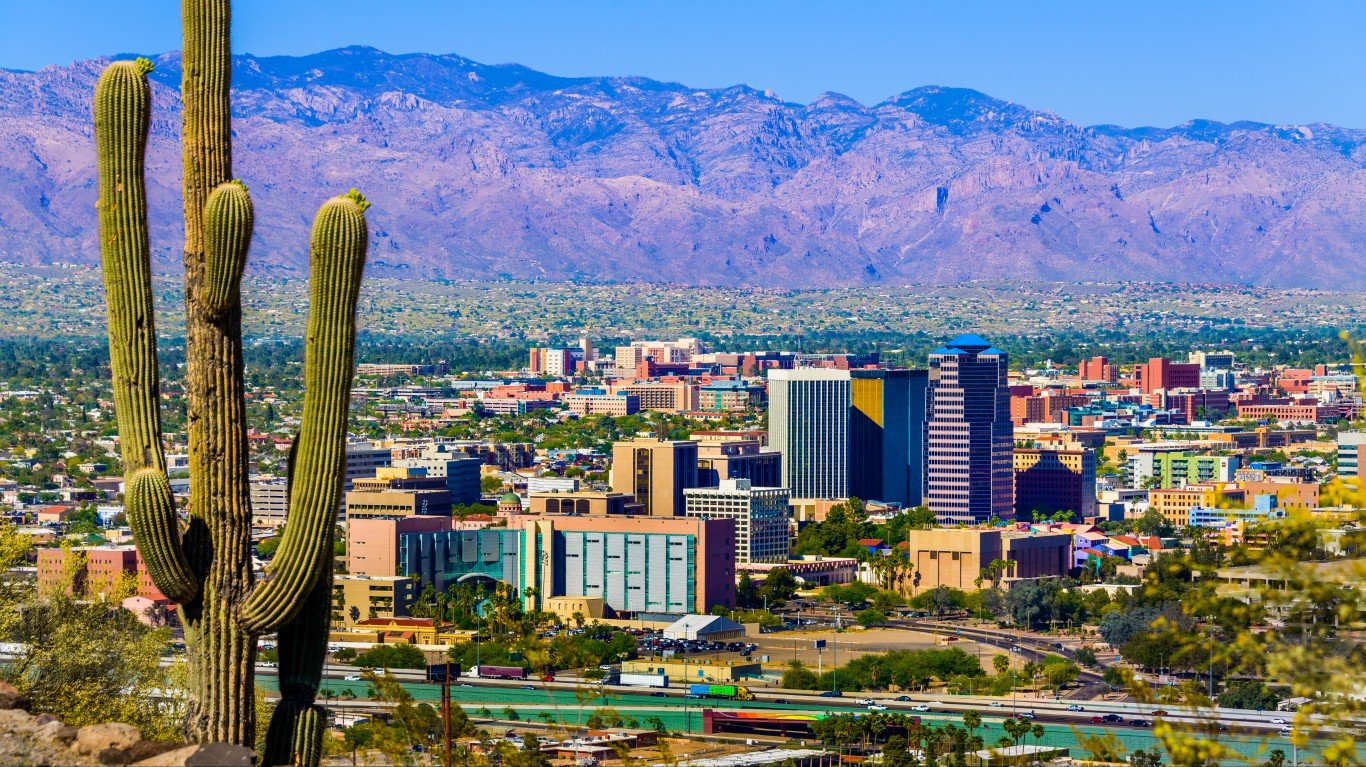
Prospective retirees often say they’re moving to “Arizona” as if it were a single address. They’ve settled on the state, but the harder question is which Arizona, because the cities differ far more than brochures suggest.
State-Level Facts That Do Not Decide Anything
Arizona taxes ordinary income, including pension income and traditional retirement account withdrawals, at a flat 2.5%. Arizona does not tax Social Security benefits at the state level. Effective property tax rates statewide run in the roughly 0.5% to 0.7% range of market value, and Proposition 117 caps annual growth in the limited property value used for most tax calculations at 5%. Those rules travel with you from Yuma to Flagstaff, and they don’t separate a good retirement here from a bad one.
Elevation Is the Variable Nobody Prices In
The biggest city name for most people, Phoenix sits at roughly 1,100 feet, while Tucson is at about 2,600 feet. Prescott climbs to around 5,400 feet, and Flagstaff to nearly 7,000 feet. The consequences are enormous. Phoenix routinely logs more than 100 days a year above 100 degrees, with a run of 30-plus days above 110 in recent summers. Tucson runs several degrees cooler and sees fewer extreme days. Prescott has real four-season weather and gets measurable snow most winters. Flagstaff averages around 100 inches of snowfall a year.
The retiree who visits Scottsdale in February and buys in April has bought a July they’ve never met. The retiree who chases the Ponderosa pines north to escape it has, in some cases, moved back into the exact winter they left Ohio to avoid.
Healthcare and Water, the Two Constraints That Compound
Healthcare capacity across the state is also highly concentrated. Phoenix and Tucson have full academic medical systems and deep specialist benches. Prescott and Flagstaff each have a single dominant hospital system with thinner specialty coverage. If a spouse has a cardiologist, oncologist, or rheumatologist they already trust, the higher-elevation cities require confirming acceptance of new patients before making an offer.
Water is the other quiet decider. The Arizona Department of Water Resources announced in June 2023 that new subdivisions in parts of the Phoenix Active Management Area relying solely on groundwater would no longer receive assured water supply certificates, which reshaped the edges of the Phoenix metro overnight. The Prescott AMA has its own groundwater constraints. Tucson relies more heavily on Central Arizona Project water and recharged aquifers. This question resolves at the address level, and the utility holds the answer.
Why the Same Person Buys Twice
The mistake pattern is consistent: winter-only reconnaissance, then a summer that changes everything. A low-desert purchase made for price, followed by a cooler-climate second purchase made for survival. A higher-elevation choice made for climate, followed by a return to the metro when a diagnosis narrows the specialist list. An age-restricted community bought for amenities, then unwound when visiting rules or resale terms become clear. Proximity to a golf course chosen over proximity to a hospital, with priorities inverting around age 75.
Each round trip absorbs commissions, title work, moving costs, and updates, typically 8% to 10% of the home’s value. With the Case-Shiller national index at 336.7 in June 2026, and a soft resale market running at 3.98 million annualized sales in August 2026, there isn’t much appreciation tailwind to absorb two moves in three years.
Arizona’s Default, and Who Should Ignore It
For most retirees committed to Arizona, Tucson is the sensible starting point. It has the medical depth of a university city, an elevation that softens the worst of the low-desert summer without introducing real winter, a housing market below the Scottsdale corridor, and water infrastructure less exposed than the Phoenix fringe. Retirees whose priority is genuinely cool summers and who have straightforward medical needs should start in Prescott instead. Retirees who need a top-tier subspecialist network belong in the Phoenix or Scottsdale medical corridor.
Rent in the leading candidate for a full year, summer included, before buying. One lease, roughly the cost of a few months of the average household’s annual expenditures of $78,535, is the cheapest tuition for the question of which Arizona you actually want to live in.
Contact [email protected] for any questions or corrections.
David Beren has been a Flywheel Publishing contributor since 2022. Writing for 24/7 Wall St. since 2023, David loves to write about topics of all shapes and sizes. As a technology expert, David focuses heavily on consumer electronics brands, automobiles, and general technology. He has previously written for LifeWire, formerly About.com. As a part-time freelance writer, David’s “day job” has been working on and leading social media for multiple Fortune 100 brands. David loves the flexibility of this field and its ability to reach customers exactly where they like to spend their time. Additionally, David previously published his own blog, TmoNews.com, which reached 3 million readers in its first year. In addition to freelance and social media work, David loves to spend time with his family and children and relive the glory days of video game consoles by playing any retro game console he can get his hands on.