‘Conventional Wisdom Isn’t Wise’: Ramsey Tells Retirees to Dump Bonds, The Numbers Back Him Up
Dave Ramsey told retirees to ditch bonds on live radio, and a close look at the actual Treasury yields and withdrawal math reveals whether that advice is reckless or overdue.

This post may contain links from our sponsors and affiliates, and Flywheel Publishing may receive compensation for actions taken through them.
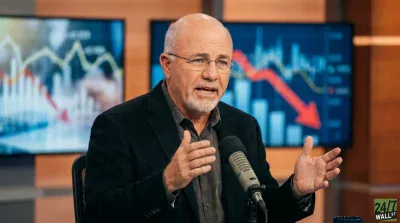
On the September 9, 2026 episode of The Ramsey Show, titled Short-Term Pain, Long-Term Peace, Dave Ramsey took a wrecking ball to the age-based glide path that most target-date funds and financial planners still recommend. His line: “If you follow conventional wisdom on the average diet in America, you will be obese. If you follow conventional wisdom on the proper way to be married, you won’t be long. Conventional wisdom isn’t wise.” The target was the standard rule that retirees should shift heavily into bonds as they age.
The stakes for a 65-year-old are concrete. A $1 million portfolio moved from stocks into an aggregate bond fund at the start of 2026 would be worth meaningfully less today than it was on January 1, before a single withdrawal was taken. That is the practical cost of treating bonds as automatically “safe.”
Scoring the Claim: Two Numbers Right, One Number Off
Ramsey backed his position with live figures: “Year to date the S&P is up 12%. You know what the bond market has averaged since the beginning of the year? Less than 1%.” Both directional claims check out, and the bond number has only deteriorated further since air date. SPDR S&P 500 ETF Trust (NYSEARCA:SPY), which tracks the S&P 500, was up roughly 12% at the time of the broadcast. The iShares Core U.S. Aggregate Bond ETF (NYSEARCA:AGG), the most widely cited proxy for the U.S. bond market, has since deepened its loss: BlackRock’s own NAV data puts AGG’s total return at roughly -2.4% year to date as of mid-October 2026. Coupon income has not come close to outrunning price declines.
Ramsey’s inflation figure is where the math slips. He told listeners: “If you don’t make 4.2% on your money, the inflation rate, you are going backward in real purchasing power. If you need to pay taxes, you need a little over 6% just to break even.” The Bureau of Labor Statistics reported that the Consumer Price Index for All Urban Consumers rose 3.4% year over year in July 2026, a reading that held through August. That puts the real hurdle rate about 80 basis points below what Ramsey claimed, which weakens his numeric framing without rescuing bonds.
Verdict: He Is Right on the Bigger Point
Here is the actual math a retiree faces today. The 10-year Treasury now yields approximately 5.2% and the 30-year approximately 5.5%, well above where they stood when the episode aired on September 9. Yields have climbed sharply in recent weeks, with the 10-year briefly touching a 24-year high of 5.31% on October 5. On an inflation-protected basis, the 10-year TIPS real yield has risen to roughly 2.9% and the 30-year TIPS to roughly 3.3%, levels not seen in nearly two decades. These are your real, after-inflation returns on the safest instruments the U.S. government sells, before taxes.
Now run the retirement math. A 65-year-old with $1 million and a 4% initial withdrawal takes $40,000 in year one. If the portfolio earns a real 2.9% and you withdraw 4%, principal still shrinks in real terms every year. Even at the current, historically elevated TIPS yields, a bond-only portfolio cannot arithmetically sustain a standard 4% real withdrawal for 30 years. That is the sequence-of-returns trap retirees are told bonds solve. Bonds smooth volatility. They do not solve the arithmetic (we made the full case against the classic 4% rule, and what to run instead, in a free report).
Equities carry the opposite problem: real volatility paired with real long-run return. Apple (NASDAQ:AAPL | AAPL Price Prediction) has returned roughly 39% over the past year and about 145% over five years. Amazon (NASDAQ:AMZN) has returned roughly 17% over the past year and about 54% over five years. Apple pays a 0.3% dividend yield and authorized a $100 billion buyback in Q2 2026. Amazon pays no dividend. Neither is a bond substitute for a household that needs cash next month. Both are precisely the reason a 65-year-old with a 25-to-30-year horizon cannot afford to be entirely out of equities.
Key Variable: How Many Years of Spending You Hold in Cash
The single factor that decides whether Ramsey’s advice helps or hurts you is your cash bucket. A retiree holding two to three years of spending in T-bills, currently yielding roughly 4.3% at three months and 4.5% at one year, can leave the remainder in equities and ride out an average bear market without selling stocks at a loss. Without that cushion, an all-equity allocation is genuinely dangerous: the retiree who needs to sell shares in a down year to cover expenses has no buffer.
Two scenarios clarify this quickly. A 68-year-old with $800,000 and $60,000 in a money-market fund can survive a 30% equity drawdown without touching a single share. A 68-year-old with $800,000 all in stocks and $2,000 in checking cannot. The solution is a spending reserve, not a bond glide path.
Do This Before Your Next Rebalance
- Calculate your annual withdrawal in dollars. Multiply by two or three. That is your target cash-and-T-bill bucket, funded from current bond allocations.
- Compare your bond fund’s yield to the 10-year TIPS real yield of roughly 2.9%. If your fund yields less on an after-inflation basis, you are paying a manager to underperform the government.
- Check the 2027 Social Security COLA, officially set at 3.6% by the Social Security Administration on October 14, 2026, against your portfolio’s real return. Guaranteed income indexed to inflation is the bond substitute most retirees ignore.
- Model a 30% equity drawdown in year one of retirement. If you cannot cover essential expenses from your cash reserve, the allocation is wrong regardless of what any rule says.
Ramsey’s inflation number was off by about 80 basis points. His core argument, that moving a retiree wholesale into bonds is a math problem dressed up as prudence, is supported by every yield on the current Treasury curve, which has continued rising since the episode aired.
Data Sources
- Ramsey Show, Short-Term Pain, Long-Term Peace (Sept 9, 2026): source of the primary quote, the S&P and bond return claims, and the 4.2% inflation figure fact-checked in this article.
Editor’s note: This update refreshes several figures that moved materially after the original publication date. The 2027 Social Security COLA is now an official 3.6% (announced October 14, 2026), not the 3.1% estimate cited originally. Treasury yields have risen since September 9: the 10-year is now approximately 5.2% and the 30-year approximately 5.5%, while 10-year TIPS real yields have climbed to roughly 2.9%. AGG’s year-to-date total return has deepened to roughly -2.4%. Apple’s one-year return is now approximately 39% and Amazon’s approximately 17%, with five-year figures updated to roughly 145% and 54%, respectively. T-bill rates cited in the cash-bucket section have also been revised to reflect current levels.
Contact [email protected] for any questions or corrections.
Jake has been been working in financial media for almost 15 years. He focuses on all things personal finance for 24/7 Wall St. with high hopes to educate and entertain. Most recently, Jake spent 12 years working various roles at The Motley Fool. He started copy editing fool.com content, worked on premium and marketing campaigns, and helped launch The Ascent, a personal finance brand.
His work has been featured on platforms like MSN, Yahoo Finance, USA Today, and more. He's written about credit cards, social security, ETFs, savings accounts, and just about anything else you can imagine when thinking about money. Jake love to cook, play golf, and tell people he's never had a cavity. (It's true!)