Arizona Retirees Who Bought a House With a Pool Say It Was the Most Expensive Thing They Never Used
Thousands of Arizona retirees locked in a backyard pool they almost never use, and the bills keep arriving whether anyone swims or not. Before you buy, there is a portfolio number attached to that water.

This post may contain links from our sponsors and affiliates, and Flywheel Publishing may receive compensation for actions taken through them.
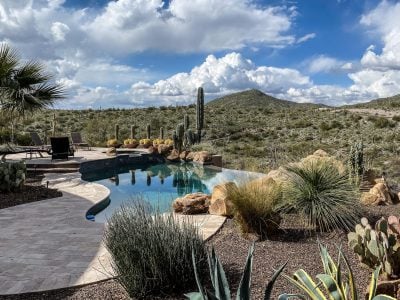
Arizona retirees often buy homes with pools, then regret it. They use the pool heavily the first spring, but by July the water is too warm. After that, it mostly sits idle except when grandkids visit. The bills keep arriving either way. Before closing on a pool home, ask: What does the pool cost over a 25-year retirement, and how much of your portfolio must you set aside to pay for it?
What a Phoenix Pool Costs Each Year, Whether Anyone Swims or Not
Most Arizona homeowners pay $130 to $190 per month for weekly pool service with chemicals included. One Phoenix owner on Reddit put it this way: “We’re currently paying $160 a month for weekly service that includes chemicals.” Then come the other costs. Industry estimates put pool electricity at $500 to $1,200 a year, water at $200 to $600, repairs at $200 to $500, and higher insurance at $200 to $500. The big bills come less often. Resurfacing plus tile runs $8,000 to $15,000 in the Phoenix metro and is needed every 10 to 15 years. A new pump, filter, and heater costs $3,000 to $8,000 every 8 to 12 years.
| Pool Cost | Working Annual Figure |
|---|---|
| Weekly service with chemicals | $1,920 |
| Electricity | $800 |
| Water | $400 |
| Repairs | $350 |
| Insurance increase | $350 |
| Resurfacing savings (a $12,000 job every 12 years) | $1,000 |
| Equipment savings (a $5,500 replacement every 10 years) | $550 |
| Total | $5,370 |
A variable speed pump can cut $500 to $1,200 per year from that total. It is the one upgrade that reliably pays for itself.
Turning the Pool Into a Portfolio Number
Most retirees pay for the pool from IRA withdrawals, which are taxed. Arizona taxes other income at a flat 2.5%. Assume a 12% federal bracket plus state tax. Paying $5,370 in pool bills takes about $6,300 in gross withdrawals. At a 4% withdrawal rate, that requires roughly $157,000 of portfolio set aside just for the pool. Over 25 years, you would spend about $134,000 in today’s dollars.
The average U.S. household spent $78,535 in 2024. Arizona’s cost-of-living index is 100.677. Two average Social Security checks of $2,071 each bring in $49,704 a year. To cover the rest of the budget at 4%, a couple needs about $720,000. Add the pool, and the target rises to about $878,000. Medicare Part B costs $202.90 a month per person, or about $4,870 a year for a couple.
When you claim Social Security, it makes a big difference here. Waiting from 67 to 70 raises your benefit by 24%. For a couple with average-size checks, that adds about $11,900 a year, almost twice what the pool costs after taxes.
Equity Tied Up in the Pool Earns Nothing
In warm-climate states, pools add roughly 5% to 8% to a home’s value. The median Phoenix metro single-family home sells for $504,900, so the pool’s share is $25,000 to $40,000. That money sits in concrete. It throws off no income, and you only get it back if you sell. Selling has its own problems. Existing home sales are running at an annualized 3.98 million, which counts as a soft market. Sellers in their late 70s who no longer want to manage a pool will sell into whatever market exists at the time. Clark Howard has made the same point about bigger homes on his podcast: “There’s more maintenance, repairs you have to make over time.”
Another way to get water without the bills. The Oro Valley couple in the Journal’s story chose a 55+ community with pools and a golf course. That swaps the pool bills for HOA dues, and it skips the equity premium at purchase.
What It Takes to Own the Pool Without Regret
For a couple with average Social Security, an Arizona pool retirement takes about $880,000 in savings at 4%, with roughly $157,000 earmarked for the pool. Pick a home with a pool that has a variable-speed pump and a fresh surface. Waiting to claim Social Security until 70 brings in enough extra to cover the pool. The pool really costs about $157,000 of portfolio plus the equity sunk into the backyard. Set that aside in your plan before you buy.
Contact [email protected] for any questions or corrections.
David Beren has been a Flywheel Publishing contributor since 2022. Writing for 24/7 Wall St. since 2023, David loves to write about topics of all shapes and sizes. As a technology expert, David focuses heavily on consumer electronics brands, automobiles, and general technology. He has previously written for LifeWire, formerly About.com. As a part-time freelance writer, David’s “day job” has been working on and leading social media for multiple Fortune 100 brands. David loves the flexibility of this field and its ability to reach customers exactly where they like to spend their time. Additionally, David previously published his own blog, TmoNews.com, which reached 3 million readers in its first year. In addition to freelance and social media work, David loves to spend time with his family and children and relive the glory days of video game consoles by playing any retro game console he can get his hands on.