‘You Don’t Co Parent With a Gorilla’: Dave Ramsey to Mom Who Financed $103,000 for Her Boyfriend’s Construction Company
A mother in Atlanta signed her name on $103,000 worth of loans for her boyfriend's construction company, then called Dave Ramsey to ask about borrowing $10,000 more. The hosts had a very different question for her.

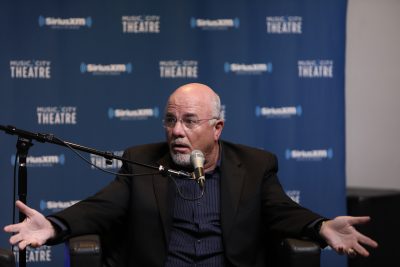
Louisa of Atlanta asked The Ramsey Show a money question. Should she borrow “those 10k” from her 401(k)? The answer was “You’re not listening.” After that, the call was about getting a mother and her 2-year-old out of the house, and the debt came second.
Dave Ramsey’s show has spent decades preaching debt freedom. On the episode that aired October 14, 2026, Louisa said she had about $103,000 of debt taken on for her boyfriend’s construction company.
Most of it was a $60,000 truck loan, roughly $10,000 upside down. The rest was a $22,000 business credit card she opened because he asked her to. (A host later rounded the card to $25,000.)
She takes home about $5,100 a month on an $85,000 salary. She said she worked her way through college without borrowing, not even for a car. Her mother lives in Florida, so she has no family nearby.
The hosts told her to let the truck be repossessed, freeze her credit so he could not borrow against her again, call her therapist, and leave: “If you’re not safe, you need to be gone when he gets home tonight.” One host said, “Screw the debt. Screw him. He’s not a father. He’s an abuser.” Later, that same host walked it back to “not necessarily an abuser.”
On the money, the hosts were right.
Why a $10,000 401(k) Loan Would Fix Almost Nothing
A $10,000 loan would cover about 10% of what she owes. And the card keeps growing.
At an example rate of 24%, a $22,000 balance runs about $440 a month in interest alone. That’s roughly 9% of her take-home pay, and it doesn’t shrink the balance at all.
The tax rules make it worse. Under 26 U.S.C. § 72(p)(1)(A), a plan loan counts as a distribution unless it meets specific exceptions. If she leaves her job before paying it back, the unpaid balance can become a “plan loan offset amount” under § 402(c)(3)(C) and get taxed as income. On top of that comes the 10% additional tax on early distributions under § 72(t)(1). Someone who may need to move in a hurry is exactly the person most likely to trigger that.
Letting a $60,000 Truck Go Still Leaves a Bill
A repossession doesn’t erase the loan. If she owes $60,000 and is $10,000 upside down, the truck is worth about $50,000.
Say it sells at auction for 80% of that value (a hypothetical). She would still owe about $20,000, plus fees.
Even so, a fixed $20,000 shortfall beats making payments with no end date on a vehicle she bought for someone else’s business.
Ramsey’s Own Warning About Small Businesses Explains Her Trap
Earlier in the same episode, a Canadian construction owner named Jay described growing from $128,000 to $30 million in five years with very little debt. Ramsey told him to fire the advisors pushing a bank credit line. His reasoning: “80% of small businesses in America fail. Number one cause: cash flow shortage, caused by two things: screwing up tax planning, and going into debt. As soon as there’s a slowdown, they got run out of business because the bank owns their butt.”
Louisa’s boyfriend’s company is owed about $60,000 in invoices and has not been paid in two months. That’s the cash crunch Ramsey described. What decides who gets hurt is whose signature is on the loan. When a business borrows in its own name, a slowdown hits the business. When it borrows on a girlfriend’s signature, the slowdown hits her credit, and the debt itself becomes the reason she felt she could not leave.
Do These Four Things If Your Name Is on a Partner’s Debt
- Freeze your credit at Equifax (NYSE:EFX | EFX Price Prediction), Experian, and TransUnion (NYSE:TRU). A freeze is free, and it blocks anyone from opening new accounts in your name. This was the hosts’ first piece of practical advice.
- Pull all three credit reports and list every account in your name. Dispute anything you didn’t open. Under federal credit reporting law, identity theft victims have additional rights, and you can file a complaint with the Consumer Financial Protection Bureau.
- Run the deficiency math before you hand over the keys. Get the payoff amount from the lender and look up the vehicle’s wholesale value. That difference is roughly what you’ll still owe, so you can plan for it instead of being surprised.
- Leave the 401(k) alone and put your safety first. The National Domestic Violence Hotline treats coerced debt as a form of abuse. You can call 1.800.799.SAFE (7233) or text “START” to 88788. It’s free and confidential.
You can pay down debt someone talked you into, but first make sure they can’t add any more in your name.
Contact [email protected] for any questions or corrections.
Jake has been been working in financial media for almost 15 years. He focuses on all things personal finance for 24/7 Wall St. with high hopes to educate and entertain. Most recently, Jake spent 12 years working various roles at The Motley Fool. He started copy editing fool.com content, worked on premium and marketing campaigns, and helped launch The Ascent, a personal finance brand.
His work has been featured on platforms like MSN, Yahoo Finance, USA Today, and more. He's written about credit cards, social security, ETFs, savings accounts, and just about anything else you can imagine when thinking about money. Jake love to cook, play golf, and tell people he's never had a cavity. (It's true!)