Plenty of Retirees Move to the Mountains and Head Back Down Within a Few Years. One Reason Comes Up Every Time
Retirees who fall in love with mountain living and then sell within a few years almost always cite the same thing, and it has nothing to do with the winters or the isolation.

This post may contain links from our sponsors and affiliates, and Flywheel Publishing may receive compensation for actions taken through them.
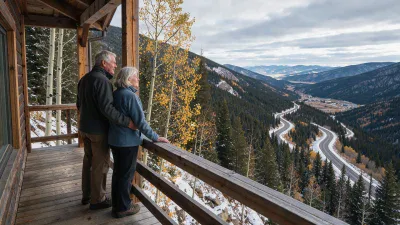
It goes without saying that retirees may buy a mountain house after spending fall there, drawn by the scenery and quiet roads. Some retirees make this move, and some later list the house again. Couples who’ve done it give several reasons for leaving, including one that comes up often: how far the house is from a hospital, and how that distance feels at 72 compared with 62. The article explores that reason, its impact on the budget, and what a couple would need to stay.
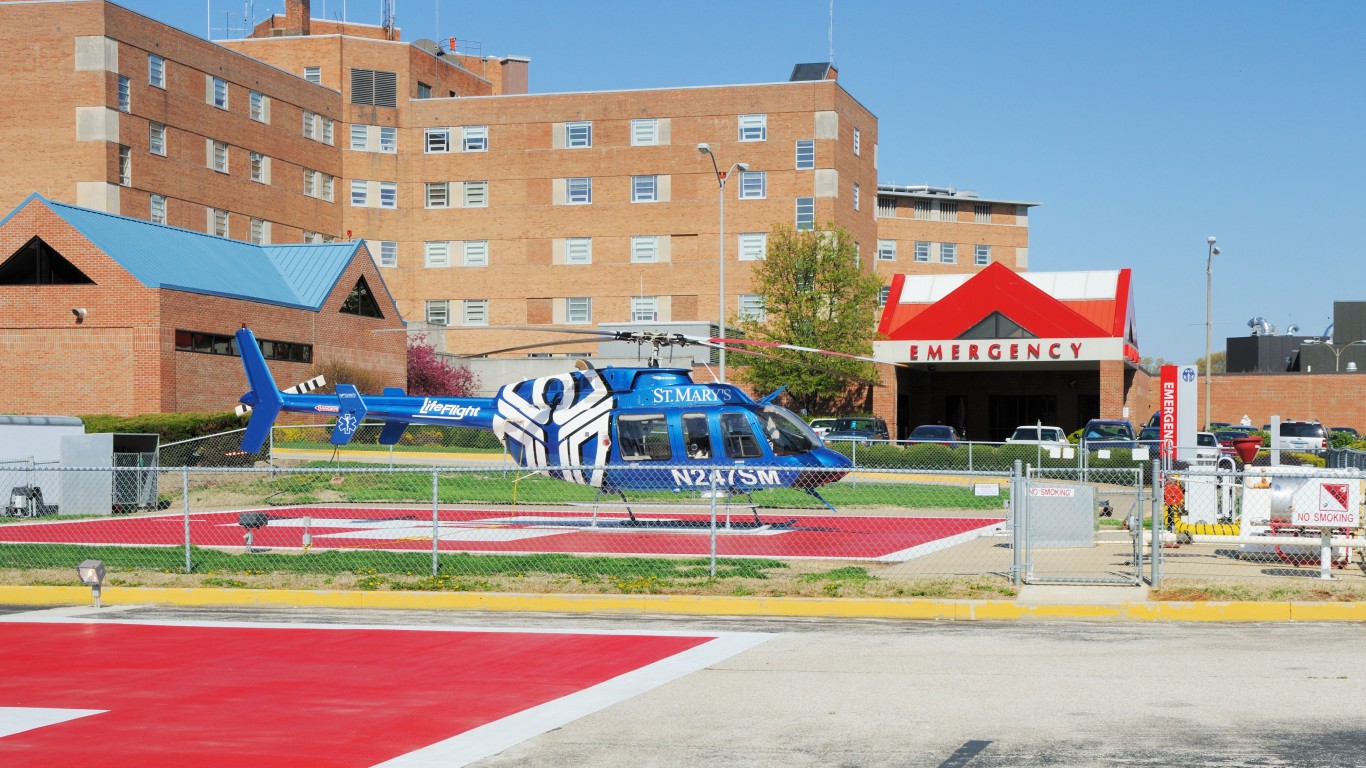
Distance to the Emergency Room Is What Sends People Back Down
Researchers at the Maine Rural Health Research Center mapped what they call “ambulance deserts,” meaning places more than 25 minutes from the nearest ambulance station. In the 41 states with data, 4.5 million people lived in one, according to KFF Health News.
On a snowy mountain road, a 25-minute response can easily take longer, and a medical helicopter can only fly when the weather allows. Rural hospitals are under pressure too, as lawmakers in Ohio and Washington state were dealing with rural hospital funding and strain just this week (Ohio House; House.gov).
Altitude is another factor for some retirees. Boulder Community Health notes that for people with chronic lung disease, higher altitude “may exacerbate low blood oxygen levels and elevated blood pressure in the lungs.” A peer-reviewed review found that existing pulmonary hypertension “may deteriorate at even moderate altitude”.
Other research from CU Anschutz found lower death rates from ischemic heart disease at higher altitudes, so the findings are mixed. Doctors can assess how altitude may affect people with heart or lung conditions.
How Medicare Choice Changes Life Two Valleys From a Specialist
The type of Medicare a couple chooses matters more in a remote town. Medicare.gov says Original Medicare covers “any doctor or hospital that takes Medicare, anywhere in the U.S.” Medicare Advantage plans may require in-network providers for non-emergency care. Penn State’s Office of Rural Health reports that when rural hospitals drop Medicare Advantage contracts, local patients can be left “without nearby in-network providers.”
The standard Part B premium is $202.90 a month, or about $4,870 a year for a couple, before adding Part D or a Medigap plan (a private policy that covers costs Original Medicare doesn’t pay). The Part A hospital deductible is $1,736 for each benefit period. Joint income above $218,000 pushes each person’s Part B premium up to $284.10. This matters because selling a house and moving often means taking a large lump sum from savings in a single year.
Insurance, Snow and Life on a Slope
Fire insurance is another cost for mountain homeowners. Colorado set up a FAIR Plan in July 2025 for properties that standard insurers won’t cover. It works as a last resort, with homeowner coverage limited to $750,000. Insurers often require homeowners to manage the trees and brush around the house before they’ll write a policy. Heating, plowing, and private road agreements, where the neighbors split the cost of keeping a shared road open, add bills that a house in town wouldn’t have.
Several other reasons come up. Isolation gets hard, especially after a spouse dies. Keeping up a house on a steep lot takes more effort every year. Groceries, pharmacies, and repair crews can be far away.
What It Takes to Stay
As a rough budget, take the average U.S. household’s spending of $78,535 a year. Couples where both spouses receive Social Security get $3,208 a month on average, or $38,496 a year. That leaves about $40,000 to come from savings. At a 4% withdrawal rate, that takes about $1 million.
At 3.5%, a more conservative rate for a long retirement with unpredictable insurance costs, it’s closer to $1.14 million. Mountain extras like insurance, plowing, and heat push the number higher. Inflation for older households has also been climbing. The BLS index for Americans 62 and older went from 354.818 to 368.066 over the past year, while the 2027 Social Security raise is 3.6%.
Staying long term involves a few factors: savings of about $1 million to $1.14 million on top of average Social Security, Original Medicare with a Medigap plan so the network doesn’t shrink with the local hospital, and a property that can actually be insured.
Some couples rent through a whole winter before buying and choose a mountain town with a hospital rather than a remote lot. Drive time from a house to the nearest emergency room in January is one measure of that distance.
Contact [email protected] for any questions or corrections.
David Beren has been a Flywheel Publishing contributor since 2022. Writing for 24/7 Wall St. since 2023, David loves to write about topics of all shapes and sizes. As a technology expert, David focuses heavily on consumer electronics brands, automobiles, and general technology. He has previously written for LifeWire, formerly About.com. As a part-time freelance writer, David’s “day job” has been working on and leading social media for multiple Fortune 100 brands. David loves the flexibility of this field and its ability to reach customers exactly where they like to spend their time. Additionally, David previously published his own blog, TmoNews.com, which reached 3 million readers in its first year. In addition to freelance and social media work, David loves to spend time with his family and children and relive the glory days of video game consoles by playing any retro game console he can get his hands on.