How a 67-Year-Old Collects $4,750 a Month From Just Three Tickers: DIVO, ADC, and BXSL

This post may contain links from our sponsors and affiliates, and Flywheel Publishing may receive compensation for actions taken through them.
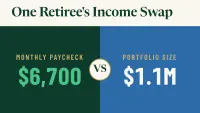
Picture a 67-year-old retiree who wanted an income plan simple enough to explain on a napkin. Three tickers, averaging $4,750 a month in dividend income, with payments arriving on different schedules. That works out to $57,000 a year, and it has to land whether stocks rise or fall.
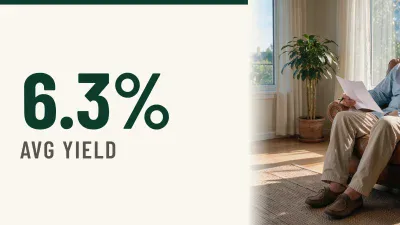
This sample portfolio splits the money three ways: 40% in a covered-call dividend ETF, 30% in a net-lease REIT, and 30% in a BDC. With today’s prices and payouts (November 11, 2026), the average yield comes to about 6.3%. Covering $57,000 a year at that rate takes roughly $900,000.
Three holdings make the plan easy to run. They also make it concentrated. Each one carries a big slice of the paycheck. A single dividend cut shows up fast in the monthly deposit.
Amplify CWP Enhanced Dividend Income ETF
Amplify CWP Enhanced Dividend Income ETF (NYSEARCA:DIVO) owns large, dividend-paying U.S. companies. Its managers sell covered calls selectively, stock by stock. A covered call means the fund takes in cash today in exchange for limiting a stock’s upside for a set period.
The fund lists 30 holdings as of October 20, 2026, charges a 0.56% expense ratio, and builds its stock portfolio around 20 to 25 companies spread across sectors. That basket adds some diversification inside this slice. Shares trade near $47, and the annualized monthly payout is about $2.30, for a yield of roughly 4.8%. On a $360,000 stake, DIVO supplies about $1,450 a month.
One thing to know: DIVO paid an extra-large $0.95 per share in December 2025, boosting its trailing 12-month total to $3.03. Plan around the regular monthly rate.
Agree Realty
Agree Realty (NYSE:ADC) owns stores and rents them on net leases, meaning tenants cover property taxes, insurance, and maintenance. It favors grocery, home improvement, auto parts, and dollar stores. Agree owns 2,888 properties at nearly 99.8% occupancy as of September 30, 2026. About 66% of its base rent comes from investment-grade tenants, the retailers with the strongest credit.
Shares sit near $70, and the monthly dividend annualizes to about $3.25, a 4.7% yield. Its share of the portfolio, roughly $270,000, produces about $1,051 a month.
One thing to know: this company grows. Agree lifted its monthly dividend from $0.262 to $0.267 in April and to $0.271 in October. Adjusted funds from operations, the cash flow a REIT pays dividends from, rose 7% to $1.14 a share in the second quarter.
Blackstone Secured Lending
Blackstone Secured Lending (NYSE:BXSL | BXSL Price Prediction) is a BDC, a fund that lends to private companies and passes most of its income to shareholders. About 96% of its portfolio is first-lien debt, meaning it gets repaid first if a borrower fails.
Shares trade near $24, and the board has already cut the quarterly dividend from $0.77 to $0.60, starting with shareholders of record on March 31, 2027. At the new $2.40 annual rate, the yield is about 10%. Its slice produces roughly $2,248 a month, the biggest piece of the paycheck.
One thing to know: coverage fell before the cut. Net investment income, the interest left after expenses, covered just 88% of the $0.77 payout last quarter. It fell to $0.68 a share from $0.82 a year earlier. Net asset value per share dropped to $25.25 from $27.15, and loans that stopped paying reached about 2% of the portfolio at fair value.
Stress-Testing the Biggest Payer
Run a hypothetical: if Blackstone Secured Lending cut its dividend another 25%, the monthly deposit would fall about $562, to roughly $4,188. Agree, and Blackstone is a single company, so each of those income streams rides on one board’s decision.
Account Type Changes the Tax Bill
Does this portfolio sit in a taxable brokerage account or an IRA? The answer shapes the after-tax paycheck. For taxable accounts, ordinary dividends count as ordinary income, according to the IRS. Federal law limits how much REIT and regulated investment company dividends qualify for lower rates under sections 854 and 857. BDCs fall in that second group, so most of Agree’s and Blackstone’s payouts get taxed at regular income rates. Qualified dividends get the 0%, 15%, or 20% rates instead.
Within an IRA, those investment income rules don’t apply; withdrawals follow IRA distribution rules. That often makes an IRA a better fit for the REIT and BDC portions.
Keeping a Three-Ticker Plan on Track
Before investing $900,000, build one routine into the plan. (We walked through the full version of this approach, the mix, the payment calendar, and the withdrawal order, which you can find here: The Paycheck Portfolio Method.)
Check each payer’s dividend coverage every quarter. For Blackstone, compare net investment income per share against the dividend, and for Agree, compare adjusted funds from operations per share against the payout. For DIVO, track whether the monthly distribution holds steady, and Blackstone’s coverage dropped below 100% before its board announced the cut, so the warning showed up a quarter ahead.
Contact [email protected] for any questions or corrections.
David Beren has been a Flywheel Publishing contributor since 2022. Writing for 24/7 Wall St. since 2023, David loves to write about topics of all shapes and sizes. As a technology expert, David focuses heavily on consumer electronics brands, automobiles, and general technology. He has previously written for LifeWire, formerly About.com. As a part-time freelance writer, David’s “day job” has been working on and leading social media for multiple Fortune 100 brands. David loves the flexibility of this field and its ability to reach customers exactly where they like to spend their time. Additionally, David previously published his own blog, TmoNews.com, which reached 3 million readers in its first year. In addition to freelance and social media work, David loves to spend time with his family and children and relive the glory days of video game consoles by playing any retro game console he can get his hands on.