How Much Does a 56-Year-Old Need Invested to Replace a $145,000 Salary With Dividends?

This post may contain links from our sponsors and affiliates, and Flywheel Publishing may receive compensation for actions taken through them.
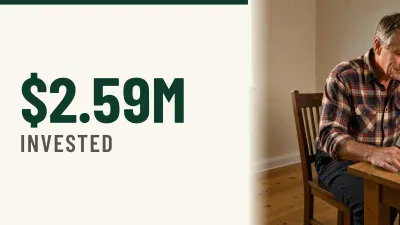
A 56-year-old making $145,000 takes in about $12,083 a month, and to replace that paycheck with dividends, you’d need about $2,589,286 invested at a 5.6% blended yield. That’s a big number, but your real target is probably smaller.
Each Yield Comes With Its Own Price Tag
Divide the income you want by the yield to get the amount you need invested.
- Conservative (3.5%): $145,000 divided by 0.035 is about $4,142,857. That buys dividend growers and broad funds. It’s the hardest pile to build, but it has the least risk of a payout cut.
- Moderate (6%): $145,000 divided by 0.06 is about $2,416,667. Think real estate investment trusts (REITs), preferreds, and closed-end funds. Payout growth slows, so inflation slowly eats into the income.
- Aggressive (10%): $145,000 divided by 0.10 is $1,450,000. That means BDCs, mortgage REITs, and option-income funds. Payouts get cut, and the principal often shrinks.
Six Holdings Behind the 5.6% Blend
Right now, the mix actually yields about 5.7%, close enough to the planning figure that the target barely moves.
| Holding | Weight | Current Yield |
|---|---|---|
| Vanguard International High Dividend Yield ETF (NASDAQ:VYMI) | 20% | 3.2% |
| Eaton Vance Tax-Advantaged Global Dividend Income Fund (NYSE:ETG) | 15% | 8.4% |
| Essential Properties Realty Trust (NYSE:EPRT) | 15% | 4.6% |
| Blue Owl Capital Corporation (NYSE:OBDC | OBDC Price Prediction) | 15% | 11.3% |
| Merck (NYSE:MRK) | 15% | 2.3% |
| Vanguard Intermediate-Term Corporate Bond ETF | 20% | 5.3% |
Global Dividends for Pennies
The Vanguard international fund holds high-paying companies outside the U.S. and charges just 0.07% a year. The risk is uneven checks: its latest quarterly payout was $0.82, down from $1.26 the quarter before.
Monthly Checks From a Closed-End Fund
The Eaton Vance fund trades like a stock and pays monthly. The payout was recently increased to $0.16 from $0.13. The risk: those distributions have changed before, so none of them are guaranteed.
Rent From Car Washes and Preschools
Essential Properties is a net-lease REIT. It owns buildings, and the tenants pay most of the costs. It has 2,580 properties and is nearly 100% occupied. Its dividend climbed from $0.28 to $0.32 per quarter. The risk is tenants failing during a downturn.
A Lender Paying Double Digits
Blue Owl is a BDC, which means it lends to midsize private companies. Net investment income of $0.33 a share covers the $0.31 base dividend. The risk: that base payout was $0.37 earlier this year.
A Drug Maker That Keeps Raising
Merck has lifted its quarterly dividend from $0.48 in 2018 to $0.85. The risk is Keytruda, its biggest drug, where sales fell 5%[1] last quarter.
Bonds for Ballast
The Vanguard bond ETF holds investment-grade company bonds, pays monthly, and costs 0.03%[2]. The risk: bond income doesn’t grow much over time.
Why a Lower Yield Pays More by 65
Put $4,142,857 to work at 3.5%, let the dividends grow 8% a year, and your income hits about $289,856 in nine years. That’s right around age 65. A 10% portfolio with no growth still pays $145,000, or less after cuts.
Here’s what that growth looks like year by year on the conservative pile.
Taxes Change Which Account Holds What
Qualified dividends get taxed at 0%, 15%, or 20%. Ordinary dividends get taxed like wages, and for single filers the 24% bracket starts above $105,700. Most REIT and BDC payouts count as ordinary income, so they usually do better inside an IRA.
Your Real Number Is Smaller
Once you stop working, you stop paying the 6.2%[3] Social Security tax and the 1.45% Medicare tax. Say you were also saving 10% for retirement. Take both out, and you need about $119,408 a year. At 5.6%, that takes roughly $2,132,277. Once Social Security checks start, the gap shrinks again (a free guide here covers turning a lump sum into something that acts like a paycheck, with a mix and payment calendar included).
Three Moves Before Your Next Birthday
- Add up 12 months of what you actually spent. That’s the number to replace, and it’s often lower than your salary.
- Put REITs and BDCs in tax-deferred accounts. Keep the qualified dividend payers in your taxable account.
- Get your Social Security estimate from ssa.gov and subtract it from your target. Then redo the yield math.
Contact [email protected] for any questions or corrections.
David Beren has been a Flywheel Publishing contributor since 2022. Writing for 24/7 Wall St. since 2023, David loves to write about topics of all shapes and sizes. As a technology expert, David focuses heavily on consumer electronics brands, automobiles, and general technology. He has previously written for LifeWire, formerly About.com. As a part-time freelance writer, David’s “day job” has been working on and leading social media for multiple Fortune 100 brands. David loves the flexibility of this field and its ability to reach customers exactly where they like to spend their time. Additionally, David previously published his own blog, TmoNews.com, which reached 3 million readers in its first year. In addition to freelance and social media work, David loves to spend time with his family and children and relive the glory days of video game consoles by playing any retro game console he can get his hands on.