A 66-Year-Old Turned Down a $680,000 Annuity for a Portfolio Paying $3,669 a Month. Here’s What She Gave Up

This post may contain links from our sponsors and affiliates, and Flywheel Publishing may receive compensation for actions taken through them.
An insurance company quoted her an annuity: hand over $680,000, and it would pay her a check every month for the rest of her life. At 66, that guarantee would remove the risk of outlasting her savings. She turned it down, kept control of the money, and spread it across seven income holdings.
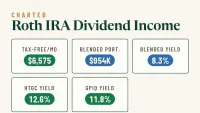
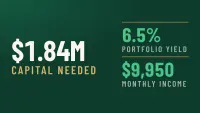
At today’s yields, her mix blends to 6.5%. That pays $3,669 a month, or $44,030 a year. Below you’ll find what makes up that paycheck, what the same income costs at other yields, and what she gave up to keep control.
Guaranteed for Life Versus Yours to Keep
The annuity guarantees income for life, and the insurer’s claims-paying ability stands behind it. She could never outlast it. The cost is that the money is usually gone at death, and the check doesn’t adjust for inflation.
She keeps ownership of her $680,000 portfolio for heirs, emergencies, or a change of plans, although its value can rise or fall. The risks run the other way. Distributions can be cut, prices can fall, and if she sells shares to pay bills, the money can run out. She traded a lifetime guarantee for ownership and flexibility.
For scale, her check beats the estimated $2,071 average monthly Social Security benefit for retired workers.
Seven Holdings Behind Her $3,669 Paycheck
- JPMorgan Equity Premium Income ETF (NYSEARCA:JEPI), 25%: This covered call fund yields about 8.3% on trailing payouts and grounds the monthly income. The catch: payouts float, from about 45 cents in May to about 34 cents in October, and selling calls caps the upside.
- VictoryShares US Equity Income Enhanced Volatility Weighted ETF (NASDAQ:CDC), 15%: This volatility-weighted basket of high-dividend U.S. stocks yields about 3.2% and adds equity growth. But monthly checks swing between 12 cents and 45 cents.
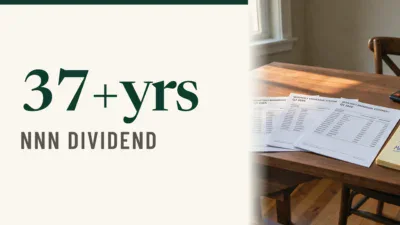
- NNN REIT (NYSE:NNN), 15%: This net-lease landlord yields about 6.0%, has raised its dividend for 37 or more consecutive years and runs at 99%[1] occupancy. The catch: it pays quarterly, and 19% of rent comes from automotive service tenants.
- Hercules Capital (NYSE:HTGC), 10%: This venture lender yields about 12.5%, so test it. Net investment income covered the base payout 118%[2]. The catch: a 25-basis-point Prime cut trims income by about 3 cents a share[2] annually, and shares are down 10% this year.
- Royal Bank of Canada (NYSE:RY | RY Price Prediction), 10%: It yields only about 2.7%, but it supplies the raises, with an 18%[3] return on equity behind them. The catch: RBC is Canadian, so its dividends may be subject to withholding tax.
- Invesco Preferred ETF (NYSEARCA:PGX), 15%: These preferred shares yield about 7.2%, with steadier monthly checks. The catch: payouts have fallen lower since 2018, with no growth.
- iShares Floating Rate Bond ETF (CBOE:FLOT), 10%: This floating-rate bond fund yields about 4.2% and holds the steadiest price. The catch: income follows short-term rates down, from 26 cents monthly in 2024 to 19 cents now.
Same $44,030, Three Different Price Tags
- Conservative (3% to 4%): $44,030 divided by 0.035 equals about $1,258,000. Dividend growers and broad funds need the most capital, but they carry the least risk of an interrupted paycheck.
- Moderate (5% to 7%): At a 6.475% yield, it works out to about $680,000. Her tier holds covered calls, REITs, and preferreds, with slower growth and capped upside.
- Aggressive (8% to 14%): At a 0.12 yield, it works out to about $367,000. In BDCs and mortgage REITs, cuts and principal erosion are common.
Why a Smaller Check Today Can Win Later
Put the same money in a 3.5% dividend grower, and it pays $23,800 a year, about $1,983 a month. That is less than her current check. But if those dividends grow 8% a year, income roughly doubles in nine years to about $47,576, or $3,965 a month.
A 12% yield with no growth stays flat. Social Security rose 2.8% for 2026 and grows 3.6% for 2027. Without growth, her paycheck buys a little less every year.
Three Moves Before You Pick Either Path
- Size the gap by subtracting Social Security from your actual monthly spending. That gap is what the portfolio has to cover.
- Track coverage quarterly, since Hercules’ coverage ratio and NNN’s 68%[1] AFFO payout ratio usually flag trouble before a cut does.
- Check the hurdle: the 10-year Treasury yields 5.0%[4] with government backing. Ask whether a 6.5% blend pays you enough for the extra risk, then check which accounts would keep the most after-tax income from RBC and the bond funds.
The annuity buys an income floor you can’t outlive. Her portfolio buys a balance she still owns. Pick the one your spending needs more. The full method for turning a lump sum into a monthly paycheck, the mix and the payment calendar, is laid out in a free guide here.
Contact [email protected] for any questions or corrections.
David Beren has been a Flywheel Publishing contributor since 2022. Writing for 24/7 Wall St. since 2023, David loves to write about topics of all shapes and sizes. As a technology expert, David focuses heavily on consumer electronics brands, automobiles, and general technology. He has previously written for LifeWire, formerly About.com. As a part-time freelance writer, David’s “day job” has been working on and leading social media for multiple Fortune 100 brands. David loves the flexibility of this field and its ability to reach customers exactly where they like to spend their time. Additionally, David previously published his own blog, TmoNews.com, which reached 3 million readers in its first year. In addition to freelance and social media work, David loves to spend time with his family and children and relive the glory days of video game consoles by playing any retro game console he can get his hands on.