Retiring to a Golf Community Can Mean Paying for the Course Whether You Play or Not

This post may contain links from our sponsors and affiliates, and Flywheel Publishing may receive compensation for actions taken through them.

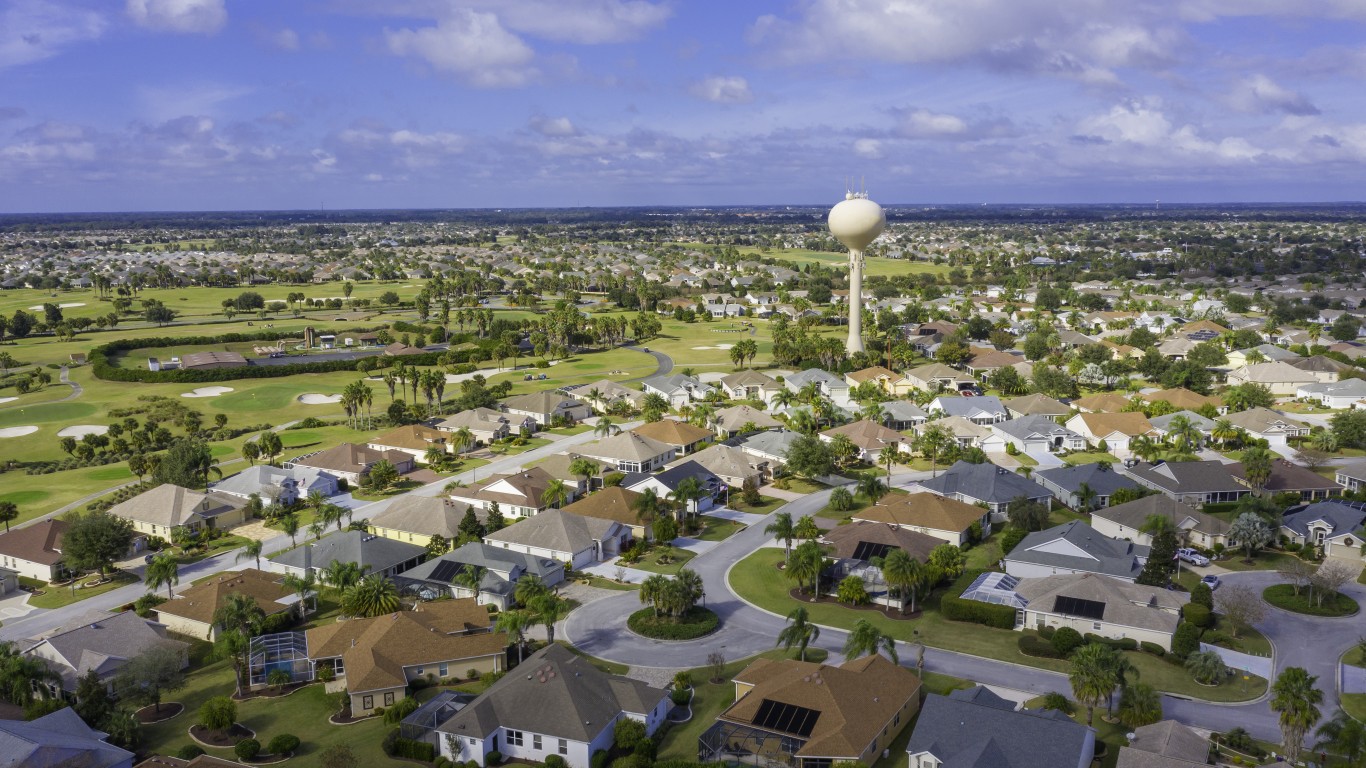
Many retiring couples picture a house on a fairway, where one spouse tees off every morning and the other, who doesn’t golf, spends those mornings on the lanai with a book. Plenty of couples picture this retirement, and plenty of them skip one question until closing. In many golf communities, the club membership comes with the house, and you pay for the course whether you play or not, and the bill keeps coming for as long as you own the place.
Here’s what that costs, how it changes the size of the portfolio you need, and what to check before you sign.
What a Mandatory Membership Actually Bills You For
Some communities tie a club membership to every deed. That usually means an initiation fee when you buy, annual dues, a food-and-beverage minimum you owe whether you eat at the club or not, assessments when the course needs work, and HOA fees on top of all of it. Published fee schedules show the scale. The Cliffs, a private club community in the Carolinas, lists a $100,000 golf initiation fee, a $3,000 home club improvement fee, and full golf dues of $1,710 a month on its 2026 schedule. Boca Grove in Florida, a mandatory membership community, lists golf dues of about $27,267 a year. Smaller clubs set dining minimums too, like Aberdeen Country Club’s $1,250 annual family minimum.
Those costs go up over time. The BLS research index for households headed by someone 62 or older shows prices up 3.9%[1] over the past year, while Social Security’s 2027 COLA is only going up 3.6%[2]. When club costs rise with the general price level, they slowly pull ahead of your benefit check.
Running the Numbers for a Couple at 65
As a baseline, the average U.S. household spent $81,905 in 2025, according to the BLS Consumer Expenditure Survey. Treat that as an illustrative budget before golf dues and income taxes, recognizing that the figure includes pension and retirement contributions. Medicare Part B alone runs $209.40 a month per person in 2027. On top of that, add dues at The Cliffs’ level, which come to $20,520 a year.
The SSA estimates that an aged couple with both spouses collecting will average $3,355[2] a month in January 2027, or $40,260 a year. Subtract that, and your portfolio has to cover a gap of about $62,165. At a 4% withdrawal rate, that takes roughly $1.55 million. If you’d like more cushion for a 30-year horizon and use 3.5%, the target moves to about $1.78 million.
Without the club, the same couple needs about $1.04 million. The dues alone account for roughly $513,000 of the portfolio at 4%, or about $586,000 at 3.5%. The initiation fee comes on top of that, paid out of your home sale proceeds. So the spouse who doesn’t golf is helping fund a half-million-dollar line item.
That deserves a conversation at the kitchen table before you make an offer. Waiting to claim Social Security helps here. Each year you hold off, up to age 70, locks in a bigger check for good and narrows the gap. If a fixed withdrawal rule is doing this much of the heavy lifting in your plan, it’s worth stress-testing the assumption itself, which we did in a free report on why the 4% rule wobbles in today’s market.
Where Golf Communities Cost You on the Way Out
Leaving a golf community carries its own costs. A mandatory membership is a cost the next buyer has to accept too, so fewer people are willing to buy. The Real Deal has reported that mandatory club membership can lower home values for exactly that reason. If the course struggles, owners can face special assessments.
If it closes, the hit is bigger. A 2019 Wall Street Journal report, cited by the Congress for New Urbanism, estimated that nearby homes typically lose 25% of their value after a course closes, and 40-50% when a legal fight follows. If the house sits on the market for a year while dues keep charging, that’s another $20,520 gone.
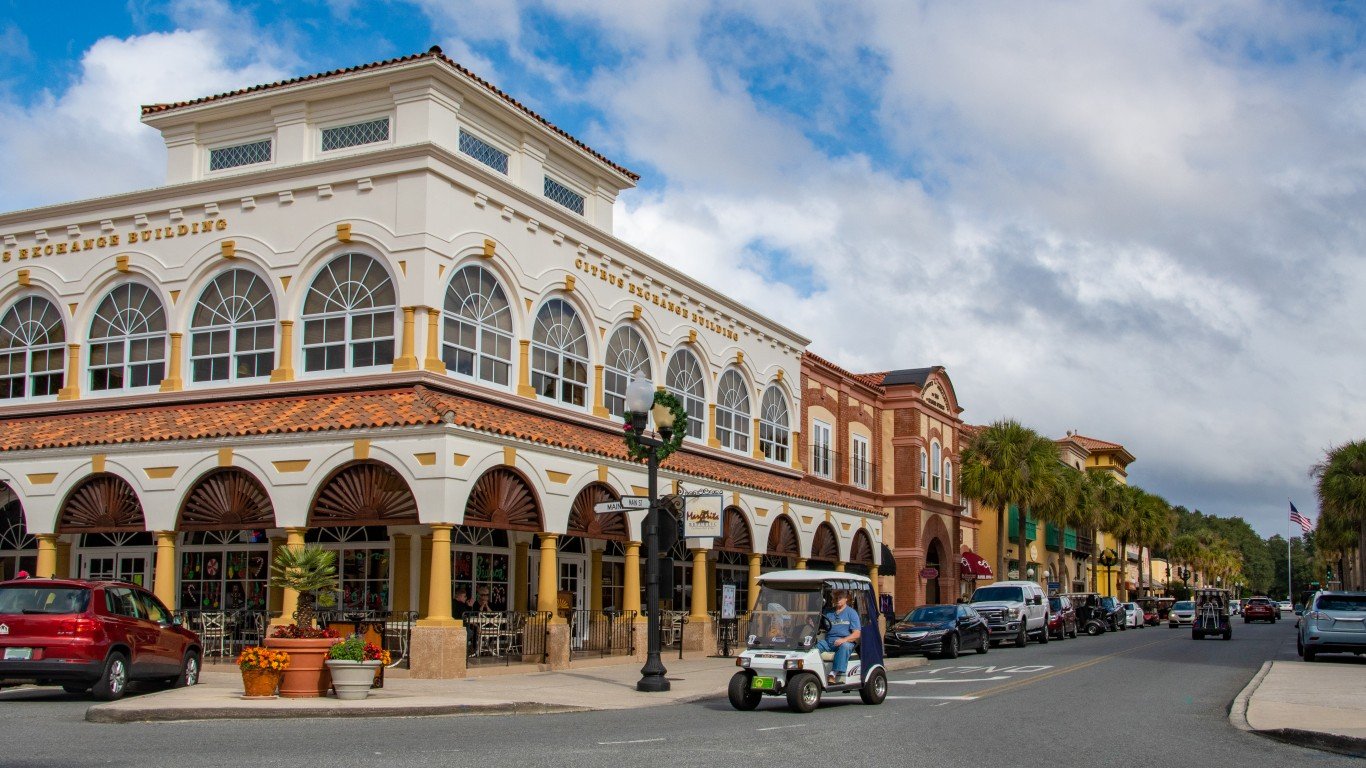
The local market matters as well. Over the past year, FHFA data shows home prices in Wildwood-The Villages down 1.68%[3] and Naples-Marco Island down 1.64%, while Hilton Head Island-Bluffton-Port Royal is up 5.96%.
Before you buy, get answers in writing. Is membership mandatory or optional? Who owns the course: the members, the developer, or an outside operator? Ask for audited financials, the reserve study, the capital plan, the history of assessments, and the membership count trend. Also ask whether dues stop when you list the house or only when a new member takes your spot.
What It Takes to Make the Fairway Home Work
For a couple with average spending and average Social Security, a mandatory club costing around $20,520 a year means you need about $1.55 million invested at a 4% withdrawal rate, or about $1.78 million at 3.5%. That assumes a balanced mix of broad stock index funds plus a Treasury ladder covering the first several years of withdrawals, and dues that rise about as fast as other prices. Pay the initiation fee in cash from your home sale proceeds and leave the portfolio intact. Leave room in the budget for at least one assessment.
A mandatory membership can require an additional half-million dollars in retirement savings and can make your house harder to sell. If the spouse who doesn’t golf wouldn’t choose that on its own merits, look for a community where membership is optional.
Contact [email protected] for any questions or corrections.
David Beren has been a Flywheel Publishing contributor since 2022. Writing for 24/7 Wall St. since 2023, David loves to write about topics of all shapes and sizes. As a technology expert, David focuses heavily on consumer electronics brands, automobiles, and general technology. He has previously written for LifeWire, formerly About.com. As a part-time freelance writer, David’s “day job” has been working on and leading social media for multiple Fortune 100 brands. David loves the flexibility of this field and its ability to reach customers exactly where they like to spend their time. Additionally, David previously published his own blog, TmoNews.com, which reached 3 million readers in its first year. In addition to freelance and social media work, David loves to spend time with his family and children and relive the glory days of video game consoles by playing any retro game console he can get his hands on.