At 62, His Woods Became a Maple Syrup Business. What the Income Does to His Social Security.
Tapping sugar maples on your own land sounds like a retirement dream, but the moment that syrup money starts flowing, Social Security math enters the picture in ways most people never see coming.

This post may contain links from our sponsors and affiliates, and Flywheel Publishing may receive compensation for actions taken through them.
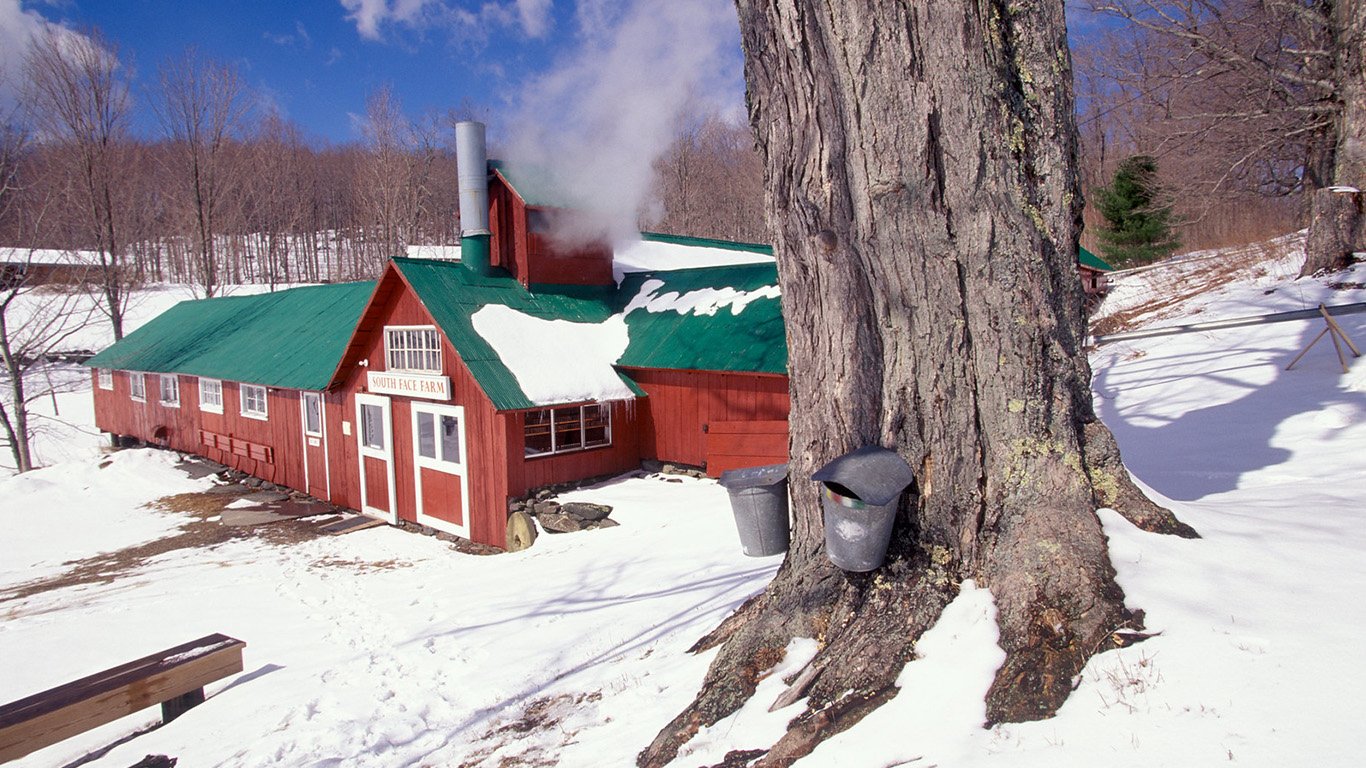
Picture a man at 62 with sugar maples behind his house. He wants to keep working on his own terms, away from a cubicle. So he taps his trees, boils sap in a small evaporator, and sells jars of syrup at farmers markets and online. Maybe he adds honey, shiitake mushrooms on oak logs, or seasonal produce.
Real operations already run this playbook. West Virginia family farms have paired maple syrup production with strawberries, produce, and sorghum for more than two decades in some cases, and the state’s winter farmers market recently drew more than 120 vendors, a sign that growers are stretching revenue well past the traditional summer season. Early retirees with wooded land wonder whether a small syrup operation could add a few thousand dollars a year without wrecking the Social Security check they are counting on. That worry deserves unpacking, because the answer is friendlier than most expect.
Why Net Profit Is the Number That Matters
If he has already claimed Social Security at 62, he is subject to the retirement earnings test until full retirement age (FRA), which for someone born in 1964 is 67. Under that test, Social Security withholds $1 in benefits for every $2 he earns above an annual limit that resets each year with wage growth.
For self-employed people, the earnings test counts net profit rather than gross sales. If he sells $18,000 of maple syrup but spends $9,000 on jars, taps, fuel, booth fees, and depreciation on the evaporator, only about $9,000 counts toward the limit. He can gross a meaningful amount while staying under the threshold, meaning no benefits withheld.
That same net-profit figure drives how much of his Social Security check becomes taxable. Once combined income (roughly adjusted gross income (AGI) plus half of benefits) crosses $25,000 for a single filer or $32,000 for a couple, a portion of benefits gets pulled into taxable income. Tracking expenses carefully protects the benefit directly.
Using the Woods to Delay Claiming
The stronger play, if health and cash flow allow, is to use the business to delay Social Security rather than supplement a check already started. Claiming at 62 permanently reduces the monthly benefit by up to 30% compared with FRA, while waiting past that threshold adds roughly 8% per year up to age 70. On a $2,000 benefit at 67, that is roughly the difference between $1,400 at 62 and about $2,480 at 70, for the rest of his life, with each year’s cost-of-living adjustment (COLA) layered on a bigger base.
The COLA piece matters more than people think. The 2026 adjustment came in at 2.8%, and every future raise is a percentage of whatever base he locks in. A larger starting benefit compounds every year he lives.
Context helps: the average U.S. household doled out $78,535 in expenses in 2024. Even $10,000 of net syrup profit covers a real slice of that while savings and eventual benefits keep growing. In a lower-cost state like West Virginia, where the cost of living index sits at 89.5, roughly 10.5% below the national average, the same profit stretches further.
What to Think Through Before the First Tap
Two details are worth getting right early. Keep clean books from day one. Receipts for equipment, mileage to markets, fuel for the evaporator, and depreciation schedules turn gross sales into the smaller net-profit number Social Security actually looks at. A shoebox of receipts is worth real money here.
Then decide whether the business is a bridge or a supplement. If it is a bridge that lets him wait until 67 or 70 to claim, the lifetime math usually favors delaying, especially for someone in good health with longevity in the family. If it is a supplement to benefits already flowing, the earnings test is manageable as long as net profit stays modest, and any benefits withheld are credited back at full retirement age anyway.
Every situation carries its own nuances: a spouse’s benefit, a pension, Medicare premiums that step up at higher incomes. A wooded lot and a few weekends of work in late winter can turn into real retirement income without punishing the Social Security check he has spent a lifetime earning.
Contact [email protected] for any questions or corrections.
Gerelyn Terzo is the author of dividend investing handbook "Dividend Investing Strategies: How to Have Your Cake & Eat It Too." A veteran financial journalist, she covers agri-finance for outlets like Global AgInvesting and the broader stock market and personal finance for 24/7 Wall Street. She began at CNBC and later helped launch Fox Business in New York. Gerelyn currently resides in Woodland Park, Colorado and dabbles in nature photography as a hobby.