The Milk Check Went Straight to the Barn Loan. Social Security Said He Earned More Than He Thought.
Every milk check vanished into loan payments, so the farmer assumed Social Security saw the same empty account his bank did. What the tax return quietly recorded told a completely different story.

This post may contain links from our sponsors and affiliates, and Flywheel Publishing may receive compensation for actions taken through them.
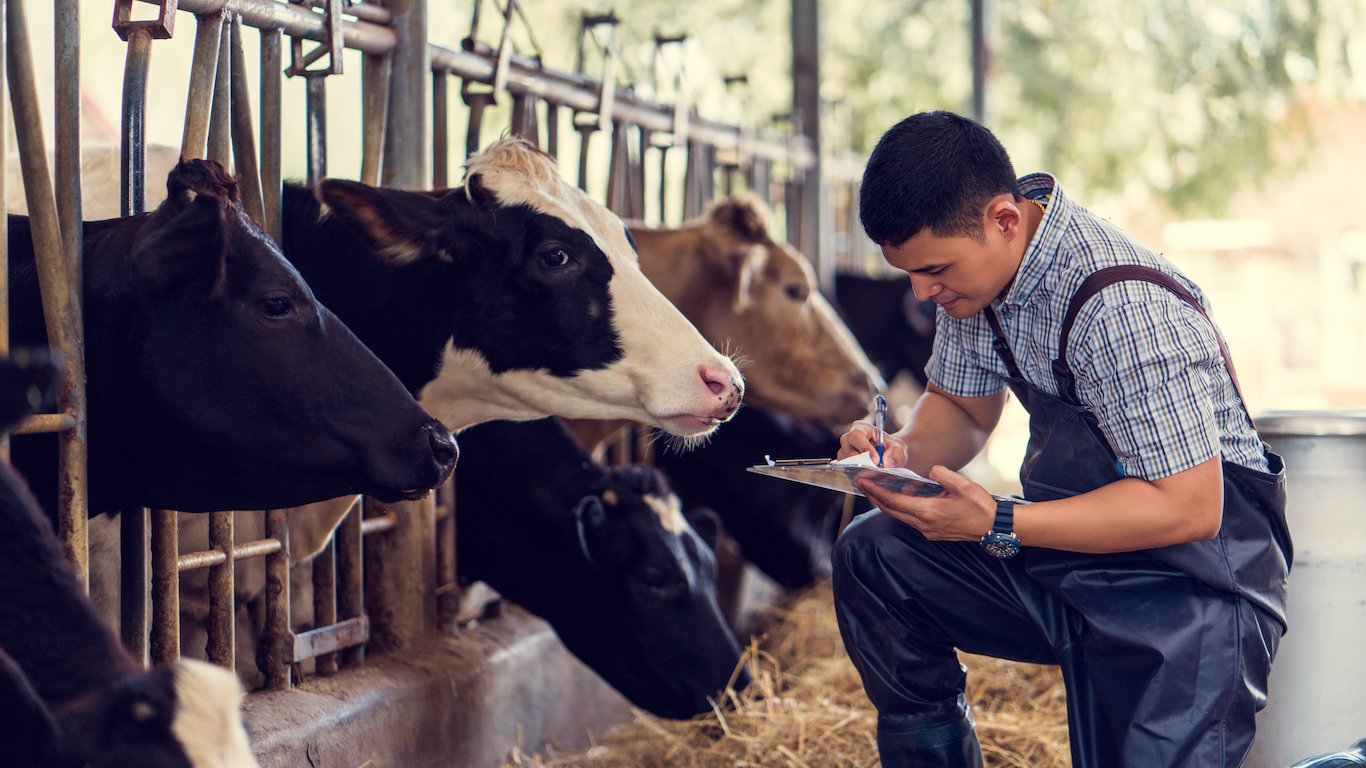
A dairy farmer builds a new barn, doubles his herd, and finances milking equipment because a processor wants more volume. Every milk check walks straight to the bank for loan payments. His checking account looks anemic. So when he thinks about Social Security, he assumes his tracked earnings have cratered too.
They have not. That is the whole story.
Farmers ask this question frequently: The loan payment depleted my account, so my taxable farm income has to be low too, right? The answer is usually no. That gap between what feels true and what the tax return says can quietly drive self-employment tax bills and, for anyone drawing benefits early, an unwelcome collision with the Social Security earnings test.
Cash Out the Door Is Not Profit
When a bank loan payment goes out each month, part is interest, which may be deductible, and part is principal, which is not. Depreciation on the barn and equipment may also generate deductions. Principal payments never show up on Schedule F as a subtraction from profit. A farm can generate $400,000 of milk revenue, spend $250,000 on feed, labor, fuel, veterinary bills and interest, take depreciation, and still report healthy net profit on Schedule F. That can happen even if the checking account is near zero because principal payments consumed the rest.
Schedule F profit generally feeds into the farmer’s net self-employment earnings. Those earnings are subject to self-employment tax and can be credited to his Social Security record much like wages from a paycheck. The bank got the cash. Social Security still counted the earnings. That is not a gross-versus-net confusion. He knows revenue is not profit. What he did not know is that a giant debt payment does not reduce profit the way a giant feed bill does.
The Earnings Test Trap for Early Claimers
If the farmer has already filed for Social Security before reaching full retirement age (FRA), the issue sharpens. The retirement earnings test looks at earnings from work, including net earnings from self-employment, not how much money remains in the bank.
For someone below that threshold throughout 2026, Social Security withholds $1 in benefits for every $2 earned above $24,480. A different limit and formula apply during the year the person reaches it. Beginning that month, the earnings test disappears. Claiming at 62 can also reduce a worker’s scheduled monthly benefit by as much as 30% when the designated age is 67. Waiting beyond it adds delayed-retirement credits of 8% per year until age 70.
Benefits withheld under the earnings test are not necessarily gone forever. Once the farmer reaches FRA, Social Security recalculates his monthly benefit to credit the months in which checks were withheld. Still, losing current checks during a cash-hungry expansion can wreck the retirement-income plan that justified claiming early in the first place.
Where Farm Plans and Retirement Plans Collide
Timing is one lever farmers can overlook. The year a new barn or qualifying equipment goes into service, depreciation choices, including bonus depreciation and Section 179, may pull deductions into the current return and reduce Schedule F profit. If property goes into service during a different tax year, the profit picture may change with it. Same farm, same cows, same loan. Different result on the tax return and potentially at the Social Security office.
But depreciation is not a free Social Security lever. A larger deduction today can affect future deductions, taxable income and the farm’s wider tax plan. It should not be accelerated or delayed solely to stay beneath the earnings-test limit. A profitable year is not purely bad news, either. Covered earnings may improve the farmer’s future benefit if they replace a lower year in the 35-year calculation. The surprise is not that profit hurts him. It is that the bank balance and the Social Security record can tell two entirely different stories.
What to Do Before Signing the Next Loan
Two data points are worth pinning down before the next expansion:
- Ask a farm-experienced CPA to project taxable farm profit and net self-employment earnings, not merely cash flow, for the years in which the loan will be repaid.
- If claiming Social Security before FRA is on the table, model the earnings test alongside major purchases and depreciation elections.
Every farm is different, and depreciation choices, entity structure and loan terms can swing the numbers. But Social Security does not follow the milk check to see where it went. It follows the profit left behind on the tax return.
Contact [email protected] for any questions or corrections.
Gerelyn Terzo is the author of dividend investing handbook "Dividend Investing Strategies: How to Have Your Cake & Eat It Too." A veteran financial journalist, she covers agri-finance for outlets like Global AgInvesting and the broader stock market and personal finance for 24/7 Wall Street. She began at CNBC and later helped launch Fox Business in New York. Gerelyn currently resides in Woodland Park, Colorado and dabbles in nature photography as a hobby.