How to Short the Entire AI Industry
An artificial intelligence sell-off could happen fast and has already begun. Here's how to get in on the fun and make money by shorting the AI industry.


My colleague and friend of many years, Lee Jackson, has several financial paths to bet on an imposition of the artificial intelligence (AI) segment. For argument’s sake, let’s just call it shorting, if you believe you can time an implosion about right. The process of an AI tech sell-off has already begun. Get in on the fun and make money.
Big-time investor Paul Kedrosky told Bloomberg that the AI bubble is “every bubble from the past rolled into one.”
Oracle and SoftBank
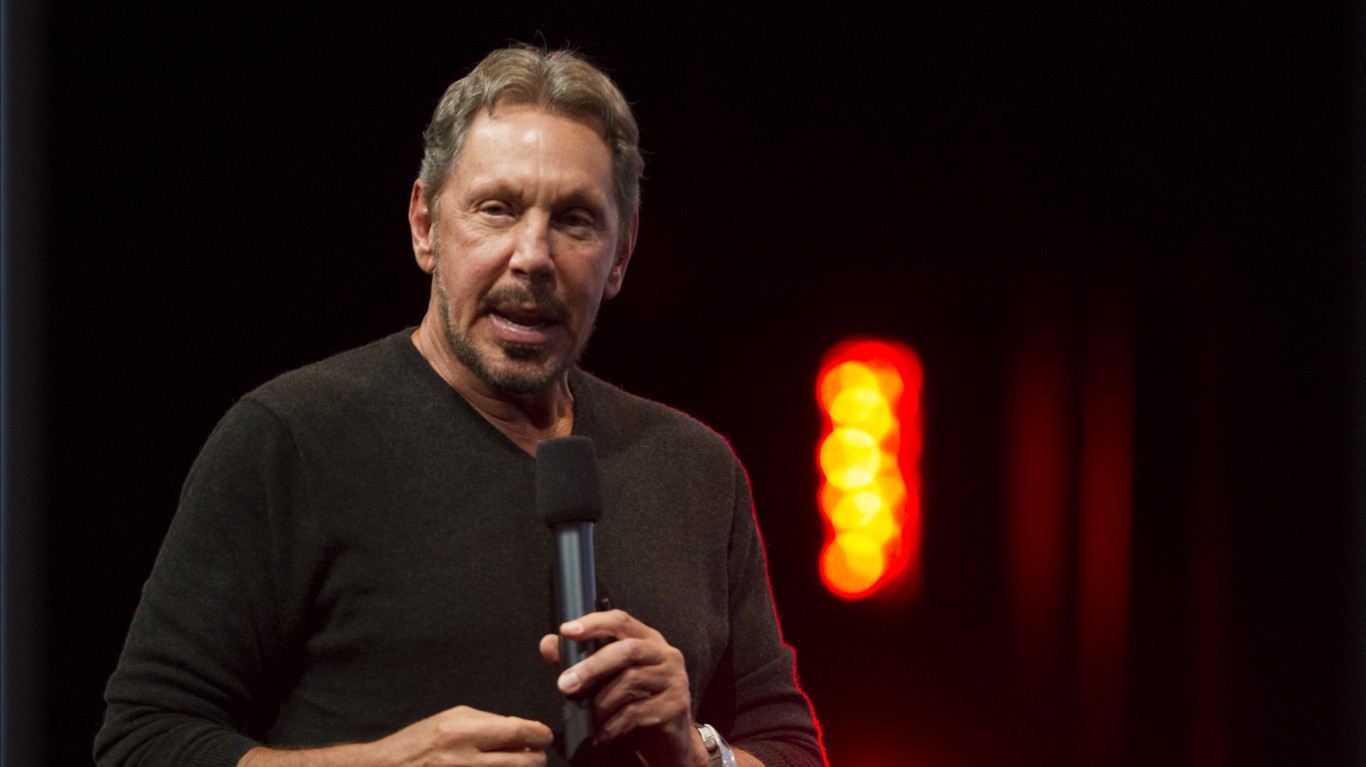
The drop has already started if you think of Oracle Corp. (NYSE: ORCL | ORCL Price Prediction) as the proverbial canary in the coal mine. Wall Street did not like what it saw as a significant bet on AI and a concentration of Oracle’s business in one small AI room. The stock has declined by 30% over the past month. Founder Larry Ellison says he will bet hundreds of billions of dollars on chips and data centers. Most of Oracle’s deals are based on the gamble that OpenAI will be the AI winner. Oracle is leveraging to the hilt to get there. The Financial Times reports, “Oracle has been hit harder than Big Tech rivals in the recent sell-off of tech stocks and bonds, as its vast borrowing to fund a pivot to artificial intelligence unnerved Wall Street.” The risk with shorting Oracle is that its stock has already fallen so much.
Softbank has also started to lead AI stocks lower. It sold its entire investment in Nvidia Corp. (NASDAQ: NVDA) to fund its foray into other AI ventures. Its stock recently dropped 9% in a day. SoftBank is as deeply entrenched in the AI industry as any other company. It has led to the creation of $500 billion in AI infrastructure. SoftBank CEO Masayoshi Son stood directly next to President Trump when he announced Stargate, a massive bet on future data center buildouts. Ellison and OpenAI CEO Sam Altman were also in attendance. Some investors have asked where SoftBank will get the money to fulfill its obligations.
Palantir and Microsoft
If any company demonstrates how much the frenzy has driven up the price of stocks, it is Palantir Technologies Inc. (NASDAQ: PLTR). It had revenue of $1.2 billion in the most recent quarter. Net income was $447 million. Its growth rate over the same quarter of last year was 63%, which is about the pace at which Nvidia is growing. However, its market cap is $410 billion. That is more than the AI chip company Advanced Micro Devices Inc. (NASDAQ: AMD), which recently announced its revenue growth would be crazy. Palantir is only a mid-sized player in the sector.
Microsoft Corp. (NASDAQ: MSFT) has its own impressive AI story and has promised to spend hundreds of billions of dollars on data centers. It is also a proxy for the future of OpenAI. Microsoft owns 27% of the private company. OpenAI states that it will invest $1.5 trillion in AI infrastructure. However, its revenue forecast for this year is $13 billion. It expects to lose money through 2030. For people who really want to be frightened, OpenAI does not use an external advisor or investment bank when it cuts its deals.
Amazon and Meta
The “I don’t like AI” short pot could also include Amazon.com Inc. (NASDAQ: AMZN) and Meta Platforms Inc. (NASDAQ: META). All they do, however, is represent more risk in a sector that has been described as too big to fail. The U.S. financial industry was too big to fail before the Great Recession. Many of America’s storied financial companies did not make it. The federal government had to bail out the banking system because it could have dragged the economy into another Great Depression. An AI imposition would cause a severe economic problem, but it is not at the core of America’s economy.
Many people believe AI deals are overleveraged. Others believe AI will develop more slowly than optimists do. Still others believe AI is a significant technology, but it will not fundamentally change the world. AI server farms will be turned into high school football fields.
An AI collapse could happen fast. Get on the short train early.
Why “Free” Could Sink the AI Bubble
Contact [email protected] for any questions or corrections.
Douglas A. McIntyre is the co-founder, chief executive officer and editor in chief of 24/7 Wall St. and 24/7 Tempo. He has held these jobs since 2006.
McIntyre has written thousands of articles for 24/7 Wall St. He is an expert on corporate finance, the automotive industry, media companies and international finance. He has edited articles on national demographics, sports, personal income and travel.
His work has been quoted or mentioned in The New York Times, The Wall Street Journal, Los Angeles Times, The Washington Post, NBC News, Time, The New Yorker, HuffPost USA Today, Business Insider, Yahoo, AOL, MarketWatch, The Atlantic, Bloomberg, New York Post, Chicago Tribune, Forbes, The Guardian and many other major publications. McIntyre has been a guest on CNBC, the BBC and television and radio stations across the country.
A magna cum laude graduate of Harvard College, McIntyre also was president of The Harvard Advocate. Founded in 1866, the Advocate is the oldest college publication in the United States.
TheStreet.com, Comps.com and Edgar Online are some of the public companies for which McIntyre served on the board of directors. He was a Vicinity Corporation board member when the company was sold to Microsoft in 2002. He served on the audit committees of some of these companies.
McIntyre has been the CEO of FutureSource, a provider of trading terminals and news to commodities and futures traders. He was president of Switchboard, the online phone directory company. He served as chairman and CEO of On2 Technologies, the video compression company that provided video compression software for Adobe’s Flash. Google bought On2 in 2009.