




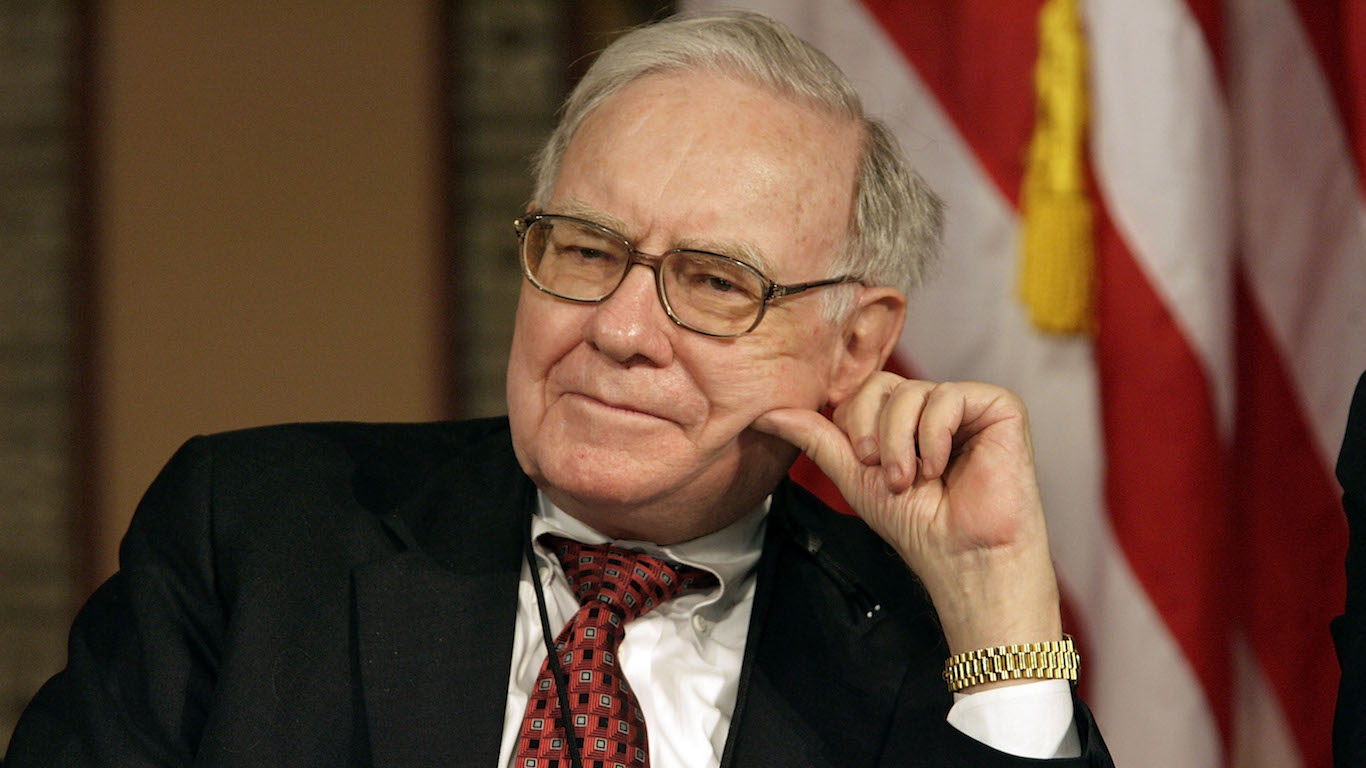
The pitch for the VistaShares Target 15 Berkshire Select Income ETF (NYSEARCA:OMAH) is almost too clever to ignore. You get a portfolio built around Warren Buffett’s publicly disclosed equity book, layered with a monthly cash distribution aiming for a 15% annualized yield. Berkshire Hathaway itself famously pays no dividend, so OMAH is essentially promising to bolt an income stream onto Buffett’s stock picks and hand you a check every month. For retirees who love the holdings but hate the zero yield, it sounds like a workaround Buffett himself refused to build.
Look under the hood, and OMAH does mirror the greatest hits. As of the April 2026 filing, the fund held Apple (NASDAQ:AAPL | AAPL Price Prediction) at 9.97% of net assets, Berkshire Hathaway (NYSE:BRK.B) itself at 8.99%, and American Express (NYSE:AXP) at 8.35%, with meaningful slugs of Occidental Petroleum (NYSE:OXY), Coca-Cola (NYSE:KO), Chevron (NYSE:CVX), Bank of America (NYSE:BAC), Moody’s (NYSE:MCO), and Kraft Heinz (NASDAQ:KHC). That is a recognizable Berkshire silhouette. Total net assets sat near $748.6 million, so this is a real fund with real scale.
Where the 15% Actually Comes From
Here is the part the marketing skims over. Those underlying holdings throw off maybe 1% to 2% in cash dividends. The rest of the 15% target has to come from somewhere, and the somewhere is a short-dated call-writing overlay plus, when the math is short, return of capital. The N-PORT snapshot shows 74 derivative positions, structured as call spreads and outright short calls against the biggest names in the book. Selling calls generates premium. It also caps how much you can participate when a stock rips higher.
The VistaShares prospectus is refreshingly blunt about the rest. Distributions “may include amounts classified as return of capital,” which the document defines as “a return of a shareholder’s invested capital rather than income or profits.” It goes further: “To the extent that distributions exceed the Fund’s total returns, such payments will reduce the Fund’s net asset value.” If the strategy does not earn the 15%, the fund fills the gap by handing you back your own money and calling it a distribution. Do that long enough and NAV grinds lower, which means each future 15% target is being calculated off a smaller base.
What OMAH’s Returns Actually Show
OMAH launched in March 2025. Since inception, the ETF has paid monthly, most recently $0.23138 per share on June 30, 2026, with trailing 12-month distributions totaling $2.83514. On a total-return basis (dividends reinvested), OMAH is up about 16% since its March 5, 2025 launch, and shares closed recently at roughly $19. Over that same stretch, Berkshire’s own B shares are down roughly 4%, so the income overlay has actually rescued a stretch where owning Buffett directly hurt.
Fine. But zoom out and the mechanics still bite. The 0.98% expense ratio is steep for what is, at its core, a Berkshire clone plus a call-writing program. And the capped upside is not theoretical. When AAPL or GOOGL (NASDAQ:GOOGL) runs past the short strike, OMAH surrenders the difference. Over a normal Buffett-holdings decade, that giveback compounds.
Who This Fits, and Who It Fools
OMAH earns a spot in a portfolio only if you truly want monthly cash from a Berkshire-flavored basket and you accept two things. The 15% is a target rather than a guarantee, and part of it is often your own principal being recycled with a nicer label. For a retiree carving out a 5% to 10% income sleeve, that trade can be worth it, particularly in flat years for Berkshire.
For anyone treating the 15% as safe yield or expecting the total return of holding BRK.B outright over a long horizon, look elsewhere. A cheaper large-cap dividend ETF, or simply owning BRK.B and selling shares as needed, will usually get you closer to Buffett’s actual compounding, minus the return-of-capital sleight of hand.
Contact [email protected] for any questions or corrections.









 Top Gaining Stocks
 Top Losing Stocks