Could Micron’s Memory Boom Make It the New Oracle?
A Sleeper AI Stock Awakens Micron Technology (NASDAQ:MU | MU Price Prediction), the memory chip powerhouse, has quietly emerged as a sleeper hit in the AI stock arena, often overshadowed by flashier names like Nvidia (NASDAQ:NVDA). The chipmaker’s pivotal role…

A Sleeper AI Stock Awakens
Micron Technology (NASDAQ:MU | MU Price Prediction), the memory chip powerhouse, has quietly emerged as a sleeper hit in the AI stock arena, often overshadowed by flashier names like Nvidia (NASDAQ:NVDA).
The chipmaker’s pivotal role in supplying high-bandwidth memory (HBM) and storage solutions for AI data centers positions it for explosive growth without the hype. While Nvidia dominates GPUs, Micron fuels the backbone — DRAM and NAND chips essential for AI training and inference, where data volume is exploding.
This under-the-radar status has kept its valuation attractive, with a forward P/E of just 12 and a price-to-earnings-to-growth (PEG) ratio of a minuscule 0.22, signaling significant undervaluation amid AI’s boom.
Today, that sleeper is stirring vigorously. Shares surged over 10% in morning trading after Citi analyst Christopher Danely hiked his price target to $175 from $150 while reaffirming his Buy rating.
Danely anticipates Micron will deliver in-line quarterly results but offer up guidance far exceeding consensus for Q1, propelled by elevated DRAM and NAND sales volumes and pricing power. This optimism stems from robust AI-driven demand in data centers, where limited production meets surging needs.
Meanwhile, Oracle (NYSE:ORCL) recently posted mixed earnings — beating on revenue and reporting a slight EPS miss — but its forward guidance stole the show, projecting 77% cloud infrastructure growth to $18 billion in fiscal 2026 and a staggering $144 billion by 2030, thanks to AI workloads.
Oracle’s remaining performance obligations skyrocketed 359% year-over-year, underscoring a multi-year tailwind. Could Micron mirror this trajectory, riding a long tail of insatiable AI memory demand into the next decade?
The Unsung Hero of Data Centers
Micron is at the forefront of memory innovation tailored for AI’s voracious appetite. AI models like large language processors require massive, high-speed memory to handle training datasets and real-time inference. Micron’s HBM3E chips deliver 50% more memory capacity of standard modules while using 20% less power, making them indispensable for hyperscale data centers run by giants like Amazon‘s (NASDAQ:AMZN) AWS and Google Cloud.
Fiscal Q1 2025 results were a revelation: data center revenue soared 400% year-over-year, now comprising over half of total sales. In its fiscal Q3 report, data center revenue doubled again.
This shift from traditional PC and smartphone markets to AI-centric ones has diversified Micron’s revenue, offsetting potential cyclical downturns.
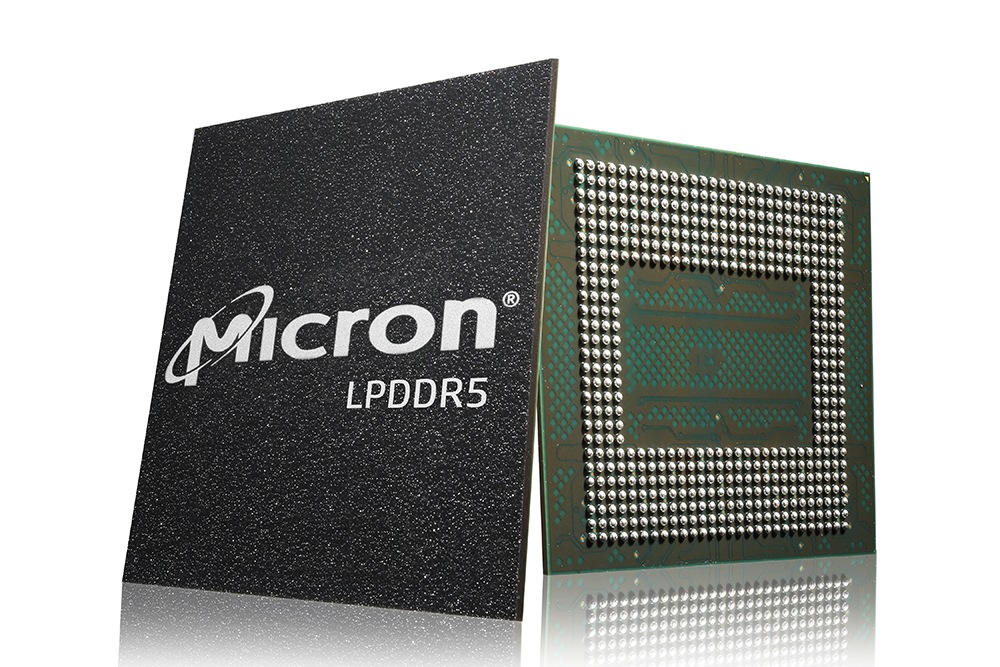
Moreover, Micron’s 1-gamma LPDDR5X memory — the world’s first for AI-powered edge devices like smartphones and autonomous vehicles — extends its reach beyond servers. Partnerships with Nvidia for H200 and GH200 accelerators cement its supply chain status, with HBM supply sold out through 2025 and demand spilling into 2026.
Wall Street projects Micron’s HBM addressable market ballooning to $100 billion by 2030, a sixfold jump, as AI adoption accelerates across industries. Despite a 38% stock dip from its 2024 peak due to softer consumer demand, 2025 has seen Micron outperform many semiconductor stocks, with Q4 guidance at $8.7 billion in revenue and $1.16 EPS, implying 29% growth.
Risks like NAND volatility persist, but AI’s momentum appears unstoppable, positioning Micron as a value play in a sector dominated by pricier peers.
Unlocking Massive Growth Potential
Citi’s report adds fuel to the fire, providing a roadmap for Micron’s potential transformation into an AI juggernaut akin to Oracle’s cloud pivot. Analyst Danely’s upgrade isn’t just a tweak; it’s a vote of confidence in the memory cycle’s extension through 2025 and beyond.
He attributes the upturn to constrained supply — DRAM pricing is forecasted to rise 12% in Q3 and 6% in Q4 — coupled with “better than expected demand, particularly from the data center end market.” This isn’t fleeting; AI’s long-tail effects, from generative models to edge computing, demand ever-increasing memory capacities.
Translating this to growth, Danely’s fiscal 2026 EPS estimate sits 26% above consensus, implying robust profitability as Micron gains share in enterprise SSDs, rivaling SK Hynix and Samsung. With average analyst targets around $152 but Citi at $175, the stock could rally almost 20% from current levels near $150, assuming execution.
This mirrors Oracle’s playbook: initial mixed results giving way to blockbuster guidance that re-rated the stock skyward. For Micron, realizing this could mean billions in added revenue, turning it from a cyclical chipmaker into an AI essential. The opportunity is massive, but it hinges on sustained AI capex from hyperscalers.
Key Takeaways
Micron Technology was already a compelling buy as an undervalued AI enabler, but Citi’s upgraded outlook elevates it further. If the analyst’s projections materialize — with superior Q1 guidance and extended memory upcycle — MU stock boasts a vast runway for growth, potentially delivering Oracle-like multi-year surges driven by AI’s enduring demand.
Contact [email protected] for any questions or corrections.
After two decades of patrolling the dark corners of suburbia as a police officer, Rich Duprey hung up his badge and gun to begin writing full time about stocks and investing. For the past 20 years, he’s been cruising the markets looking for companies to lock up as long-term holdings in a portfolio while writing extensively on the broad sectors of consumer goods, technology, and industrials. Because his experience isn’t from the typical financial analyst track, Rich is able to break down complex topics into understandable and useful action points for the average investor. His writings have appeared on The Motley Fool, InvestorPlace, Yahoo! Finance, Money Morning, and, of course, 24/7 Wall St. He has been featured in both U.S. and international publications, including MarketWatch, Financial Times, Forbes, Fast Company, and USA Today.