Rivian Faces Recall — Is This the End for the EV Maker?
Electric vehicle (EV) maker Rivian Automotive (NASDAQ:RIVN | RIVN Price Prediction) has endured a rollercoaster ride since its 2021 debut. From supply chain snarls and production delays to fierce competition from established players, the company has battled to scale up. …

Electric vehicle (EV) maker Rivian Automotive (NASDAQ:RIVN | RIVN Price Prediction) has endured a rollercoaster ride since its 2021 debut. From supply chain snarls and production delays to fierce competition from established players, the company has battled to scale up.
Financial losses have mounted, with billions burned annually, forcing repeated capital raises and workforce cuts. Yet, amid these headwinds, Rivian’s stock has shown flickers of resilience. Year-to-date, RIVN stock is up a modest 6%, reflecting cautious investor optimism, but shares traded 47% above the late-2024 lows it plumbed after disappointing deliveries and margin pressures. That rebound, fueled by hopes of cost efficiencies, new partnerships, and a new EV model, now hangs in the balance.
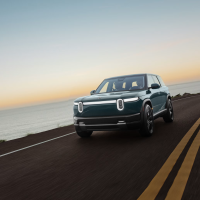
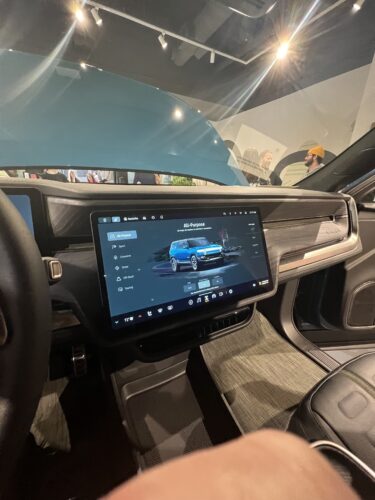
The latest blow came the other day when Rivian announced a massive recall of over 24,000 R1S SUVs and R1T trucks from the 2025 model year. The culprit was a software defect in the Highway Assist system, an SAE Level 2 driver-assistance feature that misidentified lead vehicles — like confusing a slow-moving car for a faster one — potentially leading to loss of control and crashes.
While no injuries were reported, the National Highway Traffic Safety Administration flagged the risk, prompting the urgent action. Rivian had rolled out an over-the-air (OTA) update on June 3, reportedly fixing 99% of affected vehicles for free. Still, this isn’t Rivian’s first rodeo with recalls — previous issues involved accelerators and seats — but its scale, hitting nearly half the company’s output, underscores deepening quality concerns.
Rivian is banking big on the new R2 model, a compact SUV slated for early 2026 launch at around $45,000, to democratize its rugged EV appeal and boost volumes. But is this recall the final nail in the coffin for a maker already gasping for air?
A Blow to Production Scale
The recall’s scope is staggering relative to Rivian’s output. Targeting 24,214 vehicles — spanning U.S. and Canadian models — it encompasses more than half of the company’s projected 2025 production goal of 42,000 to 46,000 units.
The first quarter saw just 8,640 deliveries, a 24% drop year-over-year, highlighting persistent scaling woes at the Normal, Ill. plant. That was followed by another 22% drop in Q2. While the OTA fix minimizes physical disruptions, the recall erodes trust in Rivian’s manufacturing rigor. Investors, eyeing a rebound to 70,000 units produced annually long-term, now face amplified doubts: If core software falters on flagship models, how will the company hit efficiency targets amid factory halts for R2 prep?
Stoking Buyer Hesitation for the R2
Prospective R2 buyers, drawn to its 300-plus mile range and pricing that rivals Tesla‘s (NASDAQ:TSLA) Model Y, may now pause. The recall spotlights vulnerabilities in Rivian’s advanced driver aids, a key selling point for tech-savvy EV shoppers.
With deliveries starting in the first-half of 2026 at the Illinois facility (before shifting to Georgia), early adopters could fear similar glitches, especially as Rivian pushes “eyes-off” autonomy. Surveys already show EV reticence over charging and reliability; this incident amplifies those fears, potentially delaying preorders.
Rivian must pour resources into transparency and testing to rebuild confidence, but in a market where first impressions stick, the damage could linger, crimping the R2’s volume ramp-up.
Navigating the EV Demand Drought and Tax Credit Cliff
Rivian isn’t sailing solo in stormy seas — the entire EV sector is grappling with cooling demand and policy shocks. U.S. EV sales hit a record 607,089 in the first half of 2025 but fell 6% year-over-year in Q2, signaling maturity pains.
High prices averaging $58,000 vs. $49,000 for gas cars, sparse infrastructure, and high interest rates have curbed enthusiasm. Compounding this, the $7,500 federal tax credit expires on Sept. 30 under policy shifts that have pushed automakers like Tesla to urge pre-deadline buys.
Rivian, which is ineligible for full credits on pricier R1s, faces steeper hits, with CFO Claire McDonough warning of a drag on EBITDA. Layoffs of 200 staff announced earlier this month underscore the cost-cutting necessary as demand softens. Rivals like Ford (NYSE:F) and General Motors (NYSE:GM) are slashing incentives, but Rivian’s niche adventure focus leaves it vulnerable.
This recall, while fixable, jeopardizes the fragile investor hope for Rivian’s turnaround. Amid declining sales and credit losses, it tests the startup’s survival mettle.
Key Takeaway
The EV industry is stumbling. Expectations for growth in the U.S. has slowed from 10% to 8.5% with tariffs, the end of subsidies, and consumer wariness biting hard. Legacy giants are pivoting, but pure-plays like Rivian and Lucid Group (NASDAQ:LCID) lag, failing to dent Tesla’s dominance.
Despite a pivotal Volkswagen partnership launched in July 2024, with up to $5.8 billion in funding for software and architecture, Rivian trails as a fading contender. VW’s $1 billion 2025 infusion aids its R2 development, but execution risks loom.
The recall could doom Rivian’s slim rebound hopes, cementing its status as an also-ran in an unforgiving marketplace.
Contact [email protected] for any questions or corrections.
After two decades of patrolling the dark corners of suburbia as a police officer, Rich Duprey hung up his badge and gun to begin writing full time about stocks and investing. For the past 20 years, he’s been cruising the markets looking for companies to lock up as long-term holdings in a portfolio while writing extensively on the broad sectors of consumer goods, technology, and industrials. Because his experience isn’t from the typical financial analyst track, Rich is able to break down complex topics into understandable and useful action points for the average investor. His writings have appeared on The Motley Fool, InvestorPlace, Yahoo! Finance, Money Morning, and, of course, 24/7 Wall St. He has been featured in both U.S. and international publications, including MarketWatch, Financial Times, Forbes, Fast Company, and USA Today.