OpenAI Downgrades Microsoft: Is the AI Power Couple Headed for Divorce?
Microsoft (NASDAQ:MSFT | MSFT Price Prediction) has positioned itself as a leader in artificial intelligence (AI), pouring billions of dollars into the technology and weaving it into nearly every corner of its vast ecosystem. From Azure cloud services to Office…


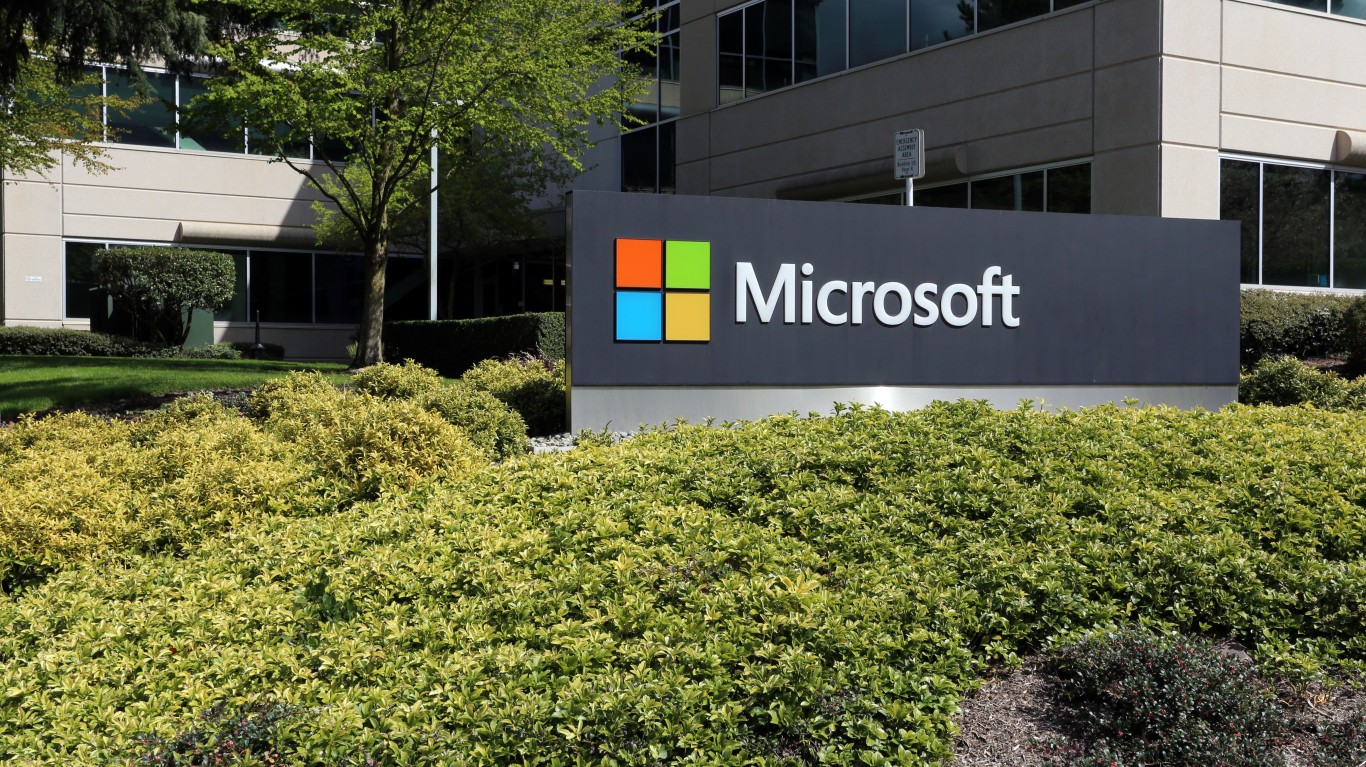
Microsoft (NASDAQ:MSFT | MSFT Price Prediction) has positioned itself as a leader in artificial intelligence (AI), pouring billions of dollars into the technology and weaving it into nearly every corner of its vast ecosystem. From Azure cloud services to Office 365 tools like Copilot, the company has made AI a core driver of innovation and revenue.
This aggressive push has paid off in stock gains and market dominance, but recent moves raise questions about whether the tech giant is starting to doubt the pace of AI’s expansion.
AI as Microsoft’s Secret Sauce
For years, Microsoft has treated AI not as a side project but as the foundation for its future. Its 2019 partnership with OpenAI gave Microsoft exclusive access to advanced models like GPT-4, which it integrated across products, including Word’s AI-powered summaries or Teams’ real-time translation. AI wasn’t bolted on; it’s baked in.
This strategy has fueled growth. In fiscal 2024, Azure’s AI services saw triple-digit revenue jumps, contributing to overall cloud sales topping $110 billion. Microsoft committed $13 billion to OpenAI by 2023, securing priority compute resources and co-developing tools. CEO Satya Nadella has called AI “the runtime” for software, emphasizing its role in everything from enterprise analytics to consumer apps.
Analysts credit this integration for Microsoft’s edge over rivals like Amazon (NASDAQ:AMZN) and Google, with AI helping Azure capture 25% of the cloud market.
The bet extends to hardware. Microsoft designs custom chips like Maia to optimize AI workloads, reducing reliance on Nvidia (NASDAQ:NVDA). It’s also training millions in AI skills, aiming to build a workforce ready for the shift. These moves signal confidence that AI isn’t hype, but rather the next computing paradigm — and Microsoft wants to own it.
Cracks in the Foundation
Despite the fanfare, signs of strain are emerging. OpenAI, Microsoft’s key ally, is no longer playing favorites. While the original deal wasn’t exclusive, OpenAI’s recent string of partnerships — with Oracle (NYSE:ORCL), SoftBank, Nvidia, Advanced Micro Devices (NASDAQ:AMD), and others — feels like a pivot.
In January 2025, OpenAI and SoftBank announced Stargate, a $100 billion to $500 billion joint venture for AI infrastructure, bypassing Microsoft’s dominance.
A September article in The Information reveals deeper tensions. OpenAI leaders told staff that Microsoft “isn’t moving fast enough” to supply servers and data centers for training massive models. It will only share 8% of its revenue with MSFT by 2030, down from 20% today.
This lag, amid surging demand for compute power, has pushed OpenAI to diversify. It’s shifting workloads to Oracle’s cloud and exploring deals with regional providers. One executive noted, “We’re not tied to one horse,” highlighting the shift from dependency to optionality.
This isn’t just logistics. It reflects OpenAI’s maturation — valued at $157 billion, it’s attracting suitors eager to fund its ambitions without Microsoft’s strings. For Microsoft, it’s a reminder that even marquee partnerships can fray when growth demands outpace supply.
Pausing to Catch Its Breath
Adding to the unease, Microsoft canceled at least two major data center leases earlier this year, totaling hundreds of megawatts of capacity. According to a February Fortune report, the moves suggest concerns over building excess AI infrastructure.
Analysts at TD Cowen pointed to “oversupply” fears, noting Microsoft halted conversions of preliminary agreements into full leases. Internationally, it’s redirecting funds to U.S. projects, signaling a broader slowdown.
The reason may be that the return on investment in AI remains elusive. Despite the hype, few enterprises report transformative gains — most pilots fizzle into productivity tweaks, not revenue booms. McKinsey estimates only 5% of companies have scaled AI meaningfully, hampered by data issues and costs.
Microsoft’s $56 billion in 2024 capex yielded solid Azure growth but margins strained under power-hungry GPUs. With energy constraints tightening — data centers guzzle 2% of global electricity — bubble talk intensifies.
Summer Surge, Then Second Thoughts?
This spring’s caution contrasts with its summer optimism. In June, Microsoft reaffirmed its fiscal 2025 plan: $80 billion in AI data centers, half of which would be in the U.S. MSFT president Brad Smith touted it as fueling “the next industrial revolution,” with new facilities in Wisconsin and elsewhere. Capacity additions hit record highs, and partnerships such as with AMD promised cheaper inference chips.
But by fall, the OpenAI story flipped the script. If Microsoft can’t keep pace, that $80 billion commitment feels shakier. Is Microsoft recalibrating for efficiency, or hedging against a slowdown? Either way, it underscores the massive upfront costs AI imposes for uncertain payoffs.
Key Takeaway
Microsoft isn’t having true second thoughts — it’s pragmatically managing a volatile boom. The OpenAI tensions and lease cuts reflect supply tweaks, not a retreat. The tech giant still leads in AI adoption, with Azure’s 30% growth outpacing peers.
For investors, this means Microsoft remains resilient. Its diversified revenue buffers against AI risks, while its OpenAI stake hedges upside. MSFT stock is still one to buy on dips. At a 28x forward P/E, it is not overvalued for the sustained 16% earnings growth Wall Street envisions.
Contact [email protected] for any questions or corrections.
After two decades of patrolling the dark corners of suburbia as a police officer, Rich Duprey hung up his badge and gun to begin writing full time about stocks and investing. For the past 20 years, he’s been cruising the markets looking for companies to lock up as long-term holdings in a portfolio while writing extensively on the broad sectors of consumer goods, technology, and industrials. Because his experience isn’t from the typical financial analyst track, Rich is able to break down complex topics into understandable and useful action points for the average investor. His writings have appeared on The Motley Fool, InvestorPlace, Yahoo! Finance, Money Morning, and, of course, 24/7 Wall St. He has been featured in both U.S. and international publications, including MarketWatch, Financial Times, Forbes, Fast Company, and USA Today.