The “English Warren Buffett” Is Selling Everything in Sight. Time to Follow Suit?
Terry Smith, founder of Fundsmith, has earned the nickname, the “English Warren Buffett” for his disciplined, long-term approach to investing in high-quality companies at reasonable prices — much like the Oracle of Omaha himself. Since launching the Fundsmith Equity Fund…


Terry Smith, founder of Fundsmith, has earned the nickname, the “English Warren Buffett” for his disciplined, long-term approach to investing in high-quality companies at reasonable prices — much like the Oracle of Omaha himself.
Since launching the Fundsmith Equity Fund in 2010, Smith has delivered strong returns by focusing on a concentrated portfolio of resilient global growth stocks, avoiding hype-driven sectors, and emphasizing businesses with high returns on capital and predictable cash flows. His straightforward style, annual shareholder letters critiquing market excesses, and personal investment in his own fund mirror Buffett’s philosophy at Berkshire Hathaway (NYSE:BRK-A | BRK-A Price Prediction)(NYSE:BRK-B). With around $20 billion in assets under management, Fundsmith remains one of the U.K.’s most successful active funds.
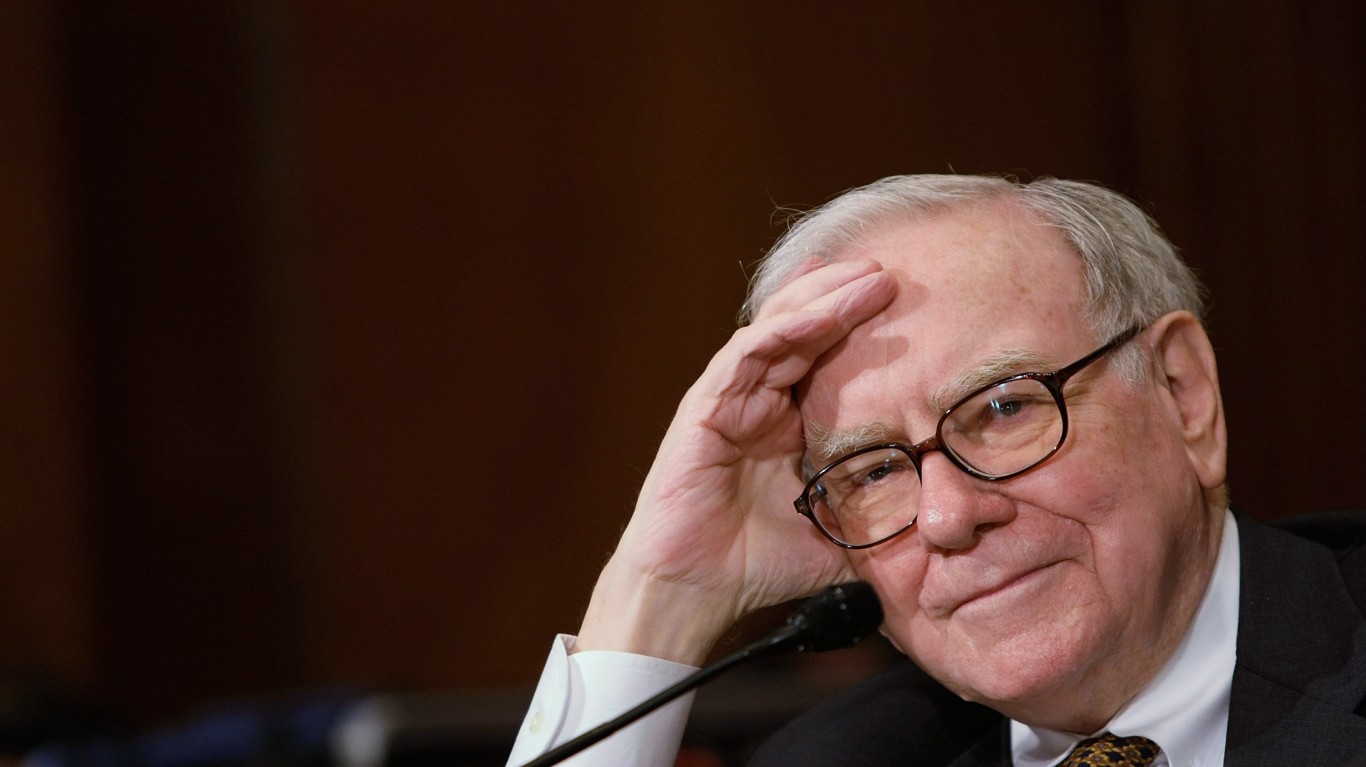
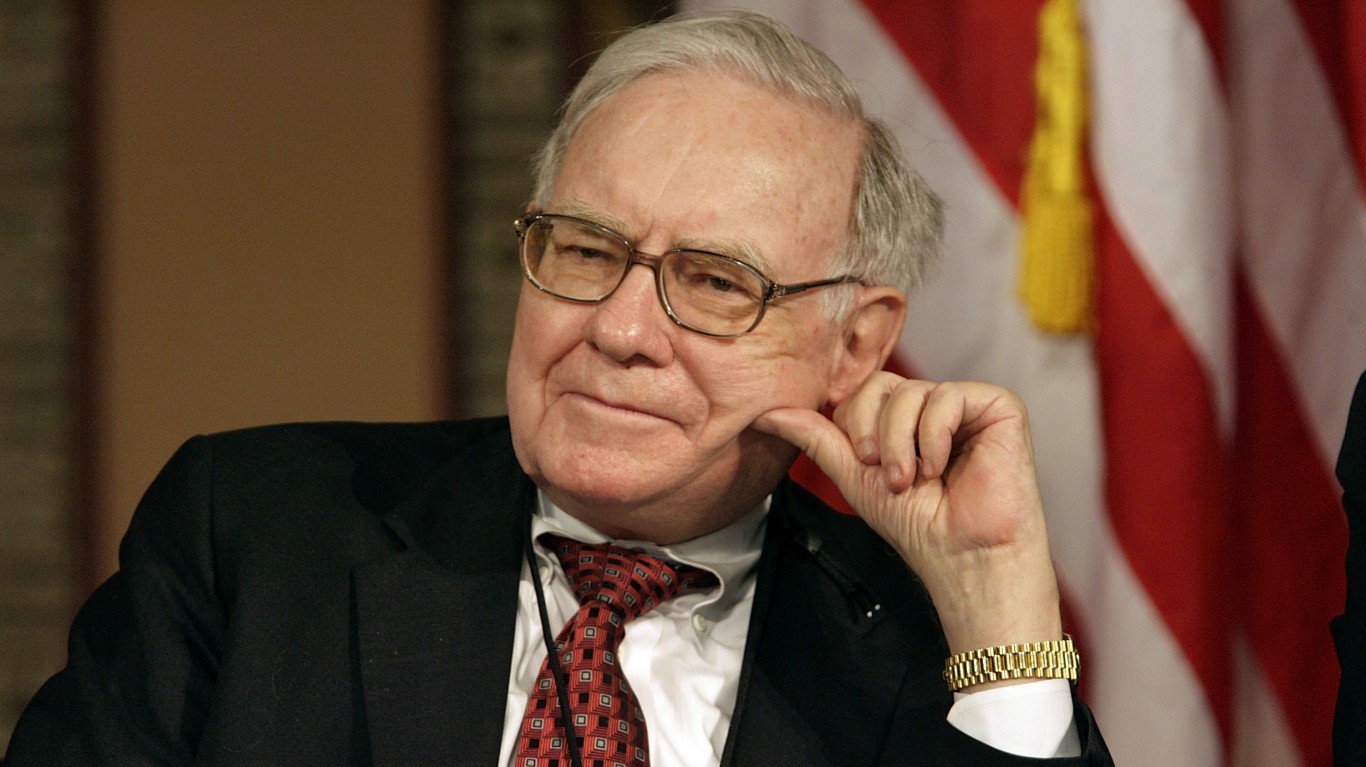
Now, Smith appears to be echoing Buffett’s recent caution. While the Oracle has built Berkshire Hathaway’s cash hoard to a record $382 billion by net selling stocks for multiple quarters, Smith has spent much of 2025 trimming positions aggressively with only minor additions — suggesting both legends see limited attractive opportunities at current valuations.
A Year of Ruthless Pruning
Portfolio trimming has defined Fundsmith’s activity throughout 2025. Smith’s strategy of “buy good companies, don’t overpay, and do nothing” shifts to active reduction when valuations stretch too far. 13F filings and updates show consistent sales across quarters, reducing exposure to expensive names while cash balances implicitly rise.
The pattern intensified in the third quarter. Reports indicate Smith fully exited at least five positions, including completely selling out of Mastercard (NYSE:MA). He also cut Meta Platforms (NASDAQ:META) — once a top holding — by more than half and slashed Microsoft (NASDAQ:MSFT) almost in half. These moves reduced exposure to high-multiple tech leaders that drove much of the market’s gains.
On the buy side, activity stayed minimal. Smith nominally added to Visa (NYSE:V) — his fifth-largest holding today — and made small increases in Intuit (NASDAQ:INTU), Home Depot (NYSE:HD), and Procter & Gamble (NYSE:PG). These remain relatively minor positions in the roughly 30-stock portfolio, underscoring that additions were dwarfed by sales.
Overall, the fund’s equity exposure contracted, with top holdings becoming even more concentrated in remaining names like Stryker (NASDAQ:SYK) and Alphabet (NASDAQ:GOOG)(NASDAQ:GOOGL).
Echoes of Omaha
This mirrors Buffett’s playbook. Berkshire has been a persistent net seller, unloading big stakes in companies like Apple (NASDAQ:AAPL) while struggling to find full replacements for its capital. Both investors seem to share a view that many quality stocks — especially in tech and consumer — trade at premiums that leave little margin of safety. With markets hitting repeated highs amid AI enthusiasm, forward earnings multiples have expanded sharply, making it harder to justify new commitments.
Smith has long warned against overpaying, even for excellent businesses. His recent letters highlight concerns over elevated valuations and concentration risks in indices dominated by a handful of mega-caps. By selling into strength and waiting, he preserves firepower for better entry points, just as Buffett hoards cash rather than chase momentum.
Key Takeaway
Buffett and Smith signal growing distrust in today’s valuations. While some billionaires place large short bets on leading AI names and others exit entirely, these value purists prefer patience over participation. Their actions suggest the market’s enthusiasm may have outrun fundamentals, leaving stocks vulnerable to disappointment.
Retail investors don’t need to liquidate everything — Smith and Buffett remain fully invested in their best ideas — but protecting downside makes sense. Consider raising cash allocations, hedging concentrated positions, or stress-testing portfolios against higher rates or earnings misses. When two of the world’s best wait on the sidelines, it often pays to take notice.
Contact [email protected] for any questions or corrections.
After two decades of patrolling the dark corners of suburbia as a police officer, Rich Duprey hung up his badge and gun to begin writing full time about stocks and investing. For the past 20 years, he’s been cruising the markets looking for companies to lock up as long-term holdings in a portfolio while writing extensively on the broad sectors of consumer goods, technology, and industrials. Because his experience isn’t from the typical financial analyst track, Rich is able to break down complex topics into understandable and useful action points for the average investor. His writings have appeared on The Motley Fool, InvestorPlace, Yahoo! Finance, Money Morning, and, of course, 24/7 Wall St. He has been featured in both U.S. and international publications, including MarketWatch, Financial Times, Forbes, Fast Company, and USA Today.