2026’s Tax Per Capita Shockers: 4 States Where You’ll Pay Nearly Double the National Average
Over the past 12 months, the sheer amount of revealed taxpayer dollars involved in fraud, bribes, and other illegalities by politicians and NGOs has been staggering. The fraud committed in Minnesota under Gov. Tim Walz, which now appears to outstrip…

Over the past 12 months, the sheer amount of revealed taxpayer dollars involved in fraud, bribes, and other illegalities by politicians and NGOs has been staggering. The fraud committed in Minnesota under Gov. Tim Walz, which now appears to outstrip the $9 billion initial estimate, appears to be dwarfed by new indications over CA Gov. Gavin Newsom’s unaccounted for $70+ billion.
The Big Beautiful Bill passed by Congress last year offered a number of federal tax relief measures for beleaguered taxpayers. However, tax rates in blue states that are still unconscionably high have not undergone similar reductions. In fact, these high state and local taxes are the major reason why “affordability” has continued to be an issue for those big city citizens in blue states.
How Taxes Differ Across Various States
The average federal tax paid per capita by US citizens is roughly $13,800 as of recent years, which may go down slightly thanks to BBB reductions on federal income tax for social security, tips, and some other areas. However, while the average state and local tax is approximately $7,100, the discrepancy is quite broad.
State and local taxes may include separate income taxes, as well as property, school, and other taxes. However, the variances can include such areas as:
- Certain states, most notably Texas and Florida, have no state income tax.
- Other states, where land is at a premium, and much of its food and energy are shipped in from the mainland or elsewhere, like with Hawaii, have very high cumulative state taxes.
- Additionally, local sales tax, another factor directly affecting “affordability” in blue states. Over 10% sales tax is a big factor in elevating Louisiana’s total tax burden to 8.90%, and Tennessee’s 9.6% comprises an even bigger ratio of the state’s overall 6.4% tax burden.
- After one dies’ estate taxes, which can range from 0% in states like Pennsylvania to as high as 35% in Washington.
From a cumulative perspective, Washington, D.C. easily has the highest per capita tax grab, $14,979 although it is not the highest tax percentage of income, since non-residents who work in D.C. are taxed in their respective residence states.
Based on a total tax burden percentage, the states that take the largest bite from its residents’ incomes are:
- Hawaii: 13.9%
- New York: 13.6%
- Vermont: 11.5%
- California: 11.0%
Hawaii

As the Pacific Island Paradise of the US, Hawaii’s residents pay a hefty toll for the luxury of living there. The 13.9% cumulative tax burden breaks down to 4,2% in state income taxes (can go as high as 11% for wealthy residents), 2.6% in property taxes, and 7.2% in sales and excise taxes. Additionally, Hawaii’s taxation has some unique twists not found in any other state:
- Transient Accommodations Tax (TAT): Hawaii’s heavy dependence on tourism includes a statewide tax on short-term hotel stays and vacation rentals. This tax is presently 10.25% of gross rental income.
- Hawaii Real Property Tax (HARPTA): A HARPTA tax of 7.25% of the sale price is withheld at the closing of any Hawaii real estate by non-residents, and if sellers are required to prove their actual capital gain when filing for a refund.
- General Excise Tax (GET): Due to inordinate dependence Hawaii has on imported necessities like food and energy, as well as other items, The GET, for all intents and purposes, exceeds a normal sales tax in several ways:
* The tax is levied on not just final sales, but on the gross receipts of businesses on services, goods and rentals sold.
* Costs are passed onto the buyer via price hikes from the seller.
* The state rate in Hawaii is 4%, but counties’ surcharge rates vary, with Honolulu’s at 4.5%.
New York

The Big Apple has been synonymous with high finance, tall buildings, glittery nightlife, and cutting edge art and fashion for over a century. As such, it’s no surprise that it has one of the highest state income tax rates:10.9%. However, the rest of New York state is considerably less highly taxed that New York City, which is a tax leviathan unto itself.
For example, the average NY state property tax is between 1.2% to 1.7%. However, New York City property taxes depend on classification: 1-3 family homes are normally assessed around 6%, but can reach a nominal rate of over 20%; co-ops and condos are assessed at 45% of market value with larger buildings possibly higher; commercial real estate tax rate for 2026 stands at 10.8%. With New York City taxes so high, the rest of the state mathematically calculates out much lower in order for the mean to fall closer to 1.5%.
Additionally, New York City residents pay a local income tax on top of state income tax.
Socialist Mayor Zohan Mamdani wants to increase New York City’s rates even higher across the board, so tax relief in the Big Apple is not expected anytime soon. Additional taxes unique to New York for individuals (businesses have an entirely separate long list) includes:
- Congestion pricing: Instituted by Gov. Hotchul, this tax is levied on any drivers entering Manhattan below 60th Street, with peak hours rates for cars at $9.00, trucks at $21.60, and motorcycles at $4.50.
- Business Specific Surcharges: customers of parking lots, hair and/or nail salons, and gyms are charged an additional tax on top of their fees, along with a fixed 12% surcharge on auto rentals.
- Apparel and Footwear: Any clothing or footwear that costs over $110.00 triggers an added combined additional state and city tax.
- Excise Taxes: Ridiculously high taxes on tobacco ($5.35 per cigarette pack) and fuel (added petroleum testing and several other taxes) are charged as extra cents per gallon at the pump.
- Vaping: Vapor products are charged a 20% additional tax.
Vermont
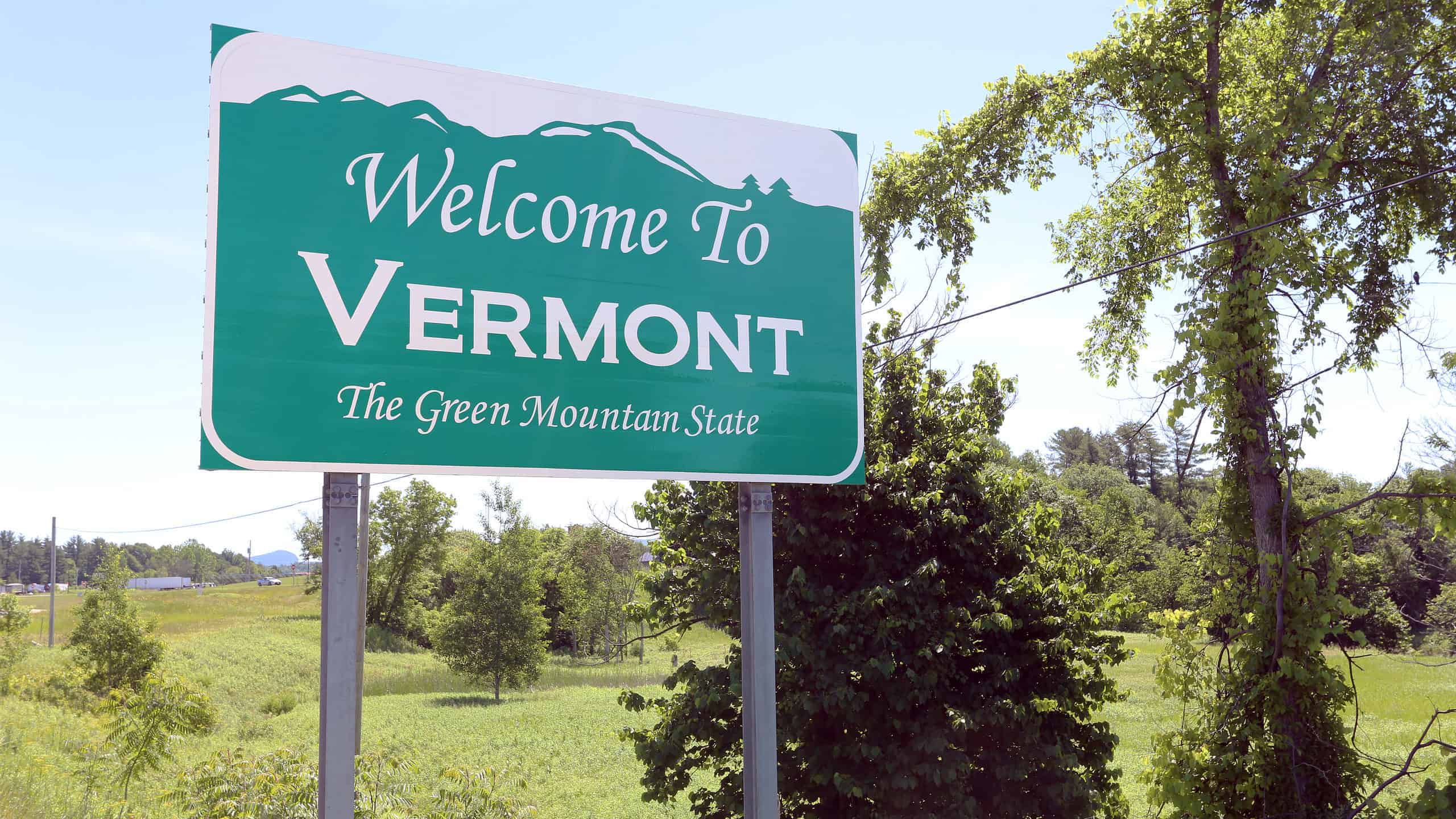
Popular for its excellent ski resorts, gorgeous foliage, and for being the largest supplier of maple syrup in the US, Vermont also has the highest state property tax rates: a 1.78% average with some areas like Caledonia as high as 2.48%. Vermont’s school system is especially reliant upon property tax revenues for its budgets. Additionally, Vermont has a progressive income tax in brackets, with the top rate at 8.75%, an average combined sales tax of 6.39%, and its own high gas and tobacco excise taxes.
Taxes unique to Vermont include:
- Property Transfer Tax: This is a 50% tax used as a revenue stream for several Vermont state-run funds for Municipal Planning and Housing & Conservation.
- Education Property Tax: The rate averages 1.78%.
- Meals & Rooms (Hotel and Lodging) Tax: This is a tax which is divided 69% to the General Fund, 25% to education, and 6% to the Clean Water Fund.
California

In his seven years as Governor of California, Gavin Newsom has gutted the strongest middle class in the nation and replaced it with record setting levels of poverty and homelessness. His reckless spending has included estimates of $70 billion in unaccounted for federal tax dollars given to California in addition to his own mismanagement of the L.A. wildfire disaster, the “bullet train to nowhere”, and other boondoggles. With a state GDP that outstrips that of a large number of sovereign nations, Newsom’s taxation takes his pound of flesh and then some:
- Highest State Income Tax: California’s top state income tax rate is 13.3% with an extra 1% mental health surcharge (not a joke!).
- Highest Gas Tax: In a state where public transportation is abysmal and a car is a must Californians pay a cumulative 90 cents per gallon tax – highest in the nation.
- Highest State Sales Tax: California’s 7.25% state sales tax is another #1 national ranking – and additional local sales taxes bump that figure up higher.
- Capital Gains Taxes: Unlike lower rates for capital gains as per the IRS, California insists on taxing capital gains as income.
- Non-Deductability of HSA: California does not recognize the triple tax deductibility (contributions, earnings, and withdrawals for medical needs) of Health Savings Accounts and taxes contributions.
When some Americans plain about “affordability” as an issue, Californians who venture outside their state to compare know who is actually at fault, and it’s not the federal government.
In 1789, Benjamin Franklin came up with the famous phrase, “In this world, nothing can be said to be certain except death and taxes.” Interestingly, he strongly approved of external taxes, just like President Trump’s tariffs, and was against internal taxes, like the Stamp Act, and only believed that additional taxes should be levied by consent. He’s probably rolling in his grave when the above states’ tax rolls come to his attention from the beyond.
Contact [email protected] for any questions or corrections.
After 15 years on Wall Street with 7 of them as Director of Corporate and Municipal Bond Trading for a NYSE member firm, I started my own project and corporate finance consultancy. Much of the work involves writing business plans, presentations, white papers and marketing materials for companies seeking budgetary allocations for spinoffs and new initiatives or for raising capital for expansion or startup companies and entrepreneurs. On financial topics, I have been published under my own byline at The Motley Fool, 247wallst.com, DealFlow Events’ Healthcare Services Investment Newsletter and The Microcap Newsletter, among others. Additionally, I have done freelance ghostwriting writing and editing for several financial websites, such as Seeking Alpha and Shmoop Financial. I have also written and been published on a variety of other topics from music, audiophile sound and film to musical instrument history, martial arts, and current events. Publications include Copper Magazine, Fidelity (Germany), Blasting News, Inside Kung-Fu, and other periodicals.