Cramer Reminds Panicked Investors: “Stocks Don’t Go Down Because People Are in a Bad Mood”
It’s a fact of life in the financial markets: sometimes stocks go up, and sometimes they go down. When stocks go down sharply, people want to know why it happens — and Jim Cramer, host of the Mad Money television…

This post may contain links from our sponsors and affiliates, and Flywheel Publishing may receive compensation for actions taken through them.

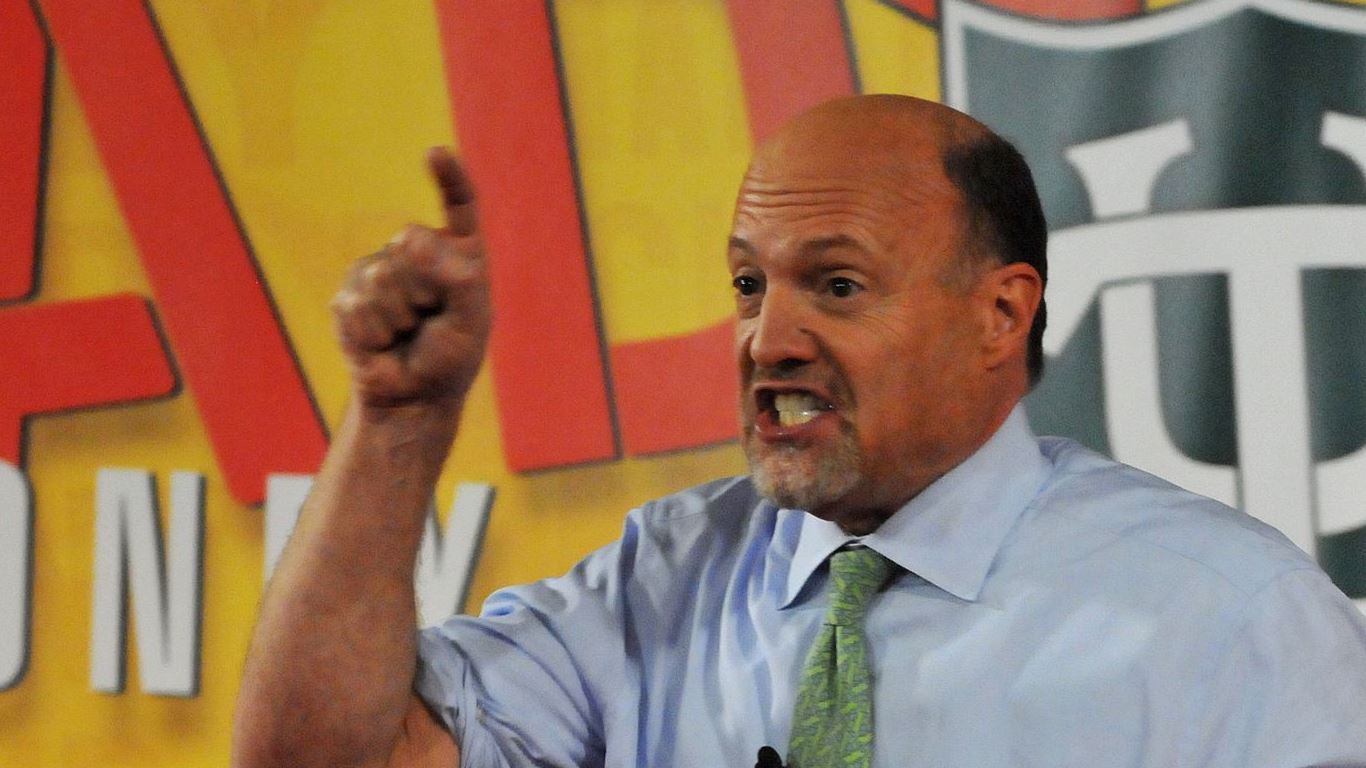
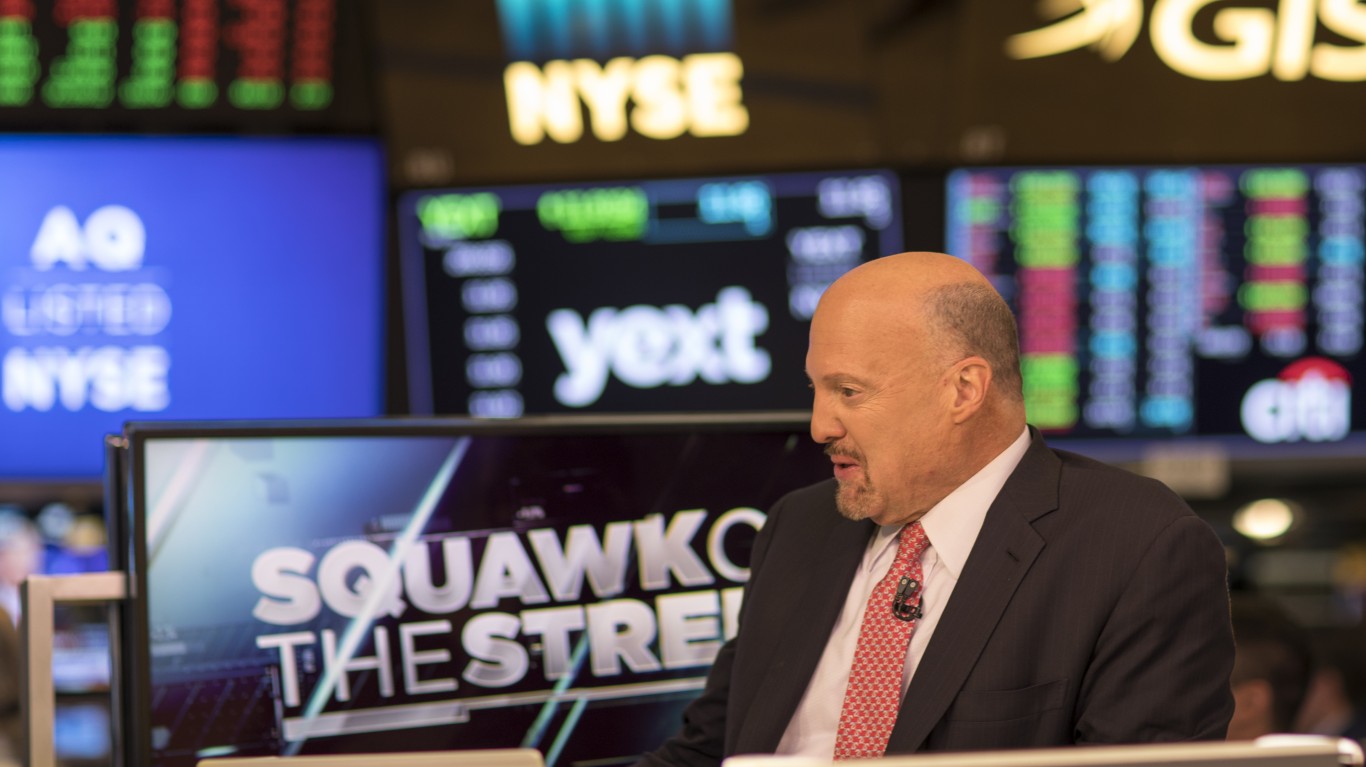
It’s a fact of life in the financial markets: sometimes stocks go up, and sometimes they go down. When stocks go down sharply, people want to know why it happens — and Jim Cramer, host of the Mad Money television program, may be able to shed some light on this.
Surely, people had burning questions for Cramer when the NASDAQ 100 and S&P 500 dropped on Thursday morning. After all, Cramer recently issued a warning to take profits on certain high-flying stocks.
As it turns out, even before Thursday’s stock market rout, Cramer offered up some words of wisdom for jittery investors. As earnings season kicks off and major technology giants report their fourth-quarter 2025 results, it’s a good time to consider the Mad Money host’s timely and incisive commentary.
It’s Not About Mood
On the evening of Sunday, January 25, the stock market was closed but futures contract traders were quite busy. Indeed, S&P 500 futures plummeted in late-night trading due to international tensions over Greenland as well as worries about snowstorms.
Yet, both the S&P 500 and the tech-heavy NASDAQ 100 were in rally mode the next day, when the stock market was open again. Inexperienced investors may have been shocked at this turn of events, but it’s nothing new to a seasoned pro like Cramer.
“I have seen this Sunday night future plummet so many times in my career that you would think the stock market would be dramatically lower, not up,” Cramer declared, “since the S&P futures started trading in the 1980s.” He further observed that S&P futures contract price trends “often represent the sum of all of that weekend’s fears and nothing positive at all.”
What’s the driver behind these whiplash fluctuations in stock prices, then? Is it all just a function of the market’s sentiment or mood?
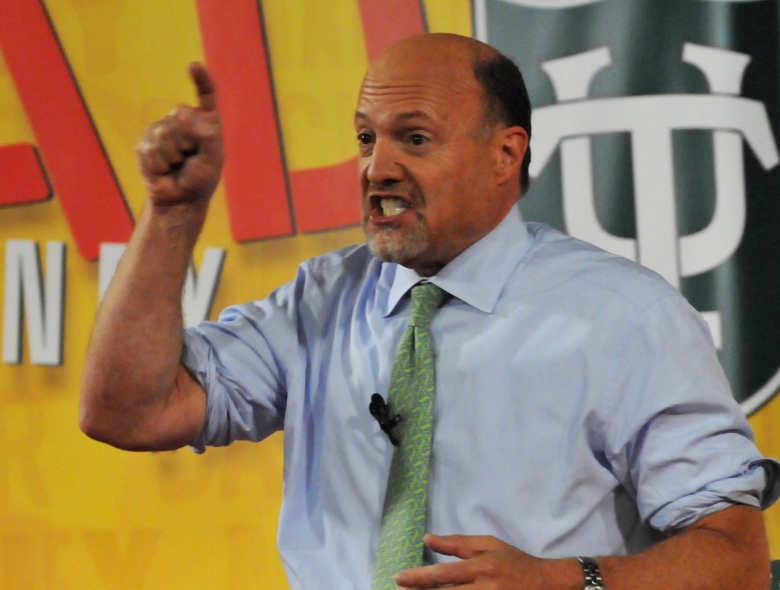
Evidently, Cramer doesn’t believe so. “Stocks don’t go down because people are in a bad mood,” he asserted. This should provide some reassurance to nervous investors who fear that share-price moves are entirely mood-based, random, and unfathomable.
Fundamentals, Not Emotions
Don’t get the wrong idea. Cramer wasn’t suggesting that the S&P 500 didn’t “respect everything that happened” during that worry-filled weekend.
Rather, Cramer is reminding investors that while the S&P 500 includes 500 stocks, the “stocks that play the largest role in the index, the Magnificent Seven, simply don’t react much at all to the emotions of the moment.” Thus, mega-cap technology stocks like Microsoft (NASDAQ:MSFT | MSFT Price Prediction), Meta Platforms (NASDAQ:META), and Apple (NASDAQ:AAPL) aren’t just tossed around by spur-of-the-moment mood shifts.
So, if it’s not immediate-term sentiment shifts, then what drives large-cap stock price declines? Cramer explained that stocks “go down because something goes wrong that impacts their businesses”; moreover, “[T]hat something tends to elude investors both big and small.”
The implication, presumably, is that the fundamentals of businesses like Microsoft, Meta Platforms, and Apple are the real market drivers. Cramer’s idea could be compared to the Benjamin Graham/Warren Buffett concept that the stock market is a voting machine in the short term but is a weighing machine in the long term.
Earnings Will Reveal the Truth
If there’s any time of year when the market’s weighing machine comes into full effect, it’s earnings season. Right now, we’re in the middle of earnings seasons for Q4 2025, with a number of famous technology firms reporting their results.
Cramer is well aware of this, naturally. “We are in earnings season,” he pointed outs, and “earnings season is when stocks hew most closely to the fundamentals of the companies.”
In other words, as fundamentals are the real driver of stock prices, earnings season is when the truth is revealed about Magnificent Seven stocks. Thursday provided a textbook example of this, with Meta Platforms stock up double digits (percentage-wise) on favorable earnings while Microsoft stock plunged double digits on unfavorable earnings.
On that day, investors were more concerned about Microsoft’s quarterly disappointment than Meta Platforms’ positive results. Over the coming days and weeks, the market will weigh the good, the bad, and the ugly within Microsoft’s and Meta Platforms’ earnings releases.
In essence, Cramer’s commentary is an update for 2026 on the principles of long-term investors like Graham and Buffett. The takeaway from many years of experience is simple: short-term mood shifts shouldn’t derail your sensible, fundamentals-focused plan for long-term profits.
Contact [email protected] for any questions or corrections.
David Moadel is financial writer specializing in stocks, ETFs, options, precious metals, and Bitcoin. David has written well over 1,000 articles for leading online publications, helping investors understand markets, income strategies, and risk.His work has appeared in The Motley Fool, InvestorPlace, U.S. News & World Report, TipRanks, ValueWalk, Benzinga, Market Realist, TalkMarkets, Finmasters, 24/7 Wall St., and others.With a master’s degree in education, David has taught at the elementary, high school, and college levels. That teaching background shapes his writing style: clear, educational, and practical. David has also built a loyal social-media audience by providing trustworthy financial content on YouTube, X/Twitter, and StockTwits.