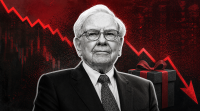
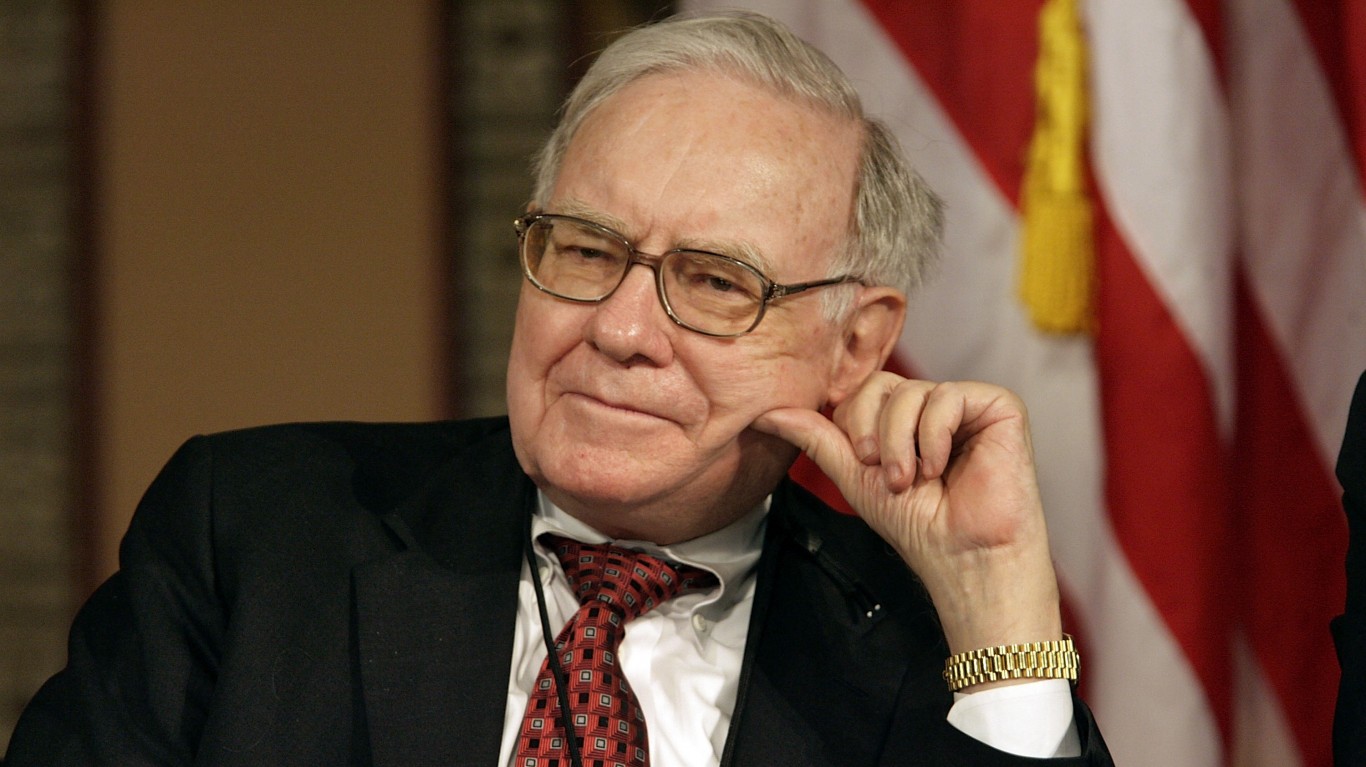
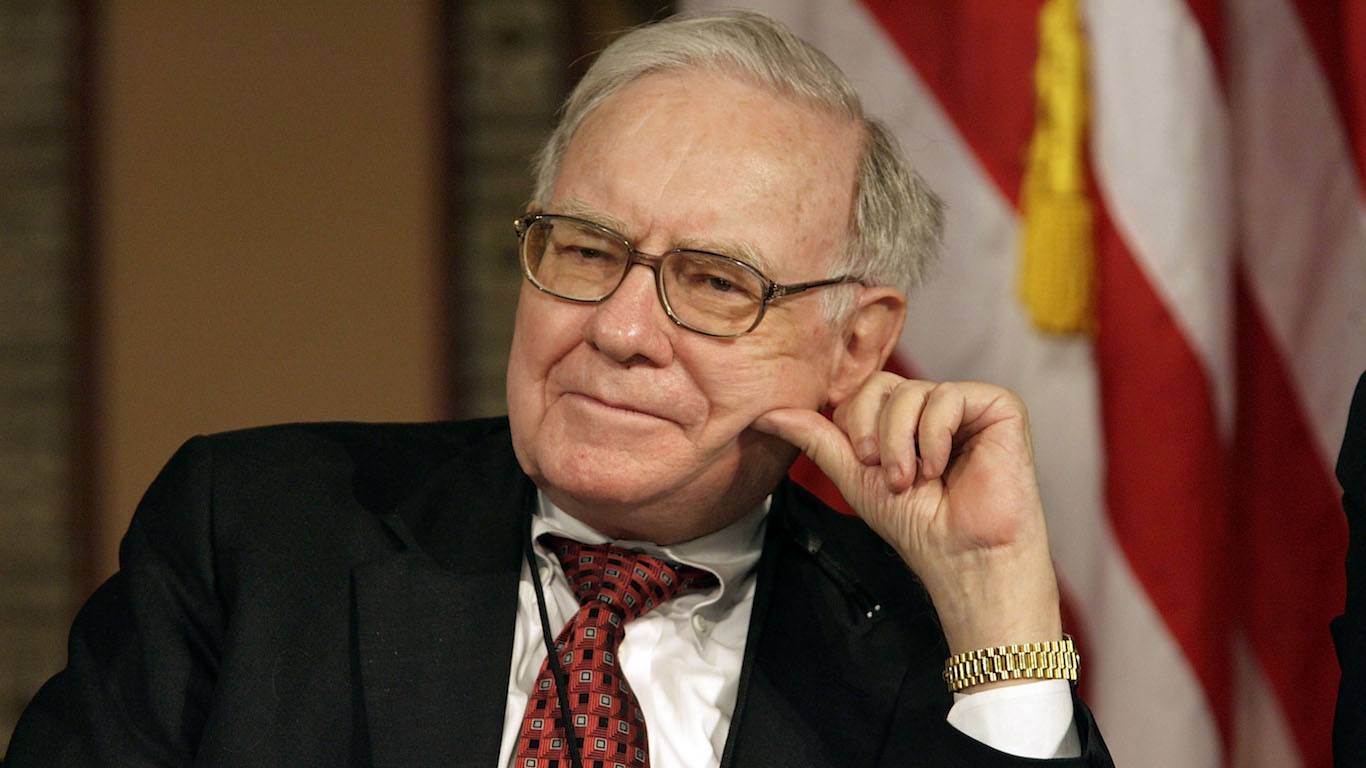
Warren Buffett: “I’d rather have Greg handling my money than any of the top investment advisors or any of the top CEOs of the United States.”
Warren Buffett does not hand out personal endorsements of his money manager every day. That makes the line he delivered about Greg Abel, who formally became President and CEO of Berkshire Hathaway on January 1, 2026, worth pausing on. For…

This post may contain links from our sponsors and affiliates, and Flywheel Publishing may receive compensation for actions taken through them.
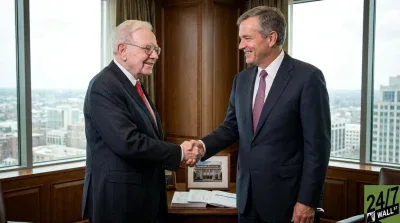
Warren Buffett does not hand out personal endorsements of his money manager every day. That makes the line he delivered about Greg Abel, who formally became President and CEO of Berkshire Hathaway on January 1, 2026, worth pausing on. For shareholders of Berkshire Hathaway (NYSE:BRK-B | BRK-B Price Prediction), it is the strongest possible vote of confidence following the leadership transition at the top of the company.
Skin in the Game
Buffett describes the relationship as a “perfect 10.” Abel has backed that trust with real capital. In June 2022, he sold his 1% stake in Berkshire Hathaway Energy for roughly $870 million and reinvested heavily in Berkshire Class A shares. Then in early 2026 he took alignment a step further. Abel’s annual salary as the new CEO is $25 million, a 19% raise from the $21 million he earned as vice chairman. His entire after-tax take-home, approximately $15.3 million, went straight into Berkshire stock, a commitment he has pledged to repeat every year he holds the role. SEC filings from March 4, 2026 confirm he personally acquired 21 Class A shares in a price range of $725,210 to $733,300, at an average of $728,970 per share. His net worth and shareholder outcomes are now firmly aligned.
The Great Portfolio Consolidation
Abel’s approach to the equity portfolio has been anything but passive. His first full quarter at the helm produced one of the most sweeping overhauls in recent Berkshire history. Q1 2026 13F filings showed the portfolio contracting from roughly $274 billion to approximately $263 billion, with the number of holdings dropping from around 40 to 29. Abel sold stakes in 16 companies outright, including positions in Visa, Mastercard, Amazon, UnitedHealth Group, and Domino’s Pizza. Many of those were holdings associated with former investment manager Todd Combs, who departed for JPMorgan at the end of 2025. Berkshire was a net seller by roughly $8.1 billion on the equity side in Q1.
By Q2, the picture had flipped entirely. Berkshire ended a streak of 14 consecutive quarters of net stock sales by deploying approximately $20 billion in net equity purchases during the quarter. The total disclosed 13F portfolio rose to roughly $299 billion by June 30. Abel deployed approximately $39.4 billion into equity purchases across the first six months of 2026, more than five times the $7.1 billion Berkshire invested during the same period in 2025 under Buffett. The portfolio’s top five names, Apple, American Express, Alphabet, Coca-Cola, and Bank of America, now represent the core of the book, with Abel pruning the edges while aggressively expanding his biggest conviction positions.
Abel also completed Berkshire’s first major acquisition under his watch: the $9.7 billion all-cash deal to acquire OxyChem from Occidental Petroleum, which closed on January 2, 2026. The deal, Berkshire’s largest since its $11.6 billion purchase of Alleghany in 2022, was announced by both companies in October 2025 and signaled from the outset that Abel was not content to sit on cash indefinitely.
Two Quarters of Earnings Growth
Q1 2026 results filed May 7 confirmed operating earnings of $11.35 billion, up nearly 18% from $9.64 billion in the same quarter a year earlier. Insurance underwriting led the way, with profits rising about 28% to $1.72 billion. The real story in Q1, though, was the balance sheet: Berkshire’s cash position reached a record $397 billion by quarter’s end, up from $373 billion when 2025 closed. That war chest represented more than a third of Berkshire’s $1.1 trillion market value at the time.
Q2 told a different story. Operating earnings climbed another 16% to $12.98 billion, up from $11.16 billion in the prior year’s second quarter. Berkshire Hathaway Energy’s profit surged 27% to $891 million, manufacturing, service and retailing jumped 24% to $4.47 billion, and BNSF added $1.56 billion, a 6% gain. Insurance was the one soft spot, with underwriting earnings falling 13% to $1.73 billion. More significantly, Abel accelerated the buyback program: after the modest $234 million in Q1 repurchases, Berkshire spent $4.5 billion buying back its own shares in Q2, bringing the six-month total to roughly $4.8 billion. The cash pile fell to $365.5 billion by June 30, down about 8% from its Q1 peak, a reflection of Abel’s willingness to put the war chest to work.
In March 2026, Abel confirmed on CNBC’s “Squawk Box” that Berkshire had resumed repurchases when the price-to-book ratio dipped to approximately 1.4, and that buybacks would continue as long as the stock traded below conservatively determined intrinsic value.
The AI Energy Pivot
Perhaps the most consequential departure from the Buffett era is Abel’s deliberate push toward artificial intelligence infrastructure. During the May 2026 Annual Meeting, Abel identified Berkshire Hathaway Energy (BHE) as the primary beneficiary of the AI buildout. Data centers in the Midwest already account for nearly 10% of peak load, a figure expected to grow 50% by 2030. Abel has taken a firmer stance on cost allocation than his predecessor, demanding that tech companies bear the full infrastructure costs for grid upgrades, protecting utility customers while positioning Berkshire as a backbone provider of the AI economy.
That posture took concrete form on June 1, 2026, when Alphabet announced an $80 billion equity capital raise and disclosed a concurrent $10 billion private placement with Berkshire. The investment comprised $5 billion in Alphabet Class A shares at $351.81 each and $5 billion in Class C shares at $348.20, adding to a position Berkshire had been building since Q3 2025. Buffett told CNBC in July 2026 that he initiated the Alphabet investment. By the end of Q2, Berkshire’s total Alphabet stake had grown to roughly 106 million shares valued at approximately $36.6 billion, making it the third-largest equity holding in the portfolio, behind only Apple at $69.7 billion and American Express at $51.9 billion.
Abel has continued to move the portfolio into technology territory beyond Alphabet. In July 2026, Berkshire invested $600 million in Bending Spoons, an Italian-based serial acquirer of digital businesses, at that company’s Nasdaq IPO. Then on October 14, 2026, Berkshire added another $330 million in a private placement, acquiring 10 million shares at $33 each and lifting its total stake to approximately $930 million and 4% of the company. Bending Spoons, which owns brands including Evernote, Vimeo, and AOL, saw its shares surge more than 40% on the announcement. For a conglomerate that long avoided pure technology bets, the combination of the Alphabet position and the Bending Spoons commitment is a clear signal of where Abel sees durable long-term value.
Time Will Tell
The transition at Berkshire has moved faster than most observers anticipated. On September 18, 2026, Buffett stepped down as chairman of the board, nine months after handing Abel the CEO role. He was named chairman emeritus and remains a director, while his son Howard Buffett assumed the chairmanship. Abel now runs the company with full operational and board-level independence. Buffett wrote to shareholders that “Father Time always wins,” but added he was “more confident than ever about what lies ahead” for Berkshire.
Markets have responded. BRK-B shares closed at $539.82 on October 20, 2026, a new all-time high and a gain of roughly 9% for the year. That is a narrower gap to the S&P 500’s approximate 12% to 13% price advance year-to-date than existed earlier in 2026, and the trend has been closing. The underlying businesses continue to deliver on both the earnings and capital-allocation fronts. Abel’s style is more granular, more willing to confront underperformers, and considerably more tech-forward than what investors experienced over the prior six decades. The fortress balance sheet, while down from its $397 billion peak, remains formidable at $365.5 billion. OxyChem is integrated, the Alphabet position has tripled in size since it was first disclosed, and Berkshire has now committed nearly $1 billion to Bending Spoons. Abel has deployed more capital in his first nine months than Buffett deployed in all of 2025. Buffett’s quote is the endorsement. Abel’s record through October 2026 is the evidence.
Editor’s note: This article has been updated to reflect Warren Buffett’s September 18, 2026 resignation as Berkshire chairman (with Howard Buffett succeeding him), Berkshire’s $330 million follow-on investment in Bending Spoons on October 14, 2026 (bringing total committed capital to approximately $930 million for a 4% stake), and the BRK-B share price reaching a new all-time closing high of $539.82 on October 20, 2026, representing a year-to-date gain of approximately 9%.
Contact [email protected] for any questions or corrections.
Don Lair writes about options income, dividend strategy, and the kind of boring-but-durable investing that actually funds retirement. He's the founder of FITools.com, an independent contributor to 24/7 Wall St., and a former writer for The Motley Fool.