VGT Looks Like a Diversified Tech Bet Until You Realize Three Stocks Are 43 Percent of It
The pitch on the Vanguard Information Technology ETF (NYSEARCA:VGT) is sector breadth. You pay nine basis points, you get the entire information technology sleeve of the U.S. market, roughly $125 billion in assets aggregated into one ticker. So a 50…

This post may contain links from our sponsors and affiliates, and Flywheel Publishing may receive compensation for actions taken through them.
The pitch on the Vanguard Information Technology ETF (NYSEARCA:VGT) is sector breadth. You pay nine basis points, you get the entire information technology sleeve of the U.S. market, roughly $125 billion in assets aggregated into one ticker. So a 50 year old tilting their 401(k) toward tech with VGT thinks they own a sector. They own three stocks with a sector wrapped around them, and the math on VGT is uncomfortably specific about it.
What the fund holds
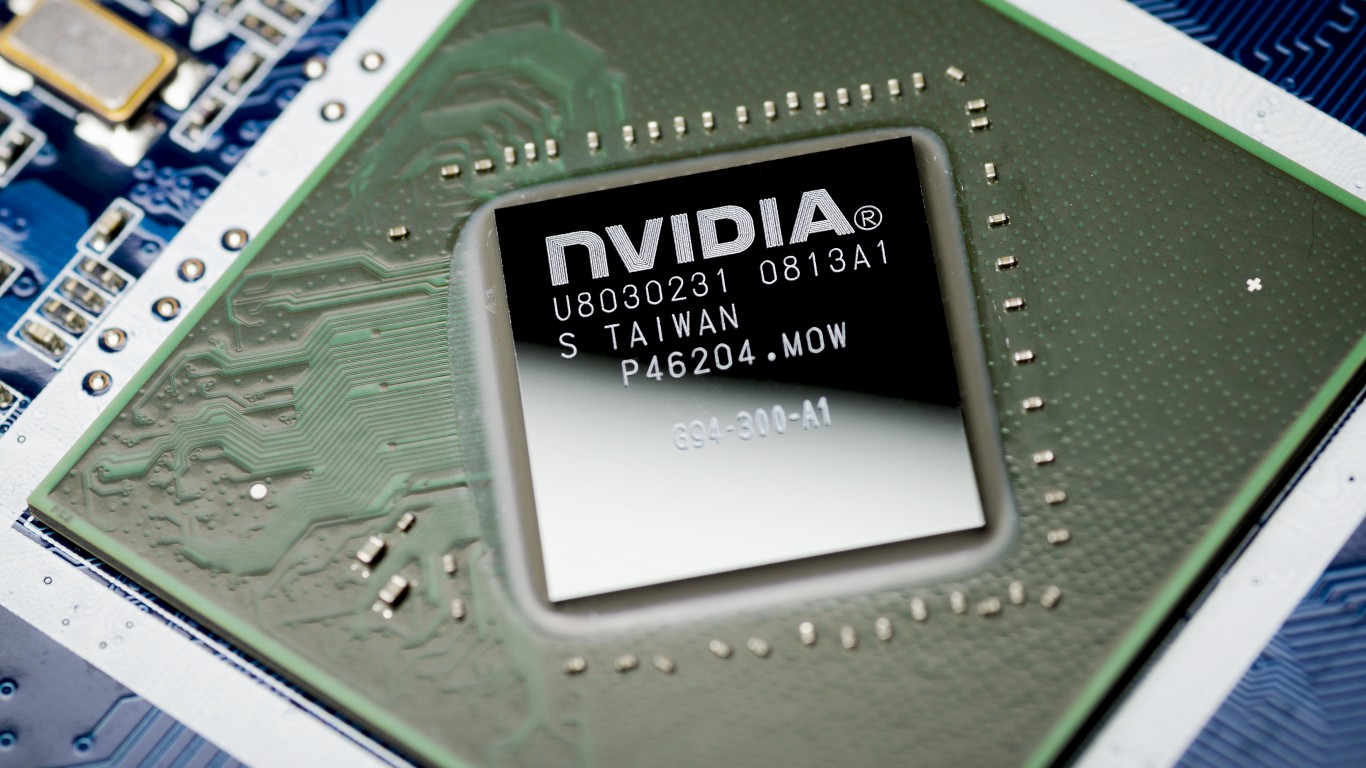
As of March 31, 2026, three names carried the fund. NVIDIA (NASDAQ:NVDA | NVDA Price Prediction) at 18.6%, Apple (NASDAQ:AAPL) at 14.8%, Microsoft (NASDAQ:MSFT) at 10.02%. That is ~43% of VGT in three companies, with the next seven holdings adding roughly 15%, which means the top ten run about 60% of the fund. The remaining ~318 holdings split the other 40%.
VGT tracks the MSCI US Investable Market Index/Information Technology 25/50, a cap-weighted index with regulatory diversification caps that are loose enough to permit exactly this kind of top-heavy structure. When NVIDIA reports earnings, roughly 18 cents of every dollar in VGT moves with the print. When Apple guides iPhone, another 16 cents respond. Microsoft does the same with Azure growth, which is currently running at +40% year over year.
Moreover, NVIDIA posted Q1 revenue up 85% year over year to $81.62 billion. Apple delivered Q2 FY26 revenue of $111.18 billion. Microsoft’s Q3 FY26 came in at $82.89 billion, with Azure growing 40% and an AI business now at a $37 billion annual run rate, up 123% year over year. Three companies, roughly $260 billion of quarterly revenue, and they sit inside a single ETF ticker.
Does the diversification claim hold up
Test it against 2022, the canonical mega-cap stumble. VGT finished that year down 30%. The Technology Select Sector SPDR (NYSEARCA:XLK), often pitched as the alternative and currently holding 39% in the same three names, fell nearly 31% peak to trough. Two products marketed as diversified tech exposure landed within two percentage points of each other because they own the same three companies in roughly the same proportions. Concentration was the entire trade.
Going the other direction, VGT is up 48% over the past year and 149% over five years. The fund delivered, and the engine was the same three names. NVIDIA alone returned 66% over the past year on the back of a $5.39 trillion market cap and Jensen Huang’s “agentic AI inflection point“ framing.
The hidden correlations inside one fund
Owning VGT in 2026 means owning a leveraged bet on AI capital spending. NVIDIA sells the accelerators. Microsoft is buying them. Apple is the odd one out, a consumer hardware cycle story rather than an AI infrastructure story, which is part of why Microsoft is down 11% year to date while NVIDIA is up 18% and Apple sits in the middle at +11.5%. Three business models, one wrapper, and your return depends on whether the AI capex cycle keeps spending money the way Wall Street currently expects.
However, the correlation cuts both ways. If hyperscaler capex guidance softens on a single earnings call, NVIDIA and Microsoft can move together to the downside, and Apple does not save you because it represents only a third of the top-three weight. Microsoft’s $30.88 billion in quarterly capex, up 84% year over year, is the kind of number that flows straight into NVIDIA’s order book, and a cut there shows up on both tickers. VGT’s wrapper does not insulate you from that linkage. It packages it.
The April split was mechanical
VGT completed an 8-for-1 split in April 2026, which drove retail interest and lowered the share price toward roughly $113. It changed nothing about what you own. Same holdings, same weights, same concentration. Splits do not reset risk, they reset the per-share price tag, and the marketing bump that followed obscured rather than altered the underlying exposure.
Who VGT fits
If you want pure exposure to the AI infrastructure trade and you accept that you are paying nine basis points to own NVIDIA, Apple, and Microsoft with a long tail of semiconductor and software names attached, VGT is honest about what it delivers.
Conversely, if you want diversification away from those three names, you already own them through any S&P 500 fund, and adding VGT doubles the bet rather than spreading it. The fund is a tech tilt with a sector label. Read the top of the holdings list before you read the prospectus, and decide whether that is the bet you meant to make.
Contact [email protected] for any questions or corrections.
Omor Ibne Ehsan is a writer at 24/7 Wall St. He is a self-taught investor with a focus on growth, cyclical, and dividend equities that have strong fundamentals, value, and long-term potential. He also has an interest in high-risk, high-reward investments such as penny stocks.