Microsoft and Apple Are Quietly Launching Features to Kill Off Rival Apps
Two of the world’s largest companies are walking on stage over the next two weeks, and they aren’t just showcasing new tech, they are quietly building execution docks for independent software applications.CNBC’s Dominic Chu used his June 2 Pre-Market Rundown…

Two of the world’s largest companies are walking on stage over the next two weeks, and they aren’t just showcasing new tech, they are quietly building execution docks for independent software applications.
CNBC’s Dominic Chu used his June 2 Pre-Market Rundown to sketch the immense stakes. Microsoft kicks things off today with its annual Build developer conference, and Apple follows next week with WWDC.
Both arrive against a backdrop of fresh record highs in yesterday’s trading session, but the real story for investors is how these tech giants are using native ecosystem features to systematically cannibalize popular third-party apps.
Chu framed Microsoft’s pitch this way: “Microsoft is holding its annual developers conference today. The company is expected to show off new tools to build AI software for PCs around the cloud.”
But the true subtext is platform domination. As Chu noted, “Analysts expect Microsoft to work on making these tools safer for businesses and the 1 billion users of the Windows operating systems worldwide.”
By weaponizing its massive footprint, Microsoft is positioned to make independent AI software wrappers completely obsolete.
Microsoft Build: Killing the Cloud AI Startup
Microsoft (NASDAQ:MSFT | MSFT Price Prediction) walks into Build with serious wind at its back and a clear target on the backs of independent SaaS providers. The company’s most recent Q3 FY26 results showed revenue of $82.89 billion, up 18.3% year over year, with Azure and other cloud services growing 40%. CEO Satya Nadella said the “AI business surpassed an annual revenue run rate of $37 billion, up 123% year-over-year,” while commercial remaining performance obligations climbed to $627 billion, up 99%. Capital expenditures hit $30.88 billion, up 84%, underscoring aggressive provisioning for agentic workloads designed to absorb tasks that third-party apps used to handle.
Chu pointed to the hardware angle that could deal a fatal blow to rival software companies: “They’re also looking for more details on how Microsoft will let developers tap into a new chip Nvidia has unveiled this week to help bring AI directly to PC computers.” Pushing inference directly onto the device rather than round-tripping queries to the cloud fundamentally changes the unit economics for consumer AI. If Windows handles advanced AI tasks natively on local hardware, the financial justification for paying separate subscription fees to standalone AI apps completely evaporates. It also instantly strengthens the data-privacy story for enterprise IT buyers, leaving cloud-reliant rivals out in the cold.
NVIDIA (NASDAQ:NVDA) is the silent third party assisting in this platform consolidation. Its most recent quarter delivered revenue of $81.62 billion, up 85.2% year over year, with Data Center revenue of $75.25 billion. CEO Jensen Huang called the current cycle “the largest infrastructure expansion in human history.” Shares are up 66.07% over the past year, and prediction-market and news sentiment trackers put NVDA at a composite sentiment score of 60.65, bullish with medium confidence. A Windows-on-NVIDIA on-device AI stack will extend that native footprint into hundreds of millions of PCs, squeezing independent AI software developers completely out of the value chain.
Markets are pricing Build as incremental rather than transformational for the stock itself, but the competitive implications are severe. Polymarket contracts give MSFT only a 38.5% probability of closing above $450 by Friday, and shares were down 3.51% in Tuesday trading after a 10.02% run over the prior week.
Apple WWDC: Coming to Cannibalize Venmo and Splitwise
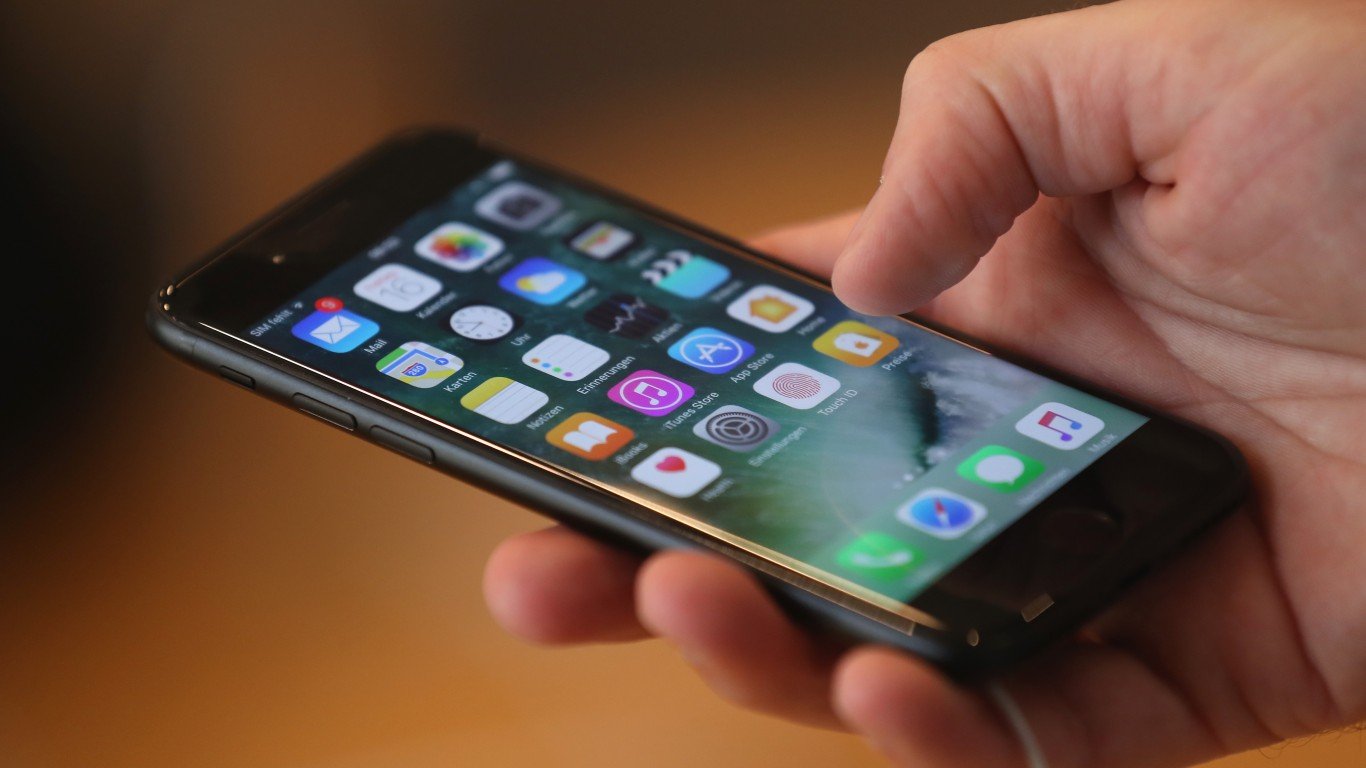
Next week, Apple (NASDAQ:AAPL) takes its turn on stage, deploying a textbook ecosystem strategy: taking a popular third-party utility and baking it directly into the iPhone operating system to starve out competitors. According to Chu, “Apple is planning a new feature for the iPhone to let users split bills for group dinners or other events. It will let you take a photo of the receipt, assign items to different people, and create a payment request similar to Venmo.” By integrating receipt-scanning and itemized splitting natively into the OS, Apple is executing a direct assault on the territory long owned by PayPal’s Venmo and dedicated budgeting utilities like Splitwise.
The tech giant’s massive financial reserves support this predatory ecosystem scaling. Apple’s Q2 FY26 revenue came in at $111.18 billion, up 16.6% year over year, with Services hitting an all-time record of $30.98 billion and iPhone delivering $56.99 billion, fueled by what CEO Tim Cook described as “extraordinary demand for the iPhone 17 lineup.” The board authorized a $100 billion buyback and raised the dividend 4% to $0.27 per share. Apple shares are up 53.11% over the past year and 12.88% year to date.
Embedding bill-splitting directly into the OS extends Services revenue per device and completely eliminates the friction of opening a third-party application. It gives Apple another inescapable reason to defend its installed base of over 2.5 billion active devices while severing the user’s reliance on external fintech platforms. Prediction markets place 94.5% odds on AAPL closing the week above $300, with the AAPL composite sentiment reading at 64.83, bullish with medium confidence.
What to watch next: The Era of Platform Erosion
The through-line of Chu’s reporting is convergence, but for independent software developers, it looks much more like platform erosion. Microsoft is using developer tooling to push AI into enterprise workflows and onto NVIDIA silicon, choking out standalone cloud AI apps.
Apple is using developer tooling to push payments deeper into everyday iPhone moments, cutting the legs out from under fintech rivals.
Both companies are turning their conferences into distribution events for software in places investors once thought belonged to independent niches. The follow-through for shareholders will show up as these native features choke out the competition, driving up Services attach rates at Apple and locking in Azure plus AI run-rate growth at Microsoft over the next two quarters.
Contact [email protected] for any questions or corrections.
Don Lair writes about options income, dividend strategy, and the kind of boring-but-durable investing that actually funds retirement. He's the founder of FITools.com, an independent contributor to 24/7 Wall St., and a former writer for The Motley Fool.